Aortic Aneurysm Surgery: Open Repair and Stent Grafts
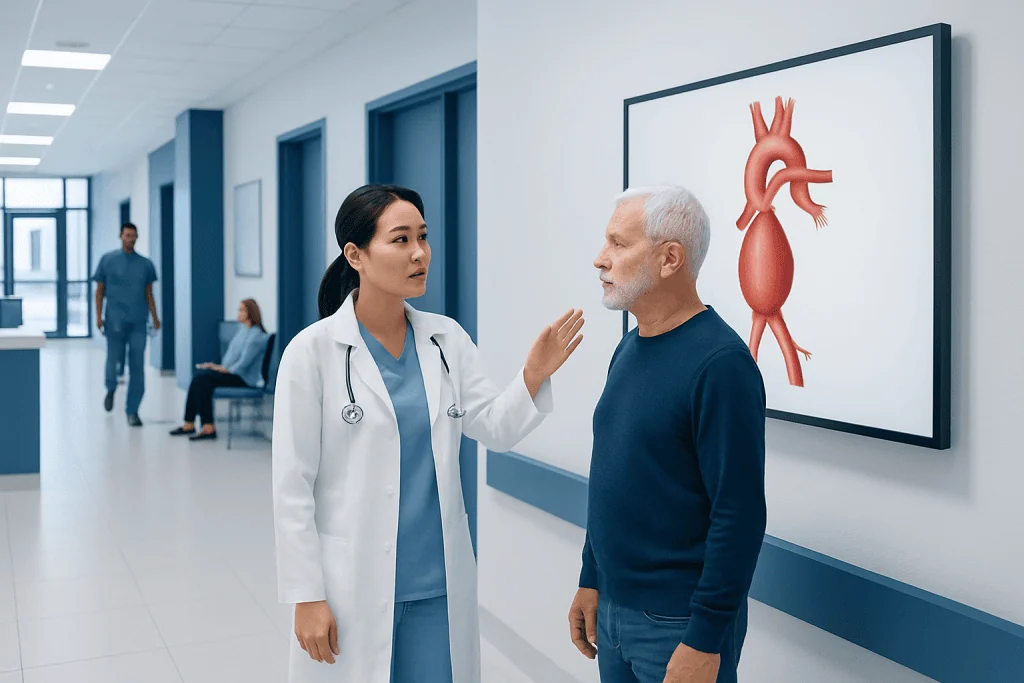
Aortic aneurysm surgery may be recommended when an aneurysm is large, growing, causing symptoms, or has features that increase rupture risk. Open repair replaces the affected part of the aorta with a durable synthetic graft, while endovascular repair supports the artery from within using a stent graft.
Key Takeaways
- Aortic aneurysm surgery may be recommended when an aneurysm is large, growing, causing symptoms, or has features that increase rupture risk.
- Open repair replaces the affected part of the aorta with a durable synthetic graft, while endovascular repair supports the artery from within using a stent graft.
- The best approach depends on detailed imaging, anatomy, age, other health conditions, and the need for lifelong follow-up.
- Recovery is usually faster after endovascular repair, but regular scans are essential to check the stent graft over time.
- Sudden severe chest, back, abdominal, or flank pain, especially with fainting or shortness of breath, needs emergency medical assessment.
Aortic aneurysm surgery repairs a weakened, enlarged section of the body’s main artery, the aorta, to lower the chance of rupture or other serious complications. The procedure may be performed with open surgery or a less invasive stent-graft technique, depending on the aneurysm’s location, size, shape, growth rate, and the person’s overall health.
Overview: what aortic aneurysm surgery does
Aortic aneurysm surgery is a planned or emergency procedure used to repair an aneurysm: an abnormal widening or bulge in the wall of the aorta. The aorta carries oxygen-rich blood from the heart to the rest of the body. When part of its wall weakens and stretches, it may continue to enlarge and can, in some cases, tear or rupture. Surgery aims to reinforce or replace that weakened area before a dangerous complication occurs.
Aneurysms can develop in the chest, called thoracic aortic aneurysms, or in the abdomen, called abdominal aortic aneurysms. Some involve more than one section of the aorta. Many aneurysms cause no symptoms and are discovered during imaging performed for another reason, while others are found through surveillance scans after a diagnosis has been made.
Repair is not automatically needed for every aneurysm. Smaller, stable aneurysms can often be monitored with scheduled imaging and managed by controlling blood pressure, avoiding tobacco, and treating cardiovascular risk factors. A vascular surgeon or cardiac surgeon considers the likely benefit of repair against the risks of an operation for each individual.
Who may be a candidate for repair
Clinicians consider aortic aneurysm surgery when the risk of leaving the aneurysm untreated becomes greater than the expected risk of repair. Important factors include the aneurysm’s diameter, how quickly it has grown, its location and shape, and whether it is associated with pain, leakage, a tear in the aortic wall, or pressure on nearby structures. Thresholds for intervention differ between abdominal and thoracic aneurysms and may be adjusted for a person’s body size, inherited condition, family history, and sex.
People with symptoms that may be related to an aneurysm usually need prompt assessment. Symptoms can include persistent chest, back, abdominal, or flank pain, hoarseness, difficulty swallowing, or a pulsating feeling in the abdomen. However, these symptoms have many possible causes, so medical evaluation and imaging are needed to establish what is happening.
Before recommending a procedure, the team assesses heart, lung, kidney, and circulation health, as well as current medicines and prior operations. CT angiography is commonly used to map the aorta and its branches in detail. Ultrasound, MRI, echocardiography, blood tests, and heart assessments may also be used to plan the safest approach.
- Open repair may be preferred when the aneurysm anatomy is not suitable for a stent graft or when a long-lasting surgical reconstruction is needed.
- Endovascular repair may be suitable when there are secure sections of healthy aorta above and below the aneurysm where a stent graft can seal.
- Individual planning is especially important for aneurysms involving branches that supply the brain, spinal cord, kidneys, intestines, or legs.
How open and endovascular procedures work
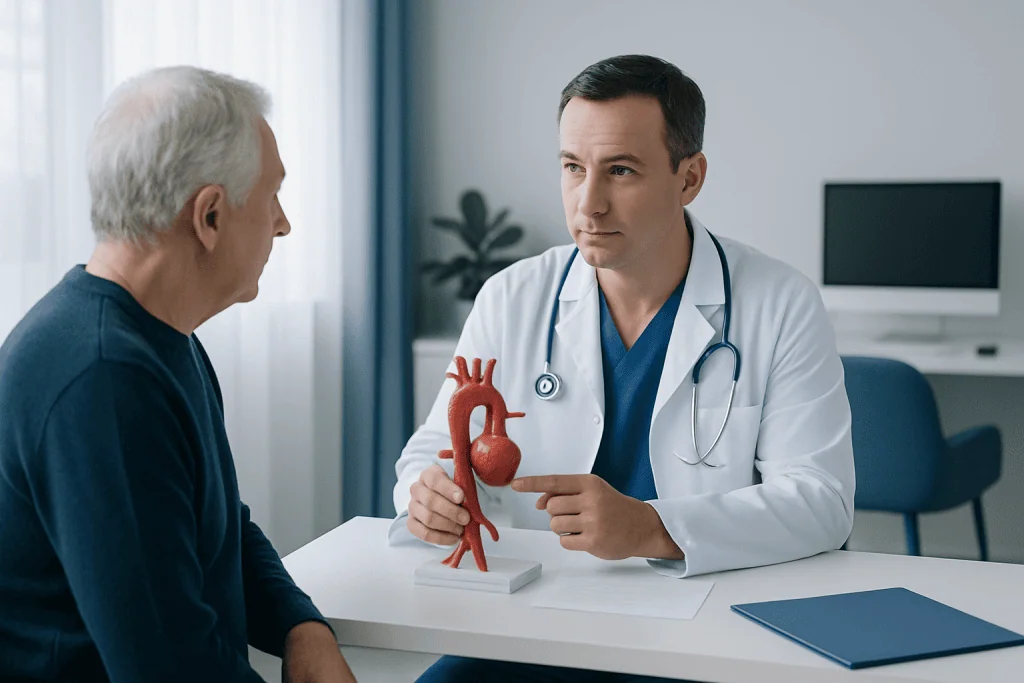
Open aortic aneurysm repair involves making an incision to reach the affected part of the aorta. The surgeon temporarily controls blood flow around the area, opens the aneurysm, and sews a synthetic fabric tube, known as a graft, into place. Blood then flows through the graft rather than pressing against the weakened arterial wall. The exact incision and complexity vary with the aneurysm’s position in the chest, abdomen, or both.
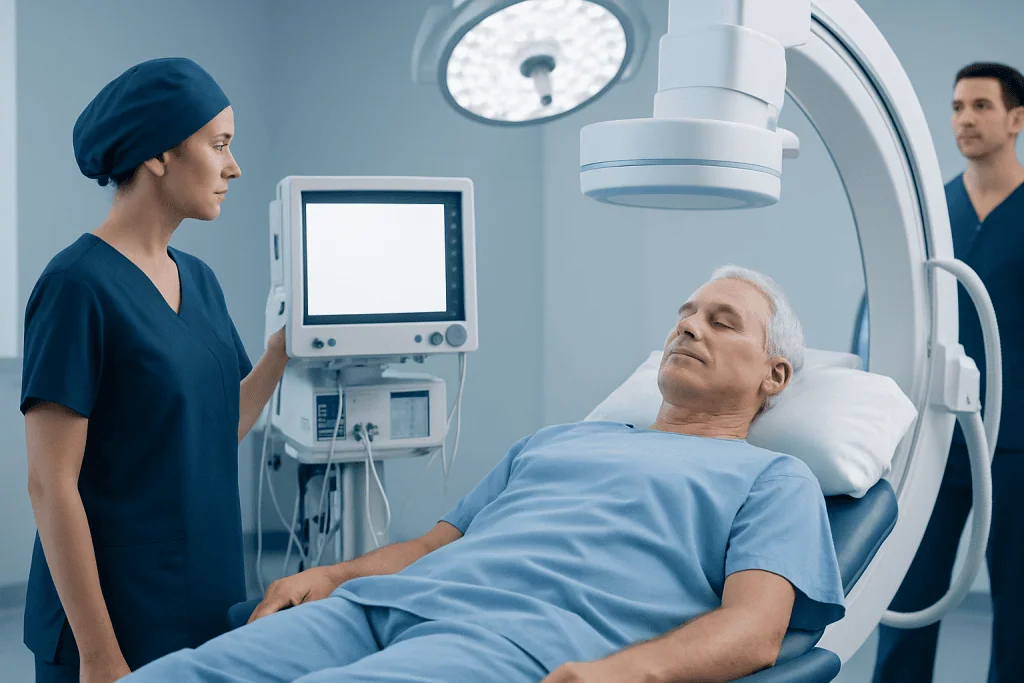
Endovascular aneurysm repair is performed from inside the blood vessels. Through small incisions, usually in the groin, the surgeon or interventional specialist guides a folded stent graft through the femoral arteries using X-ray imaging. Once positioned across the aneurysm, the graft expands and creates a new channel for blood flow. The aneurysm sac is not removed; instead, it should gradually lose pressure and may shrink over time.
For abdominal aneurysms, this minimally invasive approach is often called EVAR. For aneurysms in the descending thoracic aorta, it may be called TEVAR. More complex repairs may use custom, branched, or fenestrated stent grafts to preserve blood flow to vital side branches. Not every person’s anatomy is suitable for these techniques, and the available options should be discussed with an experienced aortic team.
Both approaches are intended to prevent rupture and may be performed electively, urgently, or in an emergency. Elective repair allows time for detailed planning and optimization of medical conditions, whereas emergency treatment is necessary when rupture or acute aortic injury is suspected.
What happens before, during, and after surgery
In the days or weeks before planned surgery, patients usually meet the surgical and anesthesia teams, complete imaging and laboratory testing, and review their medicines. Blood-thinning medicines, diabetes medicines, and some supplements may need special instructions. Patients should not stop prescribed medication on their own; the treating team provides individualized guidance. Smoking cessation, good nutrition, and treatment of infections can support safer surgery and healing.
On the day of the procedure, anesthesia is used so the patient is comfortable and does not feel pain. Open repair generally requires general anesthesia. Endovascular repair may be performed under general, regional, or local anesthesia with sedation, depending on the procedure and patient factors. The team continuously monitors blood pressure, heart rhythm, breathing, urine output, and circulation.
After open surgery, patients commonly spend time in a high-dependency or intensive care setting for close observation before moving to a regular ward. Following endovascular repair, some patients can move more quickly to a regular recovery area, but monitoring remains important. Pain control, breathing exercises, early movement when safe, and prevention of blood clots are standard parts of postoperative care.
Before discharge, the care team explains wound care, activity restrictions, medicines, follow-up appointments, and warning symptoms. It is helpful for patients to arrange support at home, particularly after open surgery, since energy levels and mobility may be limited initially.
Recovery timeline and long-term follow-up
Recovery varies according to the repair type, aneurysm location, the need for emergency treatment, and a person’s general health. After endovascular repair, hospital stays are often shorter and many people return to light daily activities within days to a few weeks. Groin soreness, bruising, and tiredness can occur temporarily. Heavy lifting and strenuous activity should be avoided until the surgical team confirms it is safe.
Open repair typically requires a longer hospital stay and a slower return to normal routines. Recovery may take several weeks to a few months because the incision and deeper tissues need time to heal. Fatigue is common, and gradual walking and breathing exercises are often encouraged. Cardiac or vascular rehabilitation may be advised for some people.
Follow-up imaging is essential after endovascular repair. CT scans, ultrasound, or other studies check that the stent graft remains in position, blood is not leaking around it, and the aneurysm sac is not enlarging. A leak around a graft is called an endoleak; many are monitored, while others need further treatment. Open repair generally requires less frequent imaging in the long term, although follow-up remains important.
Long-term care also focuses on protecting the whole cardiovascular system. This commonly includes blood-pressure management, cholesterol treatment when appropriate, regular physical activity approved by the care team, a balanced diet, diabetes management, and avoiding smoking or nicotine products. These measures cannot reverse every aneurysm-related risk, but they support aortic and overall vascular health.
Benefits and possible risks
The main benefit of aortic aneurysm surgery is reducing the risk of rupture, which can be life-threatening. Repair may also relieve symptoms caused by the aneurysm and prevent further enlargement or damage to nearby structures. When surgery is planned at an appropriate time and performed in a specialized center, it can offer a meaningful protective benefit for people whose aneurysm has reached a higher-risk stage.
All major aortic procedures carry risks. These can include bleeding, infection, blood clots, heart attack, stroke, kidney injury, breathing problems, injury to nearby organs, changes in blood flow to the legs or intestines, and complications related to anesthesia. Depending on the location and extent of the aneurysm, there can also be a risk of spinal cord injury or problems affecting the nerves.
Endovascular repair avoids a large incision and often has a faster early recovery, but it may require more frequent imaging and, in some cases, later procedures to correct endoleaks, graft movement, narrowing, or other device-related issues. Open surgery is more physically demanding initially but can be a durable option for suitable patients. The care team explains the expected benefits, limitations, and follow-up needs of each approach.
Decisions should be shared decisions. Patients may wish to ask why repair is advised now, which technique is recommended, what alternatives exist, how follow-up will be organized, and which symptoms should prompt urgent contact after discharge.
When to seek medical care
Anyone known to have an aortic aneurysm should attend scheduled surveillance appointments, even when feeling well. They should contact their doctor promptly about new or worsening chest, back, abdominal, or flank pain; a new pulsating abdominal sensation; fever or wound concerns after surgery; or changes such as a cold, painful, pale, or weak leg.
Sudden, severe, and persistent pain in the chest, back, abdomen, or side can be a medical emergency, particularly if it occurs with fainting, dizziness, sweating, shortness of breath, confusion, weakness, or a rapid heartbeat. Emergency services should be contacted immediately rather than driving to a hospital or waiting for symptoms to pass.
People with a family history of aortic aneurysm or dissection, a known inherited connective-tissue condition, or a close relative with early aortic disease may benefit from discussing screening and genetic assessment with a doctor. Acibadem International’s multidisciplinary specialists and JCI-accredited hospitals can assess and treat aortic conditions for international patients, with care plans based on individual anatomy and health needs.
Frequently asked questions
Is aortic aneurysm surgery always necessary?
No. Many small aneurysms are monitored with regular imaging rather than repaired immediately. Surgery is considered when the aneurysm reaches a higher-risk size, grows quickly, causes symptoms, or has other concerning features.
What is the difference between open repair and EVAR?
Open repair replaces the weakened aortic section with a surgical graft through a larger incision. EVAR, or endovascular aneurysm repair, places a stent graft inside the artery through small groin incisions; it usually has a faster initial recovery but requires lifelong imaging follow-up.
How long does recovery from aortic aneurysm surgery take?
After endovascular repair, many people resume light activities within days to weeks, depending on their condition and their doctor’s advice. Open repair usually requires several weeks to months for fuller recovery, with gradual increases in activity.
Can an aneurysm come back after surgery?
A successfully repaired section is generally protected by the graft, but other parts of the aorta can still need monitoring. After endovascular repair, the aneurysm sac and stent graft must be checked regularly for endoleaks or other changes that may require treatment.
What should a person avoid after aortic aneurysm repair?
Patients should avoid heavy lifting, intense exertion, and driving until their surgical team says these are safe. They should also avoid smoking and should take prescribed medicines as directed, especially treatments for blood pressure and cardiovascular risk factors.
What symptoms after surgery need urgent attention?
Urgent medical advice is needed for severe or increasing chest, back, abdominal, or leg pain; fainting; shortness of breath; fever; persistent vomiting; or signs of poor circulation in a leg. Emergency services should be called for sudden severe pain, collapse, or symptoms suggesting a heart attack or stroke.
References
- American Heart Association
- Society for Vascular Surgery
- European Society for Vascular Surgery
- National Heart, Lung, and Blood Institute
- National Institute for Health and Care Excellence
This article is for general information only and is not a substitute for professional medical advice. Please consult a qualified doctor about your individual situation.
Aortic Aneurysm in Turkey — costs, top hospitals & a free quote
JCI-accredited · board-certified surgeons · reply within 24h
Add us as a Preferred Source to see more of our trusted health content across Google Search, AI Overviews and Discover.
Check your numbers in seconds
BMI, calories, due date, blood pressure and 30+ more clinical calculators — free, instant, doctor-reviewed ranges.

Cardiology Department
Diagnosis and treatment of heart and vascular conditions, from prevention to advanced interventional procedures.
93 specialists in this unitMore from the Health Library



Related Specialists

Dr. Sebiha Nihal Yılmaz
Oral Dental & Maxillofacial Surgery
Prof. Dr. Harzem Özger
Orthopedic Surgery & Traumatology
Dyt. Zeynep Ondur
Nutrition & Diet
Dr. Nihal Özşeker
Pulmonology