Are Sleep Disorders Neurological? How Brain and Breathing Disorders Overlap

Sleep disorders may be neurological, breathing-related, or caused by both mechanisms together. The brain regulates sleep stages, breathing drive, movement, and wakefulness throughout the night.
Key Takeaways
- Sleep disorders may be neurological, breathing-related, or caused by both mechanisms together.
- The brain regulates sleep stages, breathing drive, movement, and wakefulness throughout the night.
- Conditions such as sleep apnea, narcolepsy, restless legs syndrome, and parasomnias can share symptoms but need different treatments.
- Sleep studies and neurological evaluation help identify the exact cause of poor sleep and daytime fatigue.
- Persistent snoring, pauses in breathing, unusual nighttime behaviors, or excessive daytime sleepiness should be medically assessed.
Sleep disorders are not always purely neurological or purely breathing-related. Many develop through an overlap between the brain’s control of sleep, breathing, movement, and alertness, which is why accurate diagnosis often involves both neurology and sleep medicine.
Overview: Why Sleep Disorders Can Involve Both Brain and Breathing
Sleep is an active biological process controlled by the brain, nerves, hormones, muscles, and breathing patterns. For that reason, sleep disorders do not fit into just one category. Some are mainly neurological, meaning they arise from changes in the brain or nervous system. Others are primarily breathing-related, involving partial or repeated blockage of the airway or problems with breathing control during sleep. In many people, both systems are involved at the same time.
The brain helps regulate when a person feels sleepy, when they enter different sleep stages, how muscles relax during sleep, and how breathing adjusts throughout the night. If these control systems are disrupted, a person may have insomnia, excessive sleepiness, abnormal movements, unusual behaviors during sleep, or breathing disturbances. This overlap is one reason symptoms can seem confusing and why two people with similar complaints may have very different diagnoses.
For example, someone who wakes tired every morning may have obstructive sleep apnea, a neurological sleep-wake disorder such as narcolepsy, frequent leg movements, or a combination of problems. Snoring and breathing pauses may point toward sleep apnea, but sleepiness can also come from neurological conditions that affect alertness. Understanding whether the issue begins in the brain, the airway, or both is central to effective treatment.
How the Brain Controls Sleep and Breathing
The brain contains networks that act like an internal clock and sleep switch. These systems help coordinate circadian rhythm, the daily cycle of sleep and wakefulness, and also manage transitions between light sleep, deep sleep, and rapid eye movement (REM) sleep. During these stages, breathing patterns, muscle tone, heart rate, and awareness naturally change.
Breathing during sleep is partly automatic. Brain centers in the brainstem monitor oxygen and carbon dioxide and adjust breathing effort without conscious thought. At the same time, muscles of the throat and upper airway must stay open enough for air to pass freely. If the airway narrows or collapses, breathing can be interrupted even if the lungs themselves are healthy. If the brain’s breathing signals are unstable, breathing pauses can happen for a different reason.
This is why sleep medicine often looks at both neurology and respiratory function. The brain may affect whether a person falls asleep normally, enters REM sleep safely, maintains wakefulness during the day, or keeps breathing regular at night. In some cases, people have both airway obstruction and a problem with central breathing control, making a careful evaluation especially important.
Which Sleep Disorders Are Neurological?

Several sleep disorders are considered primarily neurological because they involve the brain, spinal cord, or nervous system. Narcolepsy is a classic example. It affects the brain’s regulation of sleep and wakefulness, leading to strong daytime sleepiness and sometimes sudden muscle weakness triggered by emotion. Parasomnias, such as sleepwalking or REM sleep behavior disorder, also involve abnormal activity during sleep transitions or REM sleep.
Restless legs syndrome and periodic limb movement disorder are also closely linked to the nervous system. People may feel an urge to move the legs at rest, especially in the evening, or have repetitive leg movements during sleep that disturb rest. Although these disorders are different from breathing disorders, they can still cause fragmented sleep, poor concentration, and daytime tiredness.
Neurological diseases such as Parkinson’s disease, epilepsy, stroke, dementia, and some neuromuscular conditions can also disrupt sleep. They may change sleep architecture, affect movement during the night, alter breathing control, or reduce the body’s ability to keep the airway open. In this way, a neurological condition may either directly cause a sleep disorder or make an existing one worse.
Some patients are evaluated for narcolepsy or restless legs syndrome when daytime fatigue is severe but snoring alone does not fully explain symptoms. Because these conditions can overlap with one another, specialists often look at the whole sleep pattern rather than a single complaint.
When Breathing Disorders Disrupt Sleep
Breathing-related sleep disorders are very common and can have a strong effect on how rested a person feels. Obstructive sleep apnea happens when the upper airway repeatedly narrows or collapses during sleep, reducing or stopping airflow for short periods. This can lead to loud snoring, gasping, restless sleep, morning headaches, dry mouth, and daytime sleepiness. Many people are unaware that these breathing pauses are happening.
Another group of disorders involves central sleep apnea, in which breathing pauses happen because the brain temporarily does not send stable signals to the breathing muscles. This is different from obstruction, although both types can disturb sleep and lower sleep quality. Some people have mixed patterns that include both airway blockage and central instability.
Breathing disorders can also affect the brain indirectly. Repeated oxygen drops and frequent nighttime awakenings may impair attention, memory, mood, and overall daytime function. Over time, untreated sleep-disordered breathing may contribute to cardiovascular strain and worsen other medical conditions. This is why evaluation may include both a respiratory and neurological perspective, especially when symptoms are complex or severe.
Common Signs That Suggest Overlap
Many symptoms of sleep disorders are not specific to one diagnosis. Daytime sleepiness, poor concentration, irritability, memory problems, morning headaches, and non-refreshing sleep can occur in both neurological and breathing-related disorders. Because of this, the pattern of symptoms matters as much as the symptoms themselves.
There are, however, clues that may point in one direction. Loud snoring, witnessed pauses in breathing, choking at night, and sleeping better when upright can suggest sleep apnea. Sudden sleep attacks, vivid dream-like experiences at sleep onset, sleep paralysis, or episodes of muscle weakness with emotion may suggest narcolepsy. Sleepwalking, acting out dreams, and unusual nighttime behaviors may indicate parasomnias. Leg discomfort relieved by movement may fit restless legs syndrome.
A doctor will also consider risk factors such as weight changes, nasal blockage, medication use, neurological disease, family history, and the timing of symptoms. Sometimes a person has more than one disorder at the same time, such as sleep apnea plus insomnia or a movement disorder plus fragmented sleep. In these situations, treating only one part of the problem may not fully relieve symptoms.
- Snoring and breathing pauses often suggest a breathing-related disorder.
- Abnormal movements or nighttime behaviors may point to a neurological sleep disorder.
- Severe daytime sleepiness can happen in either group and should not be ignored.
- Mixed symptoms are common and often require formal sleep testing.
How Diagnosis Is Made
Diagnosis begins with a detailed medical history and sleep history. A doctor will ask about bedtime habits, snoring, witnessed breathing pauses, dream enactment, unusual movements, shift work, medication use, and daytime symptoms such as fatigue or sudden sleep episodes. Input from a bed partner or family member can be very helpful because many nighttime events happen without the patient noticing them.
A physical examination may look for signs of upper airway narrowing, nasal congestion, obesity, enlarged tonsils, or neurological findings such as tremor, weakness, altered reflexes, or movement abnormalities. Depending on the symptoms, the doctor may also review heart and lung health, mental health, and possible contributing medical conditions.
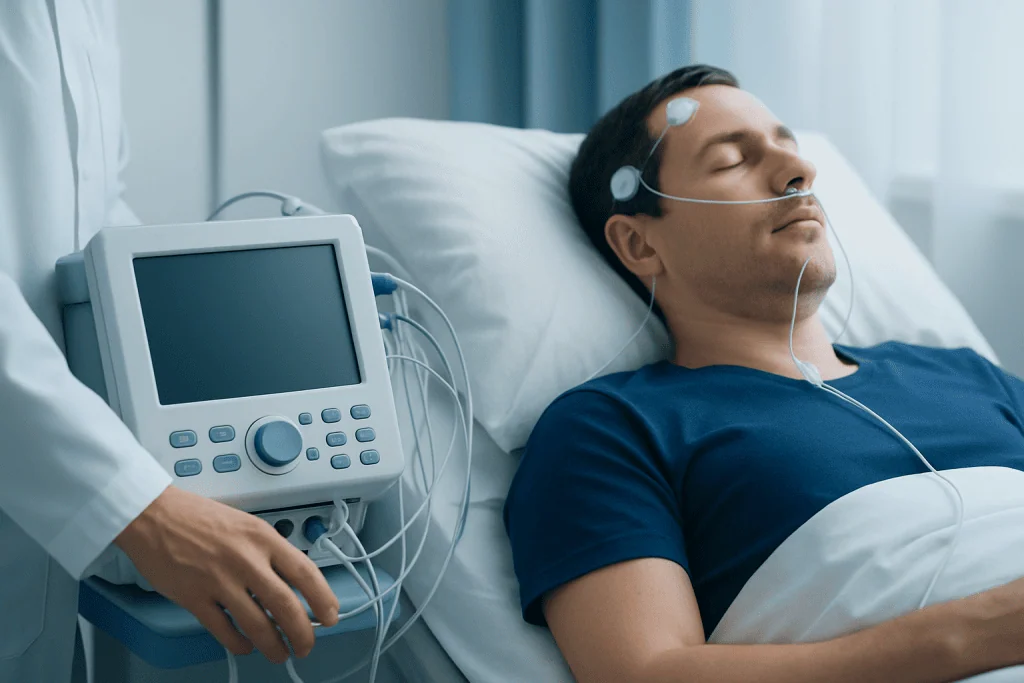
The most important test for many patients is a sleep study, also called polysomnography. This test records breathing, oxygen levels, brain waves, heart rhythm, muscle activity, and body movements during sleep. It can help diagnose obstructive or central sleep apnea, limb movements, parasomnias, and some seizure-related events during sleep. In selected cases, additional tests such as multiple sleep latency testing, actigraphy, blood work, or imaging may be used.
When clinically appropriate, treatment planning may follow findings from sleep study testing or a broader neurology consultation. The goal is not simply to label the disorder, but to understand the mechanism behind it so treatment can be matched to the patient’s symptoms and overall health.
Treatment Options for Neurological and Breathing-Related Sleep Disorders
Treatment depends on the diagnosis. For obstructive sleep apnea, therapy often focuses on keeping the airway open during sleep. This may involve lifestyle measures, positional changes, oral appliances, or positive airway pressure therapy. Some patients with airway anatomy that contributes to obstruction may be assessed for procedures such as sleep apnea surgery when other measures are not suitable or sufficient.
Neurological sleep disorders are treated differently. Narcolepsy management may include scheduled naps, sleep hygiene strategies, and medications prescribed by a specialist to support wakefulness or manage related symptoms. Restless legs syndrome may improve by identifying triggers, correcting contributing deficiencies when present, and using appropriate medication when needed. Parasomnias may require safety planning, treatment of triggers, and in some cases medication or further neurological assessment.
When a sleep disorder is linked to another neurological or medical problem, treatment also focuses on the underlying condition. Examples include managing Parkinson’s disease symptoms, improving seizure control, or addressing heart failure in central sleep apnea. A multidisciplinary plan may be useful for people with overlapping symptoms, because improving only one factor may leave the other untreated.
Near the end of the care pathway, some patients benefit from coordinated input from sleep specialists, neurologists, pulmonologists, ENT specialists, and other clinicians. Acibadem International’s multidisciplinary specialists and JCI-accredited hospitals diagnose and treat sleep-related conditions for international patients when more complex evaluation is needed.
Self-care, Prevention, and When to Seek Medical Advice
Good sleep habits support treatment but do not replace medical care when symptoms are persistent. A regular sleep schedule, limiting alcohol near bedtime, reducing sedative use unless prescribed, maintaining a comfortable sleep environment, and managing stress may all help improve sleep quality. For people at risk of sleep apnea, weight management, side sleeping, and addressing nasal congestion can also be useful.
It is important not to self-diagnose based only on snoring or tiredness. Snoring does not always mean sleep apnea, and not all neurological sleep disorders cause obvious abnormal behaviors at night. If symptoms have lasted for weeks or months, interfere with work or driving, or are affecting mood and memory, a medical assessment is appropriate.
Medical attention is especially important if a person has loud snoring with witnessed breathing pauses, wakes choking or gasping, falls asleep unintentionally during the day, acts out dreams, has repeated sleepwalking, or experiences unusual nighttime movements. Children, older adults, and people with neurological disease may present differently and should also be evaluated if sleep problems are ongoing.
Prompt diagnosis can improve quality of life and may reduce the risk of complications linked to untreated sleep disorders. The key message is reassuring: many sleep disorders are manageable once the true cause is identified, whether it lies mainly in the brain, the airway, or in the interaction between both systems.
Frequently asked questions
Are all sleep disorders neurological?
No. Some sleep disorders are primarily neurological, while others are mainly breathing-related, behavioral, or linked to other medical conditions. Many involve overlap between the brain’s sleep control systems and the body’s breathing or movement during sleep.
Is sleep apnea a neurological disorder?
Obstructive sleep apnea is usually considered a breathing-related sleep disorder because it involves collapse or narrowing of the airway during sleep. However, brain control of muscle tone, sleep stages, and breathing still plays a role, so it can overlap with neurological sleep medicine. Central sleep apnea involves breathing control more directly and may be associated with neurological or cardiac conditions.
What symptoms suggest a neurological sleep disorder?
Symptoms may include sudden daytime sleep attacks, sleep paralysis, vivid dream-like experiences when falling asleep, acting out dreams, sleepwalking, or repeated limb movements during sleep. These symptoms do not confirm a diagnosis on their own, but they are reasons to discuss sleep concerns with a qualified doctor.
Can someone have both a breathing disorder and a neurological sleep disorder?
Yes. A person can have more than one sleep disorder at the same time, such as sleep apnea together with restless legs syndrome, insomnia, or narcolepsy. This is one reason a full sleep evaluation can be more helpful than focusing on only one symptom like snoring or fatigue.
How do doctors tell the difference between these disorders?
Doctors use a detailed history, physical examination, and often a sleep study to identify what happens during the night. Depending on the symptoms, they may also use neurological assessment, daytime sleep testing, blood tests, or other investigations. The diagnosis is based on the pattern of symptoms and objective findings together.
When should a person see a doctor about sleep problems?
Medical advice is important if sleep problems are frequent, affect daytime function, or create safety concerns such as drowsy driving. Snoring with pauses in breathing, waking up gasping, acting out dreams, sudden daytime sleep episodes, or persistent non-refreshing sleep are all good reasons to seek evaluation.
References
- American Academy of Sleep Medicine
- National Institute of Neurological Disorders and Stroke
- National Heart, Lung, and Blood Institute
- Centers for Disease Control and Prevention
- Mayo Clinic
This article is for general information only and is not a substitute for professional medical advice. Please consult a qualified doctor about your individual situation.
Explore treatments in Turkey — costs, top hospitals & a free quote
JCI-accredited · board-certified surgeons · reply within 24h
Add us as a Preferred Source to see more of our trusted health content across Google Search, AI Overviews and Discover.
Check your numbers in seconds
BMI, calories, due date, blood pressure and 30+ more clinical calculators — free, instant, doctor-reviewed ranges.