Armpit Fat: A Complete Medical Overview

Armpit fat is commonly a normal body variation rather than a disease. Its appearance may relate to overall body fat, genetics, posture, skin elasticity, or nearby breast and chest tissue.
Key Takeaways
- Armpit fat is commonly a normal body variation rather than a disease.
- Its appearance may relate to overall body fat, genetics, posture, skin elasticity, or nearby breast and chest tissue.
- A new lump, pain, redness, swelling, or asymmetry should be assessed by a doctor.
- Lifestyle changes can reduce overall body fat, but spot reduction is not possible.
- When fullness is caused by excess tissue rather than a health problem, medical or surgical options may be discussed.
Armpit fat usually refers to a soft fullness or bulge near the underarm. In many people it is a normal combination of body fat, skin folds, breast or chest tissue, and anatomy, though sometimes it may need medical evaluation if it is new, painful, firm, or one-sided.
Overview: what armpit fat usually means
Armpit fat is a common term for fullness, a soft bulge, or extra tissue seen in the area between the upper chest and the underarm. In most cases, it is not a separate disease. It is often a normal mix of fatty tissue, skin, the shape of the chest wall, and tissue extending from the breast or side of the chest into the underarm area.
People may notice armpit fat more when wearing fitted clothing, bras, sleeveless tops, or after weight changes. The area can look more prominent because the underarm is a natural fold where skin, muscle, and soft tissue meet. Body shape, posture, and the way clothing fits can all affect how visible it appears.
Although armpit fat is usually harmless, not every underarm bulge is simply fat. A lump may sometimes come from enlarged lymph nodes, cysts, accessory breast tissue, or other conditions that should be checked. That is why changes that are new, painful, firm, or limited to one side deserve medical attention.
Why the underarm area looks full
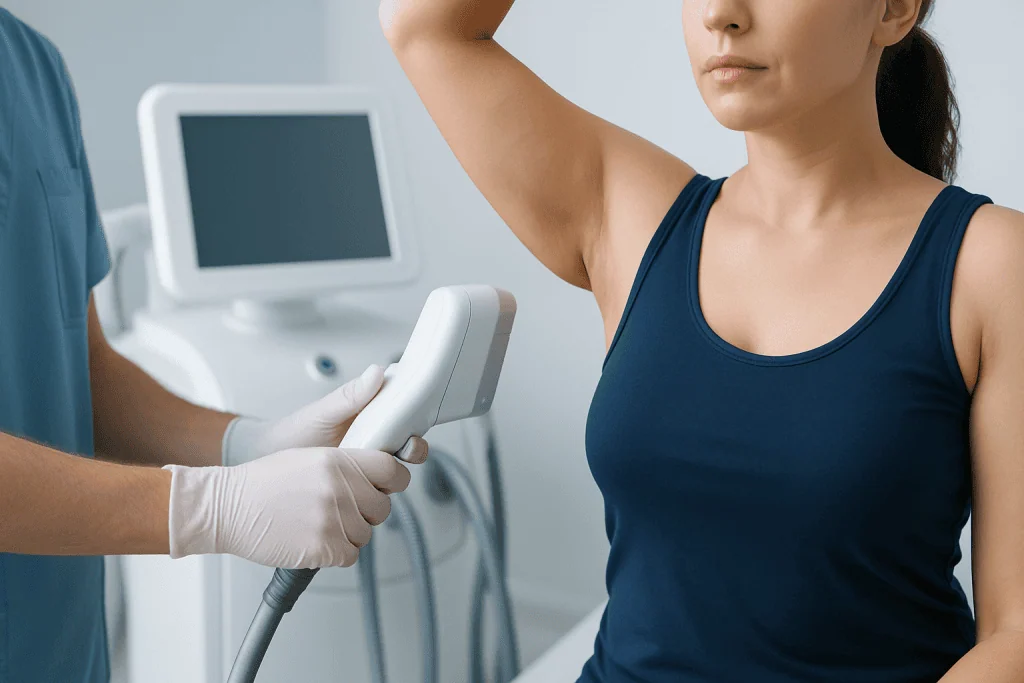
The underarm region, also called the axillary area, is anatomically complex. It contains skin, subcutaneous fat, lymph nodes, sweat glands, and tissues connected to the chest and breast. Because several structures overlap here, even a small increase in tissue can create a noticeable fold or bulge.
In some people, the fullness comes mainly from general body fat. In others, it is influenced more by inherited body shape, loose skin, or breast tissue that extends toward the armpit. Some women and men also have accessory breast tissue, which is extra breast tissue outside the usual breast area and may become more noticeable with hormonal changes or weight gain.
Muscle position can also affect appearance. Rounded shoulders and a forward posture may make skin and soft tissue gather more visibly at the side of the chest. Tight clothing, especially bras with narrow bands or armholes that press into the skin, can accentuate a bulge that is otherwise mild.
Because appearance alone cannot always identify the cause, persistent or unusual underarm fullness may be evaluated alongside breast and skin health. If a doctor suspects a breast-related cause, they may also consider conditions such as breast cancer when appropriate, especially if there is a true lump rather than diffuse soft tissue.
Common causes and contributing factors

Several non-serious factors can contribute to armpit fat. Overall weight gain is one of the most common, since the body stores fat in patterns influenced by genetics and hormones. Some people are more likely to store fat around the chest, upper arms, and underarms even when they are otherwise healthy.
Hormonal changes may play a role, especially during puberty, pregnancy, breastfeeding, and menopause. In these situations, breast and nearby soft tissue can become fuller. Aging can also reduce skin elasticity, which may make natural folds more noticeable even without major weight gain.
Other possible causes of underarm fullness include:
- Accessory breast tissue in the underarm area
- Loose skin after weight loss
- Benign cysts or inflamed sweat glands
- Swollen lymph nodes related to infection or inflammation
- Lipoma, which is a benign fatty lump
- Posture-related skin folding or pressure from clothing
Less commonly, a firm or growing mass in the underarm may be related to a more significant condition. For that reason, it is important not to assume that every underarm bulge is simply fat, especially if it feels different from the surrounding tissue or appears suddenly.
Symptoms and signs that help tell the difference
Typical armpit fat usually feels soft, broad, and similar on both sides, though one side can naturally be a little more prominent. It often changes gradually over time and may become more visible with weight gain, certain arm positions, or tight clothing. There is usually no pain, redness, or distinct hard border.
By contrast, a localized lump may feel firmer, rounder, or more separate from the surrounding tissue. Some people describe tenderness, skin changes, warmth, or a pulling sensation. If accessory breast tissue is present, the area may feel fuller before menstruation or during pregnancy and breastfeeding.
Features that suggest the need for medical review include a new one-sided lump, rapidly increasing size, persistent pain, skin dimpling, discharge from the breast or nearby skin, fever, or swollen lymph nodes. Recurrent boils or inflamed nodules can point toward a skin condition such as hidradenitis suppurativa rather than simple fat.
When symptoms involve numbness, arm swelling, or significant discomfort with movement, a doctor may also look for causes beyond fatty tissue. A careful clinical exam helps distinguish normal tissue from a condition that needs treatment.
How doctors diagnose underarm fullness
Diagnosis begins with a medical history and physical examination. A doctor will ask when the fullness was first noticed, whether it changes with weight or menstrual cycles, and whether there is pain, redness, or a true lump. They may also ask about recent infections, shaving irritation, family history, and any breast-related symptoms.
During the examination, the doctor checks whether the area is soft and diffuse or firm and well-defined. They may examine both underarms, the breasts or chest wall, and nearby lymph nodes. In many cases, the findings are enough to reassure the patient that the fullness is a normal tissue pattern.
If the cause is uncertain, imaging may be recommended. Ultrasound is often useful for evaluating soft tissue lumps and enlarged lymph nodes. Mammography or other breast imaging may be appropriate depending on age, symptoms, and clinical findings. When there is concern about a suspicious lump, referral to a breast specialist or additional testing can be advised.
In selected cases, treatment planning may involve specialists in breast health or radiology to clarify whether the tissue is fatty, glandular, inflammatory, or another type of mass.
Treatment options and what can realistically help
Treatment depends on the underlying cause. If armpit fat is simply part of overall body fat distribution, the main medical advice is usually reassurance, weight management if appropriate, and attention to clothing fit and posture. It is important to know that spot reduction is not possible: exercises can strengthen nearby muscles, but they do not specifically remove fat from only the underarm area.
When overall weight loss occurs through balanced nutrition and regular activity, underarm fullness may decrease along with fat in other parts of the body. Strength training for the chest, back, shoulders, and arms may improve contour and support posture, which can make the area look smoother. However, individual results vary because genetics and skin elasticity also matter.
If the fullness is caused by accessory breast tissue, a lipoma, or persistent excess tissue that causes discomfort or cosmetic concern, a doctor may discuss procedural options. Depending on the exact cause, this could include evaluation by specialists in plastic and reconstructive surgery or breast surgery. The most suitable approach depends on anatomy, skin quality, and whether the tissue is fatty, glandular, or both.
If there is an underlying medical condition, treatment targets that condition rather than the appearance alone. For example, infected sweat glands, cysts, or inflamed nodules need different care from ordinary fatty tissue. A proper diagnosis helps avoid unnecessary treatment and ensures concerning signs are not overlooked.
Self-care, prevention, and body-comfort measures
There is no guaranteed way to prevent armpit fat because body shape is strongly influenced by genetics, age, hormones, and natural fat distribution. Still, some habits may help reduce prominence or improve comfort. Maintaining a healthy weight, staying physically active, and supporting muscle tone across the upper body can be useful for overall contour.
Clothing choices can make a noticeable difference. Well-fitted bras or tops with broader side panels may reduce skin compression and create a smoother outline. Choosing fabrics and cuts that do not dig into the underarm can also improve comfort and appearance without any medical treatment.
Good skin care matters too. Gentle cleansing, avoiding irritation from shaving or friction, and managing sweat can help if the area becomes inflamed easily. People who are prone to painful bumps, recurrent boils, or skin thickening should seek medical advice rather than assuming these changes are due to fat alone.
For individuals who remain concerned despite lifestyle measures, a medical consultation can provide clarity. Near the end of the evaluation pathway, multidisciplinary specialists at Acibadem International and its JCI-accredited hospitals may assess underarm fullness and related breast, skin, or surgical concerns for international patients.
When to seek medical care
Medical care is advisable if a bulge in the armpit is new, one-sided, firm, or clearly separate from the surrounding tissue. It is also important to seek evaluation if there is pain, redness, warmth, drainage, fever, or swelling that does not improve. These features can suggest something other than simple fat.
Prompt assessment is especially important when the underarm change occurs together with a breast lump, skin dimpling, nipple changes, unexplained weight loss, or persistent enlarged lymph nodes. While many causes are benign, a professional examination helps rule out infection, inflammatory conditions, or breast-related problems.
Anyone uncertain about what they are feeling should not rely on appearance alone. A qualified doctor can decide whether reassurance, follow-up, imaging, or specialist referral is the best next step.
Frequently asked questions
Is armpit fat normal?
Yes. In many people, armpit fat is simply a normal combination of body fat, skin folds, and nearby chest or breast tissue. It often reflects anatomy rather than a medical problem.
Can exercise get rid of armpit fat?
Exercise can help reduce overall body fat and improve muscle tone in the chest, shoulders, and upper arms. However, it cannot target fat loss in only the underarm area, because spot reduction is not possible.
Why do I have armpit fat even when I am not overweight?
Body fat distribution varies from person to person and is influenced by genetics, hormones, skin elasticity, and chest shape. Some people naturally have more fullness in the underarm area even at a healthy weight.
Could armpit fat actually be a lump?
Sometimes, yes. What seems like armpit fat may be a lipoma, enlarged lymph node, cyst, accessory breast tissue, or another condition. A doctor should assess any area that feels firm, grows, hurts, or is present on only one side.
Does weight loss always remove armpit fat?
Not always. Weight loss may reduce general fatty tissue, but the degree of change depends on genetics, skin quality, and whether the fullness is caused by fat, glandular tissue, or loose skin. Some fullness may remain even after successful weight management.
When should someone worry about underarm fullness?
Concern is more appropriate when the change is sudden, one-sided, painful, hard, red, or associated with fever or breast symptoms. These features do not necessarily mean something serious, but they do warrant medical evaluation.
References
- Mayo Clinic
- Cleveland Clinic
- American Academy of Dermatology
- American Cancer Society
- National Health Service
This article is for general information only and is not a substitute for professional medical advice. Please consult a qualified doctor about your individual situation.
Medical weight-loss options in Turkey — costs & eligibility
JCI-accredited · board-certified surgeons · reply within 24h
Add us as a Preferred Source to see more of our trusted health content across Google Search, AI Overviews and Discover.
Check your numbers in seconds
BMI, calories, due date, blood pressure and 30+ more clinical calculators — free, instant, doctor-reviewed ranges.

More from the Health Library



Related Specialists

Dr. Ercan Paşaoğlu
Ophthalmology
Dt. Ferah Kuybulu
Oral & Dental Health
Assoc. Prof. Dr. Selin Özaltın
Gynecology & Obstetrics
Dt. Hakan Karagözoğlu
Oral Dental & Maxillofacial Surgery