Armpit Hair: What Patients Need to Know

Armpit hair is a normal result of puberty and varies widely from person to person. It can help reduce friction and may play a role in trapping sweat and skin oils.
Key Takeaways
- Armpit hair is a normal result of puberty and varies widely from person to person.
- It can help reduce friction and may play a role in trapping sweat and skin oils.
- Shaving, waxing, and other hair removal methods can irritate the skin or cause ingrown hairs.
- New rash, pain, lumps, infection, or sudden hair loss in the armpit should be assessed by a doctor.
- Good underarm hygiene and gentle skin care can lower the risk of irritation and odor.
Armpit hair is a normal part of body development and usually does not need treatment. Most concerns relate to grooming, skin irritation, odor, or sudden changes in hair growth that may point to an underlying skin or hormone issue.
Overview: what armpit hair means
Armpit hair is a normal body feature that usually appears during puberty. It develops in response to hormones, especially androgens, and its amount, thickness, color, and growth pattern can differ greatly between individuals. For many people, these differences are simply part of normal genetic variation.
Armpit hair is not harmful by itself. It may help reduce rubbing between the skin surfaces in the underarm and can trap sweat and natural oils produced by nearby glands. Some people choose to keep it, while others remove it for personal, cultural, athletic, or cosmetic reasons.
Most questions about armpit hair are practical rather than medical. Common concerns include odor, shaving bumps, ingrown hairs, darkening of the skin after hair removal, itching, and whether sudden changes in growth are normal. In most cases, simple skin care and grooming adjustments are enough, but some changes deserve medical review.
How armpit hair grows and why it varies

Hair in the armpit grows from follicles in the skin. During puberty, hormonal signals stimulate these follicles to produce thicker, darker terminal hair. This is different from the finer body hair seen in childhood. The timing of growth can vary, and the amount of hair does not reliably reflect overall health, hygiene, or masculinity or femininity.
Genetics strongly influence how much armpit hair a person has. Ethnic background, age, hormone levels, and some medical conditions can also affect growth. Hair may become thinner with aging, after some medical treatments, or in certain endocrine disorders. By contrast, increased body hair growth in multiple areas may sometimes relate to hormonal imbalance.
It is also normal for the two armpits not to look exactly the same. Minor differences in density or growth direction are common. A person should be more alert to changes that are new, clearly one-sided, or associated with redness, pain, scaling, rash, or a lump.
Common concerns: odor, irritation, ingrown hairs, and skin changes
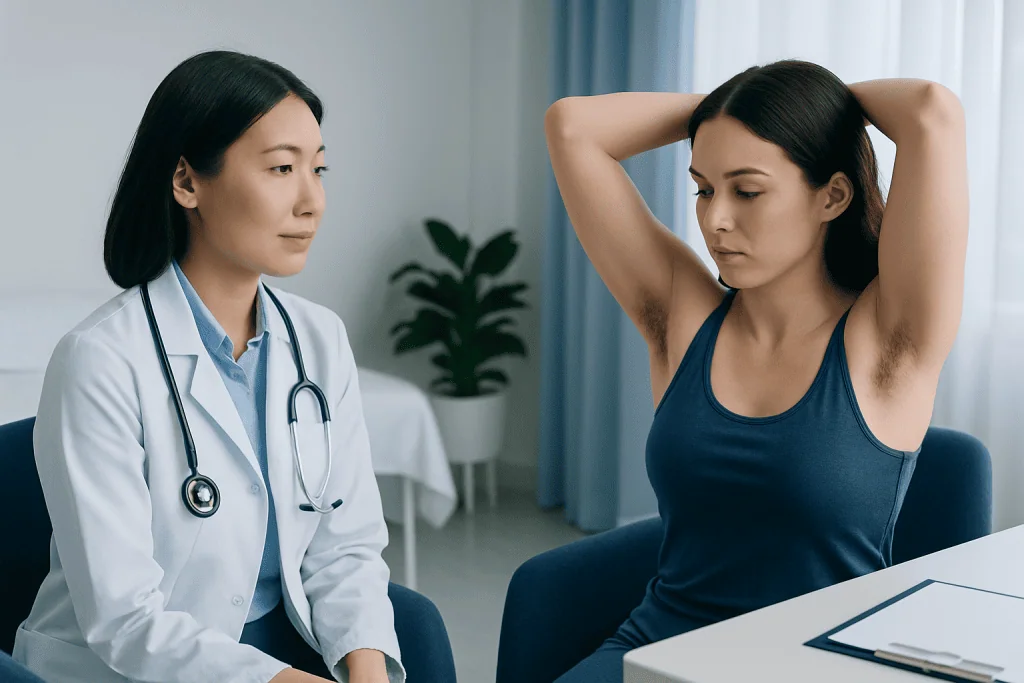
Armpit hair itself does not cause disease, but it can affect how sweat and skin oils sit on the skin. Underarm odor usually happens when sweat interacts with bacteria on the skin surface. Hair may hold moisture longer, which is why some people feel odor is more noticeable when underarm hair is longer. Regular washing and breathable clothing are often enough to manage this.
Another frequent issue is skin irritation from grooming. Shaving can create small cuts and razor burn. Waxing and epilation may irritate follicles, while depilatory creams can trigger burning or contact dermatitis in sensitive skin. Ingrown hairs happen when the hair curls back into the skin, leading to small painful bumps or pustules.
Some people notice darkening of the underarm skin after repeated friction or hair removal. This may be due to post-inflammatory change, irritation, or friction from clothing. In other cases, a velvety dark patch under the arm can suggest a condition such as acanthosis nigricans, which may be linked to insulin resistance and should be assessed by a clinician.
Rashes in the underarm can have several causes, including eczema, fungal infection, bacterial infection, deodorant sensitivity, or inflammatory skin disease. If redness, scaling, drainage, or tenderness keeps returning, a dermatologist may look for conditions such as hidradenitis suppurativa or other skin disorders affecting the hair follicles and sweat glands.
When armpit hair changes may signal a health issue
Most variation in armpit hair is normal, but sudden or unexplained changes can sometimes reflect an underlying problem. New thinning or hair loss may occur with irritation, fungal infection, autoimmune conditions, nutritional problems, thyroid disease, or certain medicines. Hair loss that occurs in patches elsewhere on the body may be associated with alopecia areata.
Unexpectedly increased coarse hair growth, especially if it appears together with acne, irregular periods, scalp hair thinning, or voice changes, may suggest a hormone-related condition. In women, doctors may consider causes such as polycystic ovary syndrome, adrenal disorders, or medication effects. In men and adolescents, the pattern and timing of development can help determine whether the change is within the normal range.
Infection is another reason the underarm may change. Folliculitis can cause tender, pimple-like bumps around hair follicles. More extensive bacterial or fungal infections may lead to redness, swelling, odor, drainage, or pain. A persistent lump, especially if it is enlarging or accompanied by fever or weight loss, needs medical evaluation to rule out infection, inflamed glands, or other causes.
Safe grooming and hair removal options
There is no medical need to remove armpit hair unless a person wants to. If removal is preferred, the safest method often depends on skin sensitivity, hair type, and how long a smooth result is desired. Shaving is quick and inexpensive, but it may need frequent repetition and can cause stubble, irritation, or razor bumps.
Waxing and epilation remove hair from the root and may last longer than shaving, but they can be uncomfortable and may irritate delicate underarm skin. Depilatory creams dissolve the hair shaft, yet they may also cause burning or allergy in some people. Patch testing on a small area first is wise.
For people who want a longer-term reduction, laser hair removal may be considered. It works best after professional assessment of skin and hair type and may require multiple sessions. If repeated grooming causes painful bumps, dark marks, or scarring, a dermatologist can advise on skin-friendly options and whether evaluation by a dermatology specialist would help.
Whatever method is chosen, a few habits can reduce problems:
- Clean the skin gently before grooming.
- Use a clean, sharp razor and shave in the direction of hair growth if prone to irritation.
- Avoid sharing razors or tools.
- Moisturize afterward with a fragrance-free product if the skin tolerates it.
- Wait before applying deodorant if the skin feels freshly irritated.
Hygiene, self-care, and preventing irritation
Good underarm care focuses on skin health rather than hair alone. Washing daily with a mild cleanser can reduce sweat buildup, bacteria, and odor. After exercise or heavy sweating, changing out of damp clothes and drying the area well may help prevent irritation and fungal overgrowth.
Clothing choice can make a difference. Loose, breathable fabrics may reduce friction and heat. People who develop itching or rash should consider whether a deodorant, antiperspirant, soap, or laundry product may be irritating the skin. Fragrance-free products are often better tolerated by sensitive skin.
If ingrown hairs are common, avoiding very close shaving and reducing friction can help. Gentle exfoliation may benefit some people, but harsh scrubbing can worsen inflammation. Recurrent painful nodules, drainage, or scarring are not typical shaving bumps and should be assessed by a clinician.
People with significant sweating may benefit from medical advice if standard antiperspirants are not enough. Depending on the cause, treatment can range from prescription-strength topicals to procedures for excessive sweating, but this should be tailored by a healthcare professional.
How doctors assess armpit hair and related symptoms
A doctor usually begins with a history and skin examination. Important details include when the hair pattern changed, whether symptoms affect one or both armpits, what grooming methods are used, and whether there are associated issues such as itching, pain, odor, drainage, rash, or body hair changes elsewhere.
If a skin disorder is suspected, the clinician may examine the hair follicles, sweat glands, and nearby lymph nodes. In some cases, they may take a swab to look for infection or recommend tests for fungal causes. Blood tests are not needed for routine armpit hair concerns, but they may be useful when symptoms suggest a hormonal, thyroid, metabolic, or nutritional problem.
When excess sweating, recurrent boils, or suspicious skin darkening is present, further evaluation may be appropriate. If there is concern about a growth, persistent lump, or deeper soft-tissue issue, doctors may consider imaging or referral to a relevant specialist. The goal is to identify whether the concern is a simple grooming-related problem or part of a broader condition.
When to seek medical care
Medical attention is sensible if an armpit problem is painful, persistent, or clearly changing. A person should arrange evaluation if there is a new lump, repeated boils, pus, bad-smelling drainage, fever, or redness that spreads. These symptoms can suggest infection or an inflammatory skin condition rather than routine irritation.
It is also important to seek care for sudden patchy hair loss, a rash that does not improve, severe itching, or dark thickened skin under the arm. New excess hair growth together with acne, irregular menstrual cycles, or other hormone-related changes should also be discussed with a doctor.
Many underarm concerns can be assessed by a primary care physician or dermatologist. For international patients who need multidisciplinary evaluation, Acibadem International’s specialists at JCI-accredited hospitals diagnose and treat skin, hormonal, and underarm-related conditions, including support through endocrinology and dermatologic care when appropriate.
Frequently asked questions
Is armpit hair normal?
Yes. Armpit hair is a normal part of puberty and adult body development. The amount and texture vary widely and, by themselves, do not usually indicate a health problem.
Does armpit hair cause body odor?
Armpit hair does not directly cause odor, but it can hold sweat and skin oils close to the skin. Odor usually develops when sweat mixes with bacteria, so regular washing and suitable deodorant or antiperspirant use can help.
Why do I get bumps after shaving my underarms?
Small bumps often come from razor irritation, ingrown hairs, or mild folliculitis. Using a clean razor, shaving gently, and avoiding very close shaving may reduce this problem. If the bumps are painful, draining, or keep returning, medical assessment is a good idea.
Can armpit hair suddenly fall out?
It can, but sudden hair loss is not always normal. Skin irritation, fungal infection, autoimmune hair loss, thyroid problems, and some medications may contribute. A doctor can help determine the cause, especially if there is rash, scaling, or hair loss elsewhere.
Is it better to shave, wax, or use laser hair removal?
There is no single best option for everyone. Shaving is simple but may irritate the skin, waxing lasts longer but can be uncomfortable, and laser hair removal may offer longer-term reduction after professional evaluation. The best choice depends on skin sensitivity, hair type, budget, and personal preference.
When should dark skin under the armpit be checked?
Darkening should be assessed if it is new, thickened, velvety, itchy, or spreading. Sometimes it is only irritation after shaving or friction, but it can also be linked to skin inflammation or metabolic conditions such as insulin resistance.
This article is for general information only and is not a substitute for professional medical advice. Please consult a qualified doctor about your individual situation.
Hair transplant in Turkey — costs, graft counts & a free assessment
JCI-accredited · board-certified surgeons · reply within 24h
Add us as a Preferred Source to see more of our trusted health content across Google Search, AI Overviews and Discover.

More from the Health Library

Double Jointed Elbows — Explained by Medical Evidence, Not Myths

Fluorouracil Cream: An Evidence-Based Guide for Patients

Tongue Stitches — Explained by Medical Evidence, Not Myths

Lateral Malleolus — Explained by Medical Evidence, Not Myths

Celery Juice: An Evidence-Based Guide for Patients