Arms Fitness: What Patients Need to Know

Arms fitness includes strength, endurance, flexibility, coordination, and shoulder health. A balanced routine should train biceps, triceps, forearms, shoulders, and upper back together.
Key Takeaways
- Arms fitness includes strength, endurance, flexibility, coordination, and shoulder health.
- A balanced routine should train biceps, triceps, forearms, shoulders, and upper back together.
- Good form, gradual progression, and recovery time help lower the risk of strain or overuse injuries.
- Pain, swelling, numbness, or sudden weakness during or after exercise should not be ignored.
- People with joint disease, past injuries, or chronic medical conditions may benefit from tailored exercise advice.
Arms fitness is not only about stronger or more toned arms. It also includes joint mobility, muscle balance, safe technique, and knowing when arm symptoms may need medical attention.
Overview: what arms fitness really means
Arms fitness refers to the healthy function of the arms during daily life, exercise, work, and sports. It includes muscle strength, muscular endurance, range of motion, coordination, and the ability of the shoulders, elbows, wrists, and hands to work together without pain. For many people, the goal is not just appearance, but safer movement and better physical function.
A patient-friendly way to think about arms fitness is this: strong arms should also be mobile, balanced, and comfortable to use. Training only one area, such as the biceps, may create imbalance if the triceps, shoulder stabilizers, and upper back are neglected. A more complete approach supports lifting, carrying, pushing, pulling, posture, and independence in everyday tasks.
Arms fitness can look different from one person to another. A younger adult may focus on sports performance, while an older adult may aim to preserve grip strength, prevent falls, and make household activities easier. After illness or injury, arms fitness may also involve rehabilitation and gradual return to normal activity.
Why arm strength and mobility matter for health
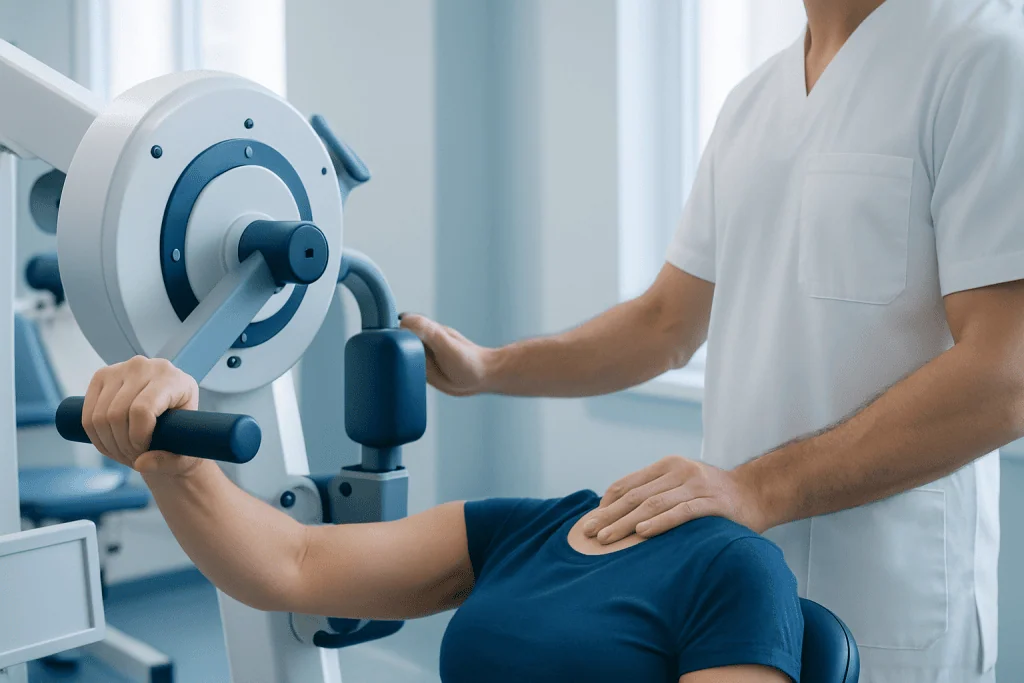
Healthy arm function supports many routine movements, including dressing, cooking, lifting bags, opening containers, reaching overhead, and pushing up from a chair. Stronger upper limbs can also improve exercise capacity, support better posture, and reduce unnecessary strain on the neck and lower back.
Mobility is just as important as strength. If a person has stiff shoulders or limited elbow motion, even simple tasks may become uncomfortable. Restricted movement can lead to compensation patterns, where other muscles work harder than they should. Over time, this may contribute to pain in the shoulder, neck, or upper back.
Arms fitness may be especially important for people who spend long hours at a computer, perform repetitive manual tasks, or take part in racket sports, swimming, climbing, or weight training. In these settings, balanced conditioning may help protect the joints and soft tissues from overuse.
For some patients, reduced arm strength can also be linked to a broader medical issue rather than lack of exercise alone. Persistent weakness, limited movement, or repeated pain may need assessment for tendon, joint, nerve, or spine problems such as shoulder impingement syndrome.
What a balanced arms fitness routine includes

A balanced arms fitness routine usually trains several muscle groups together. These include the biceps on the front of the upper arm, the triceps on the back of the upper arm, the forearm muscles that support grip and wrist control, and the shoulder and upper back muscles that stabilize the arm during movement. Focusing on only one muscle group may increase the chance of imbalance and discomfort.
Most healthy adults benefit from combining resistance exercise with flexibility and movement control work. Resistance may come from body weight, resistance bands, machines, free weights, or supervised therapeutic exercise. Mobility work can include gentle stretching, shoulder circles, wall slides, and range-of-motion drills. Control-based exercises support joint stability and help the body move efficiently.
A practical arms fitness plan often includes:
- Pushing movements such as wall push-ups or chest press
- Pulling movements such as rows or band pulls
- Elbow bending and straightening exercises for biceps and triceps
- Grip and forearm training
- Shoulder stabilization and upper back strengthening
- Gentle stretching after exercise or on recovery days
Progress should be gradual. Many people do well starting with light resistance and controlled repetitions two to three times per week, allowing time for recovery between sessions. Technique matters more than heavy loads, especially for beginners, older adults, or anyone returning after injury.
Common mistakes, overuse patterns, and warning signs
One of the most common mistakes in arms fitness is doing too much, too soon. Sudden increases in weight, repetitions, or training frequency can overload muscles and tendons before they have adapted. Another frequent issue is poor form, especially when the shoulders roll forward, the wrists bend awkwardly, or momentum is used to lift weight.
Overuse may affect the shoulder, elbow, wrist, or hand. Patients may notice aching after workouts, tenderness around a tendon, clicking, reduced range of motion, or pain during gripping or reaching overhead. Some people develop irritation around the rotator cuff or elbow tendons, while others experience nerve-related symptoms such as tingling or numbness.
It can help to distinguish normal exercise soreness from symptoms that deserve more attention. Mild muscle soreness that appears a day or two after a new workout and then improves is common. In contrast, sharp pain, swelling, bruising, sudden loss of strength, joint instability, or symptoms that do not improve with rest are not typical training effects.
When arm discomfort is ongoing, an evaluation may be useful to check for conditions affecting the shoulder, tendons, or nearby nerves. Depending on the findings, a clinician may recommend imaging, rehabilitation, or treatment aimed at pain control and recovery, such as physical therapy and rehabilitation.
Who should take extra care before starting arm exercise
Many people can begin simple arm exercises safely, but some should be more cautious. Extra care is sensible for those with previous fractures, tendon injuries, shoulder dislocation, arthritis, chronic neck pain, osteoporosis, diabetes with nerve symptoms, or recent surgery. People with heart or lung disease may also need guidance if they are starting a broader fitness program.
Older adults may benefit from supervised progression because age-related changes can affect muscle mass, balance, and joint comfort. Children and teenagers who train for sports should focus on technique and appropriate loads rather than heavy resistance for appearance goals. Pregnant individuals can often remain active, but exercise plans may need adjustment depending on symptoms and overall health.
Patients with known shoulder or arm disorders should not assume that pain is simply part of getting stronger. Conditions such as tendon irritation, frozen shoulder, or neck-related nerve compression may need targeted management. In some cases, an orthopedic or rehabilitation specialist can suggest safer movement patterns and individualized exercises.
If the main problem is loss of movement, pain when lifting the arm, or repeated strain with reaching, a doctor may assess the shoulder joint and surrounding tissues. For certain patients, care may involve orthopedic rehabilitation or broader evaluation within orthopedic care.
How doctors evaluate arm pain, weakness, or limited movement
Medical evaluation starts with the history. A doctor will usually ask when symptoms began, whether there was an injury, which movements cause discomfort, and whether there are associated symptoms such as swelling, numbness, neck pain, fever, or weakness. They may also ask about work demands, sports, medications, and previous joint or nerve problems.
The physical examination may include checking posture, shoulder alignment, range of motion, muscle tenderness, grip strength, reflexes, and sensation. Specific movement tests can help identify whether the problem is more likely related to muscle strain, tendon irritation, joint inflammation, or nerve involvement. Examining the neck is often important because some arm symptoms begin higher up in the spine.
Not every patient needs imaging. However, tests may be considered if there has been trauma, persistent symptoms, suspected tendon tear, major weakness, or concern about arthritis or another structural problem. Depending on the situation, doctors may use X-ray, ultrasound, or MRI. Nerve studies can sometimes help when tingling or unexplained weakness is present.
The goal of assessment is not just to name the problem, but to understand what is limiting function. Once this is clear, treatment can be tailored to pain relief, tissue healing, restoration of movement, and safer return to activity.
Treatment, prevention, and self-care for better arms fitness
Treatment depends on the cause of symptoms. For minor strain or overuse, first-line care often includes temporary activity modification, relative rest, ice or heat as appropriate, and a gradual return to exercise once pain settles. A clinician may also recommend supervised strengthening, stretching, posture work, and changes to exercise technique. Pain that comes from the shoulder or upper limb sometimes improves with guided exercise more than with complete inactivity.
Prevention begins with planning. Warm up before training, use proper form, and increase resistance gradually rather than abruptly. It is also helpful to balance pushing and pulling exercises, train the upper back and shoulder stabilizers, and allow at least some recovery time between harder sessions. Good sleep, hydration, and adequate nutrition support muscle repair and general fitness.
People who work at desks or perform repetitive tasks may reduce strain by improving ergonomics, taking regular movement breaks, and varying hand and arm positions. If a person has a long-term condition such as arthritis or a past injury, a physiotherapist or physician can adapt exercises so that the program remains safe and realistic.
When symptoms do not improve, specialist care may be useful. In selected cases, treatment can include structured rehabilitation, injections, or surgery for significant structural injury. Acibadem International’s multidisciplinary specialists and JCI-accredited hospitals diagnose and treat arm, shoulder, and musculoskeletal conditions for international patients.
When to seek medical care
A person should consider medical advice if arm pain lasts more than a few days despite rest, keeps returning with exercise, or interferes with sleep, work, or normal daily activities. Assessment is also reasonable if there is persistent stiffness, a clear drop in strength, or difficulty lifting the arm overhead.
More urgent care is important after a fall, sports injury, or sudden force if there is severe pain, obvious deformity, rapid swelling, marked bruising, or inability to move the arm normally. Numbness, tingling, or weakness that appears suddenly should also be assessed promptly, especially if it affects the hand grip.
Immediate medical attention is needed if arm symptoms occur with chest pressure, shortness of breath, fainting, or sudden sweating, because these symptoms can reflect a serious medical problem rather than a simple exercise injury. Fever, redness, and warmth around a joint also deserve timely evaluation.
Seeking care does not always mean stopping all activity for a long period. In many cases, the purpose of evaluation is to identify what is safe to continue, what should be modified, and how to return to healthy arms fitness with less discomfort and lower risk.
Frequently asked questions
What does arms fitness mean?
Arms fitness means more than having stronger or more defined arms. It includes muscle strength, endurance, flexibility, coordination, and healthy movement in the shoulders, elbows, wrists, and hands.
How often should a person train the arms?
For many healthy adults, arm exercises two to three times per week can be enough when combined with rest days. The exact schedule depends on age, overall fitness, exercise intensity, and whether the person is recovering from an injury.
Is soreness after arm exercise normal?
Mild muscle soreness after a new or harder workout can be normal and often improves within a couple of days. Sharp pain, swelling, bruising, numbness, or weakness is different and should not be dismissed as routine soreness.
Can arm exercises help with daily activities?
Yes. Better arm strength and mobility can support lifting, carrying, reaching, pushing, pulling, and maintaining independence in daily life. Balanced training may also improve posture and make repetitive tasks feel easier.
Should people with shoulder pain avoid all arm exercise?
Not always. Some shoulder problems improve with carefully chosen exercises, while others need temporary rest or a modified program. A doctor or physiotherapist can help decide which movements are safe and which should be avoided.
When should arm weakness be checked by a doctor?
Arm weakness should be assessed if it is sudden, progressive, affects daily function, or happens with pain, numbness, or neck symptoms. It is especially important to seek prompt care after an injury or if weakness appears without a clear reason.
References
- World Health Organization
- American College of Sports Medicine
- Centers for Disease Control and Prevention
- National Institute of Arthritis and Musculoskeletal and Skin Diseases
- American Academy of Orthopaedic Surgeons
This article is for general information only and is not a substitute for professional medical advice. Please consult a qualified doctor about your individual situation.
Joint and spine care in Turkey — expert assessment & treatment
JCI-accredited · board-certified surgeons · reply within 24h
Add us as a Preferred Source to see more of our trusted health content across Google Search, AI Overviews and Discover.

More from the Health Library

Scaphoid Fracture: A Complete Medical Overview

Healthiest Milk — Explained by Medical Evidence, Not Myths

Exfoliating Gloves: An Evidence-Based Guide for Patients

Smoker Lips: What Patients Need to Know

Thyroid Test: An Evidence-Based Guide for Patients