

Scaphoid Fracture: A Complete Medical Overview

A scaphoid fracture usually causes pain and tenderness on the thumb side of the wrist after a fall or sports injury. This injury can be missed at first because swelling may be limited and initial X-rays are sometimes normal.
Key Takeaways
- A scaphoid fracture usually causes pain and tenderness on the thumb side of the wrist after a fall or sports injury.
- This injury can be missed at first because swelling may be limited and initial X-rays are sometimes normal.
- Treatment depends on where the bone is broken and whether the pieces have moved out of place.
- Early diagnosis helps lower the risk of nonunion, delayed healing, and reduced wrist function.
- Ongoing pain after a wrist injury should be assessed by a qualified doctor, even if the injury seems minor.
A scaphoid fracture is a break in one of the small wrist bones on the thumb side of the hand, often caused by a fall onto an outstretched hand. Because symptoms can be mild and early X-rays may look normal, prompt medical evaluation is important to support healing and reduce the risk of long-term wrist problems.
Overview
A scaphoid fracture is a break in the scaphoid, a small bone in the wrist located near the base of the thumb. It helps connect the two rows of wrist bones and plays an important role in wrist stability and motion. This injury most often happens after a fall onto an outstretched hand, but it can also occur during sports, cycling, or other activities that place sudden force through the wrist.
One reason scaphoid fractures deserve attention is that they can be difficult to recognize. The wrist may not look badly injured, swelling can be mild, and pain may seem manageable at first. In some cases, standard X-rays done soon after the injury do not clearly show the break, so the fracture may be overlooked unless symptoms and examination findings are carefully considered.
The exact location of the fracture matters. The scaphoid has a limited blood supply, especially in the part closer to the forearm, called the proximal pole. When a fracture affects this area, healing may take longer and the risk of complications can be higher. This is why an accurate diagnosis and a treatment plan tailored to the fracture pattern are especially important.
Signs and Symptoms
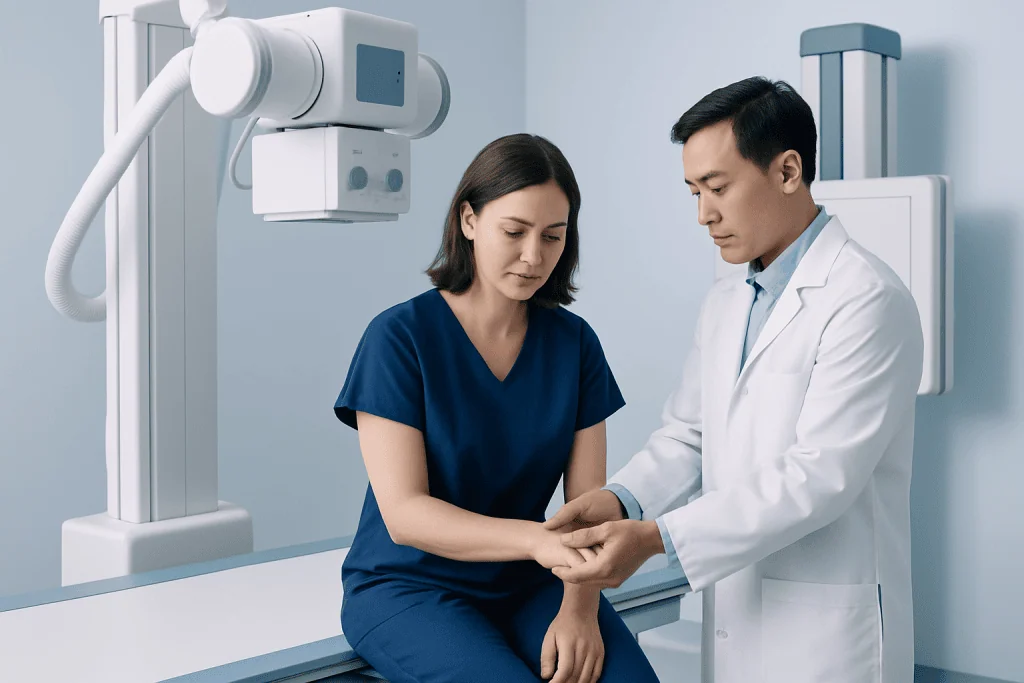
The most common symptom of a scaphoid fracture is pain on the thumb side of the wrist, especially after a fall or direct impact. Many people notice tenderness in the small hollow at the base of the thumb, sometimes called the anatomical snuffbox. The wrist may hurt more when gripping, pinching, pushing up from a chair, or trying to move the thumb and wrist together.
Swelling may be present, but it is not always dramatic. Some people have bruising, reduced grip strength, or stiffness. Others continue using the hand because the pain feels moderate rather than severe. That can make this injury seem like a simple sprain when it is actually a bone fracture.
Symptoms can vary depending on the fracture location and whether the bone fragments have shifted. In some cases, pain improves slightly after the first few days, which may create a false sense of recovery. Persistent tenderness, pain with wrist motion, or ongoing difficulty using the hand should raise concern for a possible scaphoid injury.
- Pain near the base of the thumb
- Tenderness in the snuffbox area
- Swelling or mild bruising
- Pain with gripping or lifting
- Reduced wrist motion or grip strength
Causes and Risk Factors

The classic cause of a scaphoid fracture is a fall onto an outstretched hand. During the fall, the wrist bends backward and force travels through the palm toward the thumb side of the wrist. This mechanism is common in contact sports, skateboarding, skiing, cycling, and everyday slips or trips. Motor vehicle accidents and workplace injuries can also cause this type of fracture.
Younger and physically active adults are affected more often because they are more likely to participate in activities involving speed, falls, or repeated wrist loading. However, anyone can develop a scaphoid fracture after enough force. Having a prior wrist injury, poor protective equipment use during sports, or taking part in high-impact recreation may increase risk.
Scaphoid fractures are part of a wider group of wrist injuries that may also involve ligaments, tendons, or nearby bones. In some cases, the injury may occur alongside a more general hand and wrist injury. Because several structures are packed closely together in the wrist, a complete medical assessment helps identify whether the problem is an isolated fracture or part of a more complex injury pattern.
How a Scaphoid Fracture Is Diagnosed
Diagnosis begins with a clinical history and physical examination. A doctor will ask how the injury happened, where the pain is located, and whether the hand can still be used. On examination, tenderness over the scaphoid, pain with certain wrist movements, and discomfort when pressure is applied through the thumb can all suggest a fracture.
Imaging is usually needed to confirm the diagnosis. Standard wrist X-rays are often the first test, but small or nondisplaced scaphoid fractures may not be visible immediately after the injury. If symptoms strongly suggest a fracture despite a normal X-ray, the wrist may be immobilized and repeat imaging may be arranged after a short interval.
Advanced imaging can be very helpful when the diagnosis is uncertain or when treatment planning requires more detail. Depending on the clinical situation, a doctor may recommend MRI to detect an occult fracture early or CT scan to assess the exact fracture line, displacement, or signs of healing. These tests can help avoid delays in treatment and guide whether casting or surgery is more appropriate.
Treatment Options
Treatment depends on the location of the fracture, whether the bone fragments are aligned, how stable the injury is, and the person’s activity needs. Many nondisplaced scaphoid fractures can heal with immobilization in a cast or splint. The wrist is typically kept still for several weeks, and follow-up imaging may be used to check how healing is progressing.
Fractures that are displaced, unstable, involve the proximal pole, or fail to heal as expected may need surgery. Surgical treatment usually aims to realign the bone and hold it in place with internal fixation. In selected cases, especially if blood supply is affected or healing is delayed, a bone graft procedure may be considered. These decisions are often made within the field of orthopedics after reviewing imaging and wrist function.
Pain control, hand elevation in the early period, and avoiding smoking are also important because smoking may impair bone healing. Once the bone is stable enough, rehabilitation can help restore motion, strength, and coordination. Depending on the injury, a doctor may also recommend physical therapy and rehabilitation to improve function and support a safe return to work, sport, or daily activities.
Healing, Recovery, and Possible Complications
Recovery time varies. A simple fracture in a favorable location may heal in a matter of weeks to a few months, while a fracture in the proximal part of the scaphoid can take longer. Healing is monitored with symptoms, examination, and sometimes repeat imaging. It is important not to return to heavy use too soon, even if pain begins to improve.
Most people recover well with timely care, but complications can occur. Delayed union means the fracture is taking longer than expected to heal. Nonunion means the bone ends have not healed together. Because the scaphoid has a delicate blood supply, some fractures may also lead to avascular necrosis, where part of the bone does not receive enough blood and may weaken over time.
If a scaphoid fracture is missed or left untreated, long-term wrist stiffness, reduced grip strength, and arthritis can develop. This is one reason persistent pain after a fall should not be ignored. Careful follow-up helps detect healing problems early and gives the best chance of preserving normal wrist movement and comfort.
Self-care and Prevention
Immediately after a wrist injury, resting the hand, applying a wrapped ice pack, and elevating the wrist may help reduce pain and swelling. However, home care should not replace medical assessment if there is ongoing pain near the base of the thumb, weakness, or difficulty using the hand. A wrist that seems only mildly injured can still have a scaphoid fracture.
During recovery, the most important self-care step is following the treatment plan closely. Cast or splint instructions should be followed carefully, and follow-up appointments should not be skipped. People should avoid removing immobilization devices unless they have been told it is safe to do so. Activities that load the wrist too early can interfere with bone healing.
Prevention focuses on reducing the chance of falls and wrist trauma. Supportive sports gear, safe technique, handrails, slip-resistant footwear, and attention to environmental hazards can all help. Building strength, balance, and coordination may also reduce injury risk, particularly for athletes and older adults.
When to Seek Medical Care
Medical care should be sought promptly after a fall or impact if there is pain on the thumb side of the wrist, tenderness at the base of the thumb, swelling, or trouble gripping objects. It is especially important to be examined if the wrist pain continues beyond a day or two, or if daily tasks become difficult. Even when an injury seems mild, assessment is worthwhile because this fracture can be hard to spot without imaging.
Urgent evaluation is also sensible if the wrist looks deformed, numbness develops, the hand becomes cold or pale, or pain is severe. Follow-up is important if symptoms persist after an initially normal X-ray. In such situations, further examination and imaging may be needed to confirm or rule out a hidden fracture.
For people who need specialist assessment, multidisciplinary teams can evaluate wrist injuries and plan appropriate care. Acibadem International’s JCI-accredited hospitals support international patients through diagnosis and treatment by experienced specialists in bone and joint conditions.
Frequently asked questions
Can a scaphoid fracture be mistaken for a wrist sprain?
Yes. A scaphoid fracture may cause only mild swelling and moderate pain, so it can look like a simple sprain at first. Because early X-rays may also miss some fractures, ongoing tenderness near the base of the thumb should be checked by a doctor.
How long does a scaphoid fracture take to heal?
Healing time varies depending on where the bone is broken and whether the fracture is stable. Some fractures heal in several weeks, while others take a few months or longer. Fractures closer to the forearm often heal more slowly because the blood supply is less robust.
Will every scaphoid fracture need surgery?
No. Many nondisplaced fractures can heal well with immobilization in a cast or splint. Surgery is more often considered when the fracture is displaced, unstable, in a high-risk location, or not healing properly.
Why is early diagnosis so important?
Early diagnosis helps protect the bone while it heals and reduces the risk of complications. If treatment is delayed, the fracture may heal slowly, fail to heal, or contribute to long-term wrist stiffness and arthritis.
Can a normal X-ray rule out a scaphoid fracture?
Not always. Some scaphoid fractures are not visible on the first X-ray taken soon after injury. If symptoms strongly suggest this injury, a doctor may recommend immobilization and repeat imaging or more detailed tests such as MRI or CT.
What should someone avoid during recovery?
It is usually important to avoid heavy lifting, sports, and activities that stress the wrist until a doctor confirms healing. People should also avoid removing a cast or splint without guidance. Smoking should be avoided because it may interfere with bone repair.
This article is for general information only and is not a substitute for professional medical advice. Please consult a qualified doctor about your individual situation.
Joint and spine care in Turkey — expert assessment & treatment
JCI-accredited · board-certified surgeons · reply within 24h
Add us as a Preferred Source to see more of our trusted health content across Google Search, AI Overviews and Discover.

More from the Health Library

Subacute Cutaneous Lupus — Explained by Medical Evidence, Not Myths

Cetearyl Alcohol: An Evidence-Based Guide for Patients
Genicular Artery Embolization: A Complete Medical Overview

Turbid Urine — Explained by Medical Evidence, Not Myths

Beau’s Lines: What Patients Need to Know

Ripe Avocado: An Evidence-Based Guide for Patients
Orthopedic Surgery & Traumatology Specialists at Acibadem

Prof. Dr. Arel Gereli
Orthopedic Surgery & Traumatology
Fzt. Asım Sakallı
Physical Medicine & Rehabilitation
Fzt. Aslı Hacıoğlu
Physical Medicine & Rehabilitation
Assoc. Prof. Dr. Ata Can
Orthopedic Surgery & Traumatology