Arthritis in Elbows Treatment: How It Works, Results and What to Expect

Arthritis in the elbow may result from osteoarthritis, inflammatory arthritis, past injury or joint infection. Activity changes, physiotherapy, pain-relieving medicines and injections can help many people manage symptoms.
Key Takeaways
- Arthritis in the elbow may result from osteoarthritis, inflammatory arthritis, past injury or joint infection.
- Activity changes, physiotherapy, pain-relieving medicines and injections can help many people manage symptoms.
- Surgery may be considered for persistent pain, loose bodies, severe stiffness or advanced joint damage.
- Recovery depends on the procedure, the health of the joint and commitment to rehabilitation.
- New warmth, redness, fever, sudden swelling or inability to move the elbow needs prompt medical assessment.
Arthritis in the elbow can cause pain, stiffness, clicking and reduced ability to bend, straighten or rotate the arm. Treatment usually begins with non-surgical measures and may progress to a procedure when symptoms continue to limit daily activities.
Overview: How arthritis in elbows treatment works
Arthritis in elbows treatment aims to reduce pain, preserve or restore movement, and help a person use the arm more comfortably in everyday life. The best approach depends on the type of arthritis, the extent of cartilage damage, whether there are bone spurs or loose fragments in the joint, and how much symptoms affect work, self-care, sport and sleep.
The elbow is a complex joint that allows bending and straightening as well as rotation of the forearm. Although elbow arthritis is less common than arthritis of the knee or hip, it can be particularly limiting because even a modest loss of motion may affect dressing, eating, lifting and reaching.
Most people begin with non-surgical treatment. If pain, locking, stiffness or loss of function remains significant despite appropriate care, an orthopedic specialist may discuss procedures ranging from minimally invasive joint cleaning to joint replacement in selected cases.
Can anything be done for arthritis in the elbow?
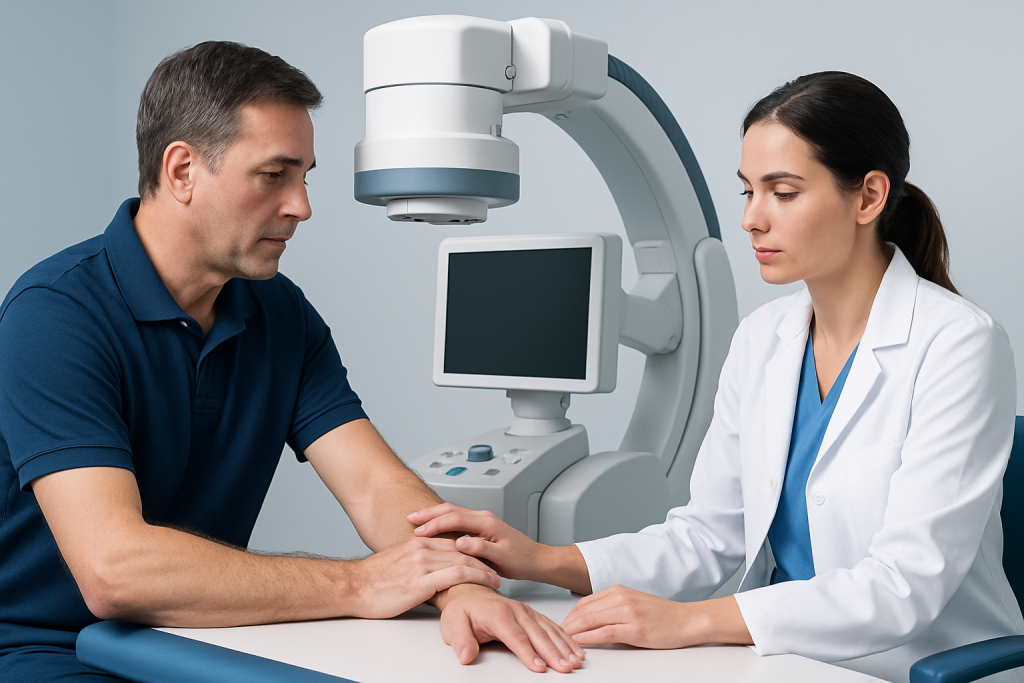
Yes. There are several options for arthritis in the elbow, and treatment is tailored rather than identical for every person. A clinician will first determine whether symptoms are due to wear-related osteoarthritis, rheumatoid arthritis or another inflammatory condition, an old fracture or dislocation, crystal arthritis such as gout, or a less common cause.
For mild to moderate symptoms, a combination of activity adjustment, strengthening and mobility exercises, supportive bracing when appropriate, and carefully selected medicines may provide meaningful relief. Managing an underlying inflammatory condition with a rheumatology team can also help protect the elbow and other joints.
When mechanical problems such as loose pieces of bone or cartilage, prominent bone spurs, or advanced joint damage are present, a procedure may improve pain and movement. The goal is not always to make the joint completely normal; it is to achieve the best possible function with a treatment plan suited to the individual.
Causes, symptoms and candidacy for treatment

Primary elbow osteoarthritis is often associated with years of repetitive heavy use, including certain manual occupations and sports. Post-traumatic arthritis can develop years after an elbow fracture, dislocation or ligament injury. Rheumatoid arthritis and other inflammatory diseases can damage the joint lining and cartilage, while previous infection may also lead to arthritis.
Common symptoms include pain at the end of bending or straightening, stiffness, swelling, grinding or clicking, and a feeling that the joint catches or locks. Some people notice tingling in the ring and little fingers because swelling or bone changes can irritate the ulnar nerve near the elbow.
A person may be a candidate for a procedure when symptoms remain disruptive after a suitable period of conservative care, imaging shows a treatable structural problem, or the elbow has marked loss of motion, frequent locking or progressive deformity. General health, bone quality, activity requirements, nerve symptoms and the ability to participate in rehabilitation are all considered before surgery is recommended.
What do you do for arthritis in the elbow?
Initial care commonly includes reducing activities that repeatedly overload the joint while maintaining safe movement. A physiotherapist can guide exercises that support mobility, strength and shoulder-wrist function without provoking symptoms. Heat or cold may provide short-term comfort for some people, and a brace can sometimes reduce strain during selected tasks.
A doctor may recommend pain-relieving medicines or anti-inflammatory medicines when they are medically suitable. These medicines are not appropriate for everyone, particularly people with certain kidney, stomach, heart, bleeding or medication-related risks, so individual advice is important. Injections may be considered for temporary symptom relief in some circumstances, but their expected benefit and limitations should be discussed clearly.
If inflammatory arthritis is present, treatment may include disease-modifying medicines prescribed by a rheumatology specialist to control the disease process. For a broad overview of inflammatory joint disease, readers may find rheumatoid arthritis information helpful. Persistent mechanical symptoms or substantial joint damage should be assessed by an orthopedic surgeon with elbow expertise.
- Arthroscopy: small instruments and a camera may be used to remove loose bodies, trim damaged tissue, clear bone spurs and improve motion.
- Open debridement or osteophyte removal: may be used when bone spurs or stiffness are more extensive.
- Interposition arthroplasty: in selected patients, tissue may be placed between joint surfaces to reduce bone-on-bone contact.
- Total elbow replacement: may be considered for severe arthritis, often when pain and disability are substantial and other procedures are unlikely to help.
Procedure pathway: step by step, benefits and risks
Before a procedure, the orthopedic team reviews symptoms, medical history, medicines and previous injuries. Examination assesses elbow motion, stability, strength and nerve function. X-rays are usually used to show joint-space changes, bone spurs or deformity; CT or MRI may be helpful in selected cases. Blood tests or joint-fluid testing may be needed when infection, gout or inflammatory arthritis is suspected.
On the day of surgery, anesthesia is planned according to the procedure and the person’s health. During arthroscopy, small incisions allow the surgeon to inspect the joint and address loose fragments or impinging bone. Open procedures use a larger incision to access and reshape affected areas or reconstruct the joint. In elbow replacement, damaged joint surfaces are removed and replaced with implanted components designed to restore alignment and movement.
Potential benefits include less pain, fewer catching episodes and improved ability to move the arm. However, results vary with the type and severity of arthritis. Risks can include infection, bleeding, stiffness, nerve irritation or injury, wound problems, blood clots, persistent pain, instability and the need for further surgery. Implants may loosen, wear or become infected over time, and elbow replacement usually involves permanent limits on heavy lifting.
These decisions should be made after an individualized discussion of expected benefits, alternatives and risks. Acibadem International’s multidisciplinary specialists and JCI-accredited hospitals diagnose and treat elbow conditions for international patients.
Recovery timeline and self-care after treatment
Recovery differs significantly between non-surgical treatment, arthroscopy, open surgery and joint replacement. After a minor arthroscopic procedure, gentle movement may begin relatively early if the surgeon advises it, while swelling and soreness can take several weeks to settle. More extensive procedures may require a splint or brace initially and a longer, structured rehabilitation program.
Physiotherapy is often an important part of recovery. It may focus on gradually restoring bending, straightening and forearm rotation, then improving strength and safe use of the arm. Attending follow-up appointments helps the team monitor wound healing, motion, pain control and any signs of nerve irritation or infection.
After elbow replacement, protecting the implant is essential. The care team will explain activity and lifting restrictions, which may be long term. People should avoid returning to strenuous work, contact sport or heavy lifting until their surgeon says it is safe. A realistic recovery plan considers the dominant arm, home support, work duties and personal goals.
What happens if elbow arthritis goes untreated?
Untreated elbow arthritis does not always worsen quickly, and some people have stable, manageable symptoms for long periods. However, pain and stiffness may gradually increase, leading to reduced use of the arm and difficulty with everyday tasks. Repeated catching or locking can be especially disruptive when loose bodies or bone spurs are present.
Reduced movement can contribute to loss of strength and further stiffness. In inflammatory arthritis, uncontrolled inflammation may damage the joint progressively and can affect other joints or organs, making timely rheumatology care important. If the cause is infection, urgent treatment is needed because joint infection can damage the elbow rapidly.
Seeking assessment does not mean surgery is inevitable. It allows the cause to be identified, symptoms to be managed early and an appropriate monitoring plan to be made.
What is the prognosis for arthritis in the elbow and when to seek medical care
The prognosis for arthritis in the elbow depends on its cause, severity and response to treatment. Many people control symptoms with a combination of activity modification, rehabilitation and medical care. When surgery is appropriate, it can improve pain and function, although full movement may not return and arthritis-related changes may continue in some situations.
Medical assessment is advisable for elbow pain that persists, interferes with daily activities, causes repeated locking, or is associated with reduced range of motion, numbness or weakness in the hand. An appointment is also appropriate after an injury, especially if the elbow looks deformed or cannot be moved normally.
Urgent medical care is needed for a hot, red and markedly swollen elbow, fever, severe pain that develops suddenly, an open wound near the joint, or new severe weakness or loss of sensation. These features can indicate infection, a fracture, nerve involvement or another condition requiring prompt evaluation.
Frequently asked questions
Can arthritis in the elbow be cured?
Most forms of elbow arthritis cannot be fully reversed once cartilage damage has occurred. However, symptoms can often be managed effectively, and treatment may improve comfort, movement and daily function. The underlying cause, such as inflammatory arthritis or an old injury, influences the treatment plan.
Is surgery always needed for elbow arthritis?
No. Many people improve with non-surgical approaches such as activity changes, physiotherapy, medicines and treatment of any underlying inflammatory disease. Surgery is generally considered when pain, stiffness, locking or disability remains significant despite appropriate conservative care.
How long does it take to recover from elbow arthritis surgery?
Recovery varies by procedure and individual factors. Less invasive arthroscopic procedures may allow earlier movement, but comfort and function can continue improving over several weeks or months. Open surgery and elbow replacement typically require a longer rehabilitation period and more activity restrictions.
Can exercise make elbow arthritis worse?
Appropriately chosen exercise usually supports mobility and strength, but painful overloading, repetitive impact or heavy lifting may aggravate symptoms. A physiotherapist or clinician can recommend movements suited to the person’s diagnosis and current level of pain. Exercise should be modified if it causes sharp pain, increased swelling or prolonged worsening of symptoms.
What type of doctor treats arthritis in the elbow?
An orthopedic surgeon, particularly one with upper-limb or elbow expertise, assesses structural elbow problems and surgical options. A rheumatologist is also important when rheumatoid arthritis or another inflammatory disease is suspected or diagnosed. Primary care clinicians and physiotherapists can help coordinate early assessment and conservative care.
Can a cortisone injection help elbow arthritis?
A corticosteroid injection may reduce inflammation and pain for some people, often for a limited period. Its suitability depends on the cause of arthritis, the condition of the joint and a person’s overall health. A clinician should explain potential benefits, risks and how injections fit into the wider treatment plan.
References
- American Academy of Orthopaedic Surgeons
- Arthritis Foundation
- National Institute of Arthritis and Musculoskeletal and Skin Diseases
- National Health Service
- Mayo Clinic
This article is for general information only and is not a substitute for professional medical advice. Please consult a qualified doctor about your individual situation.
Arthritis in Turkey — costs, top hospitals & a free quote
JCI-accredited · board-certified surgeons · reply within 24h
Add us as a Preferred Source to see more of our trusted health content across Google Search, AI Overviews and Discover.

Physical Medicine & Rehabilitation
Restoring movement and function after injury, surgery or neurological conditions.
103 specialists in this unit