Arthritis Knee Physical Therapy: Early Signs, Risk Factors, and How It Is Treated
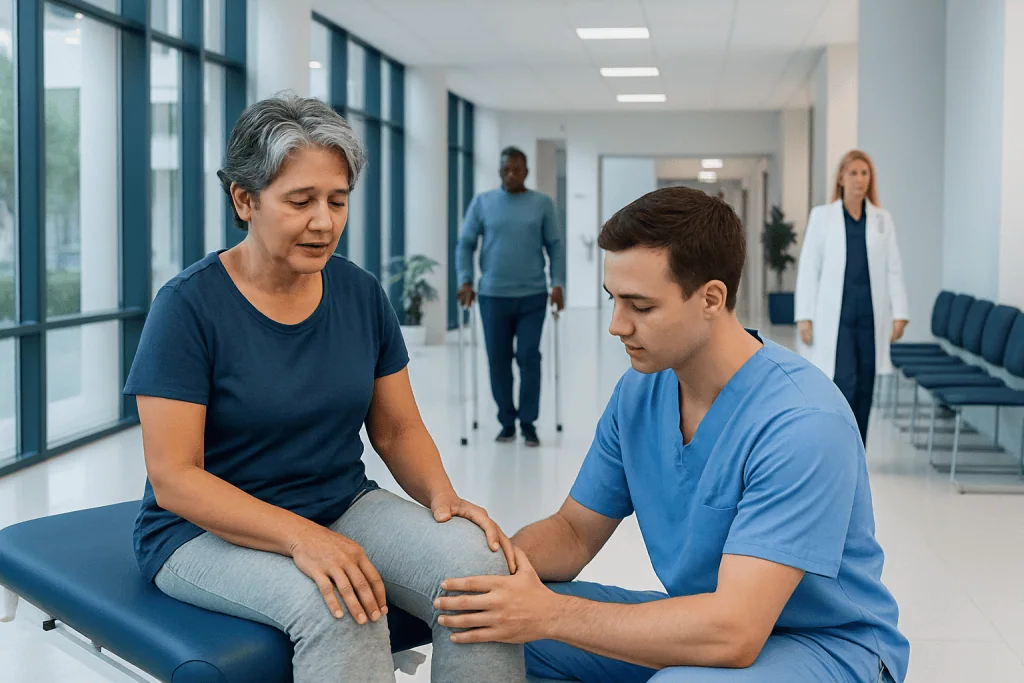
Physical therapy is often one of the first treatments for knee arthritis. Early signs include pain with activity, stiffness after rest, swelling, and reduced range of motion.
Key Takeaways
- Physical therapy is often one of the first treatments for knee arthritis.
- Early signs include pain with activity, stiffness after rest, swelling, and reduced range of motion.
- A tailored program may include strengthening, stretching, balance training, gait work, and activity modification.
- Risk factors include age, excess weight, prior knee injury, overuse, and family history.
- Medical review is important if pain persists, the knee locks or gives way, or swelling and warmth develop suddenly.
Arthritis knee physical therapy is a core part of care for many people with knee arthritis. It helps ease pain, improve strength and mobility, and support safer movement, often alongside weight management, medicines, injections, or surgery when needed.
Overview: How arthritis knee physical therapy helps
Arthritis knee physical therapy helps many people manage knee arthritis by reducing pain, improving movement, and making everyday activities easier. It does not reverse joint damage, but it can improve how the knee works by strengthening the muscles around the joint, improving flexibility, and teaching safer movement patterns.
Knee arthritis most often refers to osteoarthritis, a condition in which joint cartilage gradually wears down and the surrounding tissues can become irritated. Some people may also develop inflammatory forms of arthritis that affect the knee. In either case, symptoms often build over time and can interfere with walking, climbing stairs, standing from a chair, exercise, sleep, and work.
Physical therapy is usually part of a broader plan rather than a stand-alone cure. Depending on the person, treatment may include education, weight management, pain-relieving medicines, supportive devices, injections, and sometimes surgery. For people with persistent symptoms from knee osteoarthritis, early guided rehabilitation can help maintain independence and delay loss of function.
Early signs and symptoms to notice
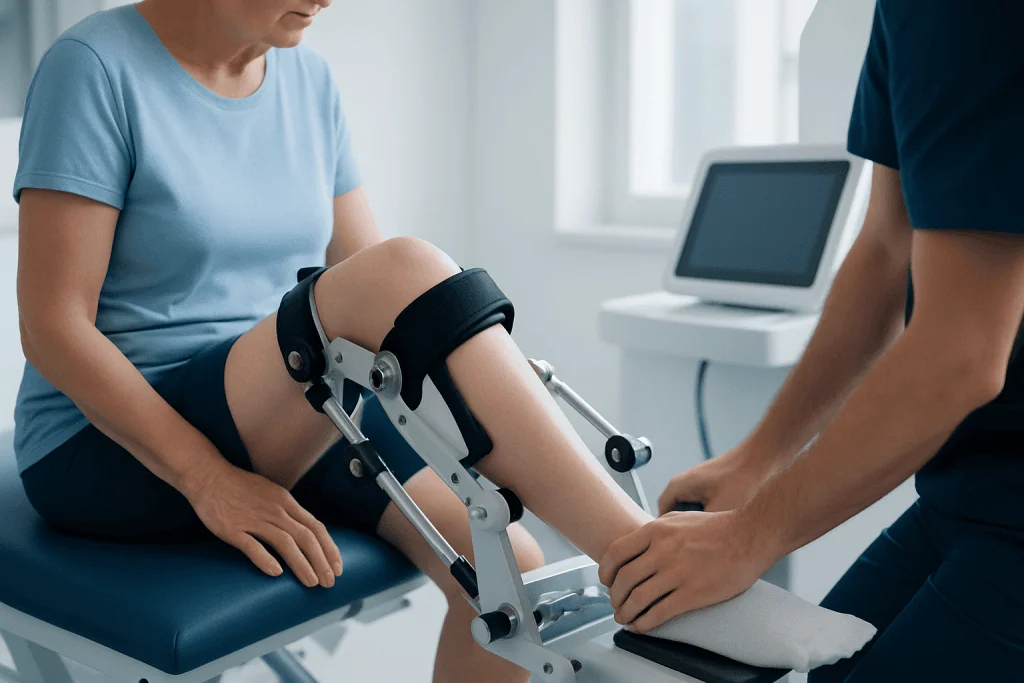
Early knee arthritis symptoms can be subtle. Many people first notice pain during or after activity, such as walking long distances, climbing stairs, kneeling, or getting up from a seated position. The pain may come and go at first, then become more frequent as the joint becomes more irritated.
Stiffness is another common early sign, especially after waking up or after sitting for a while. Some people feel the knee is hard to fully bend or straighten. Mild swelling may appear after a busy day, and the joint can feel tender, achy, or weak even without a clear injury.
As symptoms progress, a person may notice crunching or grinding sensations, reduced confidence on uneven ground, or a feeling that the knee does not move smoothly. Not every sound from the knee means arthritis, but when noises happen together with pain, stiffness, or swelling, medical evaluation is more helpful.
- Pain with activity or after activity
- Morning or after-rest stiffness
- Swelling around the knee
- Reduced range of motion
- Weakness, instability, or difficulty with stairs
Why knee arthritis develops: causes and risk factors
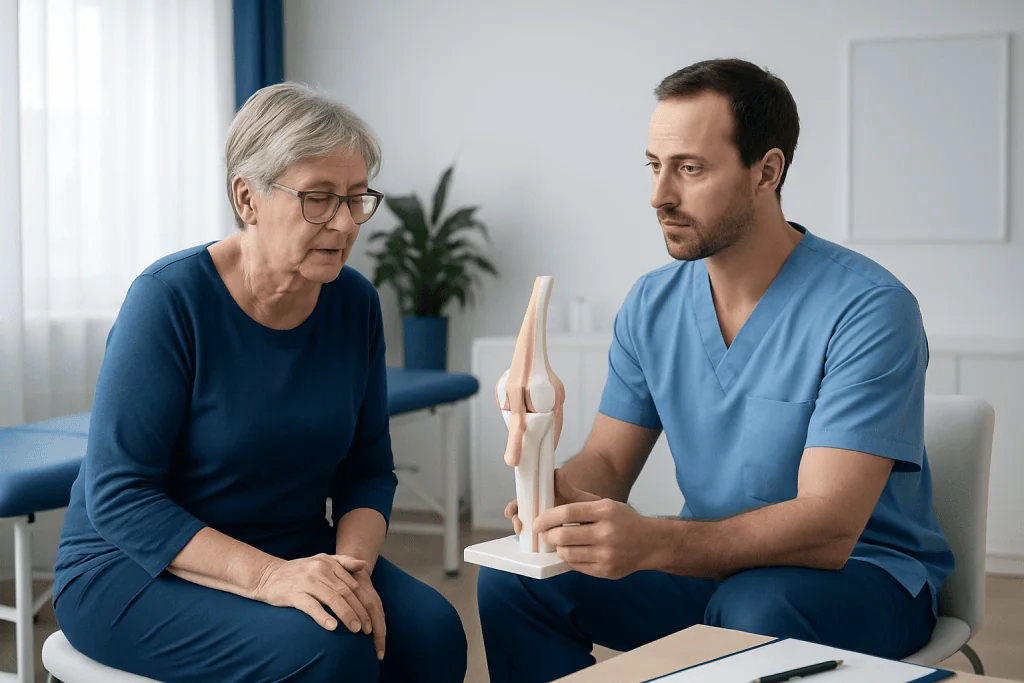
Knee arthritis can develop for several reasons. The most common is age-related wear and tear on the joint, but the process is influenced by much more than age alone. Changes in cartilage, bone, joint lining, muscles, and alignment all play a role in how symptoms appear and progress.
Several risk factors make knee arthritis more likely. Excess body weight increases load on the knee during walking and stair climbing. Previous injuries such as meniscus tears, ligament injuries, or fractures can alter joint mechanics and raise later risk. Repetitive strain from certain occupations or sports may also contribute over time.
Other factors include family history, reduced muscle strength, and structural alignment differences in the legs. Some people develop arthritis because of inflammatory conditions, metabolic disorders, or past joint infection. Physical therapy can be useful across these situations because it focuses on function, strength, and movement quality, even though the exact medical cause may differ.
What happens during diagnosis and assessment
Diagnosis starts with a medical history and physical examination. A doctor will ask about pain location, stiffness, swelling, previous injuries, walking tolerance, and which activities are most difficult. The knee is checked for tenderness, swelling, alignment, range of motion, strength, and stability.
Imaging may be recommended if symptoms are ongoing or if another condition is possible. X-rays can show joint space narrowing, bone spurs, or alignment changes typical of osteoarthritis. In selected cases, MRI may help evaluate meniscus damage, cartilage problems, or other soft tissue issues when the diagnosis is uncertain or symptoms do not match the X-ray findings.
A physical therapist then assesses how the person moves in real life, not only what the joint looks like on a scan. This may include walking analysis, balance testing, stair performance, flexibility, hip and core strength, and patterns such as limping or knee collapse inward. This practical assessment helps build a program that targets the person’s daily limitations, not just the diagnosis label.
What a physical therapy plan usually includes
Arthritis knee physical therapy is individualized. The best program depends on symptom severity, age, fitness level, other health conditions, and personal goals. In general, therapy aims to improve quadriceps and hip strength, maintain knee mobility, reduce strain on irritated tissues, and increase confidence in movement.
Strengthening exercises are central because stronger muscles help absorb some of the load placed on the knee. A therapist may also include stretching, manual therapy, balance training, posture and gait correction, and guidance on pacing activities. Low-impact aerobic exercise such as cycling, swimming, or walking within a comfortable range can support joint health and general fitness.
Education is an important part of therapy. People often benefit from learning how to modify stairs, sit-to-stand movements, exercise volume, footwear choices, and home or work routines. Some may use braces, taping, canes, or shoe inserts if these improve comfort or stability. When rehabilitation is supervised through physical therapy and rehabilitation, the plan can be adjusted as symptoms change rather than relying on a fixed set of exercises.
- Targeted strengthening for the thigh, hip, and core muscles
- Stretching to improve flexibility and joint motion
- Balance and stability work to reduce falls and improve confidence
- Gait and movement retraining for walking and stairs
- Advice on activity pacing, joint protection, and home exercise
Other treatment options that may be combined with therapy
Physical therapy is often combined with other treatments, especially when pain limits exercise. Doctors may suggest pain-relieving or anti-inflammatory medicines, depending on the person’s overall health and medical history. Some people also benefit from topical treatments, heat or cold therapy, and weight loss support if extra body weight is placing more stress on the joint.
Injections may be considered when symptoms remain troublesome despite exercise and self-care. The role of injections varies by the cause of arthritis, symptom pattern, and local practice recommendations. A specialist can explain the likely benefits, limits, and possible risks for the individual situation.
When knee pain becomes severe, deformity develops, or daily function remains poor after well-planned non-surgical care, surgery may be discussed. For advanced joint damage, knee replacement can reduce pain and improve function in appropriate candidates. If surgery is being considered, assessment by an orthopedics and traumatology team helps determine whether the symptoms truly come from arthritis and which option best fits the person’s needs.
Prevention and self-care for daily life
Not every case of knee arthritis can be prevented, but several habits can reduce stress on the joint and support long-term function. Regular low-impact activity helps keep muscles strong and joints mobile. Long periods of inactivity can worsen stiffness, while sudden bursts of heavy activity may flare pain.
Weight management is often one of the most effective self-care steps for people who are overweight. Even modest changes can reduce load through the knee with each step. Supportive shoes, sensible pacing, and avoiding repeated deep squatting or twisting under load may also help reduce symptoms.
At home, a person can use simple strategies such as warming up before exercise, increasing activity gradually, and alternating demanding tasks with rest breaks. Continuing a home exercise program after formal therapy often matters as much as the clinic sessions themselves. Near the end of the care pathway, some international patients choose specialist evaluation at Acibadem International, where multidisciplinary teams in JCI-accredited hospitals assess and treat joint conditions with rehabilitation and orthopedic support.
When to seek medical care
Medical care is appropriate if knee pain lasts more than a few weeks, limits daily activity, wakes a person at night, or keeps returning despite rest and self-care. A review is also helpful if stiffness is increasing, walking distance is shrinking, or the knee frequently gives way.
Prompt assessment is more important when swelling appears suddenly, the knee becomes hot and red, fever develops, or the joint cannot bear weight after an injury. These symptoms may point to a problem other than routine wear-and-tear arthritis and should not be ignored.
A doctor should also evaluate locking, major loss of motion, or pain that seems out of proportion to activity. Early assessment can clarify whether symptoms relate to osteoarthritis, another joint condition such as rheumatoid arthritis, or a separate injury that needs different treatment.
Frequently asked questions
Can physical therapy really help knee arthritis?
Yes. Physical therapy often helps reduce pain, improve strength, and make walking, stairs, and daily tasks easier. Results vary by severity and consistency, but it is widely used as a first-line treatment for knee arthritis.
What exercises are usually recommended for knee arthritis?
Programs often include strengthening for the thigh and hip muscles, gentle stretching, balance work, and low-impact aerobic exercise. The exact routine should be tailored to symptoms, fitness level, and any other joint or medical conditions.
Should a person rest or stay active with knee arthritis?
In most cases, staying appropriately active is better than complete rest. Too much inactivity can worsen stiffness and weakness, while too much strain can increase pain, so a balanced plan is usually best.
How long does arthritis knee physical therapy take to work?
Some people notice improvement within a few weeks, especially with regular home exercise and activity modification. Larger functional gains often take longer, and many people benefit from ongoing maintenance exercises even after formal sessions end.
Is knee arthritis the same as rheumatoid arthritis?
No. Knee osteoarthritis is usually related to joint wear, loading, and age-related changes, while rheumatoid arthritis is an autoimmune inflammatory disease. Both can affect the knee, but diagnosis and treatment plans are different.
When is surgery considered for knee arthritis?
Surgery is usually considered when pain is severe, function is significantly limited, and non-surgical treatments have not provided enough relief. The decision depends on symptoms, imaging findings, overall health, and personal goals.
References
- American Academy of Orthopaedic Surgeons
- American Physical Therapy Association
- National Institute of Arthritis and Musculoskeletal and Skin Diseases
- Arthritis Foundation
- National Health Service
This article is for general information only and is not a substitute for professional medical advice. Please consult a qualified doctor about your individual situation.
Arthritis in Turkey — costs, top hospitals & a free quote
JCI-accredited · board-certified surgeons · reply within 24h
Add us as a Preferred Source to see more of our trusted health content across Google Search, AI Overviews and Discover.

Physical Medicine & Rehabilitation
Restoring movement and function after injury, surgery or neurological conditions.
152 specialists in this unit