Artificial Insemination: What Patients Need to Know

Artificial insemination usually refers to placing prepared sperm into the uterus or cervix near ovulation. It may help in selected cases such as unexplained infertility, mild male factor infertility, or difficulty with intercourse.
Key Takeaways
- Artificial insemination usually refers to placing prepared sperm into the uterus or cervix near ovulation.
- It may help in selected cases such as unexplained infertility, mild male factor infertility, or difficulty with intercourse.
- The process often includes fertility evaluation, cycle monitoring, sperm preparation, and a brief in-clinic procedure.
- Success depends on age, sperm quality, ovulation, and whether the fallopian tubes are open.
- Patients should speak with a fertility specialist if pregnancy has not occurred after trying for an appropriate length of time.
Artificial insemination is a fertility treatment that places sperm into the reproductive tract around the time of ovulation to increase the chance of pregnancy. For many patients, it is a relatively simple, low-intervention option that may be considered before more complex fertility treatments, depending on the cause of infertility.
Overview: what artificial insemination means
Artificial insemination is a fertility treatment in which sperm is placed into the female reproductive tract at the time when pregnancy is most likely to occur. In everyday use, the term often refers to intrauterine insemination, or IUI, where washed and prepared sperm is placed directly into the uterus. In some situations, sperm may be placed at the cervix instead, but IUI is more commonly discussed in modern fertility care.
The purpose of artificial insemination is to improve the chance that sperm will meet the egg. It does not involve surgery, and it is less invasive than in vitro fertilization (IVF). For this reason, some patients are offered artificial insemination as an early treatment step after an infertility evaluation, especially when there is a reasonable chance of success without more complex procedures.
Artificial insemination is not the right option for everyone. It tends to work best when ovulation is occurring or can be medically supported, the fallopian tubes are open, and sperm quality is adequate for insemination. A fertility specialist helps determine whether it is suitable or whether another approach, such as IVF treatment, may be more appropriate.
Who may benefit from artificial insemination

Artificial insemination may be considered for couples or individuals facing certain fertility challenges. These can include unexplained infertility, mild problems with sperm count or movement, difficulty with ejaculation, pain during intercourse, or fertility planning with donor sperm. It may also be used when timed placement of sperm offers an advantage over intercourse alone.
Doctors usually recommend a full fertility assessment before treatment begins. This is important because artificial insemination has limited benefit if there are untreated problems such as blocked fallopian tubes, severe sperm abnormalities, or advanced ovulation disorders. In these cases, other treatments may offer a better chance of pregnancy.
Common situations in which artificial insemination may be discussed include:
- Unexplained infertility after a standard workup
- Mild male factor infertility
- Cervical factors that may affect sperm passage
- Ovulation timing difficulties
- Use of frozen or donor sperm
- Medical or physical conditions that make intercourse difficult
Some people undergoing evaluation may also learn that a separate reproductive condition is affecting fertility, such as endometriosis or ovulation-related disorders. Identifying the cause helps guide whether artificial insemination is likely to be helpful.
How the process works step by step
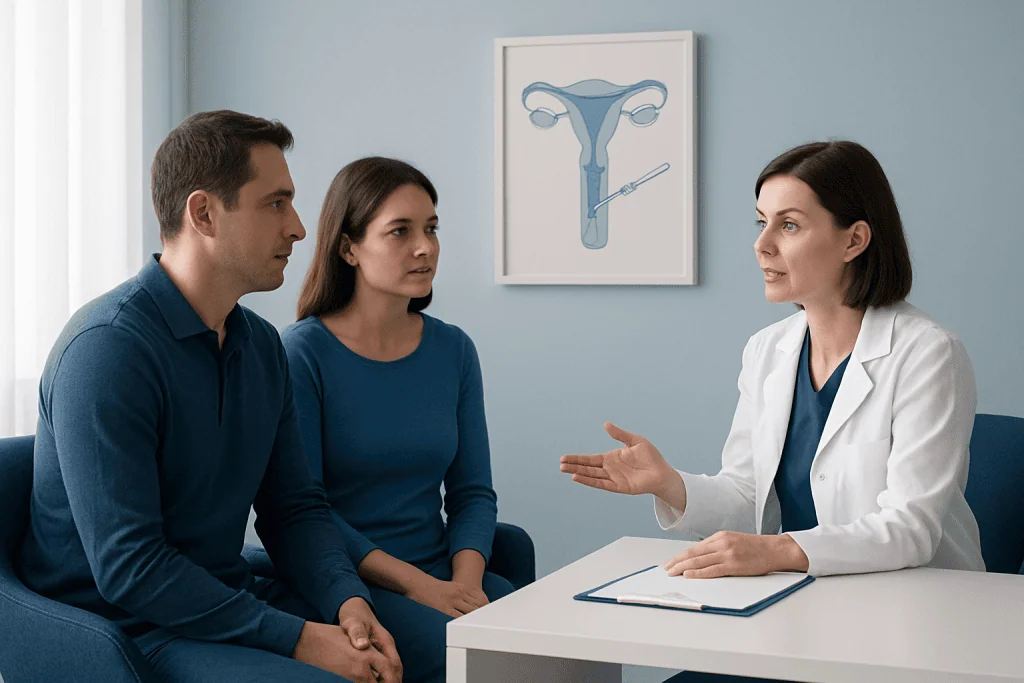
Artificial insemination is usually planned around ovulation, when an egg is available for fertilization. In a natural cycle, the doctor tracks ovulation using ultrasound scans, hormone tests, or home ovulation predictor kits. In a stimulated cycle, medication may be used to encourage the development of one or more eggs, and timing is then coordinated more precisely.
On the day of the procedure, a sperm sample is collected or thawed if frozen sperm is being used. The sample is processed in the laboratory, often called sperm washing. This step separates moving sperm from seminal fluid and other cells, concentrating the sperm most likely to reach the egg. Prepared sperm is then loaded into a thin catheter.
During IUI, the clinician places the catheter through the cervix and gently releases the sperm into the uterus. The procedure usually takes only a few minutes and typically does not require anesthesia. Many patients describe mild cramping or pressure, but significant discomfort is uncommon. Afterward, normal daily activities can often be resumed unless the doctor advises otherwise.
In some fertility plans, artificial insemination is combined with ovulation induction to improve cycle timing or support egg release. The exact approach depends on the patient’s age, test results, menstrual pattern, and overall fertility goals.
Preparation, testing, and timing
Before artificial insemination, doctors usually check factors that strongly affect treatment success. These may include ovarian reserve, ovulation pattern, hormone levels, uterine health, and whether the fallopian tubes are open. A semen analysis is also important because the number and movement of sperm after preparation help predict whether IUI is a reasonable option.
Timing is one of the most important parts of treatment. Insemination is generally performed close to ovulation, often within a carefully selected window after a natural hormone surge or a trigger injection. If timing is too early or too late, the chance of fertilization may decrease even when the procedure itself is technically successful.
Patients are often advised about lifestyle factors that support fertility before and during treatment. These include avoiding smoking, limiting alcohol, managing stress, maintaining a healthy weight, and discussing medications or supplements with a doctor. Although lifestyle changes do not replace medical care, they can support overall reproductive health.
When needed, specialists may also evaluate related issues such as polycystic ovary syndrome (PCOS), irregular periods, or thyroid problems because these can affect ovulation and treatment planning.
Benefits, limitations, and possible risks
One reason artificial insemination is widely used is that it is less invasive than many other fertility treatments. It does not require egg retrieval or laboratory fertilization, and it can be less physically demanding for some patients. For the right candidate, it may offer a practical next step after fertility testing or after trying timed intercourse without success.
At the same time, artificial insemination has limitations. It cannot bypass blocked fallopian tubes, and it is generally less effective when sperm problems are severe or when egg quality is significantly reduced. Age is also important, because female fertility naturally declines over time, especially in the later reproductive years.
Risks are usually low but should still be understood. Mild cramping, light spotting, or temporary discomfort can occur after the procedure. If fertility medications are used, there may be a higher chance of multiple pregnancy or ovarian overstimulation, depending on the treatment plan. Careful monitoring helps reduce these risks.
Patients who are deciding between insemination and more advanced care may benefit from a discussion about infertility treatment options as a whole. A specialist can explain the expected advantages and limitations of each path based on test findings.
What results to expect and when treatment may change
Artificial insemination does not guarantee pregnancy, and outcomes vary from one person to another. Success is influenced by female age, whether ovulation occurs normally, sperm quality, underlying fertility conditions, and whether treatment is done in a natural or medicated cycle. In general, doctors assess the chance of success in the context of the whole fertility picture rather than the procedure alone.
Many clinics recommend trying artificial insemination for a limited number of cycles before reconsidering the plan. If pregnancy has not occurred after several well-timed attempts, the doctor may repeat testing or suggest a different treatment strategy. This does not mean the procedure failed due to patient actions; it often reflects the biology of the underlying condition.
A pregnancy test is usually done about two weeks after insemination. This waiting period can feel emotionally difficult, especially for people who have been trying to conceive for a long time. Clear follow-up planning, emotional support, and honest discussion about next steps can help patients feel more prepared regardless of the result.
Self-care and emotional support during treatment
Fertility treatment can affect emotional well-being as much as physical health. Even when artificial insemination is medically straightforward, patients may feel hopeful, stressed, disappointed, or uncertain from one cycle to the next. These reactions are common and deserve attention, not dismissal.
Helpful self-care measures include keeping a clear calendar of appointments and medication instructions, asking for written explanations when needed, and discussing concerns early rather than waiting. Many people also benefit from partner involvement, counseling, or support groups where fertility-related feelings can be shared in a respectful setting.
General health habits remain important during treatment:
- Follow the specialist’s instructions for cycle timing and medicines
- Get regular sleep and balanced nutrition
- Avoid tobacco and discuss alcohol use with a doctor
- Stay physically active unless told otherwise
- Seek emotional support when stress becomes hard to manage
Near the end of the care pathway, some international patients choose evaluation or treatment at centers with coordinated reproductive services. Acibadem International’s multidisciplinary specialists and JCI-accredited hospitals diagnose and treat fertility conditions for international patients when further assessment or treatment is needed.
When to seek medical care
Medical advice should be sought if pregnancy has not happened after 12 months of regular unprotected intercourse for women under 35, or after 6 months for women 35 and older. Earlier evaluation is also appropriate when there are irregular or absent periods, known reproductive conditions, previous pelvic infections, prior chemotherapy, recurrent pregnancy loss, or known male fertility concerns.
Patients should contact a doctor promptly if they have severe pelvic pain, heavy bleeding, fever, fainting, or symptoms that are unusual after an insemination procedure or fertility medication. These symptoms are not common and deserve timely assessment. Immediate care is especially important if a person could be pregnant and develops one-sided pelvic pain or significant dizziness.
Anyone considering artificial insemination should speak with a qualified fertility specialist rather than relying only on general information. A personalized evaluation can clarify whether insemination is a suitable option, whether other conditions need treatment first, and when a different fertility approach may offer a better chance of success.
Frequently asked questions
Is artificial insemination the same as IVF?
No. Artificial insemination usually means placing sperm into the reproductive tract, most often the uterus, around ovulation. IVF is different because eggs are collected and fertilized in a laboratory before an embryo is transferred to the uterus.
Does artificial insemination hurt?
Most patients report only mild discomfort, pressure, or brief cramping during the procedure. It is usually done without anesthesia and takes only a few minutes. If pain is significant, the clinical team should be informed.
Who is a good candidate for artificial insemination?
Good candidates often include people with unexplained infertility, mild male factor infertility, ovulation timing issues, or difficulty with intercourse. At least one open fallopian tube and adequate sperm quality are usually important. A fertility evaluation helps determine whether it is likely to be useful.
How successful is artificial insemination?
Success varies widely and depends on age, ovulation, sperm quality, and the underlying cause of infertility. It is generally more effective in carefully selected patients and less effective when there are major tube or sperm problems. A doctor can give the most realistic estimate after testing.
How many cycles of artificial insemination are usually tried?
This depends on the patient's age, diagnosis, and response to treatment. Many specialists reassess the plan after several well-timed cycles if pregnancy has not occurred. The next step may involve repeating tests or moving to another fertility treatment.
Can artificial insemination be done with donor sperm?
Yes. Artificial insemination may be performed using donor sperm in appropriate situations, including single parenthood planning, same-sex couples, or when male infertility makes partner sperm unsuitable. Donor sperm use is typically guided by legal, ethical, and medical screening standards.
References
- American Society for Reproductive Medicine
- American College of Obstetricians and Gynecologists
- Centers for Disease Control and Prevention
- National Institute for Health and Care Excellence
- World Health Organization
This article is for general information only and is not a substitute for professional medical advice. Please consult a qualified doctor about your individual situation.
Insemination in Turkey — costs, top hospitals & a free quote
JCI-accredited · board-certified surgeons · reply within 24h
Add us as a Preferred Source to see more of our trusted health content across Google Search, AI Overviews and Discover.
Check your numbers in seconds
BMI, calories, due date, blood pressure and 30+ more clinical calculators — free, instant, doctor-reviewed ranges.

IVF & Reproductive Health
Assisted reproduction and fertility treatments tailored to each couple.
More from the Health Library

Tonsil Cyst: A Complete Medical Overview

Holistic Healing for Inflammation: An Evidence-Based Guide for Patients

Pine Pollen — Explained by Medical Evidence, Not Myths

Sabudana in English: What Patients Need to Know

Turkey Neck — Explained by Medical Evidence, Not Myths