Asbestos Exposure Screening: How It Works, Results and What to Expect

There is no routine blood test that can reliably show how much asbestos a person has inhaled or predict future disease. Screening is tailored to a person’s exposure history, symptoms, smoking history and occupational risk.
Key Takeaways
- There is no routine blood test that can reliably show how much asbestos a person has inhaled or predict future disease.
- Screening is tailored to a person’s exposure history, symptoms, smoking history and occupational risk.
- Chest imaging and pulmonary function tests can identify some asbestos-related changes, but normal results do not erase a past exposure.
- Most brief, one-time exposures do not lead to illness, although no exposure to airborne asbestos is considered completely risk-free.
- Stopping exposure, avoiding smoking and attending recommended follow-up visits are important protective steps.
Asbestos exposure screening is a medical assessment used to evaluate whether past or ongoing contact with asbestos may have affected the lungs or pleura, the lining around the lungs. It usually begins with a detailed exposure history and may include breathing tests or imaging, depending on symptoms, exposure level and individual risk.
Overview: what asbestos exposure screening involves
Asbestos exposure screening is not a single test. It is a clinical process that helps a doctor assess a person’s history of contact with asbestos, look for symptoms or physical signs of lung disease, and decide whether tests such as chest imaging or lung-function testing are appropriate. The aim is to identify asbestos-related conditions when they are present and to provide sensible follow-up for people with meaningful exposure.
Asbestos is a group of mineral fibres that was widely used in insulation, roofing, flooring, cement products, vehicle parts and other building materials. Risk occurs mainly when asbestos-containing materials are damaged, disturbed, cut, drilled or removed and fibres become airborne. People may be exposed at work, during renovation or demolition, or by bringing fibres home on contaminated clothing.
Many asbestos-related diseases develop only after a long latency period, often decades. Screening cannot predict with certainty who will develop disease, and it is not generally recommended as a one-size-fits-all test for every person who has ever encountered asbestos. A clinician can help determine the most appropriate assessment based on the individual situation.
Who may benefit from assessment
A medical review may be appropriate for people with repeated or substantial occupational exposure, especially if this occurred over months or years. Examples include work in construction, shipbuilding, insulation, demolition, asbestos removal, manufacturing, railways, firefighting or maintenance of older buildings. Household exposure may also be relevant when a family member worked with asbestos and contaminated work clothing was handled at home.
People should tell a doctor about any known exposure, even if they feel well. Important details include the type of work or activity, the years of exposure, whether materials were visibly damaged or dusty, use of respiratory protection, and smoking history. This information helps determine whether observation alone, baseline testing or referral to a respiratory specialist is suitable.
Testing is particularly important when symptoms such as persistent breathlessness, ongoing cough, chest discomfort, wheezing, unexplained fatigue or unintentional weight loss occur. These symptoms are common and often have causes unrelated to asbestos, but they deserve a timely medical assessment rather than self-diagnosis.
How asbestos exposure screening works step by step

The first step is a consultation. The clinician takes an occupational and environmental history, reviews current and past symptoms, asks about tobacco use and other respiratory risks, and performs a physical examination. There is no validated routine blood test that confirms asbestos exposure in the lungs or indicates whether a person will develop an asbestos-related illness.
If testing is appropriate, it may include spirometry or more complete pulmonary function testing. These breathing tests measure how well air moves in and out of the lungs and, in some cases, how effectively oxygen passes from the lungs into the bloodstream. Reduced lung volumes or impaired gas transfer can occur in several lung conditions, so results need clinical interpretation.
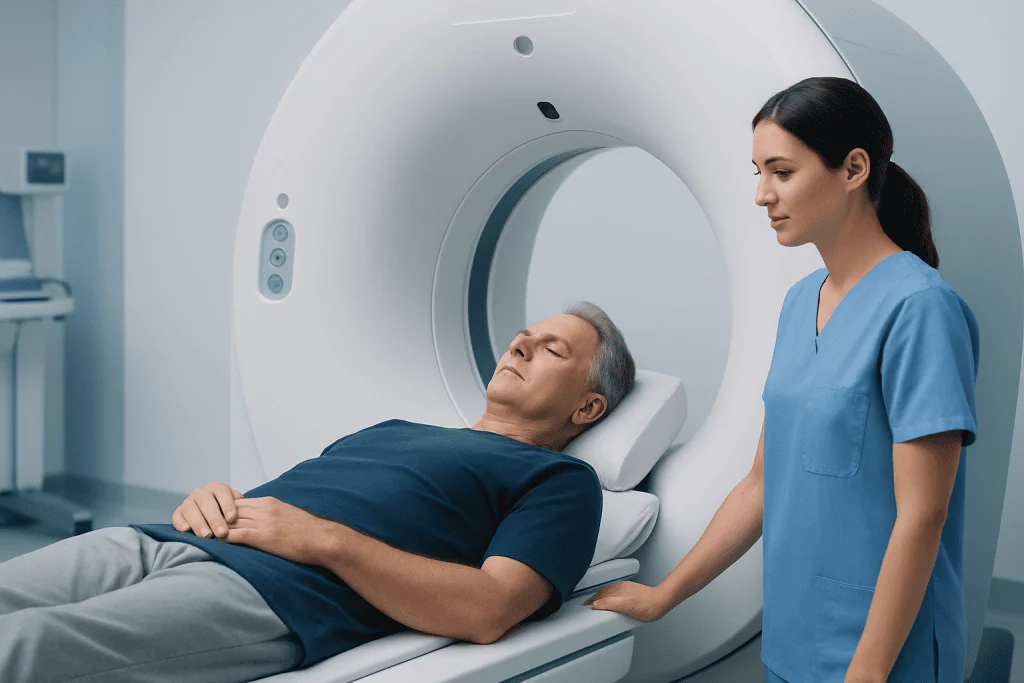
A chest X-ray may be used to look for pleural plaques, pleural thickening or scarring in the lungs. A CT scan provides more detailed images and may be recommended when symptoms, examination findings or an X-ray suggest a need for closer assessment. CT scanning is not automatically needed after every exposure because it involves radiation and can reveal incidental findings that require additional evaluation.
Depending on findings, a doctor may discuss further respiratory evaluation, repeat testing over time, or investigation of another possible cause of symptoms. When an asbestos-related disease is suspected, appropriate care may involve respiratory medicine, radiology, occupational medicine and oncology specialists.
What results can mean and how long they take
The appointment history and physical examination are available immediately. Pulmonary function test results are often reviewed on the same day or within a few days, depending on the facility. A chest X-ray report commonly takes several days, while CT results may take a few days to one or two weeks after specialist review; timing varies by healthcare system and whether additional comparison with older scans is needed.
Normal testing is reassuring but does not prove that asbestos fibres were never inhaled, nor does it eliminate all future risk after a meaningful past exposure. Conversely, an abnormal result does not automatically mean asbestos is the cause. Smoking-related disease, asthma, infection, heart conditions and other lung disorders can produce similar symptoms or imaging changes.
Pleural plaques are areas of thickened tissue on the pleura that can be associated with prior asbestos exposure. They are usually not cancer and may not cause symptoms, but their presence can be useful evidence of past exposure. Other findings, such as diffuse pleural thickening or pulmonary fibrosis, require individualized assessment and follow-up.
If imaging detects a lung nodule or another unexpected change, clinicians assess its size, appearance, growth over time and the person’s risk factors. Further imaging or specialist review may be recommended, but many incidental findings are benign. Clear communication about the result and follow-up plan is an important part of screening.
Benefits, limits and possible risks of screening
A focused evaluation can document exposure history, establish a baseline for people with relevant occupational risk, investigate symptoms and identify disease that may benefit from monitoring or treatment. It also provides an opportunity to discuss smoking cessation, vaccination where appropriate, workplace safety and strategies to prevent further exposure.
Screening has limits. No test can remove fibres already inhaled or reliably forecast whether an individual will develop cancer or lung scarring. Imaging can miss very early changes, while CT scans may find harmless abnormalities that lead to repeat scans, worry or additional procedures. For this reason, testing should be selected thoughtfully rather than performed indiscriminately.
Breathing tests are noninvasive and generally safe, although they can briefly cause light-headedness or coughing. Chest X-rays use a low dose of radiation; CT uses more radiation than an X-ray. Clinicians balance the potential value of imaging against these considerations and the person’s symptoms and exposure profile.
For people with diagnosed asbestos-related disease, care focuses on symptom management, preserving lung health and treating any specific condition found. This may include lung cancer treatment when cancer is diagnosed, but screening itself is an assessment process rather than a treatment.
Will 30 minutes of asbestos exposure hurt you?
A single 30-minute exposure is unlikely to cause immediate illness, and most asbestos-related diseases are linked to cumulative exposure over time and develop years later. However, risk depends on how much airborne fibre was present, the type of asbestos, whether material was disturbed, ventilation, and whether respiratory protection was used. Therefore, it is not possible to define a completely safe duration from time alone.
After a brief suspected exposure, the practical priority is to avoid disturbing the material again. Do not sweep, vacuum with an ordinary household vacuum or attempt untrained removal. A qualified asbestos professional can advise on assessment and safe management of potentially contaminated materials.
Medical testing is not usually urgent after a single, brief exposure in a person without symptoms. Still, the event should be recorded, especially if exposure was dusty or involved damaged insulation, demolition or drilling. A doctor or occupational health clinician can advise whether any baseline evaluation is reasonable.
What is the 3-5-7 rule for asbestos sampling?
The term “3-5-7 rule” is not a universal medical or public-health standard for asbestos exposure screening. It may be used informally in some local training materials or by particular contractors, but its meaning can vary. It should not be used as a substitute for accredited inspection, sampling procedures or professional advice.
Asbestos sampling is an environmental assessment, not a lung test. It is performed on building materials or, in some situations, air samples to determine whether asbestos is present and whether control measures are needed. Sampling can release fibres if done incorrectly, so it should be carried out by trained, appropriately licensed professionals in accordance with local regulations.
People who are concerned about a home, workplace or renovation project should avoid collecting a sample themselves. An asbestos surveyor or environmental professional can identify suspect materials, arrange laboratory analysis and advise on containment or removal when needed.
Can lungs heal from asbestos exposure?
The body can clear some inhaled particles, but asbestos fibres may remain in the lungs or pleura for a long time. There is no treatment that removes asbestos fibres from the body. If asbestos exposure has not caused disease, lung function may remain normal, particularly when further exposure is prevented and other lung risks are reduced.
Scarring of lung tissue or pleura, once established, generally cannot be reversed. Treatment can still help manage symptoms, support breathing, address complications and maintain quality of life. Avoiding tobacco is especially important because smoking substantially increases the risk of lung cancer in people exposed to asbestos.
A healthy lifestyle, recommended vaccinations, regular physical activity within personal limits and prompt assessment of respiratory symptoms can support overall lung health. A respiratory specialist can recommend monitoring tailored to the person’s exposure history and clinical findings.
When to seek medical care
People should arrange a medical appointment if they have known substantial asbestos exposure, are worried about a work-related exposure, or develop persistent respiratory symptoms. Urgent medical attention is needed for severe or rapidly worsening shortness of breath, coughing up blood, severe chest pain or signs of a serious acute illness.
Bring details of possible exposure to the appointment, including job roles, employer or site information, dates, materials handled, tasks performed and protective equipment used. Previous chest images or lung-function reports can also be helpful because comparison over time may clarify the significance of a finding.
People with concerns about asbestos-related lung conditions may benefit from specialist assessment, including evaluation for conditions such as mesothelioma when clinically indicated. Acibadem International’s multidisciplinary specialists and JCI-accredited hospitals can diagnose and treat respiratory and asbestos-related conditions for international patients.
Frequently asked questions
Is there a blood test for asbestos exposure?
There is no routine blood test that can reliably confirm asbestos exposure, measure the amount of asbestos retained in the lungs or predict whether disease will develop. Doctors mainly use exposure history, symptoms, physical examination, lung-function testing and imaging when appropriate.
How long does it take to get results back from an asbestos test?
The timeframe depends on which test is being discussed. Lung-function testing may be reviewed the same day or within a few days, while chest X-ray and CT reports often take several days and sometimes up to one or two weeks. Environmental laboratory testing of building materials has separate turnaround times set by the testing laboratory.
Should everyone with past asbestos exposure have a CT scan?
No. CT scanning is more detailed than a chest X-ray, but it also exposes a person to more radiation and can identify incidental changes that need follow-up. A clinician decides whether CT is appropriate based on symptoms, exposure intensity, other risk factors and prior imaging.
Can asbestos exposure cause symptoms straight away?
Asbestos-related diseases usually develop after many years rather than immediately after exposure. A person may have short-term throat or airway irritation from dust, but this does not by itself indicate asbestos-related lung disease. Persistent or concerning symptoms should be medically assessed.
What should a person do after finding suspected asbestos at home?
They should avoid disturbing the material and avoid drilling, sanding, sweeping or using a standard vacuum nearby. A trained asbestos professional can inspect the material and advise on safe management, sampling or removal according to local regulations. Medical assessment is generally guided by the extent of possible airborne exposure and symptoms.
Does quitting smoking help after asbestos exposure?
Yes. Smoking and asbestos exposure together greatly increase the risk of lung cancer compared with either risk alone. Stopping smoking benefits lung and heart health at any stage, and a clinician can recommend appropriate cessation support.
References
- World Health Organization
- United States Environmental Protection Agency
- Centers for Disease Control and Prevention
- National Institute for Occupational Safety and Health
- American Thoracic Society
This article is for general information only and is not a substitute for professional medical advice. Please consult a qualified doctor about your individual situation.
Explore treatments in Turkey — costs, top hospitals & a free quote
JCI-accredited · board-certified surgeons · reply within 24h
Add us as a Preferred Source to see more of our trusted health content across Google Search, AI Overviews and Discover.

More from the Health Library



Related Specialists

Prof. Dr. K. Latif Abbasoğlu
Pediatric Surgery
Dr. Metin Kınacı
Oral & Dental Health
Dr. Kumsal Kurucu
Acibadem Life Clinical Service
Prof. Dr. Mehmet Uğur Özbaydar
Orthopedic Surgery & Traumatology