Assisted Reproductive Technology: What Patients Need to Know

ART is an umbrella term for fertility treatments involving eggs, sperm, or embryos outside the body. IVF is the most widely known ART procedure, while ICSI may be used when there is a significant sperm-related factor.
Key Takeaways
- ART is an umbrella term for fertility treatments involving eggs, sperm, or embryos outside the body.
- IVF is the most widely known ART procedure, while ICSI may be used when there is a significant sperm-related factor.
- A fertility assessment helps identify possible female, male, combined, or unexplained causes of difficulty conceiving.
- ART treatment plans are individualized and may involve medication, egg retrieval, laboratory fertilization, embryo transfer, or embryo freezing.
- Success, risks, costs, and legal options vary between individuals, clinics, countries, and treatment approaches.
- Emotional support and clear communication with a fertility team are important parts of ART care.
Assisted reproductive technology (ART) describes fertility treatments that involve handling eggs, sperm, or embryos outside the body to support pregnancy. It includes in vitro fertilization (IVF), intracytoplasmic sperm injection (ICSI), embryo freezing, and some donor-assisted treatments.
Overview: What Is Assisted Reproductive Technology?
Assisted reproductive technology is a group of medical treatments designed to help people achieve pregnancy when conception has not occurred naturally or when there is a known fertility concern. In its strict clinical definition, ART includes procedures in which eggs or embryos are handled outside the body. The term most commonly includes in vitro fertilization (IVF), with or without intracytoplasmic sperm injection (ICSI), as well as the freezing and transfer of embryos.
ART may be considered by heterosexual couples, single people, and same-sex couples, depending on local laws and available services. It can involve a person’s own eggs and sperm or, where legally permitted and clinically appropriate, donor eggs, donor sperm, or donor embryos. Treatment is not a single procedure; it is a carefully planned process based on medical findings, reproductive goals, personal circumstances, and patient preferences.
Not every fertility treatment is technically classified as ART. For example, ovulation-inducing medication and intrauterine insemination (IUI) do not usually involve handling eggs or embryos in a laboratory. However, they may be discussed alongside ART because they are part of the broader range of fertility care options.
Why ART May Be Considered

ART may be recommended when testing identifies a condition that makes natural conception less likely, or when less invasive treatment has not led to pregnancy. Common reasons include blocked or severely damaged fallopian tubes, endometriosis, ovulation disorders, reduced ovarian reserve, age-related decline in egg number or quality, and certain uterine conditions. In some circumstances, ART can also reduce the time needed to achieve pregnancy when fertility is expected to decline further.
Male-factor infertility is another frequent reason for ART. Low sperm count, reduced sperm movement, abnormal sperm shape, absent sperm in the ejaculate, or difficulties with sperm delivery may affect the chance of fertilization. ICSI, in which one sperm is injected directly into a mature egg, may be considered for specific sperm-related concerns or after previous fertilization problems.
Some people have unexplained infertility, meaning standard tests do not identify a clear reason for difficulty conceiving. ART may be one option after discussing age, how long pregnancy has been attempted, previous pregnancies, test results, and the potential benefits and burdens of different approaches. It may also be used for fertility preservation before medical treatment that could affect fertility, such as some cancer therapies.
The ART Process: From Assessment to Embryo Transfer
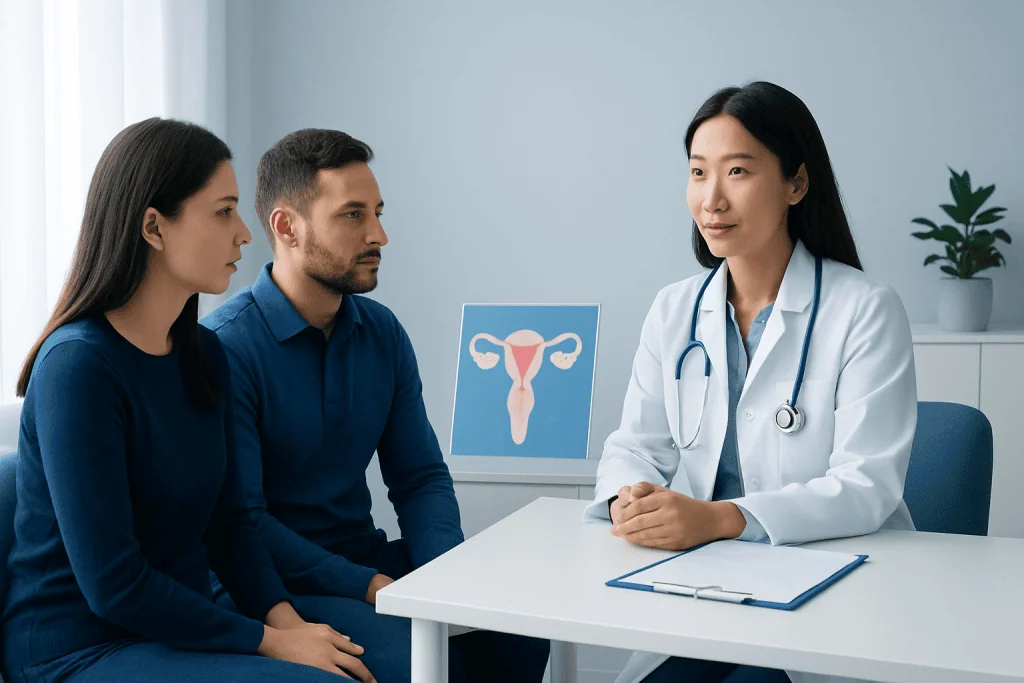
ART usually begins with a fertility assessment for all relevant partners. This may include a review of medical and reproductive history, menstrual patterns, previous pregnancies, medications, lifestyle factors, and family history. Tests may include blood tests to assess ovulation and ovarian reserve, pelvic ultrasound, examination of the uterus and fallopian tubes when indicated, and semen analysis. The purpose is to identify factors that may affect treatment choices and to develop an appropriate plan.
In a typical IVF cycle, medicines are used to stimulate the ovaries so that several eggs may mature. The care team monitors the response with ultrasound scans and blood tests. When the eggs are ready, they are collected through a minor procedure, usually with sedation or anesthesia. In the laboratory, eggs are combined with sperm through conventional IVF or ICSI. The resulting embryos are monitored as they develop.
An embryo may be transferred into the uterus during the same cycle or frozen for transfer later. Freezing embryos can allow the body to recover after stimulation and may provide additional opportunities for pregnancy without repeating egg collection. A blood pregnancy test is generally performed around one to two weeks after embryo transfer, according to the clinic’s instructions. The exact sequence can vary according to the person’s health, embryo development, and treatment plan.
- IVF: Eggs and sperm are placed together in a laboratory to support fertilization.
- ICSI: A single sperm is injected into an egg to support fertilization.
- Frozen embryo transfer: A previously frozen embryo is thawed and transferred into the uterus.
- Fertility preservation: Eggs, sperm, or embryos may be frozen for possible future use.
Tests and Decisions That Shape a Treatment Plan
Fertility specialists use test results to guide, rather than predict with certainty, the chance of pregnancy. Age is an important factor because egg quantity and quality generally decline over time, especially from the mid-30s onward. However, age alone does not determine an individual’s outcome. Sperm factors, uterine health, embryo development, medical conditions, previous treatment history, and the number of embryos available can also influence decisions.
Embryo testing may be discussed in selected circumstances. Preimplantation genetic testing (PGT) examines cells from an embryo before transfer. It may be considered when one or both intended parents have a known inherited genetic condition, a chromosomal rearrangement, or particular reproductive history. PGT has limitations and does not guarantee a healthy pregnancy or replace recommended prenatal screening and diagnostic testing during pregnancy.
Decisions about how many embryos to transfer should be made carefully. Transferring one embryo is often recommended when appropriate because transferring more than one embryo increases the likelihood of twins or higher-order multiple pregnancy. Multiple pregnancy carries higher risks for both the pregnant person and babies, including premature birth. A fertility team can explain the balance between pregnancy chances and safety in an individual situation.
Benefits, Limitations, and Possible Risks
ART has helped many people build families, but it cannot guarantee pregnancy or live birth. Some cycles do not produce enough eggs, fertilization may not occur, embryos may stop developing, an embryo may not implant, or a pregnancy may end in miscarriage. It is common for people to need more than one treatment cycle, and outcomes may differ substantially between individuals.
The medicines used for ovarian stimulation can cause temporary effects such as bloating, pelvic discomfort, headaches, mood changes, or bruising at injection sites. A less common complication is ovarian hyperstimulation syndrome (OHSS), in which the ovaries become enlarged and fluid can shift into the body. Modern treatment protocols and monitoring aim to reduce this risk. Severe abdominal pain, rapidly increasing abdominal swelling, shortness of breath, fainting, or markedly reduced urination after treatment requires urgent medical advice.
Egg retrieval has small risks related to sedation, bleeding, infection, or injury to nearby structures, although serious complications are uncommon. Ectopic pregnancy, miscarriage, and pregnancy-related complications can still occur after ART. Patients should also consider emotional strain, the time involved, financial implications, and legal or ethical questions concerning embryo storage, donation, and future use. A clear consent process is essential before treatment begins.
Preparing for Treatment and Supporting Wellbeing
Healthy habits can support general reproductive and pregnancy health, although they cannot overcome every cause of infertility. Patients are usually advised to avoid smoking and recreational drugs, limit alcohol, maintain a weight that supports overall health where possible, and manage long-term conditions such as diabetes, thyroid disease, or high blood pressure. A clinician should review all prescription medicines, supplements, and herbal products before treatment, as some may need adjustment.
Taking folic acid before pregnancy is commonly advised to reduce the risk of certain fetal neural tube defects. The appropriate approach depends on individual health needs, so patients should ask their clinician about suitable supplements and vaccinations. Regular movement, balanced nutrition, sleep, and practical stress-management strategies may help people feel physically and emotionally prepared, even though stress alone is not considered a cause of infertility.
ART can bring uncertainty, hope, disappointment, and pressure from work, family, or social expectations. Counseling, fertility support groups, or mental health care can help individuals and couples manage these experiences. It may also be useful to discuss plans for unused embryos, treatment stopping points, and how results will be communicated before starting a cycle.
When to Seek Medical Care
People may wish to speak with a doctor after 12 months of regular unprotected intercourse without pregnancy if the person trying to conceive is under 35. Assessment is commonly recommended after 6 months when the person trying to conceive is 35 or older. Earlier evaluation is appropriate for people over 40 or for anyone with irregular or absent periods, known endometriosis, prior pelvic infection or pelvic surgery, recurrent miscarriage, previous cancer treatment, or a known sperm-related concern.
Urgent medical advice is important during fertility treatment if there is severe or worsening abdominal pain, heavy bleeding, fever, breathing difficulty, chest pain, fainting, or symptoms of severe OHSS. After a positive pregnancy test, one-sided pelvic pain, shoulder-tip pain, dizziness, or bleeding should also be assessed promptly because these can occasionally indicate an ectopic pregnancy. Acibadem International’s multidisciplinary specialists and JCI-accredited hospitals diagnose and treat fertility conditions for international patients, with care tailored to clinical needs and local treatment regulations.
Frequently asked questions
What is the difference between ART and IVF?
ART is the broader term for fertility treatments involving the handling of eggs, sperm, or embryos outside the body. IVF is one type of ART. ICSI, embryo freezing, and frozen embryo transfer are also commonly included under ART.
Is IUI considered assisted reproductive technology?
IUI involves placing prepared sperm into the uterus around the time of ovulation. It is a fertility treatment, but it is not usually included in the strict definition of ART because eggs and embryos are not handled outside the body. Some clinics discuss IUI and ART together as part of a step-by-step fertility care plan.
How long does one IVF cycle take?
The active stages of an IVF cycle often take several weeks, including ovarian stimulation, monitoring, egg retrieval, laboratory procedures, and embryo transfer or freezing. The full timeline may be longer if testing, treatment of an underlying condition, or a frozen embryo transfer is planned. A fertility clinic can provide a personalized schedule.
Does ART guarantee pregnancy?
No fertility treatment can guarantee pregnancy. The likelihood of success depends on factors such as age, the cause of infertility, egg and sperm factors, uterine health, embryo development, and previous treatment history. A fertility specialist can explain what the available information may mean for an individual situation.
Can ART increase the chance of twins?
ART can increase the chance of twins or higher-order multiples when more than one embryo is transferred. Because multiple pregnancies have greater health risks, single embryo transfer is often preferred when clinically suitable. The decision is made with the fertility team based on the patient's circumstances.
Is genetic testing of embryos necessary for everyone?
No. Preimplantation genetic testing may be helpful in selected situations, including when there is a known inherited condition or certain chromosomal concerns. It is not routinely necessary for every person having IVF, and it has benefits and limitations that should be discussed with a fertility specialist or genetic counselor.
References
- World Health Organization
- American Society for Reproductive Medicine
- European Society of Human Reproduction and Embryology
- Centers for Disease Control and Prevention
- National Institute for Health and Care Excellence
This article is for general information only and is not a substitute for professional medical advice. Please consult a qualified doctor about your individual situation.
IVF & fertility treatment in Turkey — success rates and costs
JCI-accredited · board-certified surgeons · reply within 24h
Add us as a Preferred Source to see more of our trusted health content across Google Search, AI Overviews and Discover.
Check your numbers in seconds
BMI, calories, due date, blood pressure and 30+ more clinical calculators — free, instant, doctor-reviewed ranges.

More from the Health Library



Related Specialists

Assoc. Prof. Dr. Çağrı Örs
Orthopedic Surgery & Traumatology
Dr. Ayhan Ulusoy
Orthopedic Surgery & Traumatology
Dr. Mustafa Demirel
Emergency Service
Prof. Dr. Merve Gürsoy Bulut
Radiology