Asthma in Children: Symptoms, Triggers, Inhalers, and Action Plans

Asthma symptoms in children may include wheezing, repeated coughing, shortness of breath, chest tightness or tiredness during play. Common triggers include viral infections, allergens, smoke, air pollution, exercise, cold air and strong odors.
Key Takeaways
- Asthma symptoms in children may include wheezing, repeated coughing, shortness of breath, chest tightness or tiredness during play.
- Common triggers include viral infections, allergens, smoke, air pollution, exercise, cold air and strong odors.
- Inhalers work best when the correct device and technique are used, often with a spacer for younger children.
- A written asthma action plan helps families know what to do during good control, worsening symptoms and urgent situations.
- Regular follow-up allows the doctor to adjust treatment as the child grows and as symptoms change.
Asthma in children is a common long-term airway condition that can cause coughing, wheezing, chest tightness and shortness of breath. With the right diagnosis, inhaler use, trigger management and a written asthma action plan, most children can stay active and sleep well.
Overview
Asthma in children is a chronic condition in which the airways become sensitive, inflamed and sometimes narrowed. This can make breathing harder, especially during colds, exposure to triggers or physical activity. Asthma may look different from one child to another: some children wheeze, while others mainly cough at night or become unusually tired during play.
Although asthma is long-term, it can usually be managed effectively. Treatment aims to reduce airway inflammation, prevent flare-ups, protect sleep and activity, and help the child use medicines safely and confidently. Many children with asthma attend school, play sports and take part in normal daily life when their condition is well controlled.
Good asthma care is a partnership between the family, child, pediatrician and, when needed, a pediatric pulmonologist or allergy specialist. Parents should not change or stop prescribed medicines without medical advice, even when the child seems well, because asthma control can change over time.
Symptoms of Asthma in Children
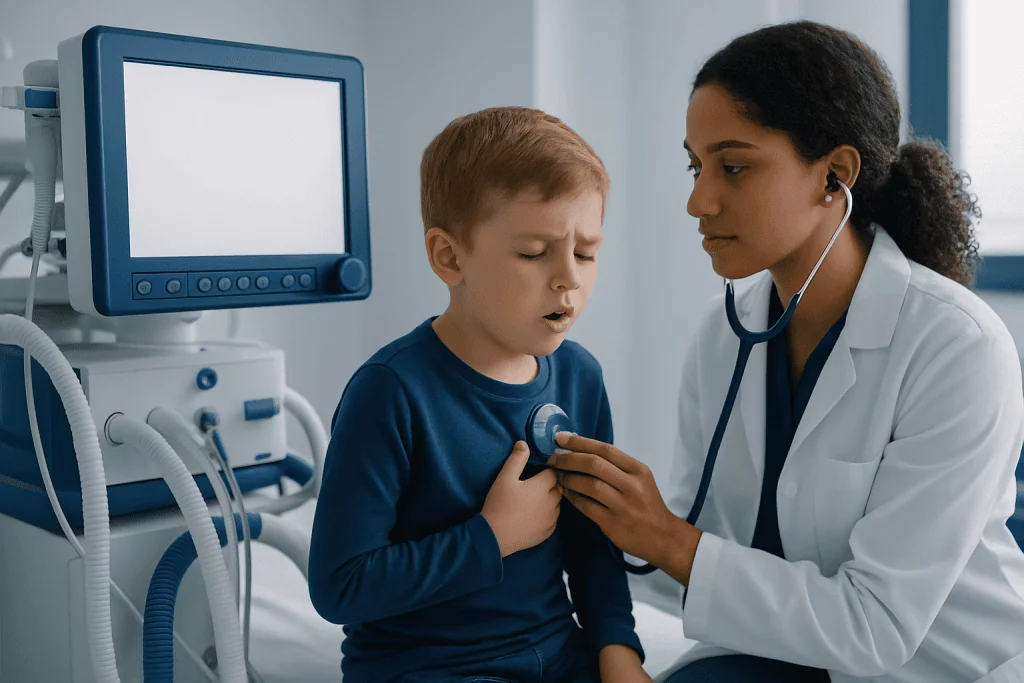
Childhood asthma symptoms can be mild, occasional or more persistent. The classic symptom is wheezing, a whistling sound when the child breathes out, but not every child with asthma wheezes. In some children, frequent coughing may be the main sign, especially at night, early in the morning, after running, laughing or crying, or during a viral infection.
Other symptoms include shortness of breath, chest tightness, fast breathing, difficulty keeping up with other children, or needing to stop during play. Younger children may not be able to describe chest tightness and may instead say their chest hurts, refuse active games, become irritable or seem unusually tired.
Symptoms that support possible asthma include:
- Coughing or wheezing that comes back repeatedly
- Symptoms that are worse at night or with exercise
- Breathing problems after exposure to smoke, pets, dust, pollen or cold air
- Symptoms that improve after prescribed reliever medicine
- Repeated episodes of bronchitis-like illness or prolonged cough after colds
Not every cough is asthma. Respiratory infections, reflux, sinus problems, airway abnormalities and other conditions can cause similar symptoms. A doctor can assess the pattern, examine the child and decide whether further testing or treatment is needed.
Common Triggers and Risk Factors

Asthma triggers are factors that make the airways react and symptoms worsen. A trigger does not cause asthma in every child, and triggers vary widely. Keeping a simple symptom diary can help families notice patterns, such as coughing after visiting a home with pets or wheezing during pollen season.
Common asthma triggers in children include viral respiratory infections, tobacco smoke, vaping aerosols, air pollution, dust mites, mold, cockroaches, pet dander, pollen, cold air, exercise, strong odors, cleaning sprays and emotional stress. Some children also have symptoms linked with allergic rhinitis, eczema or food allergy, although food is not a common asthma trigger for most children.
Risk factors may include a family history of asthma or allergies, personal history of eczema or allergic rhinitis, premature birth, exposure to smoke, and frequent wheezing illnesses early in life. These factors increase the likelihood of asthma but do not confirm the diagnosis on their own.
Exercise deserves special attention. Children with asthma should not avoid activity unless advised by a doctor. When asthma is well controlled and a plan is in place, most children can exercise safely. If symptoms occur regularly during sports, the treatment plan may need review.
Diagnosis: How Doctors Evaluate Childhood Asthma
Diagnosing asthma in children starts with a careful medical history and physical examination. The doctor asks about symptom patterns, nighttime cough, exercise symptoms, triggers, family history, allergies, previous emergency visits and response to medicines. The child may have a normal chest examination between episodes, so the history is often very important.
For school-age children, lung function tests such as spirometry may help confirm asthma and measure airflow. The test may be repeated after a bronchodilator medicine to see whether airflow improves. Younger children may not be able to perform spirometry reliably, so doctors often rely on symptoms, examination findings, risk factors and treatment response.
Additional tests may be considered depending on the child. Allergy testing can identify relevant allergens, while chest imaging or other investigations may be used if symptoms are unusual, severe, persistent despite treatment, or not typical for asthma. Doctors also consider other causes of wheeze or cough, including recurrent infections, aspiration, airway narrowing, reflux or foreign body inhalation.
The goal is not only to name the condition but also to assess control and severity. This helps the doctor choose the right treatment level and decide how often the child should be reviewed.
Treatment Options and Inhalers
Asthma treatment is individualized according to the child’s age, symptom frequency, flare-up history, lung function when available and trigger profile. Medicines are commonly delivered by inhaler because this sends treatment directly to the airways. Inhalers work well only when used correctly, so technique should be checked regularly by a healthcare professional.
Reliever inhalers are used to ease symptoms quickly by opening the airways. Controller medicines, often inhaled anti-inflammatory treatments, are used regularly to reduce airway inflammation and prevent symptoms and flare-ups. Some children need daily controller therapy, while others may need different approaches depending on their doctor’s assessment and current guidelines.
Spacers are often recommended with metered-dose inhalers, especially for younger children. A spacer helps more medicine reach the lungs and makes coordination easier. Some infants and preschool children use a spacer with a mask, while older children may use a mouthpiece. Dry powder inhalers or nebulizers may be used in selected situations, but the best device is the one the child can use correctly and consistently.
Families should know which inhaler is for quick relief and which is for long-term control. They should also understand how often medicines are prescribed, when to seek help and how to clean devices. If the child needs reliever medicine more often than expected, wakes at night from symptoms or avoids activity, asthma control should be reassessed.
Asthma Action Plans for Families and Schools
A written asthma action plan is a practical guide that explains what to do when the child is well, when symptoms are getting worse and when urgent care is needed. It should be created with the child’s doctor and updated after medication changes, flare-ups or important changes in health. Copies can be shared with caregivers, school nurses, teachers and sports coaches.
Many action plans use zones. The green zone describes good control and daily medicines. The yellow zone explains what to do for worsening symptoms, such as cough, wheeze, chest tightness or reduced activity. The red zone lists warning signs that require urgent medical help. Some plans include peak flow readings for children old enough to use a peak flow meter reliably.
An effective asthma action plan may include:
- The child’s diagnosis and known triggers
- Names and purposes of prescribed inhalers
- Step-by-step instructions for worsening symptoms
- When to contact the doctor
- When to seek emergency medical care
- School and caregiver contact details
Children should be involved in their plan as much as their age allows. Learning to recognize symptoms, ask for help and use an inhaler correctly builds confidence and safety. Parents should review the plan with the child in calm moments, not only during symptoms.
Prevention, Self-care and When to See a Doctor
Prevention focuses on good daily control and reducing avoidable triggers. Homes and cars should be kept smoke-free, including smoke from cigarettes, waterpipes and vaping. If dust mites are a trigger, washing bedding regularly, reducing dust-collecting items and using appropriate mattress and pillow covers may help. For pollen or pollution triggers, families can follow local air quality and pollen reports and adjust outdoor activity when symptoms are affected.
Vaccination and routine pediatric care are also important because respiratory infections can trigger asthma symptoms. Families should discuss recommended vaccines with their doctor. Children with asthma should maintain healthy sleep, regular activity and a balanced diet; no special diet cures asthma, but overall health supports resilience.
A doctor should be consulted if a child has repeated wheezing, persistent cough, symptoms during exercise, nighttime waking, or frequent need for reliever medicine. Urgent care is needed if the child has severe breathing difficulty, bluish lips, trouble speaking or feeding due to breathlessness, drowsiness, or symptoms that do not improve as described in the action plan.
Families traveling for care or living between countries may benefit from coordinated records, medication lists and a clear plan in a language they understand. Acibadem International’s multidisciplinary specialists and JCI-accredited hospitals diagnose and treat asthma in children for international patients, with care tailored to each child’s needs and medical history.
Frequently asked questions
Can children outgrow asthma?
Some children have fewer symptoms as they get older, especially if wheezing was mainly linked to early viral infections. Others continue to have asthma into adolescence or adulthood. Regular follow-up helps the doctor adjust treatment as the child grows.
Is wheezing always asthma?
No. Wheezing can occur with viral infections, airway irritation, allergies, reflux or other lung and airway conditions. A doctor looks at the pattern of symptoms, triggers, examination findings and, when possible, lung function tests before diagnosing asthma.
Are inhaled asthma medicines safe for children?
When prescribed appropriately, inhaled asthma medicines are widely used in children and are considered an important part of asthma control. The doctor chooses the medicine and device based on the child’s age and symptoms. Families should use medicines exactly as prescribed and attend follow-up visits to review benefits, side effects and technique.
Why does my child cough more at night?
Nighttime cough can happen when airway inflammation is not fully controlled, during colds, or with triggers such as dust mites, reflux or postnasal drip. A repeated night cough should be discussed with a doctor. It may mean the asthma plan needs adjustment or another cause should be considered.
Can a child with asthma play sports?
Most children with asthma can and should be physically active when their condition is well controlled. If exercise regularly causes coughing, wheezing or chest tightness, the doctor can review treatment and provide instructions for activity. Avoiding sports is usually not necessary with an appropriate plan.
What should be included in a school asthma plan?
A school plan should list the child’s symptoms, triggers, medicines, inhaler instructions and steps to take if symptoms worsen. It should include emergency contacts and permission details for medication use according to local school policies. Teachers and caregivers should know where the inhaler is kept and when to seek help.
References
- Global Initiative for Asthma
- World Health Organization
- American Academy of Pediatrics
- National Heart, Lung, and Blood Institute
- European Respiratory Society
This article is for general information only and is not a substitute for professional medical advice. Please consult a qualified doctor about your individual situation.
Asthma in Turkey — costs, top hospitals & a free quote
JCI-accredited · board-certified surgeons · reply within 24h
Add us as a Preferred Source to see more of our trusted health content across Google Search, AI Overviews and Discover.

Pediatrics
Complete healthcare for infants, children and adolescents across all sub-specialties.
232 specialists in this unitMore from the Health Library



Related Specialists

Dr. Bengü Kasım
Physical Medicine & Rehabilitation
Prof. Dr. Alper Özkan
Cardiology
Asst. Prof. Dr. Tarkan İkizoğlu
Pediatrics
Dr. Berhan Bayram
Orthopedic Surgery & Traumatology