Audism: A Complete Medical Overview

Audism is a social and accessibility issue, not a medical diagnosis or a feature of being Deaf or hard of hearing. It can appear in attitudes, institutional policies, communication barriers, and assumptions that hearing people or spoken language are superior.
Key Takeaways
- Audism is a social and accessibility issue, not a medical diagnosis or a feature of being Deaf or hard of hearing.
- It can appear in attitudes, institutional policies, communication barriers, and assumptions that hearing people or spoken language are superior.
- Communication access is essential for equitable healthcare and may include qualified sign-language interpreters, captioning, written information, and assistive technology.
- Hearing loss and Deaf identity are diverse; care should be based on each person's communication preferences, goals, and health needs.
- Persistent distress, isolation, communication difficulties, or new changes in hearing should be discussed with a qualified healthcare professional.
Audism is prejudice, stereotyping, or discrimination directed at Deaf and hard-of-hearing people. It can affect daily opportunities, communication, mental well-being, and access to safe, respectful healthcare, but inclusive practices and appropriate accommodations can reduce these barriers.
Overview: What Is Audism?
Audism is prejudice, discrimination, or unequal treatment directed toward Deaf and hard-of-hearing people. The term describes beliefs and practices that treat hearing, spoken communication, or hearing culture as inherently better than Deaf people, sign languages, and Deaf culture. Audism may occur between individuals, within organizations, or through systems that do not provide equitable communication access.
Audism is not a disease, symptom, or medical diagnosis. Deafness and hearing loss are human differences with many possible causes, experiences, and identities. Some people identify strongly with the Deaf community and use a signed language as their primary language, while others identify as hard of hearing, use speech and hearing technology, or use several communication methods. Respectful healthcare recognizes this diversity rather than assuming one preferred path, language, or treatment goal.
The effects of audism can be practical and emotional. A person may be excluded from conversations, education, employment, public services, or healthcare information when communication is inaccessible. Repeated experiences of being dismissed, misunderstood, or pressured to communicate in an unwanted way can also contribute to stress, reduced trust, and social isolation.
How Audism Can Appear in Everyday Life
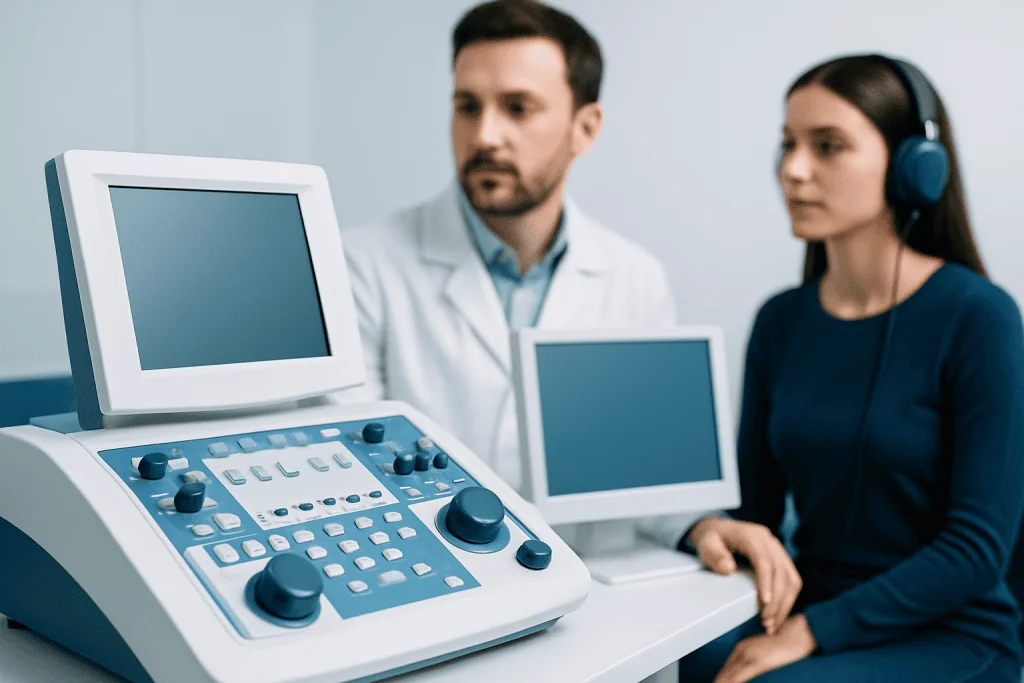
Audism can be obvious, such as refusing to arrange a qualified interpreter, making jokes about hearing loss, or excluding a Deaf person from a discussion. It can also be subtle. Examples include speaking only to a companion instead of directly to the patient, assuming that everyone can lip-read, deciding that a person cannot perform a role because of hearing status, or treating signed language as less valid than spoken language.
Institutional audism occurs when buildings, services, technology, or policies are designed only around hearing communication. An emergency announcement without visual information, an uncaptioned health video, a telephone-only appointment system, or a clinical consent discussion without effective communication support can all create barriers. The impact may be greater for people who also face barriers related to age, disability, race, language, income, immigration status, or geographic location.
Not every communication difficulty is intentional discrimination. However, intent does not remove the need to address a barrier once it is recognized. A respectful response is to ask what communication support is preferred, arrange it in a timely way, and confirm that important information has been understood.
- Assuming lip-reading is a reliable substitute for interpretation or captioning
- Failing to provide accessible information during appointments or emergencies
- Making decisions about a person’s abilities without asking about their needs and preferences
- Pressuring a person to use speech, hearing devices, or a communication method they do not want
Audism, Hearing Loss, and Deaf Identity

Hearing loss is a health condition involving reduced ability to hear sounds in one or both ears. It may be present from birth or develop later because of aging, noise exposure, infections, certain medicines, injury, genetic factors, or other medical causes. Audism is different: it refers to society’s responses to Deaf and hard-of-hearing people, rather than to hearing ability itself.
A person can seek hearing assessment or treatment while also valuing Deaf identity and signed communication. These are not opposing choices. Some people may benefit from hearing aids, cochlear implants, treatment of an underlying ear condition, assistive listening devices, speech and language support, or rehabilitation. Others may prioritize signing, captioning, visual alerts, and community-based communication. Individual goals should guide discussions with clinicians.
It is also important not to assume that all Deaf people share the same experiences. Hearing levels, languages, cultural backgrounds, age at onset of hearing differences, and access to technology vary widely. Clinicians and family members can support autonomy by asking open questions, such as which language or communication format the person prefers and what outcomes matter most to them.
Why Communication Access Matters in Healthcare
Clear communication is central to safe healthcare. Patients need understandable information to describe symptoms, ask questions, participate in decisions, give informed consent, follow treatment plans, and recognize when they need urgent help. When communication is incomplete, there is a greater risk of misunderstanding diagnoses, medication instructions, test preparation, follow-up plans, and warning signs.
Depending on the individual and setting, effective communication may include a qualified sign-language interpreter, real-time captioning, video remote interpreting when appropriate, written summaries in plain language, visual materials, assistive listening systems, or communication through a preferred support person. Family members and friends can be valuable sources of support, but they should not routinely be expected to interpret sensitive or complex clinical discussions. Qualified interpreters help protect privacy, accuracy, and patient independence.
Healthcare teams should speak directly to the patient, allow time for questions, avoid covering their face when a patient uses speechreading, and check understanding without making assumptions. Asking a patient to explain key information back in their own words can help identify gaps. Accessible communication should be arranged before an appointment whenever possible, rather than only after a problem occurs.
Health and Well-Being Effects
Audism can affect health indirectly by limiting access to information, services, and social participation. For example, a person who repeatedly encounters inaccessible care may delay routine appointments or avoid discussing concerns. Difficulties accessing health education may also make it harder to learn about prevention, screening, nutrition, medication safety, or chronic-condition management.
Experiences of discrimination can contribute to stress, frustration, loneliness, low mood, or anxiety. These reactions are understandable responses to exclusion and are not signs that a person is at fault. Support from trusted friends, family, Deaf community organizations, peer networks, counselors, or mental health professionals who can communicate accessibly may be helpful.
At the same time, it is important not to portray Deafness or hearing loss as inevitably harmful to mental health. Many Deaf and hard-of-hearing people have strong relationships, successful careers, rich cultural identities, and excellent quality of life. Health concerns are more likely to arise when social barriers, lack of access, untreated medical issues, or isolation are present.
Practical Steps for More Inclusive Care and Communication
People who are Deaf or hard of hearing may find it useful to state their preferred communication method when booking an appointment and to request accommodations early. They can ask for written after-visit instructions, captions for educational materials, and confirmation of how urgent results or appointment changes will be communicated. Bringing a list of questions can also make consultations easier, especially when several topics need to be discussed.
Families, employers, educators, and healthcare professionals can help reduce audism by treating communication access as a routine responsibility rather than a special favor. This includes learning basic inclusive communication habits, planning accessible meetings and public information, using captions, and consulting Deaf and hard-of-hearing people about what works best. A person’s own stated preferences should take priority over assumptions about what they need.
For a new or changing hearing concern, an assessment by an ear, nose, and throat specialist or audiologist can help identify possible causes and options. This medical evaluation should be delivered in the person’s preferred communication format and should include balanced information about benefits, limitations, alternatives, and follow-up needs. Treatment decisions are personal and should be made collaboratively.
Acibadem International’s multidisciplinary specialists and JCI-accredited hospitals can assess hearing-related concerns and support accessible, individualized care for international patients.
When to Seek Medical Care
Audism itself does not require medical treatment, but the effects of inaccessible communication and discrimination deserve attention and support. A person may wish to speak with a healthcare professional, counselor, patient advocate, or community support organization if exclusion, stress, anxiety, low mood, or isolation is affecting daily life. Accessible mental health support should be arranged in the person’s preferred language and communication format.
Medical assessment is important for sudden hearing loss, a rapid change in hearing, new hearing difficulty in one ear, severe ear pain, drainage from the ear, persistent ringing in the ears, dizziness, or balance problems. Sudden hearing loss should be assessed urgently because prompt evaluation may be important. Hearing changes accompanied by facial weakness, severe headache, confusion, trouble speaking, or other neurological symptoms require emergency medical care.
Routine hearing checks can be helpful when a person notices gradual changes, struggles to follow conversation, frequently increases volume, or experiences communication difficulties at work, school, or home. An audiologist or ENT specialist can evaluate hearing and discuss practical options without making assumptions about the person’s identity, communication preferences, or desired outcomes.
Frequently asked questions
Is audism a medical condition?
No. Audism is a term for prejudice, discrimination, and unequal treatment toward Deaf and hard-of-hearing people. It is a social and accessibility issue, although it can affect health when it creates barriers to care, information, or support.
What is an example of audism in healthcare?
An example is holding a complex medical discussion without arranging effective communication support, then assuming the patient understood. Other examples include speaking only to a companion, refusing captioning or interpretation, or treating a patient's communication preference as unimportant.
Is hearing loss the same as being Deaf?
Not necessarily. Hearing loss describes reduced hearing ability, while Deaf may describe an audiological experience, a cultural identity, or both. People have different preferred languages, communication styles, and views about hearing technology and treatment.
Can lip-reading replace a sign-language interpreter?
Usually not for important healthcare discussions. Lip-reading is difficult, depends on the speaker and environment, and does not provide access to every word or meaning. A qualified interpreter or another communication method chosen by the patient may be needed for accurate, private communication.
What can a patient do if communication is not accessible during an appointment?
The patient can explain their preferred communication method and request an appropriate accommodation, such as a qualified interpreter, captioning, or written information. If possible, it helps to request this before the appointment and to ask for key instructions and follow-up plans in an accessible format.
When should a person with hearing changes see a doctor?
A hearing assessment is appropriate for new, worsening, or persistent hearing difficulty. Sudden hearing loss, particularly in one ear, should be evaluated urgently. Ear pain, drainage, severe dizziness, or neurological symptoms also need prompt medical attention.
References
- World Health Organization
- National Institute on Deafness and Other Communication Disorders
- Centers for Disease Control and Prevention
- National Association of the Deaf
- World Federation of the Deaf
This article is for general information only and is not a substitute for professional medical advice. Please consult a qualified doctor about your individual situation.
Explore treatments in Turkey — costs, top hospitals & a free quote
JCI-accredited · board-certified surgeons · reply within 24h
Add us as a Preferred Source to see more of our trusted health content across Google Search, AI Overviews and Discover.