Baby Helmet — Explained by Medical Evidence, Not Myths

A baby helmet is most often used for moderate to severe positional skull flattening that persists despite repositioning and tummy time. Helmet therapy does not treat every head shape problem; some infants improve without it, while others need evaluation for different conditions.
Key Takeaways
- A baby helmet is most often used for moderate to severe positional skull flattening that persists despite repositioning and tummy time.
- Helmet therapy does not treat every head shape problem; some infants improve without it, while others need evaluation for different conditions.
- The timing of assessment matters because skull growth is fastest in early infancy.
- Diagnosis should distinguish benign positional flattening from craniosynostosis and other medical causes.
- Treatment decisions are individualized and usually involve a pediatrician and, when needed, pediatric specialists.
A baby helmet is a medical device used in selected infants to gently guide head growth when positional head flattening does not improve enough with time and repositioning. It is not needed for every baby with a flat spot, and the best choice depends on the cause, severity, age, and a doctor’s assessment.
Overview: what a baby helmet is and when it is used
A baby helmet is a custom-fitted cranial orthosis designed to help guide skull growth in infants with certain head shape differences, most commonly positional plagiocephaly or brachycephaly. In simple terms, it creates space in flatter areas while limiting growth in more prominent areas, allowing the head to become more symmetrical as the baby’s brain and skull naturally grow.
Medical evidence does not support the common myth that every flat spot requires a helmet. Many babies with mild positional flattening improve with growth, regular tummy time, and changes in how they are positioned when awake. Helmet therapy is usually considered when flattening is moderate or severe, when it does not improve enough with conservative measures, or when the baby is first assessed at an age when repositioning alone may be less effective.
Another important point is that a baby helmet is not the same as treatment for every skull problem. Some infants need evaluation for conditions in which skull bones fuse too early, such as craniosynostosis, because the treatment pathway is different. A careful diagnosis helps families avoid both unnecessary worry and unnecessary treatment.
How head flattening happens in babies
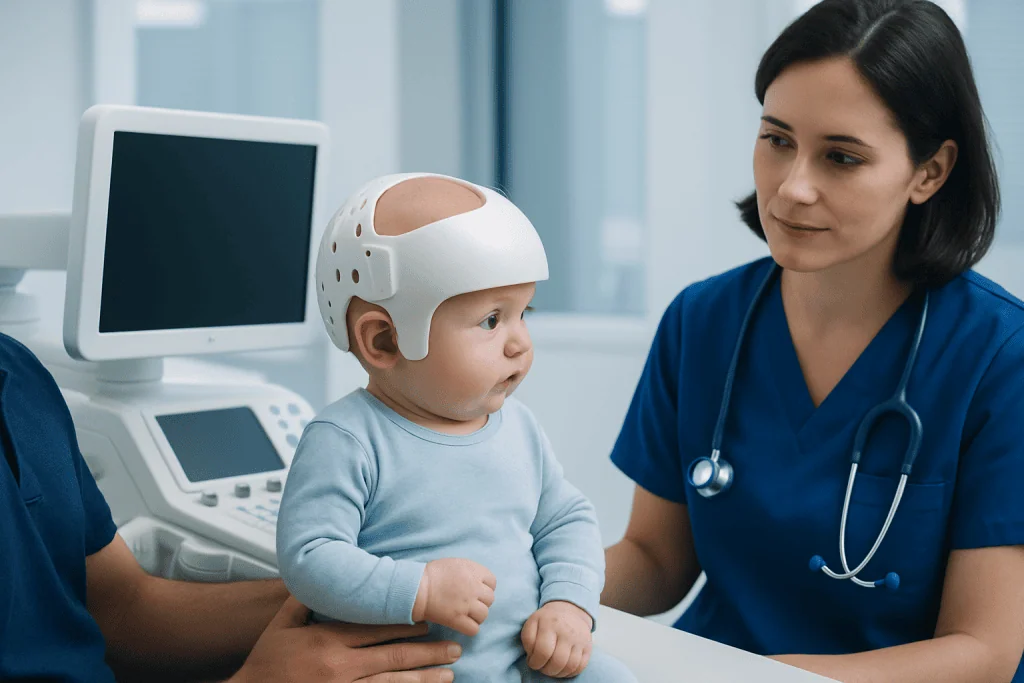
An infant’s skull is soft and made to grow quickly during the first year of life. Because of this flexibility, pressure on one area of the head over time can lead to a flat spot. This is why positional head shape changes often develop in babies who spend long periods resting in the same position, especially on their backs.
The most common pattern is positional plagiocephaly, where one side of the back of the head becomes flatter and the forehead or ear position may appear slightly shifted. Another pattern is brachycephaly, in which the back of the head is flattened more evenly, making the head appear wider and shorter. Some babies also have a long, narrow shape called scaphocephaly, though this can have different causes and may need further evaluation.
Head flattening became more common after back sleeping was recommended to reduce sudden infant death syndrome, and back sleeping remains the safest sleep position. This does not mean parents should stop placing babies on their backs for sleep. Instead, prevention focuses on supervised tummy time while awake, varying head position, limiting unnecessary time in car seats or swings outside travel, and addressing neck tightness that may make a baby prefer turning one way.
Signs, symptoms, and common risk factors
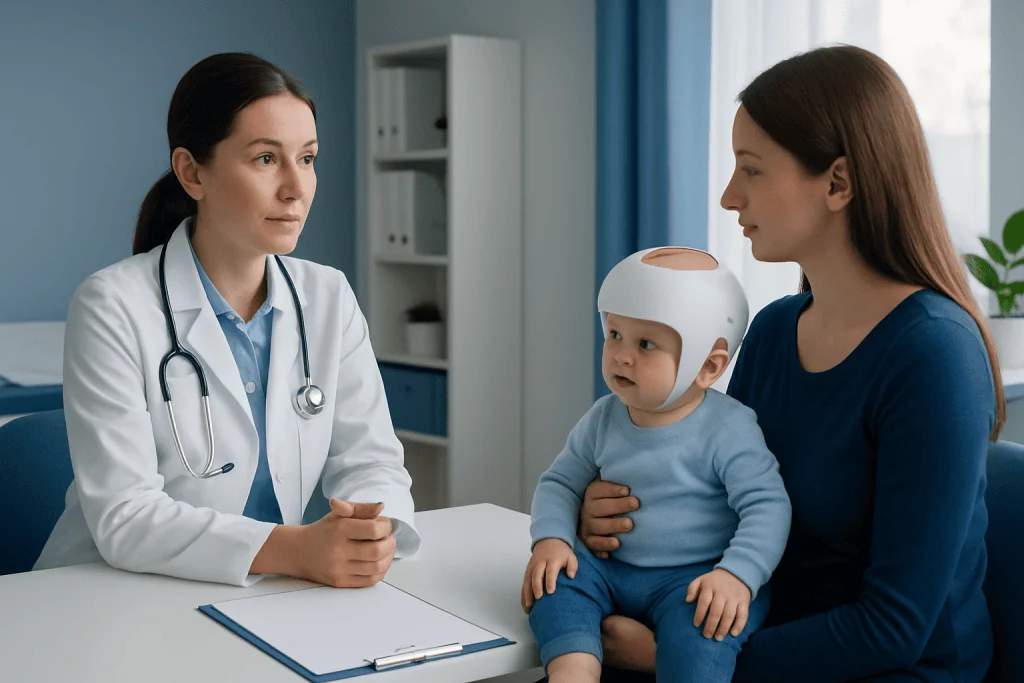
The main sign is a change in head shape rather than pain or illness. Parents may notice a flat area on the back or side of the head, uneven forehead shape, one ear appearing slightly farther forward, or asymmetry in photos taken from above. In positional flattening, the baby is usually otherwise well and developing normally.
Several factors can increase the chance of head shape changes. These include a strong preference for looking to one side, limited neck motion from torticollis, premature birth, multiple births, less active movement, and time spent with pressure on the same part of the head. Babies with tighter space in the womb may also be more prone to asymmetry at birth.
Parents should remember that head shape alone does not confirm the cause. If the skull shape seems unusual from birth, is getting worse quickly, or is associated with a raised ridge, slow head growth, vomiting, developmental concerns, or unusual eye appearance, the baby should be examined promptly. The goal is not to assume the worst, but to make sure the right condition is being addressed.
- Flattening on one side of the back of the head may suggest positional plagiocephaly.
- Symmetric flattening across the back may suggest brachycephaly.
- A persistent preference to turn the head one way may indicate torticollis.
- A firm ridge along a skull suture may need specialist assessment.
Diagnosis: separating myths from medical evidence
Diagnosis usually begins with a physical examination by a pediatrician or specialist. The clinician will ask when the flattening was first noticed, whether it was present at birth, how the baby sleeps and rests, whether there is a head-turning preference, and whether tummy time is tolerated. They will then examine the skull from different angles, feel the sutures and fontanelles, and assess neck movement.
In many infants, diagnosis can be made clinically without extensive testing. The key question is whether the head shape change is positional or whether there may be premature fusion of a skull suture. Positional plagiocephaly generally produces a parallelogram-like shape from above, while craniosynostosis may cause more fixed and characteristic patterns. When the exam raises concern, doctors may refer the infant for specialist review and, in selected cases, imaging.
Measurements or 3D surface scans may be used to estimate the degree of asymmetry and to monitor progress over time. This helps make treatment decisions more objective and can show whether repositioning is working. In complex cases, assessment may involve pediatrics, neurosurgery, physical therapy, orthotics, or pediatric neurosurgery services depending on the suspected cause.
Treatment options: repositioning, physical therapy, and baby helmet therapy
Treatment is based on age, severity, and cause. For many infants, first-line care includes supervised tummy time, encouraging the baby to turn toward the less preferred side, changing the direction the baby lies in the crib so visual stimulation comes from different angles, and reducing time spent in devices that keep pressure on the same part of the head. If torticollis is present, physical therapy and home stretching guidance can be especially helpful.
A baby helmet may be recommended when flattening is moderate to severe, when it persists despite repositioning efforts, or when a baby presents later in infancy and there is less time for spontaneous correction. The helmet is custom made and adjusted regularly. It is worn for much of the day over a period determined by the treating team, with close follow-up to monitor skin comfort, fit, and head growth.
Helmet therapy works by guiding natural growth rather than squeezing the head into shape. It tends to be most effective during the months when the skull is growing rapidly, which is why timely assessment matters. Not every baby is a candidate, and families should discuss expected benefits, practical demands, and likely duration with the clinician.
When the diagnosis is not positional flattening but a structural skull problem, treatment may be different. Some children need specialist management that can include craniosynostosis surgery or other procedures after detailed evaluation. In selected situations, advanced pediatric neurology or rehabilitation support may also be part of care if there are associated developmental or muscular concerns.
What parents can do at home
Home care focuses on safe, consistent pressure relief while the baby is awake. Regular tummy time is one of the most useful strategies because it reduces pressure on the back of the head and helps neck, shoulder, and trunk strength. It can be started in short sessions and increased gradually as the baby becomes more comfortable.
Parents can also alternate how they carry, feed, and position the baby during awake time. Toys, voices, and other visual stimulation can be placed on the non-preferred side to encourage turning in both directions. If a baby strongly resists turning one way or seems stiff, this should be discussed with a doctor because neck therapy may improve both comfort and head shape.
If a helmet has been prescribed, following the wear schedule and skin-care instructions is important. Mild warmth or temporary skin marks can occur, but persistent redness, rubbing, poor fit, or discomfort should be reported. Families should avoid using non-prescribed shaping devices or online products without medical advice, as these may be ineffective or unsafe.
- Always place the baby on the back for sleep unless a doctor advises otherwise.
- Use supervised tummy time daily while the baby is awake.
- Vary positions during play, feeding, and carrying.
- Attend follow-up visits to track improvement and adjust the plan.
When to seek medical care
Parents should seek medical advice if a baby has a noticeable flat spot that is not improving, a clear preference for turning the head to one side, or neck stiffness. An assessment is also helpful if the shape difference seems moderate or severe, if it was present very early, or if there is uncertainty about whether a helmet is needed.
Prompt evaluation is especially important when there are signs that suggest a cause other than simple positional flattening. These include a hard ridge along the skull, an unusual head shape that seems fixed, bulging of the soft spot, poor feeding, repeated vomiting, developmental concerns, or concerns about vision or eye alignment. These findings do not automatically mean a serious problem, but they should be examined by a qualified clinician.
For families seeking specialist evaluation, Acibadem International’s multidisciplinary teams in JCI-accredited hospitals assess and treat infants with head shape concerns, including cases that may require rehabilitation, orthotic guidance, or neurosurgical review.
Prognosis and common myths about baby helmets
The outlook for positional head flattening is generally good. Many babies improve with growth and conservative care, and others benefit from helmet therapy when it is appropriately recommended. Treatment aims to improve skull symmetry, but a perfectly uniform shape is not always necessary for a healthy outcome.
One common myth is that a baby helmet affects brain growth or intelligence. Properly prescribed helmet therapy does not compress the brain; it works with natural skull growth. Another myth is that helmet use is a cosmetic choice alone. In reality, the decision is medical and individualized, based on the pattern and degree of asymmetry, the baby’s age, and how the head shape changes over time.
A further myth is that parents caused the problem by following safe sleep guidance. Back sleeping remains essential for sleep safety. Positional flattening is a recognized side effect of spending time on the back, but it can often be prevented or improved with awake-time positioning strategies and early medical advice when needed.
Frequently asked questions
Does every baby with a flat head need a baby helmet?
No. Many babies with mild positional flattening improve with time, tummy time, repositioning, and treatment of any neck tightness. A helmet is usually considered only after a medical assessment and when flattening is more pronounced or persistent.
At what age is a baby helmet usually considered?
Helmet therapy is typically considered during early infancy while skull growth is still rapid, but the exact timing depends on the baby's age, the severity of flattening, and response to conservative measures. An earlier evaluation gives families more options and helps determine whether repositioning alone is still likely to work.
Is baby helmet therapy safe?
When prescribed and monitored by qualified professionals, helmet therapy is generally considered safe. Regular follow-up is important to check fit, skin condition, and progress, and parents should report persistent redness, discomfort, or feeding and sleep changes.
Can a baby helmet treat craniosynostosis?
A baby helmet does not treat the underlying fused skull suture in craniosynostosis. That condition needs specialist evaluation because management may include surgery or other interventions depending on the type and severity.
Will a flat spot affect brain development?
Positional head flattening itself does not usually mean the brain is being harmed. However, a doctor should still assess the baby to confirm the cause of the head shape change and check for associated issues such as torticollis or developmental concerns.
How long does a baby usually wear a helmet?
The duration varies from baby to baby and depends on age, severity, and how quickly the head shape changes. The treating team will set a wear schedule and adjust the helmet over time based on growth and progress.
References
- American Academy of Pediatrics
- National Institute of Neurological Disorders and Stroke
- Centers for Disease Control and Prevention
- National Health Service
- American Association of Neurological Surgeons
This article is for general information only and is not a substitute for professional medical advice. Please consult a qualified doctor about your individual situation.
Explore treatments in Turkey — costs, top hospitals & a free quote
JCI-accredited · board-certified surgeons · reply within 24h
Add us as a Preferred Source to see more of our trusted health content across Google Search, AI Overviews and Discover.

More from the Health Library

Knots in the Armpit: An Evidence-Based Guide for Patients

Interventional Cardiologist: A Complete Medical Overview

Gastrointestinal — Explained by Medical Evidence, Not Myths

Hole in Heart: An Evidence-Based Guide for Patients

Propafenone — Explained by Medical Evidence, Not Myths