Baby Seizures: An Evidence-Based Guide for Patients

Baby seizures can look like stiffening, jerking, staring, eye movements, lip smacking, or brief pauses in breathing. Not all unusual movements are seizures; reflux, startle reflexes, and jitteriness can look similar.
Key Takeaways
- Baby seizures can look like stiffening, jerking, staring, eye movements, lip smacking, or brief pauses in breathing.
- Not all unusual movements are seizures; reflux, startle reflexes, and jitteriness can look similar.
- A first-time seizure, a seizure lasting more than 5 minutes, or a seizure with breathing changes needs urgent medical care.
- Causes range from fever and low blood sugar to infection, birth-related brain injury, and epilepsy.
- Diagnosis often includes a careful history, examination, blood tests, and tests such as EEG or brain imaging.
Baby seizures are sudden episodes of unusual movement, behavior, or awareness caused by abnormal electrical activity in the brain. Some are obvious, but others are subtle, so any first-time or unexplained event in a baby should be assessed by a doctor promptly.
Overview: What baby seizures are
Baby seizures are episodes caused by sudden, abnormal electrical activity in an infant’s brain. They may affect movement, breathing, awareness, eye position, or behavior for a short time. In babies, seizures do not always look like the dramatic shaking people often expect, which is why they can be difficult for families to recognize.
Some seizures are easy to notice because they involve rhythmic jerking or stiffening. Others are more subtle and may appear as repeated lip smacking, bicycling leg movements, eye deviation, staring, or brief pauses in normal activity. Newborns and young infants can also have non-seizure movements that resemble seizures, so a professional assessment is important.
A seizure is a symptom, not a diagnosis by itself. It can happen for many reasons, including fever, low blood sugar, infection, electrolyte imbalance, brain injury, genetic conditions, or epilepsy. Because the range of causes is broad, doctors focus on identifying the reason for the event as well as treating the seizure itself.
How baby seizures may look at home
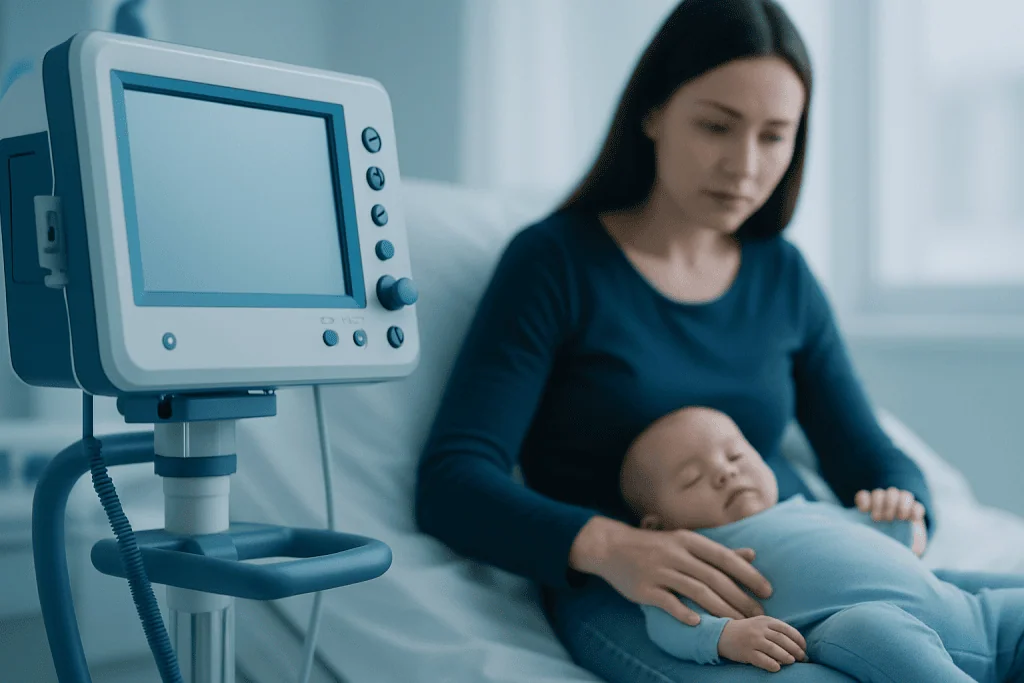
In infants, seizures may be obvious or subtle. A baby may suddenly stiffen, jerk one arm or leg, have repeated twitching of the face, blink rapidly, roll the eyes upward, or stare and stop responding briefly. Some babies make repetitive sucking or chewing movements, pedal their legs, or seem unusually floppy during an episode.
Breathing changes can also occur. A baby may pause, turn pale, or look bluish around the lips if a seizure affects breathing. After the episode, some infants quickly return to normal, while others may seem sleepy, irritable, weak, or less responsive for a period of time.
Patterns matter. Movements that happen repeatedly in the same way, cannot be stopped by gentle touch or repositioning, and occur during wakefulness as well as sleep are more concerning for seizures. Parents or caregivers who can safely record a short video often provide very helpful information for the medical team.
- Rhythmic jerking or twitching
- Stiffening of the body or limbs
- Blank staring or reduced responsiveness
- Repeated mouth, tongue, or eye movements
- Sudden pauses in breathing or color change
What can cause seizures in babies

The causes of baby seizures vary by age and overall health. In newborns, common causes include low blood sugar, low calcium, infection, bleeding in or around the brain, stroke, or lack of oxygen around the time of birth. Structural differences in the brain and certain metabolic or genetic disorders can also lead to seizures early in life.
In older infants, seizures may occur with fever, infection of the brain or its lining, head injury, or underlying epilepsy. Some babies have a seizure once and never have another, especially if the trigger is temporary and treatable. Others may need longer-term follow-up if the events recur or if testing suggests an ongoing seizure tendency.
Risk factors can include prematurity, difficult delivery, known neurologic conditions, developmental delay, central nervous system infection, family history of seizures, and previous brain injury. In some cases, evaluation may lead doctors to investigate related neurological conditions such as epilepsy. The exact cause is not always clear immediately, but careful testing often provides answers over time.
Seizures versus normal baby movements
Not every unusual movement in a baby is a seizure. Newborns and infants commonly have startle reflexes, jitteriness, sleep twitches, shuddering, reflux-related arching, and brief tremors, especially when crying. These can be normal or related to non-neurological conditions.
Doctors often look at whether the movement is rhythmic, repetitive, and impossible to interrupt. Jitteriness, for example, may lessen when a baby is held or the limb is gently flexed, while seizure activity often continues despite touch. Sleep-related twitches usually happen only during sleep and stop when the baby wakes.
Even experienced parents may not be able to tell the difference at home. That uncertainty is understandable. If a baby has a first-time episode, repeated unusual spells, or any event with breathing change, poor feeding, fever, or reduced alertness, the baby should be evaluated by a clinician rather than watched at home without advice.
How doctors diagnose baby seizures
Diagnosis starts with a detailed history and physical examination. Doctors ask what the event looked like, how long it lasted, whether the baby had fever or illness, if there were color changes or breathing pauses, and how the baby behaved afterward. Pregnancy, birth history, feeding, growth, medications, and family history can also offer important clues.
Tests depend on the baby’s age and symptoms. Blood tests may check glucose, calcium, sodium, and signs of infection or metabolic problems. An electroencephalogram, often called an EEG, records the brain’s electrical activity and can help confirm whether episodes are seizures. In some situations, brain imaging such as ultrasound in newborns or MRI may be recommended. When a stroke or bleeding is suspected, doctors may evaluate for related problems such as stroke.
If a baby is unwell, has a fever in early infancy, or shows signs of central nervous system infection, doctors may advise urgent hospital assessment and additional testing. In specialized centers, infants may be monitored with continuous EEG to capture events that are too subtle to recognize by observation alone.
Treatment options and what care may involve
Treatment depends on the cause, the baby’s age, and whether seizures are continuing. Immediate care focuses on breathing, circulation, and stopping prolonged seizures when necessary. If a trigger such as low blood sugar, low calcium, dehydration, or infection is found, it is treated promptly because correcting the cause may stop the seizures.
Some babies need anti-seizure medication, especially if seizures are repeated, prolonged, or linked to an underlying neurological condition. The choice of medicine is individualized, and doctors monitor the baby’s response closely. If tests show a structural or persistent neurological cause, care may include follow-up with pediatric neurology and, in selected cases, neurology care or advanced epilepsy surgery evaluation for difficult-to-control seizures.
Supportive care is also important. Babies may need feeding support, temperature control, treatment of infection, or observation in the hospital. If developmental concerns appear later, early intervention services can help with motor, language, or cognitive progress. For families seeking coordinated care, Acibadem International’s multidisciplinary specialists in JCI-accredited hospitals diagnose and treat seizure disorders in international patients, including access to pediatric neurology and advanced brain imaging when appropriate.
What parents can do during and after an episode
If a baby has a possible seizure, the safest first step is to place the baby on a flat surface on their side if possible, or keep the airway clear while observing closely. Tight clothing around the neck can be loosened. Nothing should be put in the baby’s mouth, and caregivers should not try to restrain movements forcefully.
Timing the episode is helpful because seizure duration guides emergency decisions. If it is safe to do so, a short video can help doctors later. After the episode, the baby should be watched for breathing pattern, color, alertness, and feeding ability. Families should note fever, recent illness, head injury, missed feeds, or any similar events in the past.
At home, parents should not give food, drink, or medicine during an active event unless specifically instructed by a doctor. If the baby has known seizures and an emergency plan has been prescribed, that plan should be followed exactly. Routine follow-up, medication reviews, and open communication with the baby’s care team can reduce uncertainty and improve safety.
When to seek medical care
Urgent medical care is needed for any first-time seizure in a baby. Emergency evaluation is especially important if the event lasts more than 5 minutes, happens repeatedly, causes breathing difficulty, blue color, poor responsiveness, or follows an injury. A baby younger than 3 months with fever also needs prompt assessment.
Parents should also seek medical advice if episodes are brief but keep coming back, if the baby seems less alert afterward, is feeding poorly, vomits repeatedly, or shows signs of infection such as fever, irritability, or unusual sleepiness. Trusting a caregiver’s concern is reasonable; if a baby does not seem right, prompt evaluation is appropriate.
Even when the baby appears normal afterward, repeated unusual spells should not be ignored. Early assessment can help distinguish seizures from other benign infant movements and can identify treatable causes before complications develop.
Frequently asked questions
Are baby seizures always obvious shaking episodes?
No. In babies, seizures can be very subtle and may look like staring, eye deviation, lip smacking, brief stiffening, or repeated twitching of one area. That is why unusual repeated episodes should be discussed with a doctor even if there is no full-body shaking.
Can reflux or startle reflex be mistaken for baby seizures?
Yes. Reflux, normal startle reflexes, sleep twitches, and jitteriness can resemble seizures in infants. A clinician may need a detailed history, examination, and sometimes an EEG to tell the difference.
What should a parent do during a possible seizure?
The baby should be kept safe on a flat surface with attention to keeping the airway clear. Caregivers should not put anything in the baby’s mouth or try to hold the movements down. Timing the event and seeking urgent help for a first seizure or a prolonged seizure are important.
Do baby seizures mean the child has epilepsy?
Not always. A seizure can happen because of a temporary problem such as fever, low blood sugar, or infection. Epilepsy is usually considered when seizures recur without a short-term trigger or when testing shows an ongoing tendency to have seizures.
How are seizures in babies diagnosed?
Doctors use the baby’s history, a physical exam, and selected tests based on age and symptoms. These may include blood tests, an EEG to record brain activity, and brain imaging such as ultrasound or MRI.
Can baby seizures be treated successfully?
Many causes of seizures in babies are treatable, especially when the underlying trigger is identified quickly. Some babies need only short-term treatment, while others need longer follow-up with pediatric neurology. The outlook depends largely on the cause rather than the seizure alone.
References
- American Academy of Pediatrics
- National Institute of Neurological Disorders and Stroke
- Centers for Disease Control and Prevention
- International League Against Epilepsy
- World Health Organization
This article is for general information only and is not a substitute for professional medical advice. Please consult a qualified doctor about your individual situation.
Explore treatments in Turkey — costs, top hospitals & a free quote
JCI-accredited · board-certified surgeons · reply within 24h
Add us as a Preferred Source to see more of our trusted health content across Google Search, AI Overviews and Discover.

More from the Health Library
Wash in Hand: What Patients Need to Know

Amalaki Powder Uses — Explained by Medical Evidence, Not Myths

Tantrum: What Patients Need to Know

Impacted Wisdom Teeth: What Patients Need to Know

Brown Tail Moth Caterpillar: An Evidence-Based Guide for Patients