Baby Water — Explained by Medical Evidence, Not Myths

Most young infants do not need extra water because breast milk or formula provides hydration. Giving too much plain water to a young baby can be unsafe and may upset the body’s salt balance.
Key Takeaways
- Most young infants do not need extra water because breast milk or formula provides hydration.
- Giving too much plain water to a young baby can be unsafe and may upset the body’s salt balance.
- The safest water choice depends on the baby’s age, feeding method, and local water quality.
- Formula should be mixed exactly as directed, using safe water and the correct powder-to-water ratio.
- Parents should ask a pediatrician if they have concerns about dehydration, vomiting, diarrhea, or fever.
Baby water is not a special medical necessity for most infants, and plain water is usually not recommended in the first months of life unless a clinician advises it. For most babies, breast milk or properly prepared formula provides the fluid they need, while water quality matters mainly when mixing formula or offering small amounts later in infancy.
What baby water really means
Baby water usually refers to water marketed for infants or to questions about whether babies should drink plain water. In medical practice, the more important issue is not the label on the bottle but whether the baby needs water at all, what age the baby is, and whether the water is being used to prepare formula safely.
For most healthy newborns and young infants, the answer is simple: extra plain water is usually unnecessary. Breast milk and standard infant formula are mostly water and normally provide the hydration a baby needs. That is why many pediatric clinicians focus less on “baby water” as a product and more on safe feeding and appropriate timing.
There can be a place for small amounts of water later in infancy, especially once solid foods begin and a pediatrician agrees it is appropriate. Even then, water should not replace milk feeds, because babies still rely on breast milk or formula for most of their calories and nutrition during the first year.
Do babies need water, and when?
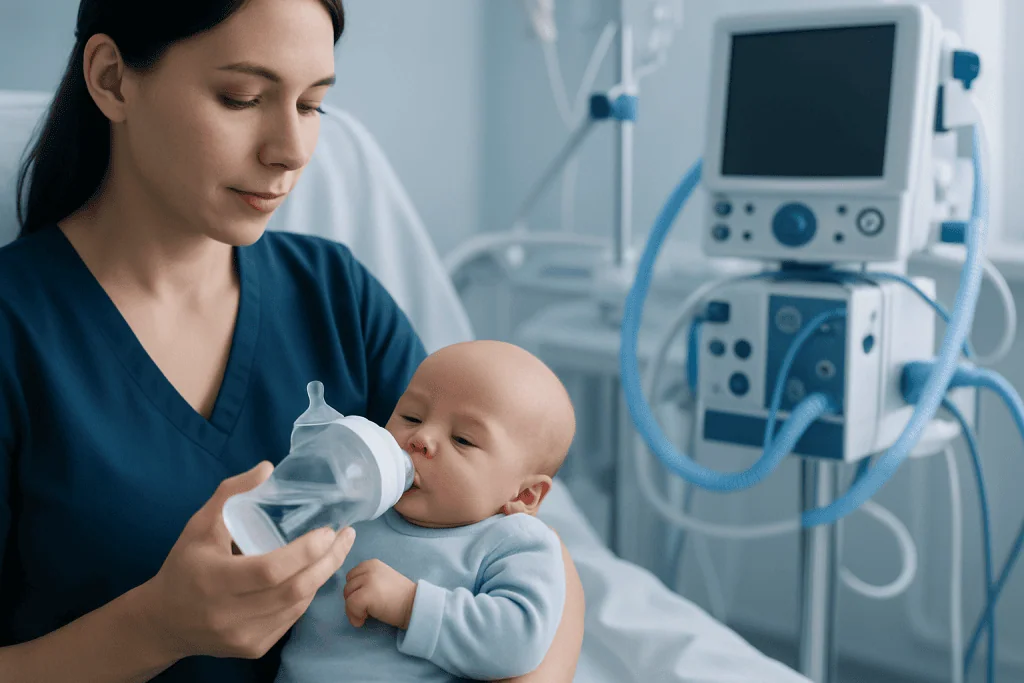
In the first months of life, healthy babies generally should not be given plain water unless a doctor specifically recommends it. Their kidneys are still maturing, and they are designed to get fluids from breast milk or formula. Adding water too early can fill a baby’s stomach without providing nutrition, which may reduce intake of needed feeds.
As babies get older, a pediatrician may suggest introducing small sips of water, often around the time complementary foods are started. The exact timing can vary depending on the baby’s development, growth, feeding pattern, and medical history. Water at this stage is usually an addition to meals, not a substitute for breast milk or formula.
Parents often ask about hot weather. In most cases, frequent breastfeeds or formula feeds are still the right way to maintain infant hydration. If there are concerns about poor feeding, heat exposure, vomiting, or diarrhea, a clinician can advise whether the baby needs evaluation for dehydration.
Why too much water can be harmful

Too much plain water can be risky for babies, especially very young infants. A baby’s body handles water differently from an older child’s or adult’s body. Large amounts of extra water can dilute the level of sodium in the blood and upset the body’s fluid balance.
This is one reason clinicians strongly advise against giving water instead of feeds or diluting formula to make it last longer. Over-diluted formula does not provide the right amount of calories, protein, minerals, and electrolytes a baby needs for normal growth and brain development.
Possible warning signs that a baby is not doing well after poor feeding or excess water intake can include unusual sleepiness, irritability, vomiting, poor feeding, or fewer wet diapers. These symptoms are not specific and can happen for many reasons, but they deserve prompt medical attention in a young infant.
Choosing safe water for formula and later drinking
When formula is used, the key question is whether the water is safe to mix with it. In many places, tap water is acceptable if it meets local safety standards. In other settings, boiled and cooled water or another safe water source may be advised. Families should follow local public health guidance and their pediatrician’s recommendations, especially if there are concerns about contamination, private wells, or temporary water advisories.
Bottled water is not automatically better than tap water. Some bottled waters contain minerals in amounts that are not ideal for regular infant use, and some are not sterile. Water marketed as baby water may be convenient, but it is not inherently necessary for most families if a safe water supply is available.
If there is any uncertainty about water quality, pediatricians may recommend discussing safe preparation methods with a healthcare professional. Hospitals and pediatric services can also guide families on pediatric care needs related to infant feeding, growth, and hydration. The most important step is to prepare formula exactly as directed on the product label and not to change the amount of water or powder unless a clinician instructs otherwise.
Common myths about baby water
One common myth is that babies need extra water in hot weather. In reality, healthy young infants usually do best with more frequent breast milk or formula feeds rather than plain water. Milk feeds replace both fluid and energy, while water alone can reduce appetite for the nutrition a baby needs.
Another myth is that constipation in babies should be treated by giving water routinely. Constipation in infants can have several causes, and management depends on age and feeding type. Parents should seek advice before trying home remedies, especially in young babies or if there is vomiting, abdominal swelling, blood in the stool, or poor feeding. In some cases, symptoms may need assessment as part of constipation care.
A third myth is that baby water products are sterile or medically superior. Unless clearly labeled and prepared for a specific medical purpose, these products are not a substitute for general safe feeding guidance. The safest choice is the one that fits the baby’s age, feeding plan, and local water safety recommendations.
- Myth: all babies need plain water every day.
- Fact: most young infants do not.
- Myth: bottled baby water is always safest.
- Fact: safe use depends on source, quality, and how it is used.
- Myth: watering down formula is harmless.
- Fact: it can be unsafe and nutritionally inadequate.
Practical self-care for parents and caregivers
Good infant hydration starts with watching feeding patterns, diaper output, and general behavior. A baby who is feeding regularly, having expected wet diapers, and appearing alert between feeds is usually getting enough fluid. If a parent is unsure, keeping a simple feeding and diaper log for a day or two can be helpful to discuss with a clinician.
Families who prepare formula should wash their hands, clean bottles carefully, and use the exact mixing instructions on the package. Water should not be added to stretch feeds, and cereal or other ingredients should not be mixed into bottles unless a pediatrician specifically recommends it. For babies with feeding difficulties, reflux, or poor weight gain, a more individualized plan may be needed.
Parents with concerns about growth, hydration, or feeding intolerance may benefit from assessment through a pediatric check-up or, when needed, support from nutrition and diet services. Near the end of the care pathway, some families also seek multidisciplinary assessment at Acibadem International, where JCI-accredited hospitals care for international patients with pediatric and nutrition-related concerns.
When to seek medical care
Parents should contact a doctor promptly if a baby is feeding poorly, has significantly fewer wet diapers than usual, seems unusually sleepy, has a dry mouth, or cries without many tears. These can be signs of inadequate intake or illness and are especially important in newborns and young infants.
Medical advice is also important if a baby has vomiting, diarrhea, fever, difficulty breathing, or is hard to wake. A clinician can determine whether the issue is simple feeding adjustment or whether further evaluation is needed. If symptoms are severe or the baby seems very unwell, urgent medical care is appropriate.
Even if the concern seems minor, parents should feel comfortable asking questions about baby water, formula preparation, or the timing of introducing water. Early guidance can prevent common mistakes and provide reassurance during a period when infant feeding advice can feel confusing.
Frequently asked questions
Is baby water necessary for newborns?
No, baby water is usually not necessary for newborns. Breast milk or properly prepared formula normally provides all the fluid a healthy young infant needs.
When can babies drink water?
Many babies can begin having small sips of water later in infancy, often around the time solid foods are introduced. The exact timing is best confirmed with a pediatrician, because age, growth, and medical history matter.
Can bottled water be used for formula?
Sometimes, but bottled water is not automatically the best choice. What matters most is whether the water is safe and appropriate for infant use, and whether formula is mixed exactly according to instructions.
Why is too much water bad for babies?
Too much plain water can upset a young baby’s fluid and salt balance. It can also reduce hunger for breast milk or formula, which may lower important calorie and nutrient intake.
Should parents give water if a baby seems thirsty in hot weather?
Usually, healthy young infants should be offered breast milk or formula more often rather than plain water. If a baby seems unwell, feeds poorly, or shows signs of dehydration, a doctor should be contacted.
Is baby water the same as sterile water?
Not necessarily. Products marketed as baby water may not be sterile unless specifically labeled that way, so parents should not assume all bottled infant water has special medical properties.
This article is for general information only and is not a substitute for professional medical advice. Please consult a qualified doctor about your individual situation.
Explore treatments in Turkey — costs, top hospitals & a free quote
JCI-accredited · board-certified surgeons · reply within 24h
Add us as a Preferred Source to see more of our trusted health content across Google Search, AI Overviews and Discover.
Check your numbers in seconds
BMI, calories, due date, blood pressure and 30+ more clinical calculators — free, instant, doctor-reviewed ranges.

More from the Health Library

Butter: A Complete Medical Overview

Bump on Eyelid: A Complete Medical Overview

Myelin Sheath: A Complete Medical Overview

Papaya Seeds: A Complete Medical Overview

Distributive Shock: A Complete Medical Overview