Backwards Exercise: An Evidence-Based Guide for Patients

Backwards exercise usually means walking backward and can also include gentle reverse stepping or treadmill work under supervision. It may help improve balance, coordination, leg muscle activation, and exercise variety.
Key Takeaways
- Backwards exercise usually means walking backward and can also include gentle reverse stepping or treadmill work under supervision.
- It may help improve balance, coordination, leg muscle activation, and exercise variety.
- Because people cannot see where they are going, falls and overuse injuries are the main risks if it is done carelessly.
- It is not suitable for everyone, especially those with significant balance problems, acute injuries, or certain neurologic conditions unless advised by a clinician.
- A safe start includes a clear surface, support nearby, short sessions, and gradual progression.
Backwards exercise refers to moving in reverse, most often by walking backward on the ground or a treadmill. For many people, it can be a practical way to challenge balance, coordination, and lower-body muscles, but it should be started gradually and with attention to safety.
What is backwards exercise?
Backwards exercise is physical activity performed while moving in reverse. In everyday use, it most often means backward walking, sometimes called retro walking. Some people also use the term for backward stepping drills, reverse lunges, or treadmill walking in reverse under close supervision.
The main reason people try backwards exercise is that it changes how the body works compared with forward movement. Walking backward places different demands on the feet, ankles, knees, hips, and trunk. It also asks the brain and nervous system to pay closer attention to body position, timing, and coordination.
For many healthy adults, backwards exercise can be a useful addition to a broader activity plan. It should not be seen as a miracle exercise or a replacement for regular walking, strength training, or rehabilitation prescribed by a clinician. Instead, it is best understood as one tool that may support balance, fitness, and movement control when used appropriately.
How backwards exercise may help the body
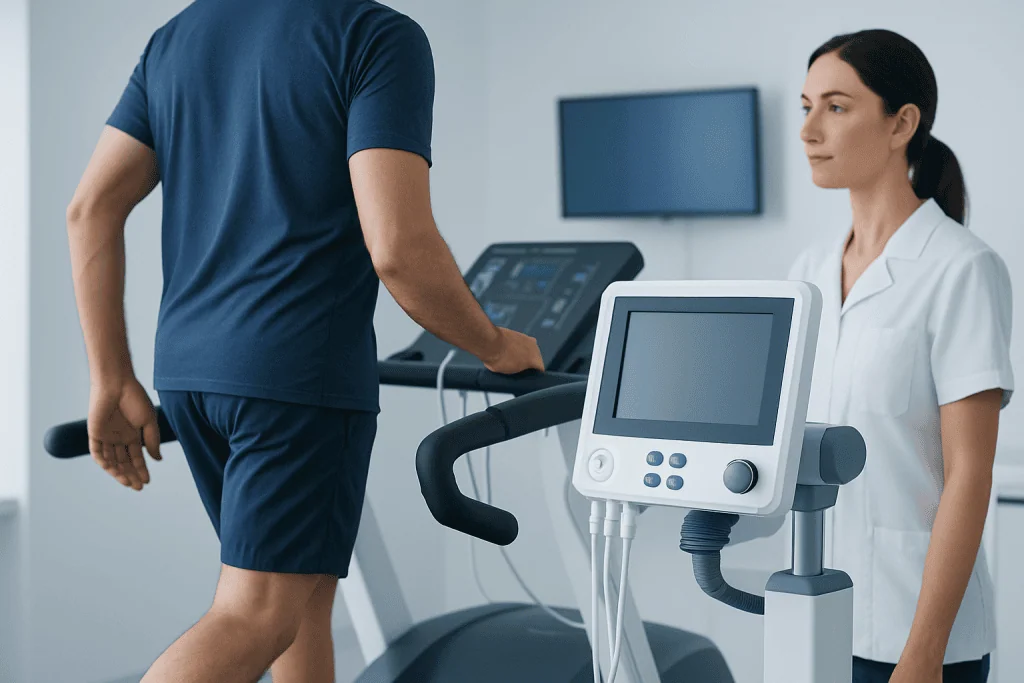
Backwards exercise may offer benefits because it is less familiar than forward walking. When the body performs a new movement pattern, muscles and the nervous system often need to work in a more deliberate way. This can increase awareness of posture, foot placement, and alignment.
Some people find that backward walking helps challenge balance and coordination. It may also activate leg muscles differently than forward walking, especially around the front of the thigh, lower leg, and hip. In rehabilitation settings, clinicians sometimes use backward walking as one part of a structured program for gait training, mobility work, or supervised recovery.
There may also be a fitness benefit. Because the movement feels less efficient and more mentally demanding, some people notice that short sessions feel more challenging than expected. However, the goal should be proper form and safety rather than intensity alone.
- May improve balance and body awareness
- May support coordination and gait control
- May vary muscle activation in the legs and hips
- May add variety to walking or rehab routines
- May help break up repetitive movement patterns
Who may benefit most from backward walking

Healthy adults who already walk comfortably forward may be able to try short, low-risk backward walking sessions for general fitness or coordination. It can be especially appealing to people who want movement variety without high-impact exercise. Athletes and active adults sometimes use it as a warm-up drill or part of neuromuscular training.
In clinical practice, backward walking may also be used selectively in rehabilitation. A physiotherapist may recommend it to support gait mechanics, lower-limb control, or balance training, depending on the person’s condition and goals. When there is pain, weakness, dizziness, or a recent injury, professional guidance is especially important.
It is also helpful to remember that not every body responds the same way. A person with knee discomfort may find backward walking tolerable in one setting but aggravating in another. For this reason, individualized assessment matters, particularly for anyone with ongoing joint, nerve, or spine symptoms such as a herniated disc.
Risks, limitations, and who should be cautious
The biggest limitation of backwards exercise is simple: the person cannot see where they are going. That makes falls, collisions, and missteps more likely than with ordinary walking. Uneven pavement, cluttered hallways, pets, loose rugs, and treadmill misuse can all raise the risk.
There can also be strain-related problems. If a person starts too quickly, does too much, or uses poor form, soreness may develop in the calves, shins, knees, hips, or lower back. Backward movement is not automatically easier on joints, and it should not be used to push through pain.
Extra caution is needed for people with balance disorders, recent surgery, severe arthritis, significant vision problems, dizziness, neuropathy, or neurologic disease. People with frequent falls or symptoms such as leg weakness, numbness, or severe back pain should seek medical advice before trying it. In some cases, a clinician may suggest assessment through physical therapy and rehabilitation to find the safest approach.
How to start backwards exercise safely
A safe start is usually simple and conservative. Choose a flat, clear, well-lit surface and begin near a wall, railing, or sturdy counter for support. Wear comfortable shoes with good grip. Early sessions should be short, slow, and focused on control rather than speed.
Many people do well by standing tall, looking over one shoulder from time to time, and taking small, smooth steps. Arms can stay relaxed at the sides or move naturally for balance. If there is any sharp pain, dizziness, or feeling of instability, the session should stop.
Progression should be gradual. A person might begin with only a minute or two and then add time slowly on different days if it feels comfortable. Some people prefer to practice with a trained professional first, especially if they are recovering from injury or already have mobility concerns.
- Warm up with regular forward walking first
- Use a clear path free of obstacles
- Start with short intervals and rest as needed
- Keep steps small and controlled
- Use supervision or support if balance is uncertain
Backwards exercise in rehabilitation and medical care
Backwards exercise is sometimes included in rehabilitation programs, but it should be matched to the diagnosis and stage of recovery. In a clinical setting, therapists may use it for selected patients to improve gait, confidence with movement, and lower-limb control. The exercise is usually one part of a broader plan rather than the only treatment.
For example, someone with ongoing knee pain, recovery after injury, or chronic movement limitations may need strength work, flexibility exercises, and targeted assessment in addition to gait drills. People with spinal symptoms may also require careful evaluation before trying reverse movement, especially if symptoms radiate into the leg or worsen with activity. Depending on the underlying cause, related care may involve orthopedic rehabilitation or evaluation for sciatica.
If a person has persistent pain, repeated falls, or trouble walking, self-directed exercise should not replace diagnosis. In those situations, medical assessment can help identify whether the issue is musculoskeletal, neurologic, or related to another health problem. Near the end of the care journey, some international patients may choose centers such as Acibadem International, where multidisciplinary specialists in JCI-accredited hospitals evaluate movement problems and rehabilitation needs.
When to seek medical care
Medical advice is recommended if backward walking causes pain that does not improve, repeated loss of balance, or symptoms that interfere with normal daily activities. This is also important if there is recent trauma, a known joint condition, or symptoms that seem to be getting worse instead of better.
Urgent medical attention is needed for red-flag symptoms such as chest pain, severe shortness of breath, sudden weakness, fainting, new numbness, loss of coordination, or severe back pain with bowel or bladder changes. These symptoms are not typical exercise effects and should not be ignored.
A clinician can help decide whether backwards exercise is appropriate, whether the technique needs to be modified, or whether another problem should be treated first. In some cases, an assessment by a specialist in neurological rehabilitation may be helpful when balance, nerve, or walking issues are present.
Frequently asked questions
Is backwards exercise the same as backward walking?
Usually, yes. In most patient education, backwards exercise refers mainly to walking backward, although it can also include reverse stepping drills or other supervised movements performed in reverse.
What are the main benefits of backwards exercise?
Potential benefits include improved balance, coordination, body awareness, and different muscle activation in the legs and hips. It may also add variety to an exercise routine and can sometimes be used in rehabilitation under professional guidance.
Can backwards exercise help knee pain?
It may help some people as part of a broader rehabilitation plan, but it is not a universal treatment. Knee pain has many causes, so a clinician or physiotherapist should guide exercise choices when pain is persistent or significant.
Is walking backward on a treadmill safe?
It can be risky without experience or supervision because falls are more likely. If it is used, it should be done very slowly, with hand support if advised, and preferably under the guidance of a trained professional.
Who should avoid backwards exercise?
People with severe balance problems, recent injury, significant vision loss, dizziness, frequent falls, or concerning nerve symptoms should be cautious. They should speak with a qualified healthcare professional before starting.
How often should a beginner do backward walking?
A beginner should start with very short, easy sessions and increase gradually based on comfort and stability. There is no single best schedule for everyone, so progression should be personalized and stopped if symptoms appear.
References
- World Health Organization
- Centers for Disease Control and Prevention
- American College of Sports Medicine
- National Institute on Aging
- National Institute of Neurological Disorders and Stroke
This article is for general information only and is not a substitute for professional medical advice. Please consult a qualified doctor about your individual situation.
Explore treatments in Turkey — costs, top hospitals & a free quote
JCI-accredited · board-certified surgeons · reply within 24h
Add us as a Preferred Source to see more of our trusted health content across Google Search, AI Overviews and Discover.

More from the Health Library

Chinese Green Tea: A Complete Medical Overview
Arterial Line: What Patients Need to Know

Desonide Cream: An Evidence-Based Guide for Patients
Unsweetened Almond Milk and Diabetes: A Complete Medical Overview

Blind in One Eye: An Evidence-Based Guide for Patients