Baker’s Cyst Behind the Knee: Why It Happens and When It Needs Treatment

A Baker’s cyst is a fluid-filled swelling that develops behind the knee. It is usually caused by an underlying knee problem such as arthritis, cartilage damage, or inflammation.
Key Takeaways
- A Baker’s cyst is a fluid-filled swelling that develops behind the knee.
- It is usually caused by an underlying knee problem such as arthritis, cartilage damage, or inflammation.
- Symptoms can include tightness, swelling, stiffness, and discomfort when bending or straightening the knee.
- Treatment focuses on both the cyst and the knee condition that caused it.
- Sudden calf pain or swelling needs urgent medical assessment because it can mimic a blood clot.
A Baker’s cyst is a pocket of joint fluid that forms behind the knee, usually because the knee is irritated or inflamed. It is often harmless, but persistent pain, swelling, or sudden worsening should be assessed by a doctor.
Overview
A Baker’s cyst, also called a popliteal cyst, is a fluid-filled swelling that forms at the back of the knee. It develops when extra synovial fluid, the natural lubricating fluid inside the knee joint, is pushed into a small sac behind the knee. This can create a soft lump or a feeling of fullness in that area.
Many Baker’s cysts are related to another issue inside the knee rather than being a separate disease on their own. Inflammation, wear and tear, or injury can make the knee produce more fluid than usual. The excess fluid may then collect behind the joint and form the cyst.
Some people notice no symptoms at all, and the cyst is found during an examination or imaging test for another reason. Others may feel pressure, tightness, stiffness, or discomfort, especially when the knee is fully bent or straightened. Although the condition is often manageable, the best approach depends on the underlying cause.
Symptoms of a Baker’s Cyst
The most common sign of a Baker’s cyst is swelling or a lump behind the knee. The size can vary. In some people it is barely noticeable, while in others it may feel more obvious after standing for a long time or being physically active.
Symptoms may include tightness behind the knee, aching pain, stiffness, and difficulty fully bending or straightening the leg. Some people feel a sense of pressure rather than sharp pain. Symptoms are often more noticeable when the knee is already inflamed from another condition.
If the cyst becomes larger, it can sometimes press on nearby tissues and increase discomfort. In rare cases, the cyst can rupture, allowing fluid to track down into the calf. This may cause sudden pain, swelling, redness, or a sensation similar to water running down the leg, which can look like other conditions and should be checked promptly.
- Swelling behind the knee
- Tightness or fullness in the back of the knee
- Knee stiffness
- Pain with movement or activity
- Calf swelling if the cyst leaks or ruptures
Why It Happens: Causes and Risk Factors

A Baker’s cyst usually happens because the knee joint is making too much synovial fluid. This is often a reaction to irritation inside the joint. The fluid can move into a bursa-like space at the back of the knee, where it collects and forms the cyst.
Common underlying causes include osteoarthritis, inflammatory arthritis such as rheumatoid arthritis, cartilage tears, and meniscus injuries. Any condition that causes ongoing knee swelling can increase the chance of developing a cyst. In children, Baker’s cysts can sometimes appear without a clear joint disease and may resolve on their own, but in adults there is often a related knee problem.
Risk factors include older age, previous knee injury, repetitive strain on the knee, and chronic joint inflammation. People who already have osteoarthritis or another painful knee condition may be more likely to notice a Baker’s cyst during a flare-up. Identifying and treating the underlying knee disorder is often the key step in preventing recurrence.
How Doctors Diagnose It
Diagnosis usually begins with a medical history and physical examination. A doctor may examine the knee for swelling, tenderness, range of motion, and any signs of arthritis or injury. The swelling from a Baker’s cyst is often easier to feel when the patient is standing with the knee slightly bent.
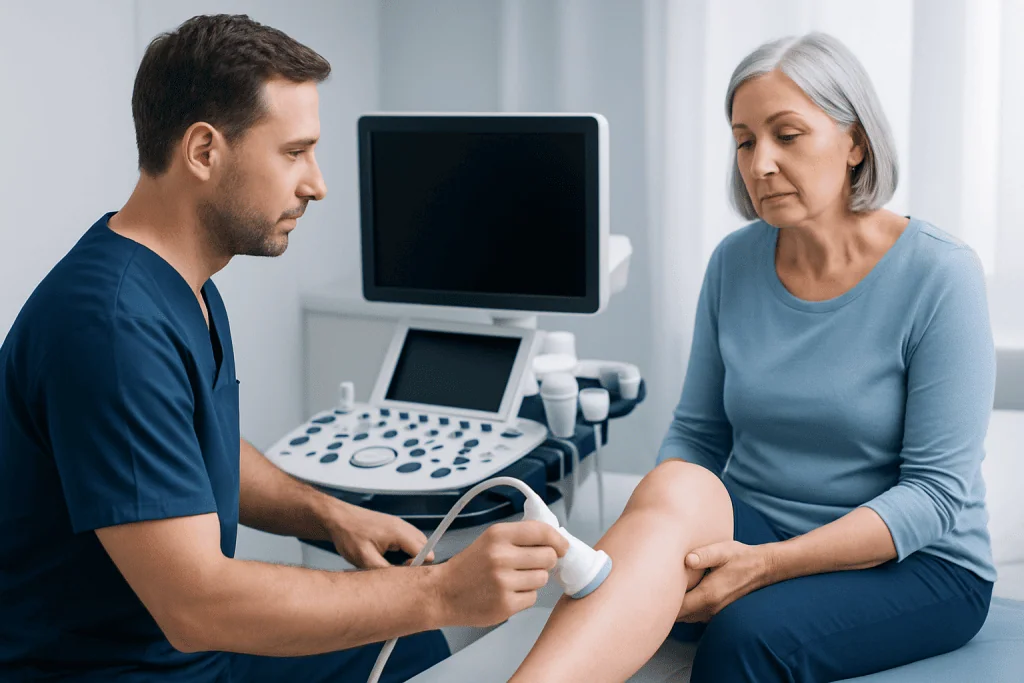
Imaging may be recommended if the diagnosis is uncertain, symptoms are significant, or another knee problem is suspected. Ultrasound is often helpful because it can show whether the swelling is fluid-filled and can help distinguish a Baker’s cyst from other causes of a lump behind the knee. MRI may be used when doctors need a more detailed view of structures inside the knee, such as cartilage, ligaments, or the meniscus.
It is important to rule out other conditions that can cause pain or swelling behind the knee or in the calf. These include blood clots, muscle injuries, vascular problems, and other soft tissue masses. When symptoms are sudden or unusual, further evaluation may be needed to make sure the diagnosis is correct.
Treatment Options
Treatment depends on the size of the cyst, the level of discomfort, and the cause inside the knee joint. Many Baker’s cysts do not need invasive treatment and may improve when the underlying inflammation settles. Rest, activity adjustment, and simple supportive measures are often enough for mild cases.
Doctors may recommend anti-inflammatory strategies, physical therapy, or treatment for the underlying knee condition. If arthritis, meniscus damage, or another structural problem is driving the fluid buildup, addressing that problem is important. In selected cases, doctors may drain the cyst with a needle and use a corticosteroid injection to reduce inflammation, although cysts can return if the root cause remains.
When symptoms are persistent or related to a mechanical problem inside the knee, more targeted care may be considered. For example, treatment may involve knee replacement for severe joint degeneration or arthroscopy when doctors need to evaluate and treat certain internal knee problems. Surgery to remove the cyst itself is less common and is usually reserved for ongoing symptoms that do not improve with conservative treatment.
Because treatment choices vary, a personalized assessment is important. The goal is not only to reduce the cyst but also to relieve pain, improve knee function, and lower the chance of recurrence.
Self-Care and Prevention
There is no guaranteed way to prevent every Baker’s cyst, because it usually reflects another knee issue. However, looking after knee health can reduce the chance of repeated inflammation. Managing arthritis, treating sports injuries early, and avoiding activities that overload a painful knee may help.
Simple self-care steps may ease mild symptoms. These can include resting the knee, using ice for short periods, elevating the leg, and following a doctor’s advice about supportive wraps or exercises. Gentle movement is often better than complete inactivity, but strenuous activity should be limited if it worsens pain or swelling.
Maintaining a healthy body weight can reduce stress on the knee joint. Strengthening the muscles around the knee through guided exercise may also improve joint support. If symptoms keep returning, it is important to reassess the knee rather than only treating the swelling behind it.
- Rest during painful flare-ups
- Use ice and elevation for comfort
- Follow a supervised exercise or physical therapy plan
- Manage arthritis and other chronic knee conditions
- Seek review for recurring swelling or limited movement
When to See a Doctor
A person should see a doctor if there is a new lump behind the knee, ongoing pain, stiffness, reduced mobility, or swelling that does not improve. Medical assessment is also important if knee symptoms interfere with walking, exercise, or daily activities. Even when the cause seems simple, a proper diagnosis helps guide safe treatment.
Urgent medical attention is needed if there is sudden calf swelling, redness, warmth, severe pain, or shortness of breath. A ruptured Baker’s cyst can mimic a deep vein thrombosis, and a blood clot must be ruled out quickly. Sudden changes in symptoms should not be self-diagnosed.
People with repeated Baker’s cysts may need further evaluation for hidden knee damage or inflammatory joint disease. In centers such as Acibadem International, multidisciplinary specialists in orthopedics, radiology, and rehabilitation at JCI-accredited hospitals diagnose and treat knee conditions for international patients. Early review can help identify whether the cyst is a temporary finding or part of a broader joint problem.
Frequently asked questions
Is a Baker’s cyst dangerous?
A Baker’s cyst is usually not dangerous and often relates to a treatable knee problem. However, it should be evaluated if it is painful, growing, or causing limited movement. Sudden calf swelling needs prompt medical attention because it can resemble a blood clot.
Can a Baker’s cyst go away on its own?
Yes, some Baker’s cysts become smaller or disappear when knee inflammation improves. This is more likely when the underlying cause is mild or temporary. If symptoms persist or return, the knee should be assessed for arthritis, cartilage damage, or injury.
What does a Baker’s cyst feel like?
Many people describe a feeling of fullness, pressure, or tightness behind the knee. There may also be stiffness, aching, or discomfort when bending or straightening the leg. Some people notice only a soft lump without much pain.
How is a Baker’s cyst different from a blood clot?
A Baker’s cyst is a fluid-filled swelling linked to the knee joint, while a blood clot is a blockage in a vein. The symptoms can overlap, especially if a cyst ruptures and causes calf pain or swelling. Because the difference cannot always be confirmed by symptoms alone, sudden or severe calf swelling should be assessed urgently.
Do all Baker’s cysts need surgery?
No, most Baker’s cysts do not need surgery. Treatment often focuses on reducing inflammation and managing the knee condition that caused the fluid buildup. Surgery is usually considered only when symptoms continue despite other treatments or when there is an underlying structural knee problem that needs repair.
Can exercise make a Baker’s cyst worse?
High-impact or strenuous activity can worsen discomfort if the knee is already inflamed. Gentle, guided exercise is often helpful because it supports mobility and muscle strength without overloading the joint. A doctor or physical therapist can advise which movements are suitable.
References
- National Health Service
- American Academy of Orthopaedic Surgeons
- Mayo Clinic
- National Institute of Arthritis and Musculoskeletal and Skin Diseases
This article is for general information only and is not a substitute for professional medical advice. Please consult a qualified doctor about your individual situation.
Joint and spine care in Turkey — expert assessment & treatment
JCI-accredited · board-certified surgeons · reply within 24h
Add us as a Preferred Source to see more of our trusted health content across Google Search, AI Overviews and Discover.