Beer and kidney stones: A Complete Medical Guide for Patients
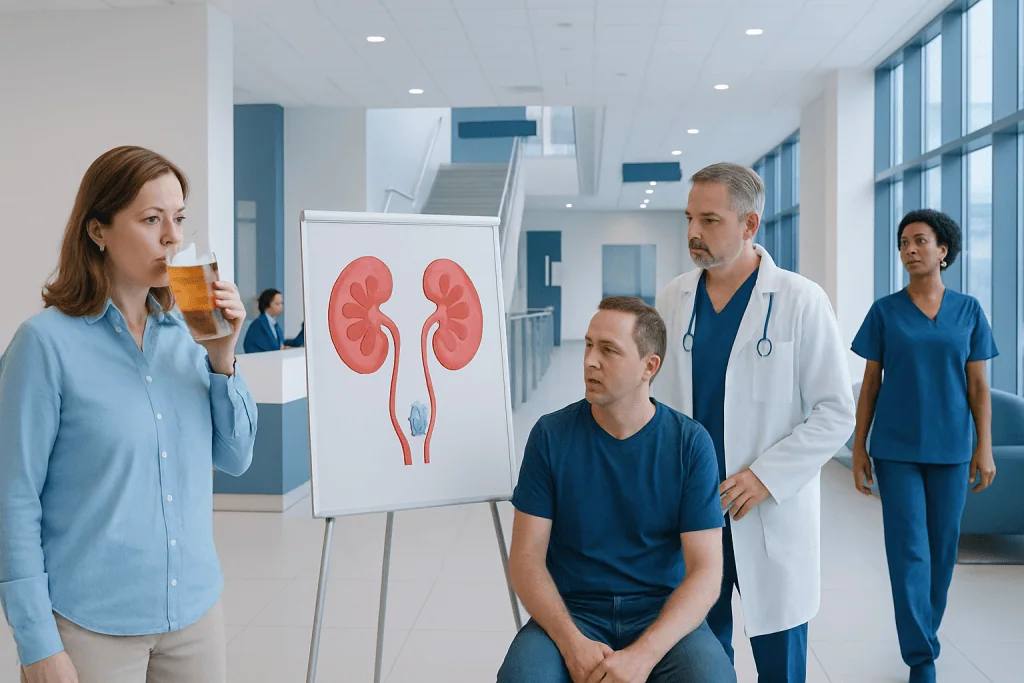
Beer is not a treatment for kidney stones and should not be used to try to pass a stone. Alcohol can increase urine output at first, but it may still lead to dehydration overall.
Key Takeaways
- Beer is not a treatment for kidney stones and should not be used to try to pass a stone.
- Alcohol can increase urine output at first, but it may still lead to dehydration overall.
- The effect of beer depends on the type of stone, a person’s hydration status, diet, and overall health.
- Water remains the best everyday drink for kidney stone prevention.
- Severe pain, fever, vomiting, or trouble urinating need prompt medical evaluation.
Beer and kidney stones have a complicated relationship: beer is not a proven or recommended way to prevent or treat kidney stones. Although beer may temporarily increase urine output, alcohol can also contribute to dehydration, raise uric acid in some people, and delay proper medical care when stone symptoms begin.
Overview: Does beer help or worsen kidney stones?
Beer and kidney stones are often discussed together because beer can increase urine production for a short time. This has led to the common belief that drinking beer helps “flush out” stones. In reality, beer is not a medically recommended treatment for kidney stones, and it should not replace water, pain control, or professional care.
The main concern is that alcohol can have mixed effects on the body. While it may increase urination briefly, it can also contribute to dehydration, especially if a person is already losing fluids from sweating, vomiting, or not drinking enough water. Dehydration is one of the most important risk factors for stone formation.
Kidney stones form when minerals and salts in the urine become concentrated and crystallize. Whether beer has any effect depends on many factors, including the type of stone, the amount of alcohol consumed, diet, medications, and other medical conditions. For most patients, the safest and most evidence-based advice is to focus on steady hydration with water rather than alcohol.
How kidney stones form and why hydration matters
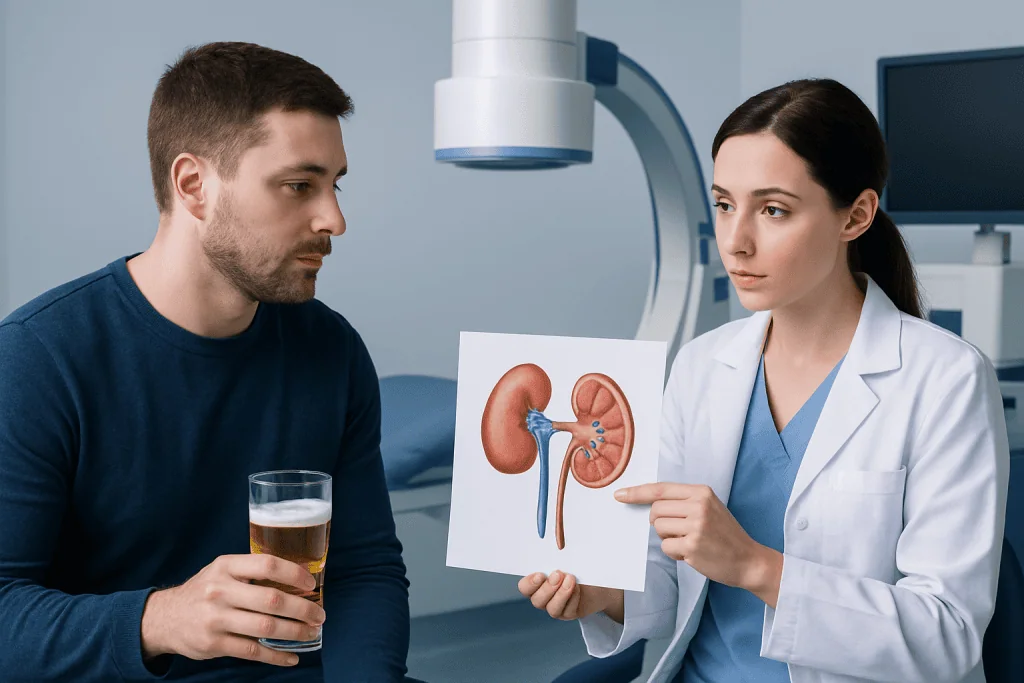
Kidney stones are hard deposits that can develop in the kidneys when urine contains high levels of crystal-forming substances such as calcium, oxalate, or uric acid. If there is not enough fluid in the urine, these substances become more concentrated and are more likely to stick together and form a stone.
Hydration helps by diluting the urine. When urine is less concentrated, crystals are less likely to form and grow. This is why doctors often recommend increasing fluid intake as a basic prevention step for many people with a history of stones.
Not all stones are the same. Common types include calcium oxalate stones, uric acid stones, struvite stones, and cystine stones. Their causes differ, so a drink or diet pattern that may be neutral for one person may be unhelpful for another. Patients who have had kidney stones more than once may benefit from a more detailed evaluation to identify the stone type and tailor prevention.
- Calcium oxalate stones are the most common type.
- Uric acid stones may be linked with dehydration, gout, or high purine intake.
- Struvite stones are often associated with urinary tract infections.
- Cystine stones are related to a rare inherited condition.
What beer may do in the body
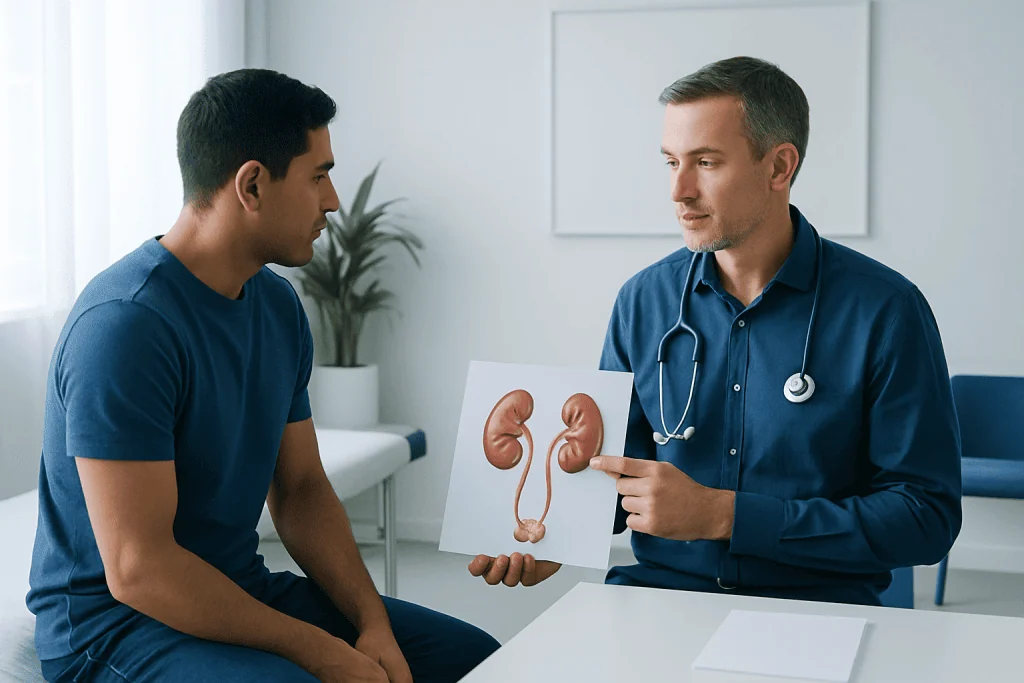
Beer contains a large amount of fluid, so it may temporarily increase urine output. Some people interpret this as proof that beer clears the kidneys or helps move a stone. However, increased urination does not automatically mean better hydration. Alcohol can alter the body’s fluid balance and may increase fluid loss, especially if consumed in larger amounts.
Beer also contains alcohol, carbohydrates, and purines. In some people, purines can increase uric acid levels, which may be relevant for uric acid stones. Beer is therefore not an ideal drink for someone who has a history of gout or uric acid stone formation.
Another practical concern is symptom masking. A person with severe stone pain may delay medical care because they assume beer will help the stone pass. This can be risky if the stone causes blockage, infection, vomiting, or worsening pain. When symptoms are significant, medical assessment is more important than trying home remedies.
Occasional moderate alcohol intake may not cause stones in every person, but that is different from saying beer is protective or therapeutic. For prevention, clinicians usually emphasize water, individualized nutrition advice, and treatment of underlying metabolic or urinary problems.
Can beer prevent kidney stones?
Beer should not be considered a prevention strategy for kidney stones. Some observational research has suggested that certain beverages may be associated with different stone risks, but these studies do not prove cause and effect. They also do not mean that a person should start drinking alcohol to protect their kidneys.
Prevention works best when it addresses the real drivers of stone formation. These may include low fluid intake, high sodium intake, excess animal protein, high oxalate intake in some patients, obesity, recurrent urinary infections, or metabolic conditions. A clinician may also recommend urine and blood tests to check for preventable causes.
For many patients, the best beverage plan is simple: drink enough water to keep the urine pale yellow most of the time, unless a doctor has given different advice. In some cases, a doctor may suggest additional strategies such as citrate-rich beverages, dietary changes, or specific medications. If a stone is large, persistent, or causing blockage, procedural options such as kidney stone treatment may be needed rather than waiting at home.
Symptoms of a kidney stone
A kidney stone may remain silent while it stays in the kidney. Symptoms usually begin when the stone moves into the ureter, the tube that carries urine from the kidney to the bladder. The classic symptom is sudden, severe pain in the side or back, often spreading toward the lower abdomen or groin.
Other symptoms can include pain during urination, frequent urination, nausea, vomiting, blood in the urine, or cloudy and foul-smelling urine. The pain often comes in waves and may be difficult to get comfortable with. Some people describe it as one of the most intense pains they have experienced.
Not every urinary symptom means a stone. A urinary tract infection or other urinary problem can cause similar discomfort, and the two may sometimes occur together. This is one reason medical evaluation matters, especially if symptoms are new, severe, or accompanied by fever.
Diagnosis and treatment options
Doctors diagnose kidney stones using a combination of medical history, physical examination, urine testing, blood tests, and imaging. Imaging may help show the size and location of the stone and whether it is blocking urine flow. In many patients, urinary system diagnosis helps clarify whether symptoms are caused by a stone or another urinary condition.
Treatment depends on the size of the stone, where it is located, the degree of pain, and whether there is infection or blockage. Small stones may pass on their own with fluids, pain management, and careful follow-up. Doctors may also prescribe medicines that help relax the ureter in selected cases.
Larger stones, ongoing severe symptoms, or complications may require procedures. Depending on the situation, these can include shock wave treatment, endoscopic removal, or other minimally invasive approaches. If symptoms continue or the stone does not pass, a specialist may discuss urology care and personalized management options.
After a stone passes or is removed, the stone may be analyzed. This is useful because prevention is more effective when based on the actual stone type and a person’s metabolic risk factors.
Prevention and self-care: what to do instead of relying on beer
The most reliable self-care measure for most people is regular hydration with water. Rather than drinking a large amount all at once, it usually helps to spread fluids throughout the day. People who exercise heavily, live in hot climates, or lose fluids from illness may need extra hydration.
Diet also matters. Reducing excess sodium can help lower calcium in the urine. Some patients need to moderate animal protein, especially if they form uric acid stones. Others may need to limit high-oxalate foods or combine them with calcium-containing foods at meals, but restrictive diets should ideally be individualized.
General prevention steps may include:
- Drinking enough water daily unless a doctor has advised fluid restriction.
- Limiting excess salt and highly processed foods.
- Maintaining a balanced intake of calcium from food unless told otherwise.
- Managing weight, blood sugar, and gout if present.
- Following up after recurrent stones for metabolic evaluation.
Patients should be careful with internet advice that suggests beer, spirits, or other alcoholic drinks as a “stone cure.” Home measures can support comfort, but they do not replace diagnosis when pain is severe or symptoms suggest a complication. Near the end of the care pathway, if specialized assessment is needed, Acibadem International’s multidisciplinary specialists in JCI-accredited hospitals diagnose and treat kidney stone disease for international patients.
When to seek medical care
Medical care is important if a person has severe side or back pain, pain that does not improve, repeated vomiting, or inability to keep fluids down. Fever, chills, and urinary symptoms can point to infection, which can become serious when a stone blocks urine flow.
Urgent evaluation is also recommended for visible blood in the urine, trouble passing urine, one kidney, pregnancy, or a history of kidney disease. Older adults and people with weakened immune systems should be especially cautious.
Even when symptoms are mild, follow-up is sensible if they persist or return. Recurrent stones deserve medical attention because prevention can often be improved once the stone type and risk factors are identified.
Frequently asked questions
Can beer dissolve kidney stones?
No. Beer does not dissolve kidney stones. Some stones may pass on their own with time and hydration, but beer is not a treatment and does not replace medical care.
Is beer better than water for passing a kidney stone?
No. Water is the preferred fluid for hydration and stone prevention. Beer may briefly increase urination, but alcohol can also worsen dehydration and is not recommended as a strategy to pass a stone.
Does alcohol cause kidney stones?
Alcohol is not the only cause of kidney stones, but it can contribute indirectly by affecting hydration and, in some people, uric acid levels. Risk also depends on diet, genetics, medical conditions, and the type of stone.
What is the best drink for kidney stone prevention?
For most people, water is the best daily choice. Doctors may sometimes recommend other beverages as part of an individualized plan, but alcohol is generally not used for prevention.
Should someone drink beer during kidney stone pain?
It is not a good idea to rely on beer during an episode of kidney stone pain. Severe pain, vomiting, fever, or difficulty urinating should prompt medical evaluation rather than self-treatment with alcohol.
Are some kidney stones affected more by beer than others?
Possibly. Beer may be more concerning in people prone to uric acid stones or gout because it can raise uric acid in some individuals. However, stone prevention should be based on medical evaluation, not assumptions about one drink.
References
- National Institute of Diabetes and Digestive and Kidney Diseases
- American Urological Association
- European Association of Urology
- National Kidney Foundation
This article is for general information only and is not a substitute for professional medical advice. Please consult a qualified doctor about your individual situation.
Explore treatments in Turkey — costs, top hospitals & a free quote
JCI-accredited · board-certified surgeons · reply within 24h
Add us as a Preferred Source to see more of our trusted health content across Google Search, AI Overviews and Discover.

More from the Health Library



Related Specialists

Psk. Meysenaz Koser
Psychology
Prof. Dr. Erhan Serin
Orthopedic Surgery & Traumatology
Prof. Dr. Funda Vesile Çorapcıoğlu
Pediatric Oncology
Assoc. Prof. Dr. Işıl Fazilet Kartaloğlu
Physical Medicine & Rehabilitation