Bell’s Palsy: Sudden Facial Weakness and Recovery

Bell's palsy typically causes sudden weakness on one side of the face, often affecting the forehead, eye closure and smile. A prompt medical evaluation is important because stroke and other neurological conditions can also cause facial droop.
Key Takeaways
- Bell's palsy typically causes sudden weakness on one side of the face, often affecting the forehead, eye closure and smile.
- A prompt medical evaluation is important because stroke and other neurological conditions can also cause facial droop.
- Treatment often includes corticosteroid medication started early, plus careful eye protection if the eyelid does not close fully.
- Recovery usually begins within weeks, although some people need longer follow-up, rehabilitation or specialist care.
- Seek urgent help for facial weakness with arm or leg weakness, speech difficulty, severe dizziness, confusion or a sudden severe headache.
Bell's palsy is a sudden, usually temporary weakness or paralysis of the muscles on one side of the face. Most people improve with timely medical assessment, eye protection and supportive care, but sudden facial droop should always be checked urgently to rule out other causes such as stroke.
Overview
Bell’s palsy is a form of facial nerve palsy that causes sudden weakness or temporary paralysis of the muscles on one side of the face. The facial nerve controls facial expression, blinking, tear production, some taste sensation and small muscles around the ear. When this nerve becomes inflamed or swollen, signals to the facial muscles may be disrupted.
The condition often develops quickly, over several hours to one or two days. A person may notice that one side of the mouth droops, the eye does not close fully, or facial expressions look uneven. Because the change can be sudden and dramatic, it is understandable to feel worried; however, Bell’s palsy is commonly treatable and many people recover well.
Bell’s palsy is considered a diagnosis of exclusion, meaning a doctor first checks for other possible causes of facial weakness. This is especially important because stroke, infections, tumors, trauma and other neurological conditions can also affect facial movement. Early assessment helps guide the right treatment and reduces the risk of complications such as eye irritation.
Symptoms
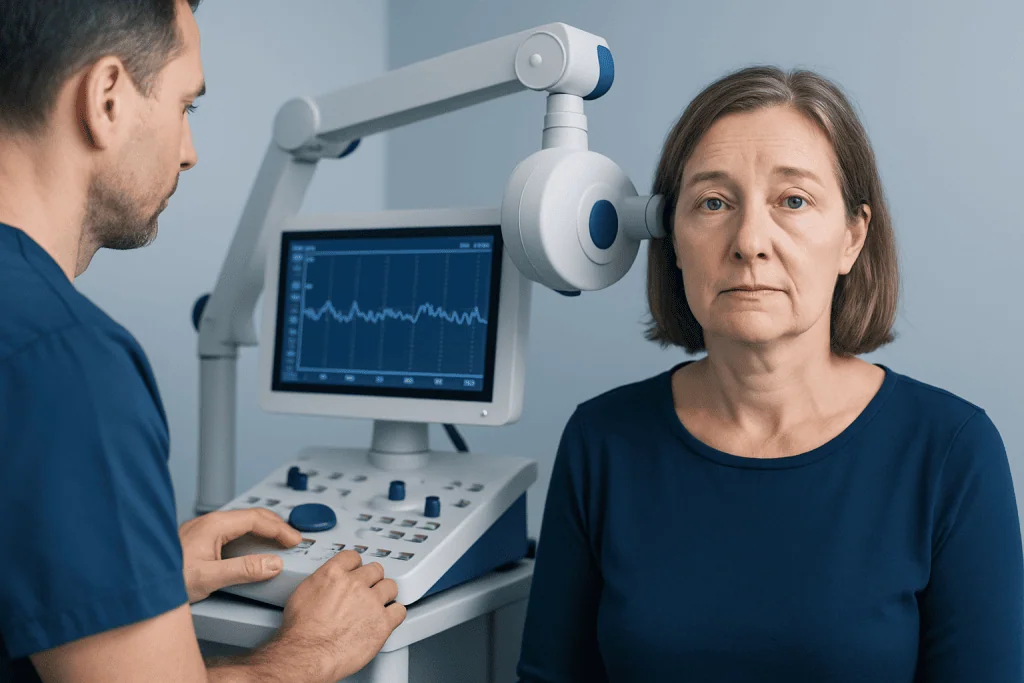
The main symptom of Bell’s palsy is sudden weakness on one side of the face. Unlike some central nervous system problems, Bell’s palsy often affects both the upper and lower parts of the face on the same side. This means the person may have difficulty wrinkling the forehead, closing the eye tightly and lifting the corner of the mouth.
Common symptoms may include:
- Facial drooping or an uneven smile
- Difficulty closing one eye or frequent tearing
- Dryness, irritation or redness of the affected eye
- Drooling or difficulty keeping food and liquids in the mouth
- Changes in taste, especially on the front part of the tongue
- Increased sensitivity to sound in one ear
- Mild pain or discomfort around the jaw, ear or behind the ear
Symptoms can range from mild weakness to complete facial paralysis on one side. Some people also report a feeling of heaviness or numbness in the face, although true loss of skin sensation is not typical. If facial weakness is accompanied by limb weakness, trouble speaking, confusion, loss of balance, double vision or a severe headache, emergency medical attention is needed.
Causes and Risk Factors

The exact cause of Bell’s palsy is not always known. In many cases, it is thought to occur when the facial nerve becomes inflamed, often after a viral trigger. The facial nerve travels through a narrow bony canal in the skull; swelling in this tight space can compress the nerve and interfere with normal function.
Viruses that have been associated with facial nerve inflammation include herpes simplex virus, which causes cold sores, and varicella-zoster virus, which causes chickenpox and shingles. Other infections and immune responses may also play a role. Bell’s palsy is not usually considered contagious, although some of the viruses linked to it can spread in other forms.
Certain factors may increase the likelihood of developing Bell’s palsy. These include diabetes, pregnancy, recent upper respiratory infection, a history of cold sores, and possibly high blood pressure or immune system changes. Facial weakness can also result from other conditions, such as Lyme disease in regions where it is common, ear infections, Ramsay Hunt syndrome, head injury or tumors affecting the facial nerve. This is why a careful medical history and examination are essential.
Diagnosis
Doctors usually diagnose Bell’s palsy based on symptoms, timing and a physical examination. The clinician checks facial movements such as raising the eyebrows, closing the eyes, smiling, puffing the cheeks and showing the teeth. They also assess the ears, eye surface, speech, limb strength, coordination and other neurological signs to look for alternative diagnoses.
In many typical cases, no complex testing is needed. However, tests may be recommended if symptoms are unusual, progressive, recurrent, bilateral, associated with other neurological problems, or do not improve as expected. Depending on the situation, a doctor may order blood tests, imaging such as MRI or CT, hearing evaluation, or tests of nerve function.
One of the most important parts of diagnosis is distinguishing Bell’s palsy from stroke. Stroke more often causes additional symptoms, such as weakness or numbness in an arm or leg, speech problems, vision changes, severe dizziness or confusion. However, not every case is obvious, so sudden facial droop should be assessed promptly rather than assumed to be Bell’s palsy.
Treatment Options
Treatment aims to reduce nerve inflammation, protect the eye and support recovery. Corticosteroid medication is commonly recommended for many adults with Bell’s palsy, especially when started early after symptom onset. The decision depends on the person’s age, medical history, pregnancy status, diabetes control and other health factors, so treatment should be prescribed by a qualified doctor.
Antiviral medication may be considered in selected cases, particularly when symptoms are severe or when a viral cause such as shingles is suspected. Antivirals are not a substitute for medical assessment and are not needed for every patient. Pain around the ear or jaw can often be managed with appropriate over-the-counter or prescribed pain relief, according to a clinician’s advice.
Eye care is a key part of treatment when the eyelid cannot close completely. The exposed eye may become dry or scratched, especially during sleep. Doctors may recommend lubricating eye drops during the day, ointment at night, protective glasses or taping the eyelid closed carefully while sleeping. If eye redness, pain, light sensitivity or vision changes occur, an eye specialist should evaluate the eye.
Some people benefit from facial physiotherapy or guided facial exercises, particularly if weakness persists or recovery is incomplete. These therapies should be gentle and supervised by professionals familiar with facial nerve disorders. Electrical stimulation and aggressive exercises are not suitable for everyone, so patients should avoid self-directed intensive programs without medical guidance.
Recovery and Possible Complications
Recovery from Bell’s palsy varies from person to person. Many people begin to notice improvement within a few weeks, and facial movement often continues to return gradually over several months. A milder degree of weakness at the beginning is generally associated with a better outlook, but even more pronounced cases can improve with time and appropriate care.
Some people experience lingering effects, such as mild asymmetry, eyelid weakness or tightness in facial muscles. A smaller number develop synkinesis, where facial muscles move together unintentionally, such as eye narrowing when smiling. These effects can often be managed with specialist rehabilitation, facial neuromuscular retraining and, in selected cases, other medical treatments.
Emotional wellbeing is also important. Facial weakness can affect eating, speaking, social confidence and self-image. Reassurance, practical support and clear information about the expected recovery process can help patients cope while healing occurs. If symptoms are affecting mood, sleep or daily life, patients should mention this to their healthcare team.
Prevention and Self-care
There is no guaranteed way to prevent Bell’s palsy because the exact trigger is often unclear. However, maintaining general health, managing diabetes and blood pressure when present, getting adequate rest, and seeking care for infections may support overall nerve and immune health. People who develop shingles symptoms near the ear or face should seek medical care promptly, because this can affect the facial nerve.
Self-care focuses on comfort, eye protection and safe daily routines. Eating softer foods, chewing slowly and drinking from the unaffected side may reduce spills. Gentle facial massage may feel soothing, but forceful stretching or repeated exaggerated facial movements should be avoided unless recommended by a therapist. Patients should also protect the affected eye from wind, dust and dryness.
Follow-up is important if symptoms are severe, if the eye remains exposed, or if there is little improvement over time. Multidisciplinary care may involve neurology, ENT, ophthalmology, rehabilitation and physical therapy. Acibadem International’s multidisciplinary specialists and JCI-accredited hospitals diagnose and treat facial nerve disorders, including Bell’s palsy, for international patients when specialist evaluation is needed.
When to See a Doctor
Anyone with sudden facial weakness should seek medical evaluation as soon as possible. Early assessment helps confirm the diagnosis, start time-sensitive treatment when appropriate and protect the eye. Even if symptoms seem mild, a doctor should examine the face, eyes, ears and nervous system.
Emergency care is needed if facial droop occurs with symptoms that may suggest stroke or another urgent neurological condition. These include weakness or numbness in an arm or leg, difficulty speaking or understanding speech, confusion, severe dizziness, loss of coordination, fainting, double vision, or a sudden severe headache. Emergency care is also appropriate if symptoms follow a head injury.
Patients should contact a doctor again if symptoms worsen after the first few days, if facial weakness affects both sides, if there is a painful blistering rash near the ear or in the mouth, or if there is eye pain, redness or vision change. Medical review is also recommended if there is no sign of improvement after several weeks or if facial tightness and unwanted movements develop during recovery.
Frequently asked questions
Is Bell's palsy the same as a stroke?
No. Bell's palsy affects the facial nerve and usually causes weakness on one side of the face, often including the forehead and eye closure. A stroke affects blood flow in the brain and may cause facial droop with arm or leg weakness, speech difficulty, confusion, vision changes or balance problems. Because the symptoms can overlap, sudden facial weakness should be checked urgently.
How quickly does Bell's palsy develop?
Bell's palsy usually develops suddenly, often over hours and reaching its maximum weakness within one to two days. Some people notice pain behind the ear or changes in taste before the facial droop becomes clear. A gradual progression over weeks is less typical and should prompt careful medical evaluation.
Will Bell's palsy go away completely?
Many people recover fully or nearly fully, especially when symptoms are mild and treatment begins early. Recovery often starts within weeks and may continue for several months. Some people have residual weakness, facial tightness or unwanted facial movements, which can often be helped with specialist follow-up and rehabilitation.
Why is eye care important in Bell's palsy?
If the eyelid does not close completely, the eye surface can become dry, irritated or scratched. Lubricating drops, ointment, protective eyewear or careful nighttime eyelid taping may be recommended by a doctor. Eye pain, redness, light sensitivity or vision changes should be assessed promptly.
Can Bell's palsy come back?
Bell's palsy can recur, but recurrence is not the usual pattern for most patients. If facial weakness happens more than once, affects both sides, or is accompanied by other symptoms, doctors may look for underlying conditions such as infections, inflammatory disorders or structural causes. A thorough evaluation helps guide the right care.
Are facial exercises helpful for Bell's palsy?
Gentle, guided facial rehabilitation can be helpful for some people, particularly when weakness persists or coordination problems develop during recovery. Exercises should be tailored by a clinician or therapist experienced in facial nerve disorders. Overly forceful or repetitive self-directed exercises may not be beneficial and can sometimes worsen tightness or abnormal movement patterns.
References
- National Institute of Neurological Disorders and Stroke
- Mayo Clinic
- American Academy of Otolaryngology-Head and Neck Surgery
- NHS
- BMJ Best Practice
This article is for general information only and is not a substitute for professional medical advice. Please consult a qualified doctor about your individual situation.
Explore treatments in Turkey — costs, top hospitals & a free quote
JCI-accredited · board-certified surgeons · reply within 24h
Add us as a Preferred Source to see more of our trusted health content across Google Search, AI Overviews and Discover.
Check your numbers in seconds
BMI, calories, due date, blood pressure and 30+ more clinical calculators — free, instant, doctor-reviewed ranges.