Bench Press — Explained by Medical Evidence, Not Myths

Bench press mainly trains the chest, front shoulders, and triceps, but the whole body contributes to stability. Good technique, gradual loading, and adequate recovery matter more for safety than any single 'perfect' grip width or bar path.
Key Takeaways
- Bench press mainly trains the chest, front shoulders, and triceps, but the whole body contributes to stability.
- Good technique, gradual loading, and adequate recovery matter more for safety than any single 'perfect' grip width or bar path.
- Pain during or after bench press is not normal training discomfort and may signal strain, irritation, or overuse.
- People with shoulder, elbow, wrist, or neck symptoms may benefit from exercise modification and medical assessment.
- Bench press is one useful exercise, not a mandatory one; similar goals can often be achieved with alternatives if needed.
Bench press is a common strength-training exercise used to build pressing power and upper-body muscle. Medical evidence suggests it can be safe and beneficial for many people when technique, progression, and recovery are appropriate, while myths about it being universally harmful or essential are not supported.
Overview: what bench press is and what the evidence says
The bench press is a resistance exercise in which a person lowers and presses a weight away from the chest while lying on a bench. It is commonly performed with a barbell, but dumbbells, machines, and modified versions are also widely used. In practical terms, it is a horizontal pressing movement that strengthens the chest muscles, triceps, and front of the shoulders while also demanding coordination from the shoulder blades, upper back, core, and legs.
From a medical and exercise perspective, bench press is neither a miracle exercise nor an inherently dangerous one. Research and clinical experience suggest it can improve muscular strength and support general fitness when the load, range of motion, and technique match the individual. At the same time, poor control, excessive training volume, sudden jumps in weight, or pressing through pain can increase the chance of irritation or injury.
Many myths around bench press come from extremes. One myth is that everyone should bench press heavily to build a strong upper body. Another is that bench press inevitably damages the shoulders. In reality, tolerance varies. For some people, bench press is a comfortable and effective staple. For others, a modified range, a neutral-grip dumbbell press, or another chest exercise may be more suitable, especially if there is a history of shoulder problems such as rotator cuff problems.
How bench press works in the body
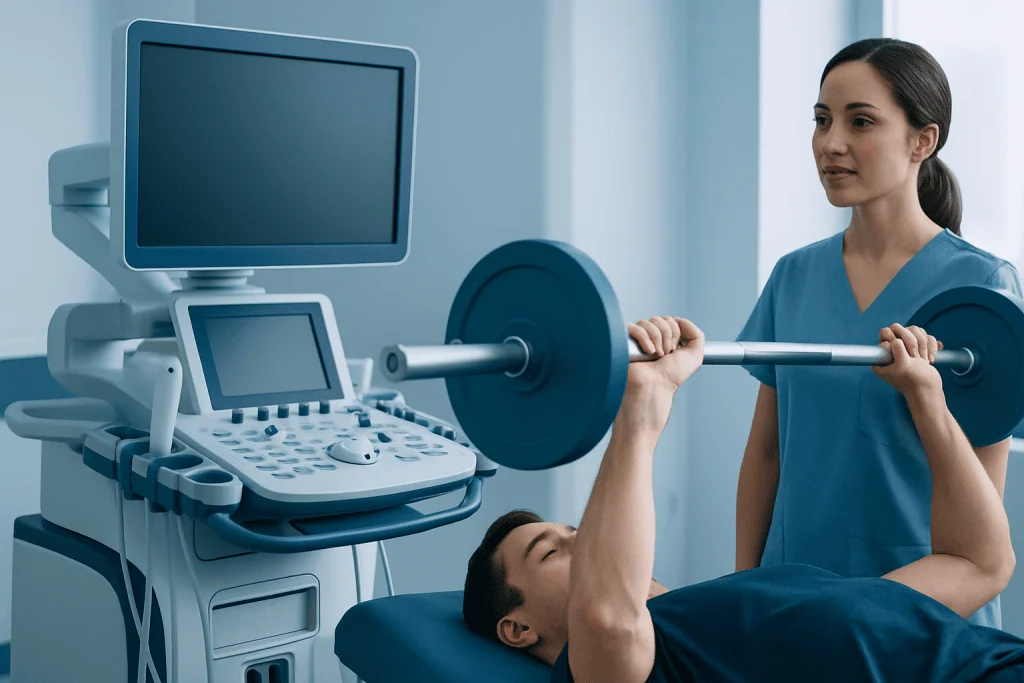
The main muscles involved in bench press are the pectoralis major, anterior deltoid, and triceps. These muscles create the force needed to lower and press the weight. The upper back muscles, including the shoulder-blade stabilizers, help position the shoulder joint and provide a stable base. The forearms and wrists transfer force through the bar, while the core and legs help keep the body steady on the bench.
Because the shoulder is a mobile joint, pressing mechanics depend on more than the chest muscles alone. Shoulder-blade positioning, thoracic spine mobility, grip width, elbow angle, and bar control can all influence comfort and efficiency. This is one reason two people can bench press the same weight with very different movement quality and symptom patterns.
Bench press also places the shoulder in a position that may challenge tissues at the front of the joint, especially when the elbows flare excessively or the bar is lowered too far for that person’s mobility. That does not mean the movement is automatically unsafe. It means tissue capacity, technique, and training history should guide how the exercise is used.
Potential benefits of bench press

When programmed appropriately, bench press can help improve upper-body strength, muscle mass, and functional pushing ability. For healthy adults, resistance training supports bone health, body composition, and metabolic health, and bench press can be one part of that broader routine. Athletes may use it to build pressing strength relevant to contact, throwing, or general power development, though sport-specific needs vary.
Bench press may also be useful because it is measurable. Load, repetitions, and movement variations can be tracked over time, making it easier to apply progressive overload gradually. For some people, this structure improves motivation and consistency. Dumbbell or machine pressing can provide similar benefits when barbell bench press is not comfortable or practical.
It is important to keep the benefits in perspective. Bench press is not necessary for everyone, and it is not the only way to strengthen the chest or arms. Push-ups, cable presses, machines, and dumbbell pressing can all be valid alternatives. The most effective exercise is often the one that a person can perform with good control, reasonable comfort, and long-term consistency.
Common myths and common causes of problems
One common myth is that a wider grip is always better for the chest. A wider grip may shorten range of motion for some people, but it can also place more stress on the shoulders. Another myth is that the bar must touch the chest in every case. Full range of motion can be beneficial when it is controlled and pain-free, but some people do better with a slightly reduced depth because of shoulder shape, previous injury, or limited mobility.
Another misconception is that pain is simply part of getting stronger. Normal effort can cause muscular fatigue or short-term soreness, but sharp pain, pinching, a sudden pop, or lingering joint pain should not be ignored. Problems often arise from doing too much too soon, repeatedly training to failure, skipping recovery, or returning to heavy lifting too quickly after time away.
Overuse can affect the shoulder, chest, elbow, or wrist. Shoulder pain may relate to tendon irritation, poor scapular control, or underlying conditions that become more noticeable with pressing. Chest pain during lifting can sometimes come from a muscle strain, but chest pain also deserves caution because not all chest symptoms are musculoskeletal. Persistent or severe symptoms warrant medical evaluation.
Bench press form: practical safety principles
There is no single perfect bench press style for everyone, but several principles are broadly helpful. The head, upper back, and hips should remain supported on the bench, and the feet should provide a stable base on the floor when possible. The wrists should stay fairly neutral rather than bent far backward, and the bar or dumbbells should be controlled throughout the movement rather than bounced or dropped.
Many coaches and clinicians recommend keeping the shoulder blades gently retracted and stable, with the elbows neither pinned tightly to the sides nor flared straight out. A moderate elbow angle often improves comfort and force transfer. The lowering phase should be controlled, and the weight should be selected so the person can maintain form without twisting, shrugging excessively, or losing contact with the bench.
Load progression matters as much as technique. Gradually increasing weight or volume gives muscles and tendons time to adapt. Warm-up sets, adequate rest between hard sessions, and attention to sleep and nutrition support recovery. People with previous injuries may benefit from a supervised program or from alternatives such as physical therapy and rehabilitation to rebuild tolerance safely.
- Use a spotter or safety arms for challenging barbell sets.
- Stop if pain changes movement quality or feels sharp, unstable, or unusual.
- Consider dumbbells, machines, or push-ups if barbell pressing is uncomfortable.
- Avoid sudden large jumps in weight, especially after a break from training.
Possible injuries and warning symptoms
The most common bench press-related issues are strains, tendinopathy, and joint irritation rather than major trauma. A pectoral muscle strain may cause sudden pain in the chest or front of the shoulder, weakness with pressing, bruising, or swelling. Shoulder symptoms may include pain at the front or side of the joint, discomfort during lowering, night pain, or a feeling of catching. Elbow or wrist pain can occur if grip, loading, or tissue tolerance is not well matched.
Neck discomfort can also appear if a person presses with excessive tension through the upper trapezius, lifts the head during the set, or lacks upper-back support. Numbness, tingling, or radiating pain is less typical of simple muscle fatigue and may suggest nerve irritation or a neck-related problem. These symptoms deserve assessment, particularly if they persist.
If symptoms limit daily activities or do not improve with rest and modification, medical evaluation can help identify whether the issue is a strain, tendon problem, joint irritation, or another condition such as shoulder impingement. In some cases, imaging such as MRI may be considered when the diagnosis is unclear or a more significant injury is suspected.
Diagnosis and treatment when bench press causes pain
Assessment usually begins with a medical history and physical examination. A clinician may ask when the pain started, whether there was a specific incident, where the pain is located, and which movements aggravate it. Examining range of motion, strength, joint stability, and the pressing pattern can provide important clues. For many mild overuse problems, a careful clinical assessment is more informative than immediately stopping all activity indefinitely.
Treatment depends on the cause. Short-term activity modification is often useful, especially reducing painful ranges, lowering training volume, or switching temporarily to more tolerable exercises. Recovery may include gradual reloading, mobility work, and strengthening of the rotator cuff, shoulder-blade muscles, trunk, and forearm as appropriate. Sudden complete rest for long periods is not always necessary or helpful unless advised by a clinician.
More significant injuries, such as a suspected tendon tear, marked weakness, extensive bruising, or symptoms after a sudden pop, may need urgent assessment by orthopedic specialists. If chest pressure, shortness of breath, dizziness, or pain unrelated to movement is present, evaluation should focus first on non-musculoskeletal causes. Near the end of the care pathway, some patients also benefit from a multidisciplinary review; Acibadem International’s JCI-accredited hospitals and specialists diagnose and treat musculoskeletal conditions for international patients.
When to seek medical care
Medical advice is appropriate if pain is severe, follows a sudden tearing sensation, causes visible bruising or deformity, or leads to notable weakness. It is also wise to seek care if symptoms last more than a short period despite reducing load and improving technique, or if pain repeatedly returns whenever pressing resumes.
Urgent medical care is important if chest pain occurs with shortness of breath, sweating, nausea, faintness, or pain spreading to the arm, jaw, or back. These symptoms should not be assumed to be a muscle strain. New numbness, tingling, arm weakness, or significant neck pain also deserve prompt evaluation.
For children, adolescents, older adults, or people returning after surgery or a known shoulder disorder, individualized guidance may be especially helpful before starting or intensifying bench press training. A qualified physician or rehabilitation professional can advise whether pressing should be modified, temporarily avoided, or progressed gradually.
Frequently asked questions
Is bench press bad for the shoulders?
Not necessarily. Bench press can be well tolerated when the load, range of motion, and technique suit the individual, but it may aggravate existing shoulder problems or overuse tissues if done poorly or too aggressively. Shoulder pain during bench press is a reason to modify the exercise and seek professional advice if symptoms persist.
What muscles does bench press work?
Bench press primarily works the chest muscles, triceps, and the front of the shoulders. It also relies on the upper back, shoulder-blade stabilizers, core, and legs to create a stable pressing position.
Should the bar touch the chest on every repetition?
Not always. A full, controlled range of motion can be useful, but some people need a slightly reduced depth because of shoulder mobility limits, body proportions, pain, or previous injury. The safest depth is one that allows good control without provoking symptoms.
Is bench press necessary for building a strong chest?
No. Bench press is one effective option, but chest strength and muscle can also be developed with push-ups, dumbbell presses, cable presses, and machine-based exercises. The best choice is often the one that can be performed consistently and comfortably.
What is the difference between normal soreness and an injury?
Normal post-exercise soreness is usually dull, symmetrical, and improves over a few days. Injury-related pain is more likely to be sharp, one-sided, associated with a pop, bruising, swelling, weakness, or worsening pain during movement. If there is doubt, medical assessment is sensible.
Can beginners do bench press safely?
Yes, many beginners can learn bench press safely with appropriate instruction, a manageable load, and gradual progression. Starting with a lighter variation, such as dumbbells or a machine, may help some people learn control before using a barbell.
References
- American College of Sports Medicine
- National Institute of Arthritis and Musculoskeletal and Skin Diseases
- American Academy of Orthopaedic Surgeons
- National Strength and Conditioning Association
- Mayo Clinic
This article is for general information only and is not a substitute for professional medical advice. Please consult a qualified doctor about your individual situation.
Joint and spine care in Turkey — expert assessment & treatment
JCI-accredited · board-certified surgeons · reply within 24h
Add us as a Preferred Source to see more of our trusted health content across Google Search, AI Overviews and Discover.