Skincare for Aging Skin: Ingredients and Daily Routine

Daily broad-spectrum sunscreen, a gentle cleanser, a moisturizer, and a retinoid form the core of most routines for aging skin. Introduce active ingredients such as retinoids or vitamin C gradually to limit irritation. See a doctor promptly if a spot changes quickly, a sore does not heal, or a growth looks unusual.
Key Takeaways
- Daily broad-spectrum sunscreen is the most important step for aging skin.
- A simple routine is often more effective than using many products at once.
- Retinoids, moisturizers, antioxidants, and gentle exfoliants can support healthier-looking skin.
- Results are gradual, and realistic expectations are important.
- Sensitive or very dry skin may need a slower approach and dermatologist guidance.
The best skincare for aging skin usually combines daily sun protection, gentle cleansing, effective moisturizers, and a few well-chosen active ingredients. While skincare cannot stop aging, it can help skin look smoother, more even, and better hydrated over time.
Overview: What Aging Skin Needs
Aging skin changes naturally over time. It may become drier, thinner, less elastic, and slower to repair itself. Fine lines, wrinkles, uneven tone, rough texture, visible pores, and age spots can all appear as part of normal skin aging. These changes are influenced not only by age, but also by sun exposure, smoking, pollution, genetics, stress, and general health.
The best skincare for aging skin is usually not the most complicated routine. In most cases, the skin responds best to a consistent plan built around protection, hydration, and a few evidence-based ingredients. A routine should support the skin barrier rather than overwhelm it with too many strong products.
It also helps to think about two types of aging. Intrinsic aging is the natural process linked to time and genetics. Extrinsic aging is caused by external factors, especially ultraviolet exposure. Because sun damage plays such a major role in visible aging, sunscreen is often considered the cornerstone of any anti-aging routine.
Common Signs of Aging Skin

Aging skin can look different from person to person. Some people notice dryness and a dull appearance first, while others are more concerned about fine lines, sagging, or discoloration. Skin tone, skin type, lifestyle, and past sun exposure all affect how changes appear.
Common signs include:
- Fine lines and deeper wrinkles
- Dryness or rough texture
- Loss of firmness and elasticity
- Uneven skin tone or dark spots
- Dullness and reduced radiance
- More visible pores
- Increased sensitivity or irritation
These changes do not always need medical treatment. Many can be improved with a gentle, targeted skincare routine. However, if the skin develops rapidly changing spots, non-healing sores, severe redness, or unusual growths, a doctor should assess them promptly.
Best Ingredients for Aging Skin
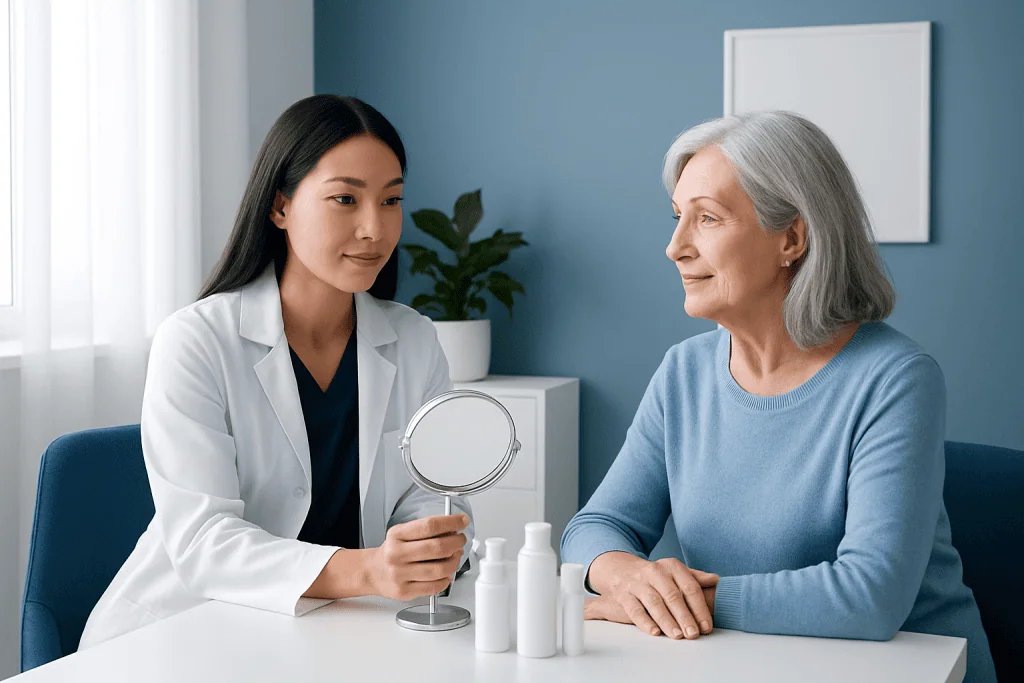
A few ingredients have stronger evidence than many others. Retinoids are among the most studied options for aging skin. They can help support skin cell turnover, improve texture, soften fine lines, and gradually reduce uneven pigmentation. Because retinoids can cause dryness or irritation at first, many people do best by starting slowly and using a moisturizer regularly.
Sunscreen is essential every day, even when the weather is cloudy. A broad-spectrum sunscreen helps protect skin from ultraviolet damage that contributes to wrinkles, dark spots, and loss of firmness. Moisturizers are also important because they reduce water loss and support the skin barrier. Ingredients such as ceramides, hyaluronic acid, glycerin, and squalane can help the skin feel more comfortable and look smoother.
Other useful ingredients may include vitamin C for antioxidant support and brightening, niacinamide for barrier support and tone, and mild exfoliating acids such as lactic acid or glycolic acid to improve texture. Not every person needs all of these. The best routine depends on skin sensitivity, dryness, acne tendency, and goals. For people with persistent pigmentation or texture concerns, a dermatologist may also discuss options linked to specialist dermatology care.
A Simple Daily Routine for Mature or Aging Skin
A practical morning routine often starts with a gentle cleanser, followed by a moisturizer and broad-spectrum sunscreen. Some people may also add an antioxidant serum, such as vitamin C, before moisturizer. The goal in the morning is to protect the skin from environmental stress and prevent further visible aging.
In the evening, the focus usually shifts to repair and hydration. A common nighttime routine includes gentle cleansing, a retinoid or other treatment product, and a moisturizer. If the skin is very dry or sensitive, moisturizer can be applied before or after the retinoid to reduce irritation. It is usually wise to introduce only one new active ingredient at a time.
A simple routine may look like this:
- Morning: gentle cleanser, optional antioxidant serum, moisturizer, sunscreen
- Evening: gentle cleanser, retinoid or other active product, moisturizer
- Weekly or occasional: gentle exfoliation if tolerated
Consistency matters more than using many expensive products. Skin usually improves gradually over weeks to months, not overnight. A routine that feels comfortable and can be maintained long term is often the most effective one.
What Results Are Realistic?
Realistic expectations are an important part of caring for aging skin. Skincare can improve hydration, softness, tone, and the appearance of fine lines. It may also help reduce the look of sun spots and roughness over time. However, topical products cannot fully reverse deeper wrinkles, major skin laxity, or significant volume loss.
Most proven ingredients work gradually. Moisturizers can improve comfort and surface smoothness fairly quickly, but retinoids, antioxidants, and pigment-correcting products often need several weeks or months of regular use. Stopping and starting products frequently may make it harder to see results and can increase irritation.
For concerns such as pronounced wrinkles, deeper discoloration, or texture changes, some people consider clinic-based options in addition to home skincare. Depending on the concern, a doctor may discuss approaches such as skin rejuvenation treatments or evaluation for laser treatment. These decisions should be individualized and based on skin type, medical history, and desired outcomes.
Mistakes That Can Make Aging Skin Worse
One common mistake is using too many strong products together. Combining retinoids, exfoliating acids, scrubs, and fragranced products can damage the skin barrier and lead to redness, burning, peeling, and increased sensitivity. When the barrier is irritated, the skin may look rougher and less healthy rather than more youthful.
Another mistake is skipping sunscreen. Even the best anti-aging ingredients cannot do their job well if skin is repeatedly exposed to ultraviolet damage. Inconsistent use of sunscreen may also worsen dark spots and reduce the benefits of treatments aimed at improving tone and texture.
Harsh cleansing, very hot water, and over-washing can also make mature skin drier. Friction from rough towels or aggressive exfoliation may add irritation. In many cases, gentle habits are just as important as active ingredients when building the best skincare for aging skin.
Lifestyle Habits That Support Healthier-Looking Skin
Skincare products are only one part of the picture. Daily habits also affect how skin looks and feels. Avoiding smoking, getting enough sleep, managing stress, staying hydrated, and following a balanced diet can all support overall skin health. Sun-protective clothing, hats, and shade can further reduce photoaging.
Good general health matters because the skin reflects the body’s broader condition. Chronic stress, poor sleep, dehydration, and environmental exposures may contribute to dullness and sensitivity. While no food or supplement can erase wrinkles, a varied diet rich in fruits, vegetables, healthy fats, and protein supports the skin’s normal structure and repair processes.
People with ongoing concerns such as severe dryness, rosacea, eczema, persistent pigmentation, or acne may need a more tailored plan. Sometimes aging skin overlaps with other skin conditions that require treatment, including eczema or rosacea. In selected cases, care teams such as those at Acibadem International can help international patients through multidisciplinary evaluation and treatment at JCI-accredited hospitals.
When to See a Dermatologist
A dermatologist can help if over-the-counter skincare is not working, if the skin is very sensitive, or if there are concerns about new or changing lesions. Professional guidance is especially useful for people who want to address dark spots, persistent redness, acne along with aging changes, or stronger signs of sun damage.
Medical advice is also important if a product causes severe irritation, swelling, blistering, or ongoing peeling. A dermatologist can suggest safer alternatives, adjust the routine, and help identify whether the issue is simple irritation, an allergy, or an underlying skin condition.
Any sore that does not heal, mole that changes, or spot that bleeds or crusts should be assessed promptly. Although many visible skin changes are harmless and related to aging, some need evaluation to rule out more serious causes. Early assessment helps people get the right treatment and peace of mind.
Frequently asked questions
What is the best skincare routine for aging skin?
A simple routine is often the best place to start. Most people benefit from a gentle cleanser, moisturizer, and daily broad-spectrum sunscreen, with a retinoid or other targeted treatment added at night if tolerated.
Which ingredient is most important for aging skin?
Sunscreen is often considered the most important product because it helps prevent further sun-related aging. Among treatment ingredients, retinoids have some of the strongest evidence for improving texture and fine lines over time.
How long does skincare take to show results on aging skin?
Some benefits, such as improved hydration, may be noticed relatively quickly. Changes in fine lines, tone, and texture usually take several weeks to months of regular use.
Can aging skin become more sensitive?
Yes. Aging skin may become drier and more easily irritated, especially when strong active ingredients are introduced too quickly. Starting slowly and supporting the skin barrier with moisturizer can help.
Is exfoliation good for aging skin?
Gentle exfoliation can help improve rough texture and dullness. However, over-exfoliation may damage the skin barrier, so it is usually best to use mild exfoliants carefully and not too often.
Do expensive anti-aging products work better?
Not necessarily. The effectiveness of a product depends more on its ingredients, formulation, and suitability for the individual’s skin than on its price. A consistent, evidence-based routine is usually more helpful than a costly but complicated one.
This article is for general information only and is not a substitute for professional medical advice. Please consult a qualified doctor about your individual situation.
Explore treatments in Turkey — costs, top hospitals & a free quote
JCI-accredited · board-certified surgeons · reply within 24h
Add us as a Preferred Source to see more of our trusted health content across Google Search, AI Overviews and Discover.