Binaural Beats: An Evidence-Based Guide for Patients

Binaural beats are perceived when the brain processes two slightly different tones presented separately to each ear. Some users report improved relaxation, concentration, or sleep, but scientific evidence remains limited and inconsistent.
Key Takeaways
- Binaural beats are perceived when the brain processes two slightly different tones presented separately to each ear.
- Some users report improved relaxation, concentration, or sleep, but scientific evidence remains limited and inconsistent.
- They are generally low risk for most adults when used at a comfortable volume, but they are not a substitute for professional diagnosis or treatment.
- People with ongoing anxiety, insomnia, headaches, seizures, or hearing concerns should speak with a qualified clinician.
- Best results, when they occur, are usually seen as part of broader healthy routines such as good sleep habits, stress management, and appropriate medical care.
Binaural beats are a type of sound-based audio illusion created when each ear hears a slightly different tone. Some people use them for relaxation, focus, meditation, or sleep, but research is mixed and they should be viewed as a wellness tool rather than a medical treatment.
Overview: what binaural beats are and what they can do
Binaural beats are an auditory effect, not a medicine or procedure. They occur when a person listens through headphones to two tones that are slightly different in frequency, one in each ear. The brain may interpret the difference between those tones as a third rhythmic beat, even though no separate external beat is actually being played.
People often use binaural beats to support relaxation, meditation, concentration, or sleep. Interest in this topic has grown because the method is simple, inexpensive, and easy to try at home. However, the most accurate answer for patients is that binaural beats may help some people feel calmer or more focused, but the evidence is mixed and the effects are usually modest.
This distinction matters. Binaural beats are sometimes discussed online as if they can directly “rewire” the brain or treat medical conditions on their own. Current research does not support such broad claims. They are better understood as a sound-based wellness practice that may complement healthy routines, not replace evidence-based care.
How binaural beats work
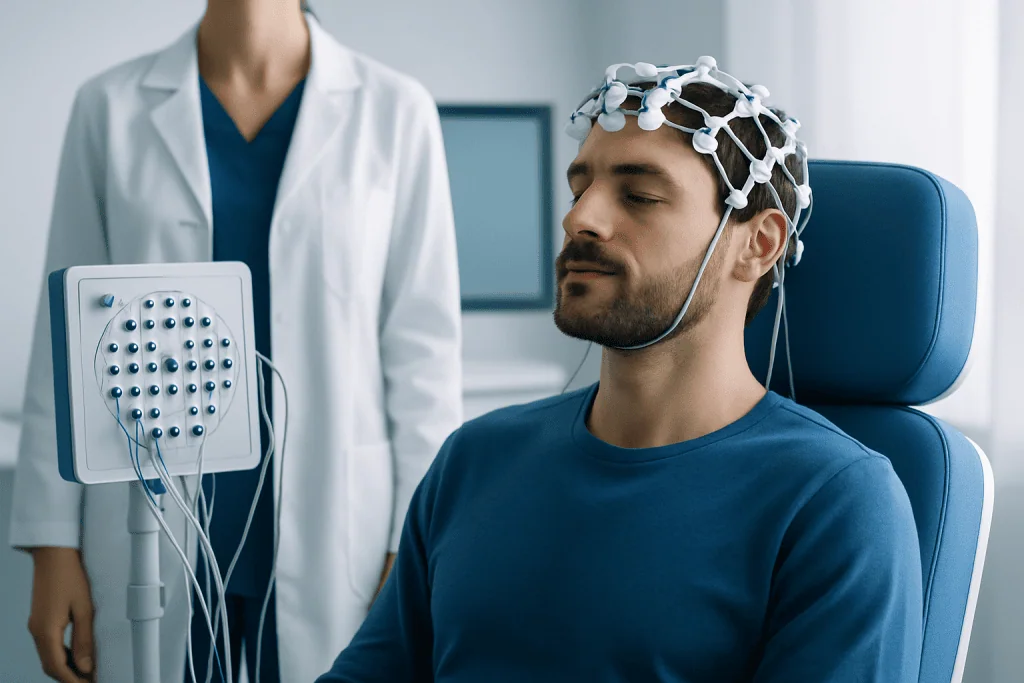
For binaural beats to be perceived, each ear must receive a different tone through stereo headphones or earbuds. For example, if one ear hears a 200 Hz tone and the other hears a 210 Hz tone, the brain may perceive a 10 Hz beat. This perceived rhythm is what listeners refer to as the binaural beat.
Researchers have studied whether these rhythmic differences influence brain activity, attention, mood, or arousal. The idea is sometimes linked to “brainwave entrainment,” meaning the brain may show activity patterns that loosely correspond to the beat frequency. In practice, the relationship is complex, and findings are not consistent across studies.
Different recordings are often labeled with terms such as delta, theta, alpha, beta, or gamma, referring to frequency ranges associated with sleep, relaxation, or alertness. These labels can be useful as a general guide, but they should not be interpreted as a guarantee of a specific clinical effect. Individual response varies, and factors such as expectation, environment, stress level, and hearing quality can influence the experience.
Possible benefits and what the evidence shows

The main reason people seek out binaural beats is to feel better in everyday life. Some listeners report that they feel calmer before bedtime, more settled during meditation, or better able to concentrate while studying or working. These perceived benefits are plausible, especially when the listening session is quiet, intentional, and part of a broader stress-reduction routine.
Research has explored binaural beats for anxiety, mood, attention, memory, and sleep. Some small studies suggest short-term benefits in relaxation or reduced situational stress, while others show little or no clear difference compared with ordinary music, white noise, or silence. This means binaural beats cannot currently be described as a proven treatment for anxiety disorders, chronic insomnia, depression, or neurological disease.
For patients, the practical conclusion is balanced: binaural beats may be worth trying as a self-care tool if expectations are realistic. They may be most helpful when used alongside established approaches such as good sleep hygiene, mindfulness practice, psychotherapy, or clinician-guided treatment for conditions like sleep disorders or anxiety.
If a person notices improved relaxation, sleep onset, or focus, that experience is still meaningful even if the exact mechanism is uncertain. But if symptoms are persistent, severe, or disruptive, professional assessment remains important.
Safety, side effects, and who should be cautious
For most healthy adults, binaural beats are considered low risk when listened to at a comfortable volume. The most important safety steps are practical ones: keep the volume moderate, avoid prolonged loud listening, and do not use headphones in situations that require full attention, such as driving, cycling in traffic, or operating machinery.
Some people may find the sounds irritating rather than helpful. Possible unwanted effects include distraction, restlessness, mild headache, ear discomfort from headphones, or frustration if the audio does not produce the expected effect. A person with tinnitus, sound sensitivity, migraine, or hearing loss may respond differently and may prefer to discuss sound-based practices with a clinician first.
People with seizure disorders or neurological conditions should use added caution with any sensory technique that they suspect may trigger symptoms, even though binaural beats are auditory rather than flashing visual stimuli. Anyone who notices dizziness, worsening headaches, unusual neurological symptoms, or heightened anxiety during use should stop and seek medical advice.
Binaural beats should also not delay evaluation for serious symptoms. Ongoing panic attacks, severe insomnia, major mood changes, fainting, confusion, or new hearing problems deserve proper medical attention rather than self-treatment alone.
How to use binaural beats in a practical, patient-friendly way
People who want to try binaural beats can approach them as a structured listening exercise. Stereo headphones are usually needed. It is often best to start in a quiet place, at low to moderate volume, for a short session of about 10 to 20 minutes. A calm, comfortable setting may matter as much as the audio itself.
It can help to match the listening goal to the time of day. Some people prefer slower, more relaxing tracks in the evening and more alertness-oriented tracks during study or desk work. Keeping a simple note of when the session was used and how the person felt afterward can make it easier to judge whether it is genuinely useful.
Binaural beats work best when they are part of healthy habits rather than a stand-alone fix. For sleep, that may include a regular bedtime, limiting caffeine late in the day, and reducing screen use before bed. For stress, it may include breathing exercises, movement, and counseling or psychotherapy when needed.
If concentration problems, poor sleep, or anxiety continue despite self-care, formal evaluation may be worthwhile. Depending on symptoms, a clinician may recommend assessment in neurology or a sleep study to look for underlying causes rather than assuming the issue is only stress.
How doctors evaluate symptoms when binaural beats are not enough
When a patient seeks help for sleep problems, anxiety, headaches, or trouble concentrating, clinicians do not focus on binaural beats themselves as the main issue. Instead, they assess the underlying symptom pattern. They may ask when symptoms started, how often they occur, whether they interfere with work or daily life, and whether other signs such as snoring, mood changes, hearing symptoms, or medication effects are present.
Evaluation may include a physical examination, review of sleep habits, mental health screening, hearing assessment, or neurological evaluation based on the person’s concerns. This step is important because common symptoms such as fatigue, poor focus, and insomnia can be linked to many conditions, from stress and depression to sleep apnea, medication side effects, pain disorders, or hormone-related issues.
Treatment depends on the cause. Evidence-based options may include sleep hygiene counseling, cognitive behavioral therapy, medication when appropriate, hearing support, stress management strategies, or treatment of a specific disorder. In this context, binaural beats can remain a supportive practice if the patient finds them soothing, but they are not the central treatment plan.
When to seek medical care
A person should seek medical care if symptoms such as insomnia, anxiety, headaches, poor concentration, dizziness, or hearing changes are frequent, worsening, or affecting daily function. Professional advice is especially important if self-care measures, including relaxation audio, have not helped after a reasonable trial.
Urgent medical attention is needed for red-flag symptoms such as chest pain, shortness of breath, fainting, new confusion, seizure activity, sudden hearing loss, severe headache unlike usual headaches, or thoughts of self-harm. These symptoms should not be attributed to stress or managed only with audio tools.
For patients seeking coordinated evaluation, Acibadem International’s multidisciplinary specialists and JCI-accredited hospitals diagnose and treat related sleep, neurological, and mental health concerns for international patients. The goal is to identify the real cause of symptoms and guide care safely and appropriately.
Frequently asked questions
Do binaural beats really work?
They may help some people feel more relaxed, focused, or ready for sleep, but results vary from person to person. Research findings are mixed, so they should be seen as a wellness aid rather than a proven medical treatment.
Can binaural beats treat anxiety or insomnia?
Binaural beats are not considered a stand-alone treatment for anxiety disorders or chronic insomnia. They may be used as a supportive relaxation tool, but persistent symptoms should be assessed by a qualified healthcare professional.
Do you need headphones for binaural beats?
Yes, in most cases stereo headphones or earbuds are needed because each ear must receive a slightly different tone. Without separate input to each ear, the binaural effect is usually not created properly.
Are binaural beats safe?
For most people, they are low risk when listened to at a comfortable volume. It is best to avoid loud volumes and not use them during activities that require full attention, such as driving.
How long should someone listen to binaural beats?
Many people start with short sessions of about 10 to 20 minutes and adjust based on comfort and response. Longer listening is not necessarily better, and stopping is sensible if the audio causes irritation, headache, or increased anxiety.
Can binaural beats help with focus while studying or working?
Some people say they feel more focused with binaural beats in the background, especially in a quiet setting. However, scientific support is limited, and ordinary instrumental music or a distraction-free environment may work just as well for some individuals.
References
- National Center for Complementary and Integrative Health
- National Institutes of Health
- American Academy of Sleep Medicine
- World Health Organization
- Cochrane
This article is for general information only and is not a substitute for professional medical advice. Please consult a qualified doctor about your individual situation.
Explore treatments in Turkey — costs, top hospitals & a free quote
JCI-accredited · board-certified surgeons · reply within 24h
Add us as a Preferred Source to see more of our trusted health content across Google Search, AI Overviews and Discover.

More from the Health Library

Mavacamten: An Evidence-Based Guide for Patients

Smoking — Explained by Medical Evidence, Not Myths

Onions in Socks: What Patients Need to Know

Left Sore Arm: An Evidence-Based Guide for Patients

Ataxia Telangiectasia: A Complete Medical Overview

Nail Bed: A Complete Medical Overview
Related Specialists

Assoc. Prof. Dr. Emine Karabük
Gynecology & Obstetrics
Prof. Dr. Bülent Güçyetmez
Intensive Care
Prof. Dr. İsmail Mete İtil
Gynecology & Obstetrics
Dt. Yiğitcan Candaner
Oral & Dental Health