Biopsy Required to Confirm Oral Cancer Diagnosis: Procedure, Recovery and Results
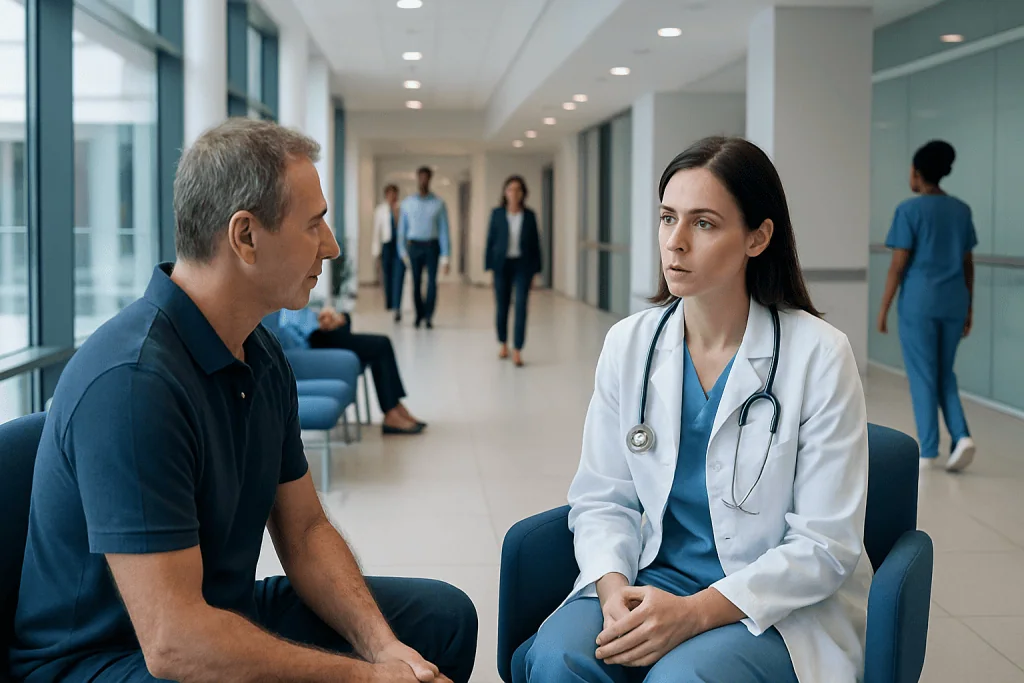
A biopsy is the definitive test for confirming or ruling out oral cancer. Most oral biopsies are outpatient procedures performed with local anaesthetic.
Key Takeaways
- A biopsy is the definitive test for confirming or ruling out oral cancer.
- Most oral biopsies are outpatient procedures performed with local anaesthetic.
- The tissue sample is examined by a pathologist, and results commonly guide further imaging or specialist care.
- Soreness, minor bleeding, and swelling are usually temporary after a mouth biopsy.
- A mouth sore, red or white patch, lump, or unexplained bleeding lasting more than two weeks should be assessed by a clinician.
A biopsy is required to confirm oral cancer diagnosis when a clinician finds a suspicious area in the mouth or throat. The procedure removes a small sample of tissue for laboratory examination, helping distinguish cancer from infections, irritation, and other non-cancerous conditions.
Overview: why a biopsy is needed
Is a biopsy required to confirm oral cancer diagnosis? Yes. Although an examination, dental assessment, scan, or special light-based test may identify an area that needs attention, only a tissue biopsy can show whether cells are cancerous when examined under a microscope.
Oral cancer can develop on the lips, tongue, gums, floor or roof of the mouth, inner cheeks, tonsils, or throat. Several non-cancerous conditions can look similar, including trauma from a sharp tooth, fungal infection, inflammatory disease, or a benign growth. A biopsy provides the information needed to make an accurate diagnosis and plan appropriate care.
The finding of an abnormal area does not mean that cancer is present. Biopsy is used because it gives a clear answer when clinical examination alone cannot reliably identify the cause. If cancer is found, the pathology report also helps the specialist understand the type and characteristics of the tumour.
Who may need an oral biopsy
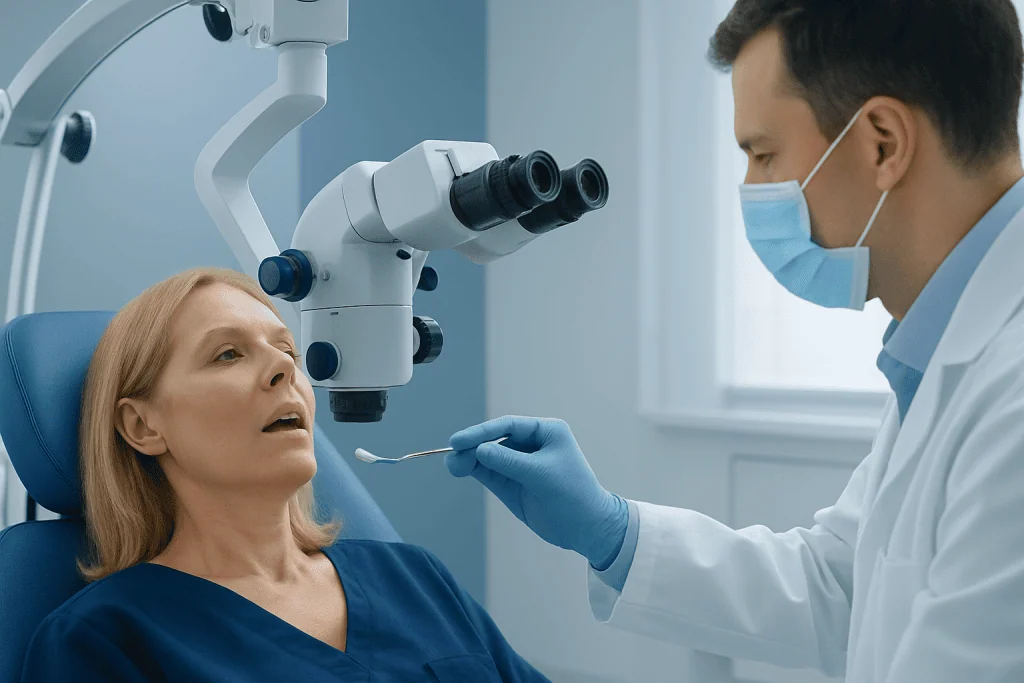
A dentist, primary care clinician, ear, nose and throat specialist, oral and maxillofacial surgeon, or head and neck specialist may recommend a biopsy when an area in the mouth does not heal or has features that require closer assessment. This is a diagnostic procedure, not a treatment for cancer itself.
Features that may lead to a biopsy include a persistent ulcer or sore, a red or white patch, an unexplained lump or thickened area, bleeding without a clear cause, pain that does not settle, numbness, or difficulty chewing, swallowing, or moving the tongue or jaw. A biopsy may also be advised for a neck lump when a mouth or throat condition is suspected.
Risk factors such as tobacco use, heavy alcohol use, previous head and neck cancer, and certain human papillomavirus-related cancers can influence clinical assessment. However, people without known risk factors can also develop oral cancer, so persistent changes should not be ignored.
- Lesions lasting longer than two weeks often need professional assessment.
- A clinician may first remove an obvious source of irritation, such as a sharp tooth edge, then review healing.
- Imaging can support evaluation, but it does not replace tissue diagnosis.
How an oral cancer biopsy works
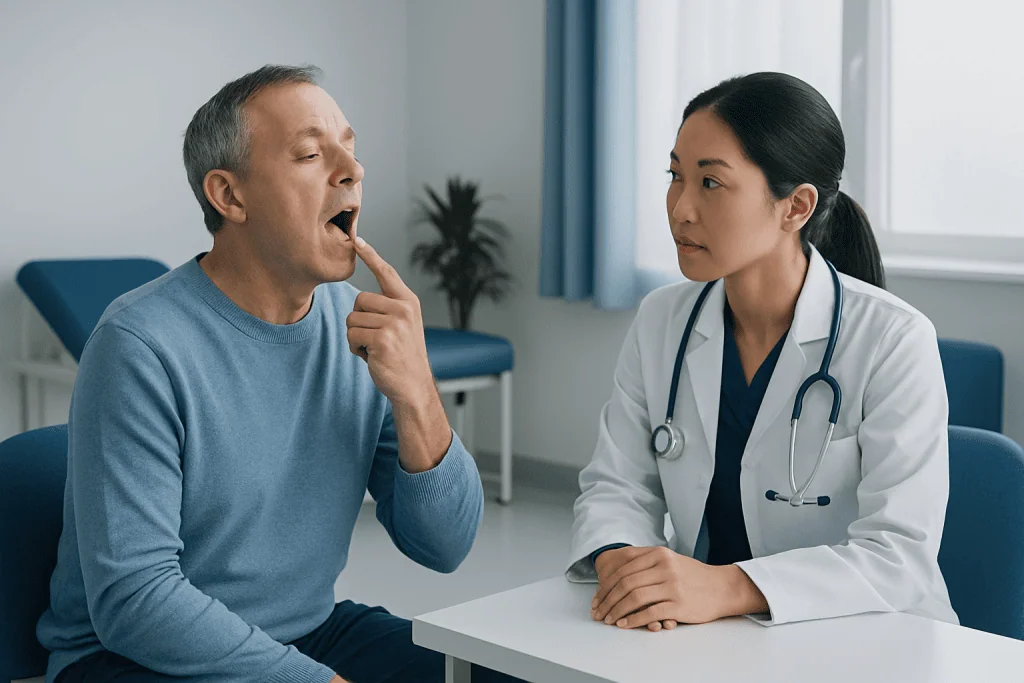
During a biopsy, a clinician removes cells or a small piece of tissue from the suspicious area. The sample is preserved and sent to a pathology laboratory, where a pathologist examines it under a microscope. In some cases, additional laboratory tests are performed to define the type of cells more precisely.
The most common method is an incisional biopsy, which removes a small portion of a larger or suspicious lesion. An excisional biopsy removes the entire small lesion and may be suitable when it can be safely removed without affecting important structures. A brush biopsy collects surface cells and can sometimes help identify abnormalities, but an abnormal brush result generally still needs confirmation with a conventional tissue biopsy.
If there is a suspicious neck lymph node, the clinician may use fine-needle aspiration. This uses a thin needle to collect cells. It can be helpful in evaluating neck lumps, while a mouth lesion is often assessed with a direct tissue biopsy. The exact method depends on the location, appearance, size, and medical history.
Step by step: what happens during the procedure
Before the procedure, the clinician reviews symptoms, medicines, allergies, bleeding history, and health conditions. People taking anticoagulants or antiplatelet medicines should not stop them independently; the prescribing clinician and biopsy team can advise whether any adjustment is appropriate.
Most biopsies inside the mouth are done in an outpatient setting with local anaesthetic. The area is numbed, so pressure or movement may be felt but sharp pain should not occur. The clinician may use a small scalpel, punch instrument, or other surgical tool to remove the sample. If needed, a few dissolvable stitches may close the site.
The procedure itself is usually brief, though appointment length varies depending on preparation and the biopsy location. A biopsy from the back of the mouth, throat, or another difficult-to-reach area may require sedation or general anaesthesia. In that situation, the care team provides instructions about fasting, transport home, and recovery.
After sampling, the tissue is labelled and sent to the laboratory. The clinician explains how to care for the wound and when to expect results. If the biopsy confirms malignancy, further assessment may include imaging and discussion with a multidisciplinary head and neck cancer team. Oral cancer care may involve several specialists because diagnosis, staging, treatment, speech, swallowing, nutrition, and dental health can all be relevant.
Recovery timeline, benefits and possible risks
After a local-anaesthetic mouth biopsy, numbness generally wears off over several hours. Mild discomfort, swelling, tenderness, or small amounts of blood-stained saliva can occur during the first day. Many people return to usual daily activities the same day, although the area may remain sensitive for several days.
For the first 24 hours, clinicians commonly advise avoiding vigorous rinsing, smoking, alcohol, and very hot foods or drinks. Softer, cooler foods may be more comfortable while the site heals. Gentle oral hygiene is important, but the biopsy area should be treated carefully according to the clinician’s instructions. Pain relief recommendations should be personalised, particularly for people with other medical conditions or medicines.
The main benefit is diagnostic certainty. A timely biopsy can prevent delays in treating cancer and can also provide reassurance when findings are benign. Risks are generally small but include temporary pain, swelling, bleeding, infection, delayed healing, and rarely damage to nearby structures or an adverse reaction to anaesthesia.
People should contact their clinical team promptly if bleeding does not stop with advised pressure, pain or swelling is worsening rather than improving, fever develops, there is pus-like discharge, or swallowing or breathing becomes difficult. These symptoms need professional assessment, even though serious complications are uncommon.
Understanding biopsy results and next steps
Biopsy results may show normal tissue, inflammation, infection, a benign lesion, changes that may increase future cancer risk, or cancer. The pathology report may use terms such as dysplasia, which means cells have abnormal changes. Dysplasia is not the same as cancer, but its degree and the clinical findings help determine whether monitoring, removal, or further treatment is needed.
If cancer is diagnosed, the report may identify the cancer type, often squamous cell carcinoma in oral cancers. Further tests are usually needed to determine the extent of disease, sometimes called staging. These may include imaging of the head, neck, chest, or other areas, along with assessment of lymph nodes and overall health.
Treatment is tailored to the location and stage of cancer, pathology findings, and the person’s general health and priorities. Options can include surgery, radiotherapy, systemic therapies, or a combination. Oral cancer treatment is planned by a multidisciplinary team to support both cancer control and important functions such as speaking, swallowing, eating, and appearance.
Results can take several days to a couple of weeks, depending on the laboratory tests required. Waiting can be stressful, and it is reasonable for patients to ask when and how results will be communicated. Bringing a relative or trusted support person to a results appointment may be helpful.
When to seek medical care
A dentist or doctor should assess a mouth change that lasts longer than two weeks, particularly if it is not clearly improving. Early review is sensible because mouth conditions often have treatable non-cancerous causes, and persistent lesions should not be self-diagnosed.
Seek a prompt appointment for a persistent mouth ulcer, red or white patch, lump, unexplained bleeding, ongoing hoarseness, persistent sore throat, one-sided ear pain without an ear cause, loose teeth without explanation, or difficulty swallowing. A new neck lump also deserves medical assessment.
Urgent medical care is appropriate for significant or uncontrolled bleeding, severe swelling, or any difficulty breathing. After a biopsy, the treating team should be contacted about symptoms that are severe, worsening, or outside the recovery guidance provided.
Acibadem International’s multidisciplinary specialists and JCI-accredited hospitals diagnose and treat oral cancer for international patients, with coordinated assessment across head and neck surgery, oncology, radiology, pathology, dentistry, nutrition, and rehabilitation services.
Reducing risk and protecting oral health
Not every case of oral cancer can be prevented, but avoiding tobacco in all forms is one of the most important ways to lower risk. Limiting alcohol, especially when combined with tobacco, also supports oral and general health. People who want to stop smoking can ask a clinician about evidence-based cessation support.
Regular dental visits can help identify changes in the mouth early. Good oral hygiene, well-fitting dentures, and prompt attention to broken teeth or persistent irritation may improve mouth health, although eliminating irritation alone does not replace assessment of a lesion that persists.
Vaccination against human papillomavirus is recommended in many national immunisation programmes and can reduce the risk of several HPV-related cancers. Eligibility varies by country and age, so individuals can discuss vaccination with a qualified healthcare professional. Routine self-awareness is useful: looking for new or persistent changes is not a substitute for professional evaluation when something seems unusual.
Frequently asked questions
Can a dentist diagnose oral cancer without a biopsy?
A dentist may identify a suspicious lesion and refer the person for further assessment, but visual examination alone cannot confirm oral cancer. A tissue biopsy examined by a pathologist is generally required for a definitive diagnosis.
Is an oral biopsy painful?
Most biopsies inside the mouth are performed with local anaesthetic, so the area should be numb during the sampling. Mild soreness or tenderness can occur once the anaesthetic wears off and usually improves over the following days.
How long does it take to get oral biopsy results?
Timing varies by laboratory and by whether additional testing is needed. Many results are available within several days to a couple of weeks, and the clinical team can explain the expected timeframe.
Does a biopsy make oral cancer spread?
No. A properly performed diagnostic biopsy is a standard, evidence-based part of cancer assessment and is not considered to cause oral cancer to spread. Obtaining an accurate diagnosis helps clinicians recommend appropriate care without unnecessary delay.
What happens if an oral biopsy is positive for cancer?
The specialist will explain the pathology result and arrange further evaluation, often including imaging and assessment by a multidisciplinary team. Treatment may involve surgery, radiotherapy, systemic treatment, or a combination, depending on the cancer's location and extent.
What should someone eat after a mouth biopsy?
Softer, cool or lukewarm foods may be more comfortable during the first day or two, particularly if the biopsy site is tender. The clinician's instructions should take priority, and very hot, spicy, sharp, or hard foods may be best avoided until the area is more comfortable.
References
- World Health Organization
- American Cancer Society
- National Cancer Institute
- American Dental Association
- NHS
This article is for general information only and is not a substitute for professional medical advice. Please consult a qualified doctor about your individual situation.
Oncology care in Turkey — second opinion and treatment plan
JCI-accredited · board-certified surgeons · reply within 24h
Add us as a Preferred Source to see more of our trusted health content across Google Search, AI Overviews and Discover.