Black Eye: A Complete Medical Overview

A black eye usually results from broken small blood vessels under the skin after trauma. Pain, swelling, and purple-blue discoloration are common and often peak in the first 1 to 2 days.
Key Takeaways
- A black eye usually results from broken small blood vessels under the skin after trauma.
- Pain, swelling, and purple-blue discoloration are common and often peak in the first 1 to 2 days.
- Vision changes, severe pain, double vision, or trouble moving the eye need prompt medical assessment.
- Initial care includes a cold compress, head elevation, rest, and avoiding further injury.
- Most uncomplicated black eyes heal without lasting problems, but doctors may check for fractures or internal eye injury.
A black eye is bruising and swelling around the eye, usually caused by a blow to the face or head. It often improves on its own within 1 to 2 weeks, but certain symptoms can suggest a more serious eye or facial injury that needs medical care.
Overview of a black eye
A black eye is a bruise around the eye caused by bleeding under the skin after an injury. The medical term often used is periorbital hematoma or periorbital ecchymosis. Even when the injury is mild, the thin skin around the eye can show dramatic purple, blue, or yellow discoloration, which can make the problem look worse than it is.
In many cases, a black eye happens after a sports injury, a fall, an accidental bump, or another impact to the face or head. The swelling and color change usually become more noticeable over the first 24 to 48 hours. As healing continues, the color often changes from dark purple or blue to green and yellow before fading.
Although many black eyes are minor, the area around the eye is closely connected to the eyeball, eyelids, nose, cheekbones, and skull. For that reason, a black eye should not be viewed only as a cosmetic issue. Sometimes it can happen together with a cut, a broken facial bone, a concussion, or an injury inside the eye itself.
A careful approach focuses on two questions: whether the bruising is simple soft-tissue injury, and whether there are signs of damage to vision or nearby structures. This helps guide whether home care is enough or whether a medical examination is the safer next step.
What symptoms are common, and what is not typical?
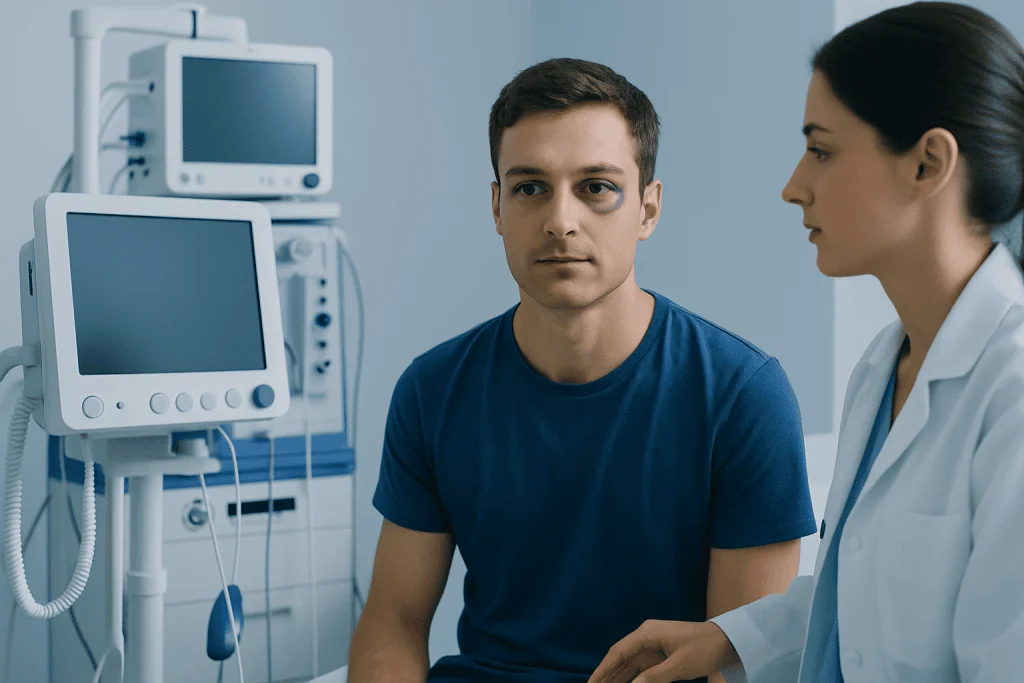
The usual symptoms of a black eye include tenderness, swelling of the eyelids, and bruising around one eye. The skin may feel sore to touch, and the eyelid can become puffy enough to partly close. Mild watering of the eye may happen, especially if the surrounding tissues are swollen.
The color of the bruise changes over time. It may start red or pink, then turn blue, purple, or black. Over several days, it often becomes green, yellow, or brown as the blood under the skin breaks down naturally. Mild headache or discomfort around the brow or cheek can also occur after an injury.
Some symptoms are less typical and deserve extra attention. These include blurred vision, double vision, new light sensitivity, severe eye pain, blood visible in the white part of the eye, or trouble opening or moving the eye. Numbness in the cheek or upper lip can suggest injury to nearby facial bones or nerves.
It is also important to notice symptoms beyond the eye area. Dizziness, vomiting, confusion, fainting, severe headache, or bleeding from the nose after facial trauma may point to a more significant head or facial injury. In these situations, the black eye is only one part of the overall problem.
Why a black eye happens: causes and risk factors

The most common cause of a black eye is direct trauma. A fist, ball, elbow, fall, door edge, or another object can break tiny blood vessels in the tissues around the eye. Blood then leaks into the surrounding skin, leading to bruising and swelling.
Not every black eye comes from a blow directly to the eye. Injury to the forehead, nose, or upper cheek can also cause blood to track downward into the tissues around the eyes. Some people develop bruising around both eyes after a facial or skull injury, and this pattern may need urgent medical assessment rather than simple home care.
Certain factors can make bruising more noticeable or more likely. These include older age, thinner skin, use of blood thinners, aspirin or other medicines that affect clotting, and bleeding disorders. Swelling may also look more dramatic in children because the tissues around the eye are delicate and reactive.
Less commonly, a black eye can appear after facial or sinus surgery, dental procedures, or other conditions that cause bleeding around the orbit. When bruising occurs without a clear injury, a doctor may consider other explanations such as a clotting problem, infection, or another underlying condition.
How doctors assess a black eye
Diagnosis begins with the story of what happened and a focused physical examination. A doctor will usually ask when the injury occurred, whether the object was blunt or sharp, whether vision changed right away, and whether there are any symptoms of head injury. Knowing whether the person lost consciousness or is taking blood-thinning medication can also be important.
The examination looks at much more than skin bruising. A clinician may check visual acuity, pupil responses, eye movements, eyelid injury, tenderness over the bones of the face, and whether there is blood inside the front of the eye. These steps help identify conditions that can accompany a black eye, including a scratched eye surface, orbital fracture, or internal bleeding.
Imaging tests are not needed for every black eye. However, a doctor may recommend scans if there is concern about a broken facial bone, an orbital injury, or head trauma. In that setting, MRI or, more commonly in acute trauma, CT scan can help assess the structures around the eye and face.
If vision is affected or the doctor suspects injury to the eye itself, referral to an eye specialist may be advised. In some cases, a black eye can occur alongside conditions such as retinal detachment or a more serious eye trauma, both of which need urgent expert evaluation to protect vision.
Treatment options and what helps recovery
Most uncomplicated black eyes improve with simple supportive care. During the first 24 to 48 hours, a cold compress can help reduce swelling and discomfort. A clean cloth wrapped around an ice pack or bag of frozen vegetables is often used for short periods several times a day. Ice should not be placed directly on the skin or the eyeball.
Resting with the head slightly elevated, including during sleep, can help swelling go down. If the eyelids are puffy, gentle cleaning of the area may make it easier to open the eye, but rubbing should be avoided. Many people find that discomfort settles gradually over a few days while the bruising takes longer to fade.
Doctors may suggest over-the-counter pain relief if it is appropriate for the individual, but the choice depends on age, other medical conditions, and medicines already being used. If there is a cut, facial fracture, infection, or injury inside the eye, treatment may be more specific and can range from wound care to specialist procedures.
When structural injury is suspected, evaluation by ophthalmology, emergency medicine, or maxillofacial specialists may be needed. In selected cases, clinicians may use further testing such as ultrasound or specialist imaging, but treatment always depends on the cause rather than the bruise alone.
Self-care, healing time, and prevention
For a simple black eye, self-care is mainly about protecting the area while the body heals. Contact sports, heavy physical activity, or situations where another blow could happen should be avoided until swelling and tenderness improve. Contact lenses may feel uncomfortable during this period, so some people temporarily switch to glasses if advised by their clinician.
Most black eyes begin to look better after a few days and heal within 1 to 2 weeks, although deeper bruising may last longer. The skin color usually changes in stages, and this is a normal part of healing. People often worry when the bruise spreads to the lower eyelid or side of the nose, but bruising can move with gravity as it resolves.
Prevention focuses on reducing the chance of facial injury. Useful measures include wearing protective sports eyewear, using seat belts, improving lighting at home to prevent falls, and keeping walkways clear of hazards. Children benefit from age-appropriate supervision and safety gear during play and sports.
People who bruise easily or take blood-thinning medicines may wish to discuss injury prevention and medicine review with a doctor. If black eyes happen repeatedly without obvious trauma, medical evaluation is sensible to look for bleeding or clotting issues rather than assuming each bruise is harmless.
When to seek medical care
A black eye should be medically assessed if there is any change in vision, double vision, severe pain, increasing swelling, inability to move the eye normally, or if the eyeball itself looks injured. Prompt care is also important if there is a deep cut, heavy bleeding, or suspicion that something penetrated the eye area.
Medical care is also advisable after high-impact injuries, such as road traffic accidents, sports collisions, or falls from height. Bruising around both eyes, marked facial tenderness, a misshapen cheek or nose, or numbness in the face can suggest a fracture. Symptoms such as vomiting, confusion, fainting, or severe headache should raise concern for head injury.
Children, older adults, and people taking anticoagulants may need earlier assessment because complications can be easier to miss or bruising can be more significant. A black eye without a clear injury, or one that does not improve as expected, should also be checked.
If specialist care is needed, Acibadem International’s multidisciplinary teams in JCI-accredited hospitals assess eye and facial injuries for international patients, coordinating imaging and treatment when appropriate. The key point is that persistent pain, visual symptoms, or significant trauma should not be managed as a routine bruise without professional advice.
Frequently asked questions
How long does a black eye last?
Most uncomplicated black eyes improve noticeably within several days and clear within 1 to 2 weeks. The color often changes from purple or blue to green and yellow before fading completely. Larger or deeper bruises can take a bit longer.
Can a black eye happen without being hit directly in the eye?
Yes. A blow to the forehead, nose, or upper cheek can cause blood to collect in the tissues around the eye. Bruising may also spread downward over time because of gravity.
Should ice be used on a black eye?
A cold compress is commonly used during the first 24 to 48 hours to help reduce swelling and discomfort. It should be wrapped in a cloth and not applied directly to the skin or the eyeball. If pain is severe or vision is affected, medical evaluation is more important than continued home treatment.
When is a black eye an emergency?
Emergency assessment is important if there is loss of vision, double vision, severe pain, inability to move the eye, or signs of a head injury such as vomiting, confusion, or fainting. Penetrating injuries, deep cuts, or obvious deformity of the face also need prompt care.
Can a black eye damage vision permanently?
The bruise itself usually does not cause permanent vision loss. However, the injury that caused the black eye can sometimes damage the eye, optic structures, or facial bones. That is why any visual change after trauma should be checked urgently.
Is it safe to wear contact lenses with a black eye?
Not always. Swelling, soreness, or a hidden eye-surface injury can make contact lenses uncomfortable or unsafe. If the eye is irritated, painful, or vision is blurred, it is best to avoid lenses until a clinician advises they are safe to use again.
This article is for general information only and is not a substitute for professional medical advice. Please consult a qualified doctor about your individual situation.
Explore treatments in Turkey — costs, top hospitals & a free quote
JCI-accredited · board-certified surgeons · reply within 24h
Add us as a Preferred Source to see more of our trusted health content across Google Search, AI Overviews and Discover.

More from the Health Library

Heartburn Remedies: A Complete Medical Overview

Biophysical Profile — Explained by Medical Evidence, Not Myths

Lozenge: Symptoms, Causes, and Treatment — Complete Patient Guide

Personality Histrionic — Explained by Medical Evidence, Not Myths

Airsupra Dosing: What Patients Need to Know