Black Toenail: What Patients Need to Know

A black toenail is most often linked to injury, repeated friction, or dried blood beneath the nail. Not every dark toenail is a bruise; fungal infection and, rarely, melanoma can look similar.
Key Takeaways
- A black toenail is most often linked to injury, repeated friction, or dried blood beneath the nail.
- Not every dark toenail is a bruise; fungal infection and, rarely, melanoma can look similar.
- Medical evaluation is important if pain is severe, the nail is lifting, there are signs of infection, or the discoloration does not grow out.
- Treatment depends on the cause and may range from rest and nail care to drainage, infection treatment, or biopsy.
- Well-fitting shoes, foot hygiene, and early assessment of unusual nail changes can help prevent complications.
A black toenail is commonly caused by trauma that leads to bleeding under the nail, but fungal infection, repeated pressure, and rarely melanoma can also be involved. Most cases are not emergencies, yet persistent discoloration, severe pain, or pigment spreading beyond the nail should be assessed by a doctor.
Overview: what a black toenail usually means
A black toenail usually means there is blood trapped under the nail after an injury or repeated pressure, such as from running, hiking, or wearing tight shoes. This is called a subungual hematoma. In many people, the nail gradually grows out over weeks to months, although the dark color can remain visible for quite a while.
However, a black toenail is not always a simple bruise. Fungal infection, chronic irritation, certain medicines, and less commonly skin cancer such as melanoma can also cause dark discoloration. For that reason, the appearance of the nail, the presence of pain, and whether the color moves as the nail grows are important clues.
Patients often worry that a dark toenail automatically means something serious. In reality, many cases are related to minor trauma that the person may not even remember. Still, any unexplained, persistent, or changing nail discoloration deserves medical attention so the cause can be identified accurately and treated appropriately.
How a black toenail can look and feel
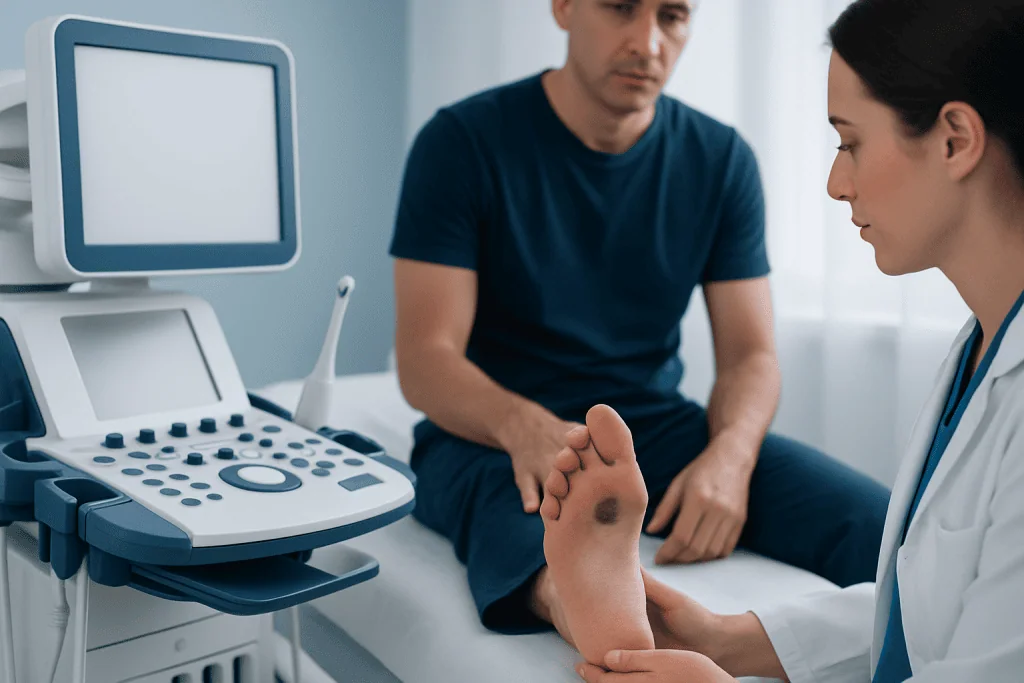
A black toenail may appear black, dark brown, purple, or deep red depending on the cause and how old the bleeding or pigment is. The entire nail may look discolored, or there may be a single dark spot, a streak, or a patch under one part of the nail. Sometimes the nail becomes thickened, loose, or partly detached.
When bleeding under the nail is the cause, pain often develops soon after injury because pressure builds beneath the nail plate. The toe may feel throbbing, tender, or sore in shoes. If the pressure is mild, the discomfort may fade within a day or two even though the dark mark remains visible.
Other symptoms can suggest a different cause. Infection may lead to thickening, crumbling, odor, surrounding redness, or drainage. A suspicious pigmented lesion may be painless and does not always follow an injury. Warning signs include a dark streak that widens, irregular color, or pigment extending onto the surrounding skin.
- Dark spot after stubbing the toe or dropping something on it
- Pain or throbbing under the nail
- Nail lifting or loosening
- Thick, brittle, or crumbly nail
- Redness, swelling, pus, or warmth around the nail
- Dark band or patch that does not grow out over time
Common causes and risk factors

The most common cause of a black toenail is trauma. This can be a single event, such as hitting the toe, or repeated microtrauma from sports. Long-distance running, soccer, tennis, skiing, and hiking are common examples because the toes repeatedly strike the front of the shoe. Tight footwear, steep downhill walking, and socks that bunch up can make this more likely.
In some cases, the dark appearance is related to infection or nail disease rather than bleeding. A fungal nail infection may cause yellow, brown, or black discoloration, especially when the nail has been damaged before. Bacterial infection can also darken the nail or the skin around it. Patients with diabetes, circulation problems, or weakened immunity may be more prone to nail complications and should be especially careful with foot changes.
Less common causes include medication-related pigment changes, inflammatory skin conditions, and melanonychia, which is increased nail pigmentation. Rarely, a dark toenail can be caused by subungual melanoma, a cancer arising in or around the nail unit. This is one reason that ongoing discoloration should not be assumed to be harmless.
Some patients with a dark, damaged, or infected nail may eventually need specialist treatment if the nail repeatedly becomes painful or deformed. In selected cases, doctors may discuss options used for troublesome nail disease, including care related to nail surgery, especially when conservative measures have not helped.
How doctors diagnose the cause
Diagnosis starts with a careful history and physical examination. A doctor will usually ask when the color first appeared, whether there was recent trauma, whether the nail is painful, and if the mark is moving forward as the nail grows. They will also look at the pattern of discoloration, the condition of the surrounding skin, and whether other nails are affected.
If a fungal infection is suspected, the doctor may take a nail clipping or scraping for laboratory testing. This helps avoid unnecessary treatment and confirms the exact cause. If there is significant injury, an X-ray may be recommended to look for a fracture in the toe bone, especially if swelling and tenderness are marked.
When the appearance raises concern for a pigmented lesion, referral to a dermatologist or foot specialist may be needed. A suspicious nail streak or patch may require further evaluation for melanoma, sometimes including dermoscopic assessment or biopsy. Although melanoma under the nail is rare, timely diagnosis matters because early treatment is more effective.
Treatment options for a black toenail
Treatment depends entirely on the cause. If the black toenail is due to minor bleeding under the nail and pain is mild, the main approach is protection and time. The body gradually reabsorbs some of the blood, and the rest grows out with the nail. Toenails grow slowly, so full clearing can take several months or longer.
If there is severe throbbing pain soon after injury, a clinician may relieve pressure by draining the trapped blood. This should be done in a medical setting rather than at home to reduce the risk of infection and avoid further injury. If the nail is badly torn or partly detached, the doctor will advise how to protect the nail bed while it heals.
When infection is present, treatment may include topical or oral medicines depending on the type and extent of the problem. Some thickened or damaged nails may need podiatric or dermatologic care. If the discoloration is not caused by trauma and does not grow out, doctors may investigate other nail conditions, including nail fungus, inflammatory disease, or pigmentation disorders.
Patients should avoid trying to pierce, cut, or remove the nail themselves. Home attempts can worsen pain, delay healing, and introduce infection. A healthcare professional can determine whether simple observation is enough or whether drainage, medication, imaging, or biopsy is more appropriate.
Self-care and prevention
For a recently injured toe, resting the foot, elevating it, and applying a wrapped ice pack for short periods may help reduce pain and swelling during the first day or two. Supportive footwear with a wide toe box can make walking more comfortable. The nail should be kept clean and dry, and it is usually best not to force a loose nail off.
Prevention focuses on reducing repeated trauma and maintaining nail health. Shoes should fit well, especially at the toe box, and should not allow the foot to slide forward. Athletes may benefit from moisture-wicking socks, proper nail trimming, and checking footwear before long runs or hikes. Toenails should be trimmed straight across and not cut too short.
Foot hygiene also matters. Keeping feet dry, changing socks regularly, and using sandals in communal wet areas may help lower the risk of infection. People with diabetes or reduced circulation should inspect their feet often and seek early care for nail changes, since healing may be slower and complications more likely. If a dark nail is linked to long-standing skin or nail symptoms, evaluation by a specialist can help identify conditions such as fungal infection or chronic irritation.
When to seek medical care
A black toenail should be assessed promptly if there is severe pain, marked swelling, or inability to bear weight after an injury. These can suggest a larger blood collection, a significant nail-bed injury, or a possible fracture. Care is also important if the area becomes red, warm, drains pus, or develops fever, which can point to infection.
Medical review is especially important if the discoloration appears without any remembered trauma, does not move outward as the nail grows, or forms a dark vertical band. Pigment that spreads onto the skin around the nail, irregular borders, or changing color should not be ignored. These features do not always mean cancer, but they need proper evaluation.
People with diabetes, immune suppression, or poor circulation should seek advice sooner rather than later for any painful, damaged, or discolored toenail. Near the end of the care pathway, patients who need specialist assessment may be seen by multidisciplinary teams; Acibadem International’s specialists in JCI-accredited hospitals diagnose and treat nail and skin conditions for international patients when further evaluation is needed.
Frequently asked questions
Is a black toenail always caused by injury?
No. Injury and repeated friction are common causes, but fungal infection, bacterial infection, pigment changes, and rarely melanoma can also darken a toenail. If there is no clear history of trauma or the mark does not grow out, a doctor should examine it.
How long does a black toenail take to go away?
It depends on the cause and how quickly the nail grows. If the discoloration is dried blood under the nail, it often clears only as the toenail grows forward, which may take several months. Larger injuries can remain visible for even longer.
Should a black toenail be drained?
Not every black toenail needs drainage. Drainage may help when there is significant trapped blood causing strong throbbing pain soon after an injury. This should be done by a healthcare professional rather than at home.
Can a black toenail fall off?
Yes. If the nail has been badly bruised or the nail bed was injured, the toenail may loosen and eventually detach. A new nail often grows back, but the process is slow and the new nail may look irregular for a time.
How can someone tell the difference between a bruise and melanoma under the nail?
A bruise often follows trauma and gradually moves outward with nail growth. Melanoma may appear as a dark streak or patch that persists, widens, or extends onto the surrounding skin, and it may occur without injury. Because the difference is not always obvious, persistent or unusual discoloration should be checked by a doctor.
When is a black toenail an emergency?
It may need urgent care if there is severe pain, major swelling, active bleeding, a deep cut, or concern for a broken toe after injury. Urgent evaluation is also wise if there are signs of infection such as pus, spreading redness, or fever. People with diabetes should seek prompt care for any concerning nail injury.
References
- American Academy of Dermatology
- National Health Service
- Merck Manual
- Mayo Clinic
- American College of Foot and Ankle Surgeons
This article is for general information only and is not a substitute for professional medical advice. Please consult a qualified doctor about your individual situation.
Explore treatments in Turkey — costs, top hospitals & a free quote
JCI-accredited · board-certified surgeons · reply within 24h
Add us as a Preferred Source to see more of our trusted health content across Google Search, AI Overviews and Discover.

More from the Health Library

Sore Throat Medicine: What Patients Need to Know

Back Extensions: A Complete Medical Overview

Myxedema: An Evidence-Based Guide for Patients

Hotty Toddy: A Complete Medical Overview

M.c.v. in Blood Report — Explained by Medical Evidence, Not Myths