Black Vagina: Understanding Darker Vulvar Skin
The vagina is internal, while the vulva is the external genital area where color changes are usually noticed. Darker vulvar skin is often a normal variation related to melanin, hormones, genetics, friction, or aging.
Key Takeaways
- The vagina is internal, while the vulva is the external genital area where color changes are usually noticed.
- Darker vulvar skin is often a normal variation related to melanin, hormones, genetics, friction, or aging.
- A new, single, changing, raised, painful, itchy, or bleeding dark area should be checked by a healthcare professional.
- Discharge that is dark, brown, or black is different from dark skin and may reflect old blood, among other causes.
- Avoid bleaching, harsh scrubs, and unprescribed creams on genital skin because they can cause burns, irritation, and scarring.
The term “black vagina” usually describes dark skin on the vulva, the external genital area. Vulvar color varies widely and may naturally be brown, deep brown, purple-brown, or nearly black, particularly in people with darker skin tones; however, a new or changing dark spot should be assessed by a clinician.
Overview: What Does “Black Vagina” Mean?
“Black vagina” is a non-medical phrase that may mean different things to different people. Most often, it refers to darkening of the vulva, which includes the labia, clitoris, vaginal opening, and surrounding skin. The vagina itself is an internal canal, so its color is not usually visible without an examination.
Vulvar skin naturally comes in a broad range of shades. It may be darker than nearby skin, including the inner thighs or lower abdomen. Brown, dark brown, purple-brown, or almost black pigmentation can be entirely normal, especially when it has been present for a long time, is symmetrical, and is not associated with discomfort or other changes.
It is also important to distinguish dark skin from dark discharge. Brown or black vaginal discharge may be old blood mixed with vaginal fluid. Although this can occur around menstruation, after childbirth, or during hormonal changes, persistent or unexplained discharge deserves medical advice.
Normal Reasons Vulvar Skin May Be Darker
Skin color is primarily influenced by melanin, the natural pigment that gives skin, hair, and eyes their color. Genetics strongly affect how much melanin a person produces and how it is distributed. For this reason, darker pigmentation in the genital area is common and is not a sign of poor hygiene or sexual activity.
Hormonal shifts can also make vulvar pigmentation more noticeable. Puberty, pregnancy, use of hormonal contraception, and the transition to menopause can all affect pigment-producing cells. During pregnancy, for example, darkening may also occur on the nipples, inner thighs, and a line down the abdomen.
Repeated friction can contribute to darkening over time. This may occur from skin-to-skin contact, tight clothing, exercise, shaving, waxing, or irritation from products. Aging may also alter the appearance and texture of genital skin. These changes are often gradual and harmless when there are no concerning symptoms.
- Long-standing, even color variation is commonly normal.
- Gradual darkening after puberty or during pregnancy is often hormone-related.
- Color alone cannot diagnose an infection or sexually transmitted infection.
Other Causes of Dark Spots or Color Changes
Some dark areas have a specific medical explanation. Benign vulvar melanosis, sometimes called vulvar lentiginosis, causes flat brown or black patches from increased pigmentation. Moles can also occur on the vulva, just as they can elsewhere on the body. A clinician can examine these areas and decide whether monitoring, photography, dermoscopy, or a small biopsy is appropriate.
Inflammation can leave darker skin after it settles. This is called post-inflammatory hyperpigmentation. It may follow eczema, contact dermatitis, ingrown hairs, folliculitis, shaving-related irritation, fungal infection, or scratching due to itch. Conditions that cause chronic irritation should be assessed and treated rather than repeatedly covered with cosmetic products.
Less commonly, a new dark lesion may need evaluation for a precancerous change or vulvar cancer, including melanoma. This is uncommon, but early assessment is important because appearance alone cannot reliably determine the cause. A lesion that is new, growing, irregular in shape or color, raised, ulcerated, or bleeding should not be self-diagnosed.
Dark or Black Vaginal Discharge Is Different From Dark Skin
Brown or black discharge usually contains older blood that has taken longer to leave the uterus and has darkened through oxidation. It may occur at the beginning or end of a period, with irregular bleeding, after a pelvic procedure, or during hormonal changes. In many cases, a small amount around menstruation is not concerning.
However, dark discharge is not always menstrual blood. It can be associated with pregnancy-related bleeding, infections, retained material such as a forgotten tampon, cervical or uterine conditions, or bleeding after menopause. The accompanying symptoms and a person’s age, menstrual pattern, pregnancy possibility, and medical history all matter.
A strong or unpleasant odor, fever, pelvic pain, pain during sex, itching, unusual bleeding, or discharge after menopause should prompt medical assessment. Anyone who may be pregnant and has bleeding or pain should seek timely clinical advice, as pregnancy-related bleeding needs individual evaluation.
How a Clinician Evaluates Vulvar Color Changes
A gynecologist, dermatologist, or primary care clinician will usually begin by asking when the change was noticed, whether it is evolving, and whether there is itching, pain, discharge, bleeding, or a history of irritation. They may also ask about menstrual cycles, pregnancy, medications, hair-removal practices, new soaps or pads, and personal or family history of skin conditions.
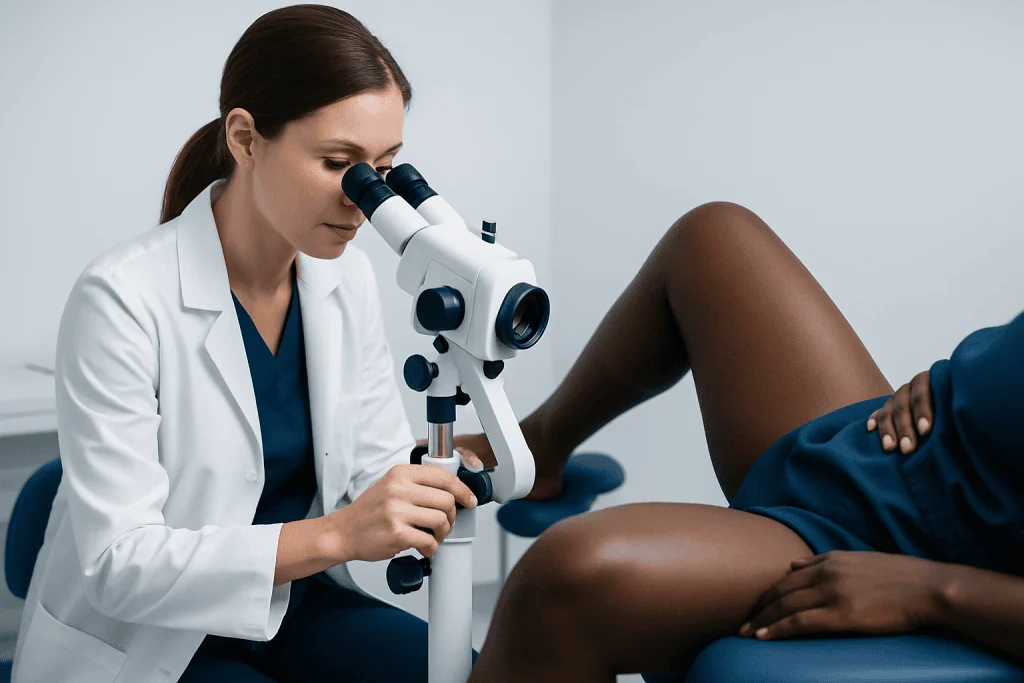
The examination is generally brief and focused on the external genital skin. If there is discharge or internal symptoms, a pelvic examination, swab, or testing for infections may be recommended. When a pigmented lesion is unclear or has concerning features, the clinician may use magnification or recommend a biopsy. A biopsy takes a very small sample of tissue, often with local anesthetic, to provide an accurate diagnosis.
It can be helpful to note whether a mark has changed and, if comfortable, to keep a private record of its size or appearance. However, photographs should not replace an in-person assessment. Avoid applying bleaching agents, acids, or strong steroid creams before an appointment, as these can alter the skin and make irritation worse.
Care, Comfort, and Safe Self-Care
Normal genital pigmentation does not require treatment. The goal of care should be comfort and skin health, not changing a natural skin tone. The vulva is sensitive, and products marketed to lighten intimate areas may contain irritating ingredients. They can cause contact dermatitis, chemical burns, pigment changes, and, in some cases, scarring.
Gentle care can reduce avoidable irritation. Washing the external area with lukewarm water and, if desired, a small amount of fragrance-free mild cleanser is usually sufficient. Douching, perfumed sprays, scented wipes, deodorants, and harsh exfoliants are not recommended because they can disrupt the natural vaginal environment or inflame vulvar skin.
Loose, breathable underwear and clothing may reduce friction and moisture. If shaving or waxing causes bumps or dark marks, changing hair-removal methods or discussing options with a clinician may help. Persistent itch, burning, or recurrent irritation should be evaluated, since the underlying cause may need targeted treatment rather than home remedies.
When to Seek Medical Care
Medical review is recommended for a new dark spot or patch that does not resemble the surrounding skin, especially if it becomes larger, develops uneven borders, changes color, feels firm or raised, or does not heal. It is also sensible to arrange an appointment for persistent itching, burning, pain, sores, blisters, bleeding, or pain during sex.
Seek prompt medical advice for dark discharge with fever, pelvic pain, a strong odor, or heavy bleeding. People who are pregnant, may be pregnant, or have bleeding after menopause should contact a healthcare professional without delay. These symptoms do not necessarily indicate a serious condition, but they need appropriate assessment.
Routine gynecologic care offers an opportunity to discuss any concerns about vulvar appearance without embarrassment. Acibadem International’s multidisciplinary specialists and JCI-accredited hospitals can evaluate vulvar and vaginal health concerns for international patients, using examination and testing tailored to the individual.
Frequently asked questions
Is it normal for the vaginal area to be black or very dark?
Darker color in the external genital area is often normal. The visible area is usually the vulva rather than the vagina, and it may naturally be darker than surrounding skin because of melanin, hormones, and friction. A new or changing isolated dark lesion should still be examined by a clinician.
Why is my vulva darker than my inner thighs?
This is a common form of natural pigmentation variation. Hormones, genetics, repeated friction, and previous irritation can make the labia and nearby skin darker than other areas. It is not a reflection of cleanliness or sexual behavior.
Can pregnancy make the vulva darker?
Yes. Pregnancy hormones can increase pigmentation in several body areas, including the vulva, nipples, and inner thighs. This change is often temporary or becomes less noticeable after pregnancy, although some pigmentation may remain.
Can an infection cause dark vulvar skin?
An infection does not usually cause a stable dark skin tone by itself. However, inflammation from an infection, dermatitis, or scratching can leave darker marks after healing. Itching, unusual discharge, odor, pain, or sores should be assessed rather than assumed to be pigmentation alone.
Should dark vaginal discharge be checked?
Dark brown or black discharge can be old menstrual blood, particularly near a period. It should be checked if it is persistent, foul-smelling, painful, associated with fever or heavy bleeding, occurs after menopause, or happens during a possible pregnancy. A clinician can identify the cause safely.
Are intimate bleaching products safe for dark vulvar skin?
Products intended to bleach or lighten genital skin can be harmful, particularly if they contain strong acids, fragrances, or unregulated ingredients. They may cause burning, inflammation, scarring, or further pigment changes. Discuss cosmetic concerns with a qualified clinician before using any product on the vulva.
This article is for general information only and is not a substitute for professional medical advice. Please consult a qualified doctor about your individual situation.
Explore treatments in Turkey — costs, top hospitals & a free quote
JCI-accredited · board-certified surgeons · reply within 24h
Add us as a Preferred Source to see more of our trusted health content across Google Search, AI Overviews and Discover.

More from the Health Library

Vegan Collagen: An Evidence-Based Guide for Patients

Benlysta: A Complete Medical Overview

Pulsatile Tinnitus: What Patients Need to Know

Adult Hep B Vaccination Schedule: What Patients Need to Know

Wrist Tendon Anatomy — Explained by Medical Evidence, Not Myths