Bladder Cancer Screening: How It Works, Results and What to Expect

Routine bladder cancer screening is not recommended for most adults without symptoms or known high risk. Blood in the urine is a common early warning sign and should always be medically assessed, even if it happens once.
Key Takeaways
- Routine bladder cancer screening is not recommended for most adults without symptoms or known high risk.
- Blood in the urine is a common early warning sign and should always be medically assessed, even if it happens once.
- Cystoscopy, which allows a clinician to look inside the bladder, is the main test used to confirm or rule out suspected bladder cancer.
- Urine tests can support assessment but cannot reliably replace cystoscopy when cancer is suspected.
- Bladder cancer is often highly treatable when found while it is limited to the bladder lining or inner layers.
- People with new urinary bleeding, persistent urinary changes, or pelvic pain should arrange timely medical review.
Bladder cancer screening is not recommended routinely for people at average risk because no screening test has been proven to clearly improve outcomes in this group. However, people with urinary symptoms, previous bladder cancer, or certain risk factors may need targeted testing, usually starting with urine evaluation and sometimes cystoscopy.
Bladder Cancer Screening: An Overview
Bladder cancer screening means testing people for bladder cancer before they develop clear symptoms. At present, routine screening is not advised for adults at average risk because available tests can produce false-positive or false-negative results, and there is not enough evidence that population-wide screening improves health outcomes.
Testing is different when a person has symptoms or an elevated risk. A clinician may investigate visible or microscopic blood in the urine, recurrent urinary symptoms without a clear cause, or changes found during follow-up after previous bladder cancer. The goal is to identify the cause of these findings promptly and accurately.
Evaluation is usually coordinated by a urologist. It may involve urine testing, imaging of the urinary tract and cystoscopy, a procedure that examines the urethra and bladder using a narrow flexible camera. The appropriate tests depend on a person’s symptoms, age, medical history and risk profile.
Who May Need Bladder Cancer Testing?
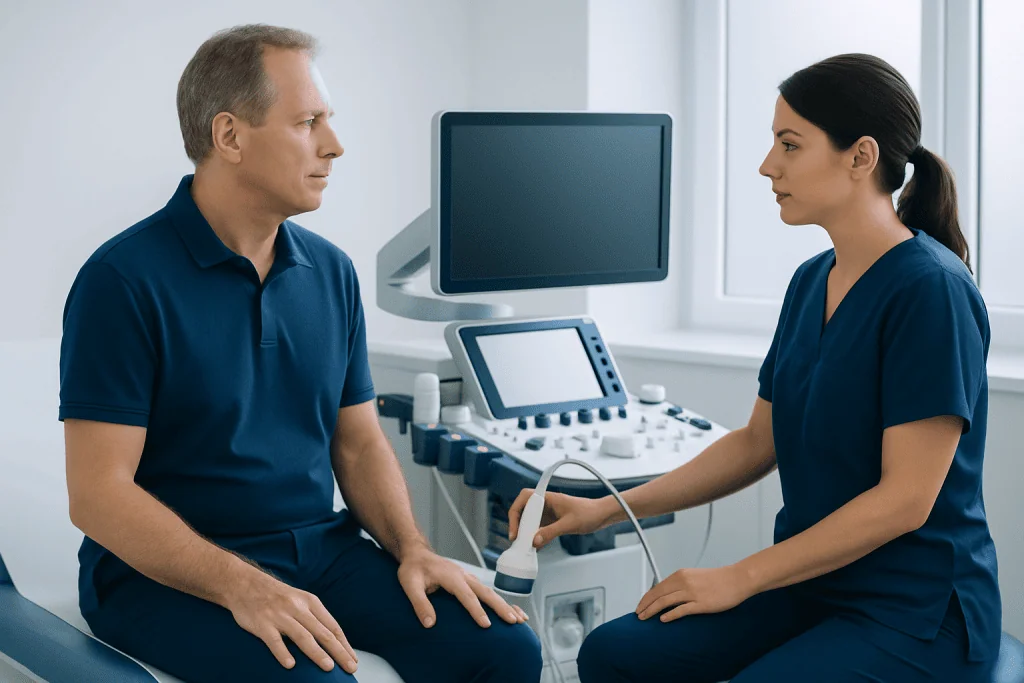
Most people do not need screening if they feel well and have no known risk factors. There is also no single blood or urine test that is accurate enough to serve as a routine screening test for everyone. Instead, clinicians use a risk-based approach when deciding whether an individual needs further assessment.
Testing may be considered for people who have blood in the urine, particularly if it is visible; ongoing urinary urgency, burning or frequent urination without infection; unexplained pelvic discomfort; or repeated abnormal urine findings. These symptoms have many possible causes, including urinary tract infection, kidney stones and benign prostate enlargement, but they deserve assessment.
Factors associated with a higher likelihood of bladder cancer include tobacco use, older age, long-term exposure to certain industrial chemicals, previous pelvic radiation, certain chemotherapy medicines and a personal history of bladder cancer. A close family history may also be relevant in selected circumstances. A doctor can help determine whether a person’s individual circumstances warrant monitoring or diagnostic tests.
- Current or past smoking is one of the most important modifiable risk factors.
- A previous bladder tumor requires planned surveillance because recurrence can occur.
- Occupational exposure may be relevant in some manufacturing, dye, rubber, leather, metal and chemical settings.
How Bladder Cancer Screening and Testing Works

The first step is usually a medical history and physical examination. The clinician will ask about urinary symptoms, smoking history, medicines, past urinary conditions, workplace exposures and family history. A urine sample may be checked for blood, infection and other abnormalities.
Urine cytology examines shed cells in urine under a microscope. It can be useful for detecting some high-grade bladder cancers, but a normal result does not exclude cancer. Other urine-based marker tests may be used in selected situations, often during follow-up of known bladder cancer, but they are generally not used alone to make or exclude a diagnosis.
Imaging can assess the kidneys, ureters and bladder. Depending on the clinical situation, this may include ultrasound or computed tomography urography. Imaging is especially helpful when blood in the urine could be coming from another part of the urinary tract.
Cystoscopy is the key examination when bladder cancer is suspected. A urologist passes a thin scope through the urethra to inspect the bladder lining directly. If an unusual area is seen, a biopsy or removal of tissue may be needed to establish a diagnosis.
What to Expect During Cystoscopy and Recovery
For an office-based flexible cystoscopy, the person is usually awake. A numbing gel is placed in the urethra, and the flexible scope is gently passed into the bladder. Sterile fluid may be used to fill the bladder so the lining can be viewed clearly. The examination itself commonly takes only a few minutes, although the full appointment takes longer.
Some people need a rigid cystoscopy, biopsy or transurethral resection of a bladder tumor under anesthesia. These procedures are more involved and may require short-term observation, a temporary urinary catheter or additional planning. The care team will explain fasting instructions, medication adjustments and arrangements for returning home if sedation or anesthesia is used.
After a simple cystoscopy, mild burning during urination, urinary frequency or a small amount of blood in the urine can occur briefly. Drinking fluids, if medically appropriate, may help. Most people return to usual activities the same day after a simple office procedure, while recovery after biopsy or tumor removal can take longer and should follow the treating team’s instructions.
The benefits of cystoscopy are direct visual assessment and the ability to obtain tissue when necessary. Risks are generally uncommon but include temporary discomfort, urinary tract infection, bleeding and, rarely, injury to the urinary tract. Fever, worsening pain, inability to pass urine, heavy bleeding or clots should be discussed urgently with a healthcare professional.
What Test Can Confirm Bladder Cancer?
A tissue biopsy is the test that confirms bladder cancer. In practice, a urologist usually identifies a suspicious area during cystoscopy and removes or samples it through the scope. A pathologist then examines the tissue to determine whether cancer is present and, if so, its type and grade.
A procedure called transurethral resection of bladder tumor is often used both to diagnose and to remove visible bladder tumors. The pathology report provides essential information about whether the tumor is limited to the bladder lining, has entered deeper layers and how abnormal the cancer cells appear.
Urine cytology, urine marker tests and imaging are valuable supporting tools, but none can replace tissue diagnosis when cancer is suspected. If cancer is confirmed, further imaging and specialist review help determine its stage and guide care.
What Are the Very First Signs of Bladder Cancer?
The most common early sign is blood in the urine, known as hematuria. It may make urine look pink, red or cola-colored, or it may be detectable only through laboratory testing. Blood in the urine can come and go, but it should not be ignored simply because it disappears.
Other possible early symptoms include needing to urinate more often, sudden urgency, burning during urination or difficulty passing urine. These symptoms are more commonly caused by non-cancer conditions such as infection, stones or prostate problems, so they do not mean that a person has bladder cancer.
More advanced disease can cause pelvic pain, flank or back pain, fatigue, unintended weight loss, bone pain or leg swelling, but these are not typical first signs. Early evaluation of urinary bleeding or persistent urinary changes gives clinicians the best opportunity to identify the cause before symptoms progress.
What Stage of Bladder Cancer Is Most Treatable?
Bladder cancer is generally most treatable when it is found at an early, non-muscle-invasive stage. This means it is confined to the inner lining of the bladder or the layer just beneath it and has not grown into the bladder muscle or spread elsewhere in the body.
Early-stage tumors are often managed through removal using a scope, sometimes followed by medication placed directly into the bladder to lower the chance of recurrence or progression. Even after successful treatment, regular follow-up is important because bladder tumors can return.
Muscle-invasive and metastatic bladder cancer can also be treated, using individualized combinations of surgery, systemic therapy, radiation therapy or other approaches. Treatment decisions are based on tumor stage and grade, overall health, kidney function, personal priorities and the expertise of a multidisciplinary cancer team.
At Acibadem International, multidisciplinary urology and oncology specialists at JCI-accredited hospitals assess and treat bladder cancer for international patients, including diagnostic evaluation, surgical planning and follow-up care.
What Organ Does Bladder Cancer Spread to First?
There is no single organ that bladder cancer always spreads to first. Before reaching distant organs, cancer may grow deeper into the bladder wall and extend into nearby tissues or lymph nodes in the pelvis. The pattern depends on the tumor’s location, stage and biological behavior.
When bladder cancer spreads beyond the pelvis, common distant sites include lymph nodes, bones, lungs and liver. This does not occur in every case, and many bladder cancers are diagnosed before distant spread develops.
Staging tests may include imaging of the chest, abdomen and pelvis, as well as selected laboratory tests. These assessments help the care team understand the extent of disease and recommend the most appropriate treatment plan.
When to Seek Medical Care
A person should arrange medical assessment promptly if they notice visible blood in the urine, even if there is no pain and even if it occurs only once. Persistent urinary burning, urgency, increased frequency or repeated urinary symptoms without a confirmed infection should also be evaluated.
Urgent medical care is appropriate for heavy bleeding, blood clots in urine, inability to urinate, fever with urinary symptoms, severe abdominal or flank pain, or feeling unwell. These symptoms may have causes other than cancer but can require timely treatment.
People who have been treated for bladder cancer should attend planned surveillance appointments and report new symptoms between visits. Avoiding tobacco, staying adequately hydrated when appropriate and following workplace safety measures can support urinary health, although they do not replace medical follow-up.
Frequently asked questions
Is bladder cancer screening recommended for everyone?
No. Routine bladder cancer screening is not recommended for most people without symptoms because available tests have important limitations and have not been shown to provide clear benefit for average-risk adults. Testing is usually targeted to people with urinary symptoms, a past history of bladder cancer or selected risk factors.
Can a urine test diagnose bladder cancer?
A urine test can detect blood, infection or abnormal cells and may help guide further investigation. However, urine tests alone cannot reliably diagnose or rule out bladder cancer. A biopsy examined by a pathologist is needed to confirm the diagnosis.
Is cystoscopy painful?
Flexible cystoscopy can feel uncomfortable, with pressure, an urge to urinate or brief burning, but numbing gel is usually used. Symptoms such as mild burning or urinary frequency can continue for a short time afterward. A clinician can discuss options if a person is anxious or likely to need a more involved procedure.
How long does it take to receive cystoscopy results?
A doctor can often discuss what was seen during cystoscopy immediately after the examination. If a biopsy is taken, the pathology result takes longer because the tissue must be processed and examined. The treating team will explain when and how results will be communicated.
Does blood in the urine always mean bladder cancer?
No. Blood in the urine may result from infection, kidney stones, strenuous exercise, prostate conditions, medicines or other causes. However, it can also be a sign of bladder, kidney or other urinary tract cancer, so medical assessment is important.
Can bladder cancer be prevented?
Not all cases can be prevented, but avoiding tobacco is the most important risk-reduction step. Following occupational safety guidance around chemical exposures and seeking assessment for urinary bleeding can also support earlier detection and care.
References
- American Cancer Society
- National Cancer Institute
- European Association of Urology
- U.S. Preventive Services Task Force
- National Health Service
This article is for general information only and is not a substitute for professional medical advice. Please consult a qualified doctor about your individual situation.
Bladder Cancer in Turkey — costs, top hospitals & a free quote
JCI-accredited · board-certified surgeons · reply within 24h
Add us as a Preferred Source to see more of our trusted health content across Google Search, AI Overviews and Discover.

Medical Oncology Department
Medical treatment of cancer with chemotherapy, immunotherapy and targeted therapies under a multidisciplinary tumor board.
60 specialists in this unitMore from the Health Library



Related Specialists

Asst. Prof. Dr. Berkhan Yılmaz
Aesthetic Plastic & Reconstructive Surgery
Dr. Şirin Zeynep Haskalp Arıkan
Pediatrics
Dr. Ferhat Erenler
Anesthesiology
Dt. Gözde Anıl Gürbüz
Oral & Dental Health