Blood Clot Behind Knee: An Evidence-Based Guide for Patients

A blood clot behind the knee is often a type of deep vein thrombosis in a leg vein. Common signs include calf or knee-area pain, swelling, warmth, tenderness, and skin color changes.
Key Takeaways
- A blood clot behind the knee is often a type of deep vein thrombosis in a leg vein.
- Common signs include calf or knee-area pain, swelling, warmth, tenderness, and skin color changes.
- DVT can look like a pulled muscle, Baker’s cyst, or knee injury, so imaging is often needed for diagnosis.
- Treatment usually involves blood-thinning medicine and measures to lower the risk of clot growth or travel to the lungs.
- Sudden shortness of breath, chest pain, or coughing up blood needs urgent emergency care.
A blood clot behind knee most often refers to a deep vein thrombosis (DVT) in the popliteal vein or nearby leg veins. It can cause pain, swelling, warmth, or tightness, but some people have few symptoms, so timely medical evaluation is important.
What a Blood Clot Behind the Knee Means
A blood clot behind knee usually means a clot has formed in a deep vein in the leg, often in or near the popliteal vein, which runs behind the knee. This is a form of deep vein thrombosis, or DVT. It matters because a deep vein clot can enlarge, block blood flow, or break loose and travel to the lungs.
Many people first notice discomfort in the back of the knee or upper calf and wonder whether it is a strain, cramp, or joint problem. That confusion is common, because DVT symptoms can overlap with sports injuries, arthritis flare-ups, and swelling from overuse. A clot cannot be confirmed by symptoms alone, which is why medical assessment is important.
Not every clot causes dramatic warning signs. Some people have mild pain or only one-sided swelling, while others notice warmth, redness, or a feeling of tightness in the leg. In some cases, the first symptoms happen only after a complication develops, which is one reason clinicians take possible DVT seriously.
Symptoms That May Suggest a Clot

The most typical symptoms of a blood clot behind the knee affect one leg rather than both. Pain may feel aching, cramping, soreness, or pressure in the back of the knee or calf. Swelling may involve the calf, ankle, or the whole lower leg, and the area can feel warmer than the surrounding skin.
Skin changes can also occur. The leg may look red, dusky, or slightly discolored, and the skin can feel tight or tender to touch. Some people notice symptoms more when standing or walking, while others feel discomfort at rest. The pattern is variable, so even mild symptoms deserve attention if they are new and one-sided.
Symptoms that can occur with DVT include:
- Swelling in one leg
- Pain behind the knee or in the calf
- Warmth over the affected area
- Tenderness along the vein
- Red or bluish skin color change
- A heavy or tight feeling in the leg
If a clot travels to the lungs, it can cause a pulmonary embolism. Warning signs include sudden shortness of breath, chest pain that may worsen with breathing, lightheadedness, a fast heartbeat, or coughing up blood. These symptoms need urgent emergency care.
Why Blood Clots Form and Who Is at Higher Risk
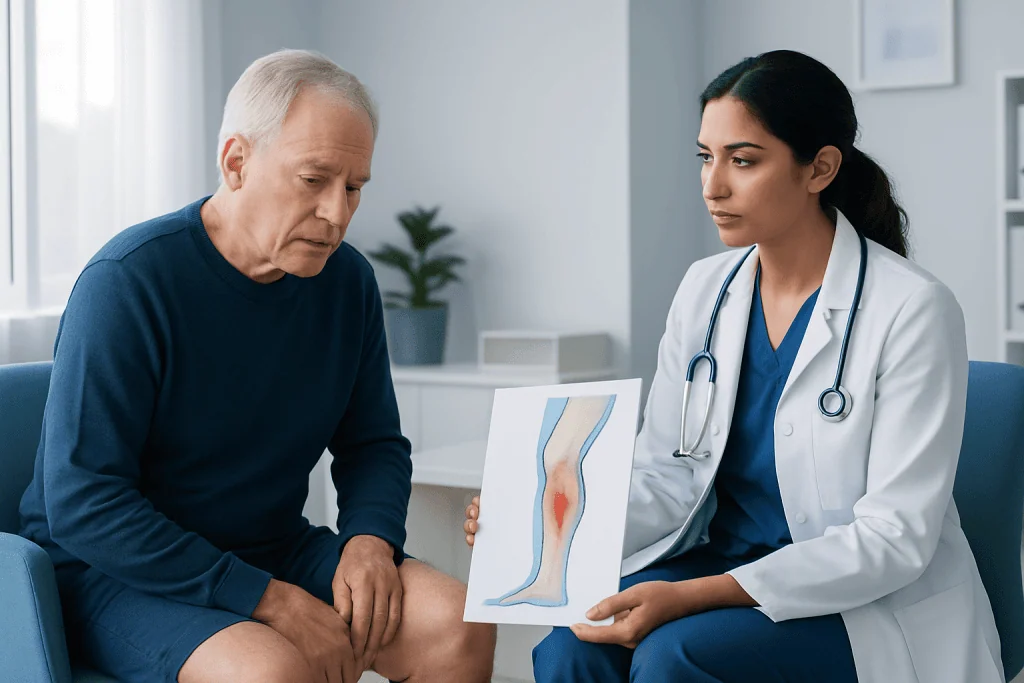
Blood clots tend to form when blood flow slows, the blood becomes more likely to clot, or the lining of a vein is injured. Doctors often think about these factors together when evaluating risk. A clot behind the knee may happen after long periods of immobility, after surgery, or during illness that reduces normal movement.
Several everyday and medical situations can increase risk. Long-distance travel, bed rest, recent hospitalization, lower-limb injury, and recovery after an operation can all contribute. Risk also rises with older age, pregnancy and the postpartum period, active cancer, smoking, obesity, hormone-containing medications, inherited clotting disorders, and a previous personal or family history of DVT.
A clot can also be linked to other vein problems. For example, superficial thrombophlebitis and chronic venous disease may cause pain and swelling but are not the same as DVT. If symptoms involve prominent veins, persistent swelling, or circulation concerns, evaluation may include conditions such as varicose veins as well as deep vein disease.
Sometimes there is no obvious trigger. An unexplained clot may lead a clinician to look more closely at medications, recent travel, hidden illness, or inherited risk factors. This broader evaluation helps guide treatment and future prevention.
Conditions That Can Mimic a Blood Clot
One reason the topic is confusing for patients is that several common problems can feel like a blood clot behind the knee. A muscle strain, torn calf muscle, tendon irritation, or a ligament injury can all cause pain in a similar area. Swelling from a knee injury or arthritis may also extend into the upper calf.
Another frequent mimic is a Baker’s cyst, a fluid-filled swelling behind the knee that can cause tightness, fullness, or pain, especially when bending the joint. If a Baker’s cyst leaks or ruptures, it may cause sudden calf pain and swelling that closely resembles DVT. Cellulitis, bruising, and superficial vein inflammation can create similar warmth and tenderness.
Because symptoms overlap so much, self-diagnosis is not reliable. Massage, vigorous exercise, or waiting several days to see if it improves may delay appropriate care if a DVT is present. A clinician uses the pattern of symptoms, the person’s risk factors, examination findings, and testing to tell these conditions apart.
How Doctors Diagnose It
Diagnosis starts with a careful history and physical exam. The clinician asks about when the pain or swelling began, whether one leg is larger than the other, and whether there have been recent triggers such as travel, surgery, injury, or hormone use. They also ask about chest symptoms that could suggest a pulmonary embolism.
The main imaging test for suspected DVT behind the knee is a leg ultrasound, especially compression ultrasonography. This test is noninvasive and helps show whether the vein is open or blocked by clot. In some situations, doctors also use a blood test called D-dimer, particularly when the overall likelihood of DVT appears low to moderate.
Not everyone needs the same tests. A clinician may use a structured risk assessment to decide whether ultrasound, blood work, or repeat imaging is needed. If symptoms suggest a clot in the lungs, chest imaging may be recommended as part of a broader evaluation for pulmonary embolism.
Imaging and blood tests are chosen based on the person’s symptoms and medical history. In some cases, diagnosis and treatment involve specialists in interventional radiology or vascular medicine when the clot is extensive, recurrent, or unusually located.
Treatment Options and What Recovery May Involve
The usual treatment for a confirmed DVT is anticoagulation, often called blood-thinning medication. These medicines do not instantly dissolve the clot, but they reduce the chance that it will grow or travel and allow the body to gradually break it down over time. The type of medicine and length of treatment depend on the clot’s location, the person’s bleeding risk, and whether there was a temporary trigger such as surgery or travel.
Some people need more advanced treatment, especially if the clot is extensive, symptoms are severe, or there is a high risk to the limb. In selected cases, hospital-based procedures may be considered to remove or break up clot, including thrombectomy. Compression stockings may be recommended for some patients, though advice is individualized.
Recovery varies. Pain and swelling often improve over days to weeks, but some discomfort can last longer. Follow-up is important because clinicians may reassess symptoms, review medication safety, and monitor for complications such as recurrence or longer-term vein problems.
After a DVT, some patients develop chronic leg swelling, heaviness, or skin changes known as post-thrombotic syndrome. Early assessment, proper treatment, movement as advised, and regular follow-up can help lower this risk. If an underlying circulation problem is suspected, a vascular specialist may be involved, and some patients may also benefit from consultation in cardiovascular surgery services for complex vascular care.
Prevention and Self-Care After Evaluation
Prevention focuses on reducing stasis, staying mobile, and managing personal risk factors. During long travel, it helps to stand up periodically, move the ankles and calves, and stay hydrated. After surgery or hospitalization, following instructions on walking, leg exercises, and prescribed preventive medication can make a meaningful difference.
People who have had a previous clot may need an individualized prevention plan. That may include reviewing hormone therapy, smoking cessation, weight management, or treatment of underlying illness. Anyone with recurrent symptoms should avoid assuming it is “just the same issue again” without medical advice.
At home, self-care should be cautious and supportive rather than diagnostic. Gentle movement may be appropriate once a clinician has advised it, but a person should not massage a painful, swollen leg that could contain a clot. Over-the-counter pain relief may be used only as advised, especially if the person is taking anticoagulants, because some medicines can increase bleeding risk.
Near the end of treatment or during follow-up, patients often have questions about travel, exercise, and future procedures. These are best discussed with the treating doctor, who can tailor advice to the clot’s cause and the person’s overall health. Acibadem International’s multidisciplinary specialists and JCI-accredited hospitals diagnose and treat vascular conditions for international patients when coordinated specialist care is needed.
When to Seek Medical Care
Prompt medical care is appropriate if there is new one-sided leg swelling, pain behind the knee or calf, warmth, tenderness, or unexplained discoloration. The same is true if symptoms appear after travel, surgery, injury, or a period of reduced mobility. Early evaluation can help confirm the cause and guide safe treatment.
Emergency care is needed if leg symptoms happen together with chest pain, sudden shortness of breath, faintness, rapid heartbeat, or coughing up blood. These can be signs that a clot has moved to the lungs. If symptoms are severe or rapidly worsening, it is safest not to wait for a routine appointment.
Patients already taking anticoagulants should also contact a clinician promptly if they develop worsening swelling, new pain, or signs of bleeding such as black stools, prolonged nosebleeds, or unusual bruising. Ongoing communication with a healthcare professional helps treatment stay both effective and safe.
Frequently asked questions
What does a blood clot behind the knee feel like?
It may feel like aching, cramping, tightness, or tenderness in the back of the knee or upper calf. Many people also notice one-sided swelling, warmth, or a heavy feeling in the leg. Some people have only mild symptoms.
Can a blood clot behind the knee be mistaken for a pulled muscle?
Yes. A DVT can resemble a muscle strain, tendon problem, Baker's cyst, or knee injury because the pain and swelling can occur in the same area. That is why imaging, usually an ultrasound, is often needed to make the diagnosis.
Is a blood clot behind the knee dangerous?
It can be, because a deep vein clot may enlarge or travel to the lungs. This does not happen in every case, but the possibility is the reason prompt medical evaluation is recommended. With timely treatment, most people do well.
How is a blood clot behind the knee diagnosed?
Doctors usually assess symptoms, risk factors, and the appearance of the leg, then confirm the diagnosis with a leg ultrasound. A D-dimer blood test may also be used in selected cases. If lung symptoms are present, additional testing may be needed.
How is it treated?
Treatment most often involves anticoagulant medication to prevent the clot from growing and to reduce the risk of it traveling. Some patients need treatment for several months, while others need a different duration based on the cause and their overall risk. A smaller group may need hospital-based procedures if the clot is extensive or complicated.
Should someone massage or exercise a painful swollen leg before seeing a doctor?
It is best not to massage a leg if a blood clot is possible. Gentle activity may be appropriate in some situations, but the safest step is to get medical advice first, especially if symptoms are new and one-sided. Self-treatment should not delay assessment.
When should someone go to the emergency room?
Emergency care is important if a person has shortness of breath, chest pain, faintness, a very fast heartbeat, or coughs up blood. These symptoms can suggest a pulmonary embolism. Severe or rapidly worsening leg symptoms also deserve urgent evaluation.
This article is for general information only and is not a substitute for professional medical advice. Please consult a qualified doctor about your individual situation.
Joint and spine care in Turkey — expert assessment & treatment
JCI-accredited · board-certified surgeons · reply within 24h
Add us as a Preferred Source to see more of our trusted health content across Google Search, AI Overviews and Discover.

More from the Health Library

Hemolysis: A Complete Medical Overview

Infant in Crib: An Evidence-Based Guide for Patients

Hard Stool: What Patients Need to Know

Xerostomia: What Patients Need to Know

Anabolic — Explained by Medical Evidence, Not Myths

Uric Acid — Explained by Medical Evidence, Not Myths
Orthopedic Surgery & Traumatology Specialists at Acibadem

Fzt. A.Sercan Soyarslan
Physical Medicine & Rehabilitation
Dr. Abdullah Yener İnce
Orthopedic Surgery & Traumatology
Dr. Adnan Abbasoğlu
Orthopedic Surgery & Traumatology
Prof. Dr. Ahmet Alanay
Orthopedic Surgery & Traumatology