Blood in Urine after Prostate Biopsy: Procedure, Recovery and Results

Light blood staining in urine is common after a prostate biopsy and usually improves within a few days. Blood in semen may last longer than blood in urine and can remain visible for several weeks.
Key Takeaways
- Light blood staining in urine is common after a prostate biopsy and usually improves within a few days.
- Blood in semen may last longer than blood in urine and can remain visible for several weeks.
- Large clots, heavy or persistent bleeding, fever, chills, or difficulty urinating require prompt medical attention.
- Blood in urine after a biopsy does not identify a prostate cancer stage.
- Recovery advice, medication adjustments, and follow-up plans should be individualized by the urology team.
Blood in urine after prostate biopsy is common because the biopsy needle passes through prostate tissue that has a rich blood supply. Light pink or red urine and small amounts of blood usually settle over several days, but worsening bleeding, inability to pass urine, fever, or severe pain should be assessed promptly.
Overview: Blood in Urine After Prostate Biopsy
A prostate biopsy collects small tissue samples from the prostate gland so a laboratory can check for cancer or other changes. Blood in urine after prostate biopsy is a frequent, expected short-term effect. The needle creates tiny punctures in the prostate and nearby tissues, allowing a small amount of blood to mix with urine.
The urine may appear pink, rust-colored, or red. Mild bleeding is often most noticeable during the first one to three days and should gradually reduce. Some people also see blood from the rectum after a transrectal procedure or blood in semen after either biopsy route; semen discoloration can persist longer and is usually not harmful.
A biopsy result, rather than post-procedure bleeding, determines whether cancer is present. A urologist may recommend biopsy after an elevated prostate-specific antigen (PSA) result, an abnormal rectal examination, concerning imaging, or a combination of these findings. The purpose is to clarify the cause and guide appropriate next steps.
How a Prostate Biopsy Works and Who May Need One
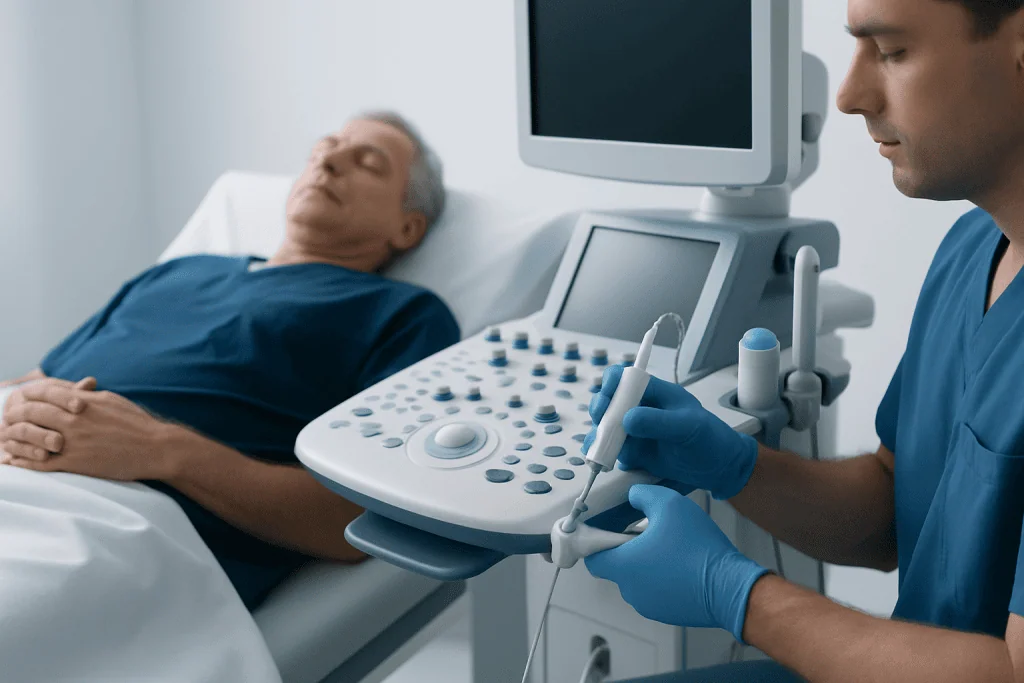
The prostate is a gland below the bladder that surrounds part of the urethra, the tube carrying urine out of the body. It can be sampled through the rectum (transrectal biopsy) or through the skin between the scrotum and anus (transperineal biopsy). Many centers increasingly use the transperineal approach because it avoids passing the needle through rectal tissue and may lower infection risk.
Biopsy is not automatically needed for every raised PSA level. PSA can increase for several non-cancerous reasons, including benign prostate enlargement, inflammation, urinary infection, recent ejaculation, cycling, or urinary procedures. Before recommending a biopsy, the urology team considers PSA trends, examination findings, age, general health, family history, MRI findings, and the person’s preferences.
Multiparametric MRI can help identify suspicious areas and support targeted sampling alongside standard samples. A biopsy may also be considered when monitoring known low-risk prostate cancer, if changes in PSA, imaging, or symptoms suggest that reassessment is needed.
Step by Step: What Happens During a Prostate Biopsy
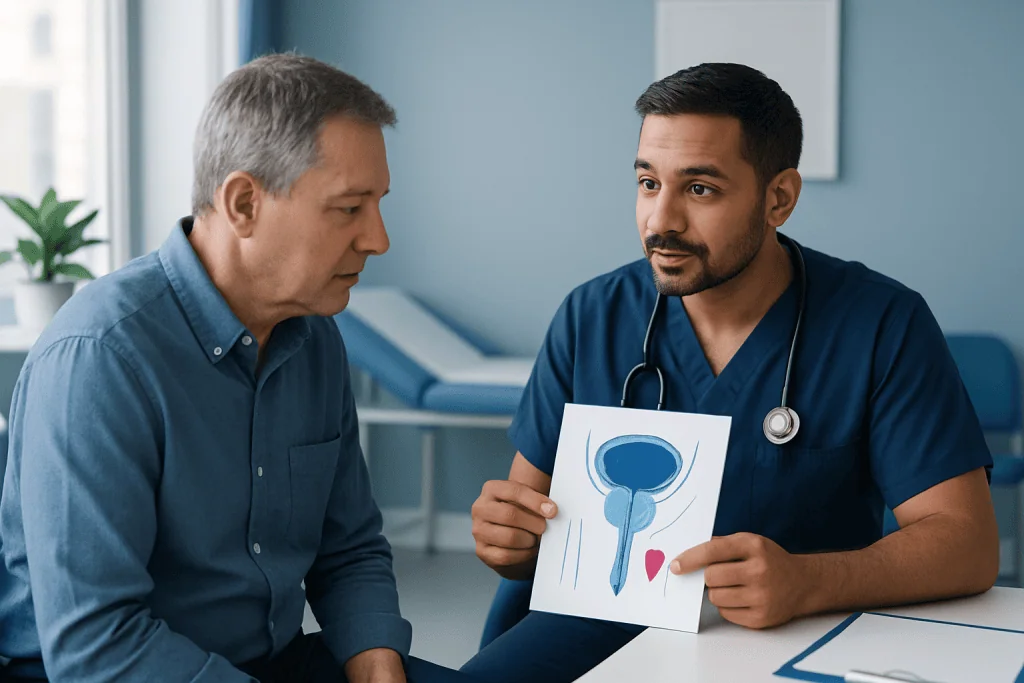
Preparation begins with a review of medicines, allergies, medical conditions, and bleeding risk. Blood-thinning medicines, antiplatelet medicines, anti-inflammatory pain medicines, supplements, and herbal products may need special planning. Patients should never stop prescribed medicines independently; the clinician who manages those medicines and the urology team should provide clear instructions.
On the day, the patient may receive local anesthetic, sedation, or anesthesia depending on the method and clinical setting. Ultrasound imaging is commonly used to guide the needle, and MRI images may be fused with ultrasound to target areas seen on MRI. The clinician takes several very small tissue cores, then sends them to a pathology laboratory for examination.
Most biopsies are outpatient procedures. Mild soreness, temporary urinary discomfort, and small amounts of bleeding can occur afterward. The clinical team provides individual written instructions about drinking fluids, activity, sexual activity, antibiotics when appropriate, pain relief, and how to contact the service if concerns develop.
How Much Bleeding Is Normal After a Prostate Biopsy?
Small amounts of blood are usually normal after a prostate biopsy. Urine may be lightly pink or red, particularly during the first few times a person urinates. It should generally become lighter rather than darker over the following days. A small spot of rectal bleeding may occur after a transrectal biopsy.
Blood in semen may be more striking than blood in urine. Semen can look pink, red-brown, or rust-colored and may remain discolored for several weeks because blood clears slowly from the prostate and seminal vesicles. This finding alone is usually not a sign that the biopsy result is abnormal.
Bleeding is not considered routine if the urine is persistently bright red, there are large or repeated clots, bleeding is becoming heavier, or the person cannot urinate. Anyone uncertain about the amount of bleeding should contact the biopsy team or a qualified clinician for tailored advice.
How Long Does It Take for the Prostate to Heal After a Biopsy?
The needle punctures begin healing quickly, and most people return to usual light daily activities within one or two days. Mild urinary burning, pelvic tenderness, or traces of blood commonly improve during the first several days. Strenuous exercise, heavy lifting, and activities that worsen discomfort may need to be avoided briefly according to the urology team’s instructions.
Complete settling of the sampled tissue can take longer than the return to everyday activities. Blood in semen may last for several weeks, and occasional minor staining can occur while the area heals. The exact recovery timeline varies with the number of samples taken, biopsy route, medicines, prostate size, and individual health factors.
Drinking adequate fluids, unless fluid restriction has been advised for another condition, can help keep urine diluted and make it easier to observe whether bleeding is improving. Patients should follow the specific aftercare plan provided by their clinician, particularly regarding work, travel, driving after sedation, and restarting medicines that affect bleeding.
What Are Common Problems After a Prostate Biopsy?
Common short-term problems include blood in urine, blood in semen, small amounts of rectal bleeding after a transrectal biopsy, soreness at the biopsy site, and mild discomfort or stinging when urinating. These effects are usually temporary. Anxiety while waiting for pathology results is also understandable, and the care team can explain when and how results will be discussed.
Less common but important complications include urinary retention, infection, and more significant bleeding. Infection can occur because bacteria enter the urinary tract or bloodstream, especially after a transrectal biopsy. Clinicians use careful preparation and may prescribe preventive antibiotics or choose a transperineal route based on individual circumstances.
Potential benefits of biopsy include confirming or excluding prostate cancer, identifying the cancer grade when it is present, and helping clinicians recommend surveillance, further testing, or treatment. A pathology report may describe cancer grade groups and other features; these findings must be interpreted together with PSA, imaging, examination findings, and overall health.
- Contact the care team if burning, pain, or bleeding is not improving.
- Take prescribed medicines exactly as directed and report medication side effects.
- Keep the follow-up appointment to discuss pathology results and next steps.
What Stage of Prostate Cancer Is Blood in Urine?
Blood in urine does not indicate a stage of prostate cancer. After a biopsy, blood is usually caused by the procedure itself, not by the presence, severity, or stage of cancer. Staging cannot be determined from urine color or from how long routine biopsy-related bleeding lasts.
If cancer is found, clinicians assess its stage using the biopsy pathology report, PSA level, physical examination, and, when needed, imaging tests. The cancer grade, including the Grade Group or Gleason-based assessment, helps describe how the cancer cells look under the microscope. Stage and grade are different but complementary parts of planning care.
Blood in urine that occurs without a recent procedure should still be medically evaluated, particularly if it recurs or is visible. It can have many possible causes, including infection, stones, kidney conditions, prostate enlargement, or cancers of the urinary tract. A clinician can arrange the appropriate tests rather than assuming a cause.
When to Seek Medical Care
Patients should seek urgent medical assessment after a prostate biopsy if they develop fever, chills, feel significantly unwell, have worsening pelvic or urinary pain, cannot pass urine, or have heavy bleeding. These symptoms can indicate infection, urinary retention, or bleeding that needs treatment. Emergency services may be appropriate when symptoms are severe or rapidly worsening.
It is also sensible to contact the urology team for blood that does not gradually improve, repeated clots, persistent painful urination, or any concern about restarting regular medicines. The team can advise whether observation, testing, or an in-person review is needed.
Acibadem International’s multidisciplinary specialists and JCI-accredited hospitals support international patients needing urological assessment, biopsy follow-up, and coordinated care. A person’s own urologist remains the best source of personalized advice because they know the biopsy method, medical history, and pathology plan.
Frequently asked questions
Is blood in urine after prostate biopsy normal?
Yes. A small amount of pink, red, or rust-colored urine is common after a prostate biopsy because the prostate tissue has been sampled with a needle. It should usually become less noticeable over several days; worsening bleeding or clots should be reported to a clinician.
How much bleeding is normal after a prostate biopsy?
Light blood staining in urine, a small amount of rectal bleeding after a transrectal biopsy, and blood in semen are common. Urine should not remain heavily bright red or contain large clots. Prompt medical advice is needed if bleeding is increasing, significant, or accompanied by trouble urinating.
How long does it take for the prostate to heal after a biopsy?
Most people feel well enough for light routine activities within one or two days, while minor urinary symptoms generally improve over several days. Internal tissue healing continues longer, and blood in semen may remain visible for several weeks. Recovery varies according to the biopsy method and individual health factors.
What stage of prostate cancer is blood in urine?
Blood in urine does not show the stage of prostate cancer. Following a biopsy, it is most often a temporary procedure-related effect. Cancer staging requires pathology results, PSA testing, examination findings, and sometimes imaging.
What are common problems after a prostate biopsy?
Common short-term effects include mild pain or soreness, temporary burning when urinating, blood in urine, blood in semen, and small rectal bleeding after a transrectal biopsy. Less common complications include infection, urinary retention, and heavier bleeding. Fever, chills, inability to urinate, or feeling very unwell require urgent assessment.
When should someone go to the hospital after a prostate biopsy?
Urgent assessment is needed for fever, chills, severe or worsening pain, inability to pass urine, heavy bleeding, or large blood clots. These symptoms may point to infection, urinary retention, or significant bleeding. It is safer to contact the biopsy team or emergency services promptly rather than waiting for symptoms to settle.
References
- American Urological Association
- European Association of Urology
- National Cancer Institute
- NHS
- Mayo Clinic
This article is for general information only and is not a substitute for professional medical advice. Please consult a qualified doctor about your individual situation.
Oncology care in Turkey — second opinion and treatment plan
JCI-accredited · board-certified surgeons · reply within 24h
Add us as a Preferred Source to see more of our trusted health content across Google Search, AI Overviews and Discover.

More from the Health Library



Related Specialists

Prof. Dr. Mehmet Akif Sargin
Gynecology & Obstetrics
Mehmet Akif Aracı
Physical Medicine & Rehabilitation
Assoc. Prof. Dr. Emine Acar Akkaya
Nuclear Medicine
Prof. Dr. Mustafa Koray Lenk
Pediatric Cardiology