

BMI Women: What Patients Need to Know

BMI is a screening tool for adult women, not a diagnosis of health or disease. A woman’s BMI should be considered together with waist size, blood pressure, blood sugar, cholesterol, and overall lifestyle.
Key Takeaways
- BMI is a screening tool for adult women, not a diagnosis of health or disease.
- A woman’s BMI should be considered together with waist size, blood pressure, blood sugar, cholesterol, and overall lifestyle.
- Pregnancy, high muscle mass, aging, and some medical conditions can make BMI less informative on its own.
- A higher or lower BMI may prompt evaluation for nutrition issues, hormonal conditions, or weight-related disease risk.
- A clinician can help decide whether BMI is relevant and what next steps, if any, are appropriate.
BMI women information helps explain how body mass index is used to screen for weight-related health risk in adult women. BMI can be useful, but it does not measure body fat directly and should be interpreted alongside waist size, medical history, lifestyle, and other health markers.
Overview: what BMI means for women
BMI women refers to using body mass index to estimate whether an adult woman’s weight is in a range that may be associated with lower or higher health risk. BMI is calculated from height and weight, and for most non-pregnant adults it is one of the simplest screening tools used in clinics and public health.
In adults, standard BMI categories are generally the same for women and men: underweight is below 18.5, healthy range is 18.5 to 24.9, overweight is 25 to 29.9, and obesity is 30 or above. These ranges can help identify people who may benefit from a broader health assessment, but BMI alone cannot describe body composition, fitness, nutrition quality, or where body fat is stored.
For women, interpretation can be especially nuanced. Hormonal changes, menopause, pregnancy history, age-related muscle loss, and differences in body composition may influence how informative BMI is. This is why clinicians often use BMI as a starting point rather than a final answer.
How BMI is calculated and interpreted
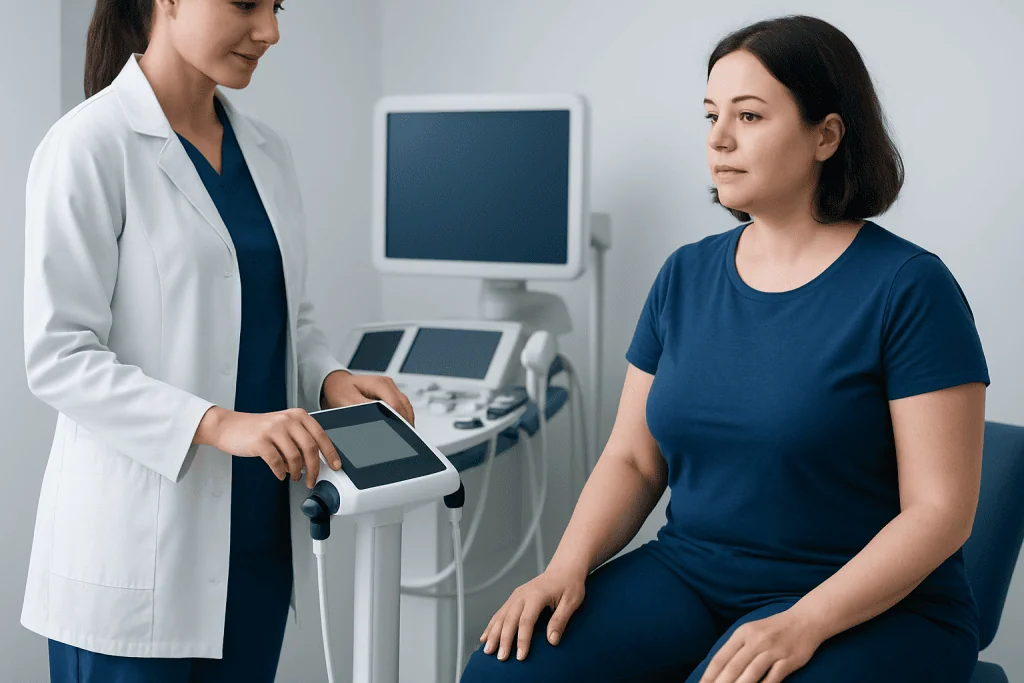
BMI is calculated by dividing weight in kilograms by height in meters squared. Many online tools also convert pounds and inches automatically. Because the calculation is simple and low-cost, BMI is widely used in routine checkups, occupational health assessments, and population studies.
Its value is in screening rather than diagnosing. A BMI in the overweight or obesity range may raise concern for conditions such as high blood pressure, abnormal cholesterol, sleep apnea, fatty liver disease, and type 2 diabetes. A BMI in the underweight range can point to possible undernutrition, eating difficulties, chronic illness, or other medical concerns.
However, two women with the same BMI may have different health profiles. One may have more muscle, another more body fat, and their fat distribution may differ. For this reason, clinicians may also assess waist circumference, diet, activity, medications, family history, and laboratory tests.
- BMI is most useful as an initial screening measure.
- It does not directly measure body fat percentage.
- It does not show fat distribution around the abdomen.
- It should be interpreted in context, not used in isolation.
Why BMI can be different in women across life stages

Women’s bodies naturally change over time. During early adulthood, pregnancy years, perimenopause, and after menopause, body composition often shifts even if body weight does not change dramatically. Many women gradually lose muscle mass with age and may gain more abdominal fat, which can affect health risk independently of BMI.
Pregnancy is a special case. Standard adult BMI categories are not used to judge weight status during pregnancy in the same way they are for non-pregnant adults. Instead, doctors consider pre-pregnancy BMI, expected pregnancy weight gain, nutrition, and fetal health. After childbirth, weight changes may take time to stabilize, so rapid self-judgment based on BMI alone is rarely helpful.
Very athletic women may also have a BMI that appears high because muscle weighs more than fat. On the other hand, an older woman can have a BMI in the so-called normal range but still have low muscle mass and excess body fat. This is one reason waist measurement, strength, mobility, and metabolic health matter.
For adolescents, BMI is interpreted differently using age- and sex-specific growth charts. Adult BMI categories should not be applied to children or teenagers without pediatric guidance.
Limits of BMI and what else doctors look at
BMI has important limitations. It does not capture how much of the body is fat, muscle, bone, or fluid. It also does not show whether fat is carried mainly around the hips and thighs or around the abdomen, where it may be more strongly linked to cardiometabolic risk.
That is why a clinician may combine BMI with other measurements and tests. Waist circumference can help estimate central fat distribution. Blood pressure, fasting glucose or HbA1c, cholesterol levels, and liver tests may be used to assess the real-world effect of weight on health. In some situations, body composition analysis may also be useful.
Medical history is equally important. Thyroid disorders, polycystic ovary syndrome, menopause-related changes, depression, poor sleep, certain medications, and reduced mobility can all affect weight. Depending on symptoms, a doctor may investigate conditions such as obesity or type 2 diabetes rather than relying on BMI alone.
Used carefully, BMI can still be helpful. It may guide conversations about prevention, prompt early evaluation, and provide a simple way to track broad trends over time. The key is to avoid treating one number as the full picture of health.
Health risks linked to a high or low BMI
A BMI above the healthy range does not guarantee illness, but it can be associated with increased risk of several conditions. In women, this may include high blood pressure, insulin resistance, type 2 diabetes, heart disease, sleep apnea, osteoarthritis, and fatty liver disease. Some women may also notice reduced energy, joint pain, or changes in menstrual patterns.
A BMI in the underweight range can also matter clinically. Possible concerns include nutrient deficiencies, low bone density, fatigue, menstrual irregularity, weakened immunity, or loss of muscle mass. In some cases, low BMI reflects a naturally smaller body frame, but in others it can be related to digestive disease, overactive thyroid, chronic infection, eating disorders, or other underlying conditions.
The overall pattern of health is what matters most. A woman with a mildly elevated BMI but healthy blood pressure, normal glucose, regular physical activity, and good sleep may have a different risk profile from someone with the same BMI and multiple metabolic risk factors. This is why individualized assessment is more useful than focusing on categories alone.
What to do if BMI is outside the healthy range
If BMI is above or below the healthy range, the most helpful next step is usually a structured medical review rather than a crash diet or quick fix. A doctor may ask about recent weight change, appetite, menstrual history, medications, sleep, stress, activity, and family history. Basic blood tests may be recommended if there are symptoms or signs of an underlying problem.
Treatment depends on the cause and the person’s overall health. For women with excess weight, care often begins with realistic nutrition changes, regular physical activity, sleep improvement, and support for mental well-being. In selected cases, clinicians may discuss weight-loss surgery or endocrinology evaluation when hormonal or metabolic issues are suspected.
For women with low BMI, management may include dietary assessment, investigation of digestion or absorption problems, screening for thyroid or chronic disease, and plans to rebuild strength and muscle. If there are menstrual changes, bone concerns, or symptoms such as palpitations or persistent fatigue, medical evaluation becomes more important.
Long-term progress tends to be safer and more sustainable than rapid weight change. Goals often focus not only on the scale, but also on strength, blood pressure, energy, sleep, glucose control, and day-to-day functioning.
Practical self-care beyond the number
Whether BMI is low, high, or within the healthy range, everyday habits have a strong effect on health. Balanced meals, regular movement, sufficient protein, good sleep, stress management, and limiting smoking and excess alcohol all support cardiometabolic health. These habits are worthwhile even when the BMI number changes slowly.
Many women benefit from shifting attention away from short-term dieting and toward sustainable routines. Walking, resistance exercise, and flexibility work can help preserve muscle mass, especially during and after midlife. For some, keeping a symptom diary or food log for a short period can make patterns easier to discuss with a clinician.
It can also help to use more than one measure of progress. Clothing fit, stamina, strength, waist size, lab results, and quality of life may better reflect improving health than weight alone. If a woman has obesity-related complications, specialist support may be appropriate, including assessment through obesity treatment services.
Near the end of the care pathway, some patients may need coordinated input from internists, endocrinologists, dietitians, and surgeons. Acibadem International’s multidisciplinary specialists and JCI-accredited hospitals diagnose and treat weight- and metabolism-related conditions for international patients when further evaluation is needed.
When to seek medical care
Medical advice is important if BMI is far outside the healthy range, if weight has changed quickly without a clear reason, or if there are symptoms such as fatigue, fainting, shortness of breath, persistent digestive problems, heavy snoring, missed periods, or swelling. A doctor should also be consulted if there is concern about nutrition, disordered eating, or repeated unsuccessful attempts to manage weight safely.
Women with risk factors such as high blood pressure, diabetes, heart disease, thyroid disease, or a strong family history of metabolic illness may benefit from earlier evaluation. It is also sensible to seek care before pregnancy or during menopause if weight changes are affecting health or well-being.
Emergency care is needed for severe chest pain, sudden trouble breathing, confusion, signs of severe dehydration, or fainting. For non-urgent concerns, a primary care doctor, gynecologist, endocrinologist, or dietitian can help place BMI in the right medical context and create an appropriate plan.
Frequently asked questions
Is BMI different for women and men?
The adult BMI calculation and standard BMI category cutoffs are generally the same for women and men. However, interpretation may differ because women can have different body composition, hormonal changes, and life-stage factors such as menopause or pregnancy.
What is a healthy BMI for women?
For most non-pregnant adult women, a BMI of 18.5 to 24.9 is considered the healthy range. Even so, health cannot be judged by BMI alone, so doctors often look at waist size, blood pressure, blood sugar, cholesterol, and lifestyle as well.
Is BMI accurate if a woman exercises a lot?
BMI can be less accurate in very athletic women because it does not distinguish muscle from fat. A woman with higher muscle mass may have a BMI in the overweight range while still being metabolically healthy, so additional assessment may be needed.
Should BMI be used during pregnancy?
BMI is not interpreted in the usual way during pregnancy. Doctors may use pre-pregnancy BMI as part of planning and monitoring, but pregnancy care also depends on nutrition, expected weight gain, and the health of both mother and baby.
Can a normal BMI still be linked to health problems?
Yes. A woman can have a BMI in the normal range and still have high abdominal fat, low muscle mass, high blood pressure, abnormal cholesterol, or raised blood sugar. That is why BMI should be seen as one piece of a larger health assessment.
What should a woman do if her BMI is high?
She should consider discussing it with a qualified doctor, especially if there are symptoms or other risk factors. The next step is usually a broader review of waist size, medical history, labs, activity, sleep, and nutrition rather than reacting to the number alone.
References
- Centers for Disease Control and Prevention
- National Heart, Lung, and Blood Institute
- World Health Organization
- American College of Obstetricians and Gynecologists
- National Institute of Diabetes and Digestive and Kidney Diseases
This article is for general information only and is not a substitute for professional medical advice. Please consult a qualified doctor about your individual situation.
Medical weight-loss options in Turkey — costs & eligibility
JCI-accredited · board-certified surgeons · reply within 24h
Add us as a Preferred Source to see more of our trusted health content across Google Search, AI Overviews and Discover.
Check your numbers in seconds
BMI, calories, due date, blood pressure and 30+ more clinical calculators — free, instant, doctor-reviewed ranges.

More from the Health Library



Related Specialists
Fzt. Sevgi Nama
Physical Medicine & Rehabilitation
Dr. Ertan Sağol
Orthopedic Surgery & Traumatology
Dr. Ömer Faruk Karakoç
Emergency Service
Dr. Murat Sarıkaş
Orthopedic Surgery & Traumatology