Bone-on-Bone Knee Arthritis: What It Means and What Treatments Can Help

Bone-on-bone knee arthritis usually refers to severe cartilage loss in the knee joint. Common symptoms include pain, stiffness, swelling, grinding sensations, and reduced mobility.
Key Takeaways
- Bone-on-bone knee arthritis usually refers to severe cartilage loss in the knee joint.
- Common symptoms include pain, stiffness, swelling, grinding sensations, and reduced mobility.
- Treatment often begins with exercise, weight management, physical therapy, medicines, and supportive devices.
- When symptoms remain severe, procedures such as injections or knee replacement may be considered.
- A medical evaluation helps confirm the diagnosis and rule out other causes of knee pain.
Bone-on-bone knee arthritis is an advanced form of <a href="https://acibademinternational.com/diseases/knee-osteoarthritis/”>knee osteoarthritis in which the protective cartilage has worn down significantly. Although it can cause pain, stiffness, and difficulty walking, a range of non-surgical and surgical treatments can help improve comfort and function.
Overview
Bone-on-bone knee arthritis is a common term used to describe advanced knee osteoarthritis. In this stage, the cartilage that normally cushions the ends of the bones in the knee has worn away so much that the bones rub more directly against each other. This can lead to pain, inflammation, stiffness, and difficulty with everyday movement.
The knee is a complex joint made up of bone, cartilage, ligaments, tendons, and surrounding muscles. Healthy cartilage allows the joint to move smoothly and absorb shock. When this protective surface becomes thin or disappears, the joint may become painful and less stable, especially during walking, climbing stairs, standing up, or prolonged activity.
Although the phrase “bone-on-bone” sounds severe, it does not mean that nothing can be done. Many people gain relief through a combination of lifestyle changes, physical therapy, pain management, and, when needed, surgery. The best treatment depends on the person’s symptoms, age, activity level, overall health, and the degree of joint damage.
Symptoms of Bone-on-Bone Knee Arthritis
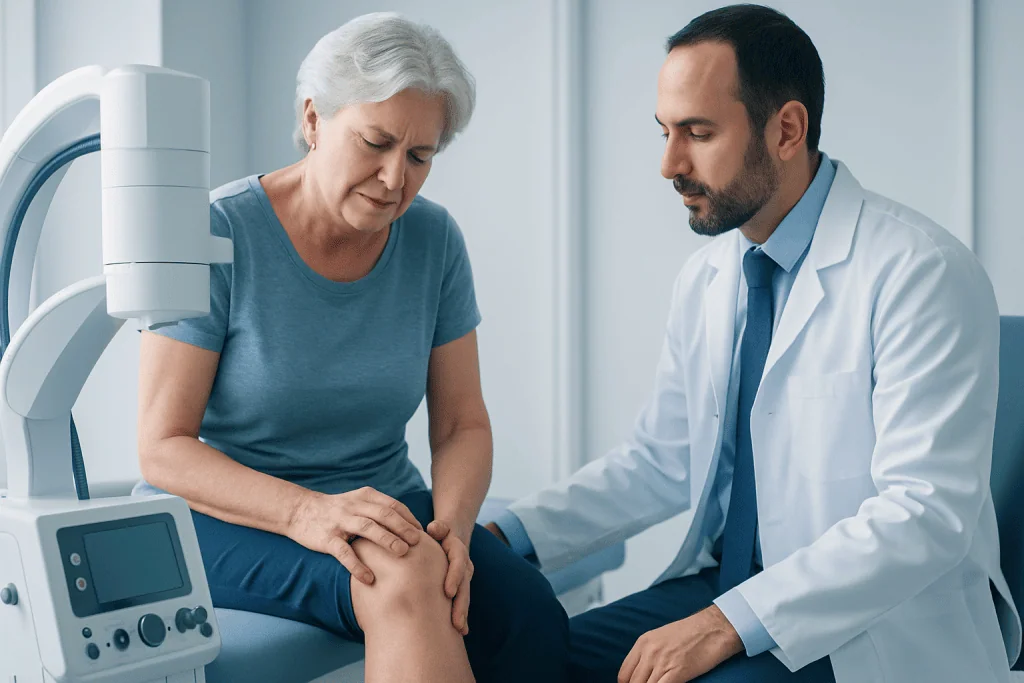
Symptoms can develop gradually over time, though some people notice a more rapid decline after an injury or period of overuse. Pain is often the main complaint. It may be worse with activity and improve with rest at first, but more advanced arthritis can also cause pain during the night or while sitting still.
Stiffness is another hallmark symptom, particularly in the morning or after sitting for a long time. Many people feel that the knee is slow to “loosen up.” Swelling may come and go, and the joint may feel warm or tender after activity. Some people notice a grinding, clicking, or crunching sensation when bending the knee.
As arthritis progresses, the knee may lose range of motion and become harder to fully bend or straighten. Daily activities such as walking, climbing stairs, getting in and out of a chair, kneeling, or carrying groceries may become more difficult. In some cases, the knee can feel weak, unstable, or as though it might give way.
- Pain during or after movement
- Morning stiffness or stiffness after rest
- Swelling around the joint
- Grinding or crackling sensations
- Reduced flexibility and function
- Changes in walking pattern or balance
Causes and Risk Factors
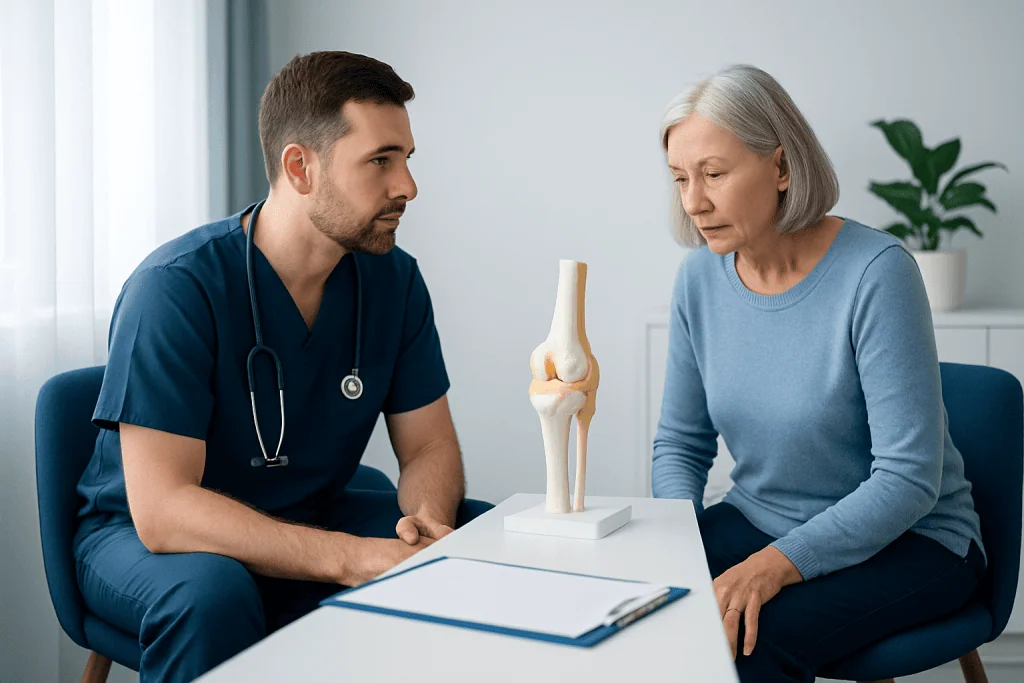
The most common cause of bone-on-bone knee arthritis is osteoarthritis, a degenerative joint condition that becomes more likely with age. Over time, repeated stress on the knee can lead to gradual wear of cartilage. When cartilage loss becomes severe, the bones are less protected and joint symptoms usually increase.
Several factors can raise the risk of developing severe knee arthritis. These include older age, excess body weight, previous knee injuries, family history, and jobs or sports that place frequent stress on the knees. Structural issues such as leg alignment problems can also cause uneven pressure in the joint and speed up cartilage wear.
Not every case of severe knee arthritis is due to typical age-related wear. Some people develop arthritis after ligament tears, meniscus injuries, fractures, or chronic inflammatory conditions. A doctor may also consider other joint problems if symptoms are unusual, such as osteoarthritis in multiple joints or inflammatory forms of arthritis affecting the knee.
How Doctors Diagnose It
Diagnosis begins with a careful medical history and physical examination. The doctor will ask about the location of pain, when symptoms started, how they affect daily life, and whether there was a previous injury. During the examination, the knee is checked for swelling, tenderness, range of motion, joint alignment, strength, and stability.
X-rays are commonly used to look for signs of advanced arthritis, including narrowing of the joint space, bone spurs, and changes in bone shape. In some cases, imaging helps explain why a person feels bone-on-bone pain, but symptoms and X-ray findings do not always match perfectly. Some people with marked arthritis on imaging have moderate symptoms, while others have severe pain with less dramatic changes.
Additional tests may be helpful in certain situations. MRI is not always necessary for typical osteoarthritis, but it may be used if another problem is suspected, such as a meniscus tear, ligament injury, or hidden bone issue. Blood tests or fluid taken from the knee may be considered if infection, gout, or inflammatory arthritis needs to be ruled out.
Treatment Options
Treatment usually starts with conservative care. Exercise tailored to the person’s ability is one of the most important parts of management. Strengthening the muscles around the knee, especially the quadriceps and hip muscles, can improve support and reduce strain on the joint. Weight management can also make a meaningful difference, because even modest weight reduction may lower stress on the knees.
Other non-surgical options may include physical therapy, activity modification, supportive shoes, knee braces, canes, and pain-relieving medicines. Doctors may recommend topical anti-inflammatory gels or oral medicines when appropriate, depending on the person’s health history. Some patients may benefit from injections, such as corticosteroid injections for temporary symptom relief. In selected cases, specialists may discuss procedures used in broader knee arthritis treatment plans.
When pain remains severe and daily function is significantly limited despite non-surgical care, surgery may be considered. The most common operation for end-stage arthritis is knee replacement, which replaces damaged joint surfaces with artificial components. In carefully selected patients, partial replacement may be possible if damage is limited to one part of the knee. The decision depends on symptoms, imaging, physical findings, and the patient’s goals.
Recovery after surgery involves rehabilitation and guided exercises to regain strength, mobility, and confidence in walking. Many patients who are good candidates experience improved pain control and better function after surgery, though every procedure has potential risks and recovery takes time. A specialist can explain which option is most appropriate for the individual case.
Prevention and Self-care
It is not always possible to prevent knee osteoarthritis completely, especially when age, genetics, or past injuries play a role. However, healthy habits can help protect the joint, reduce symptoms, and slow further strain. Regular low-impact activity such as walking on even ground, cycling, swimming, or water exercise can support joint movement without placing excessive force on the knee.
Strength and flexibility work are also valuable. Building muscle around the knee and hips helps improve joint support, while stretching can reduce stiffness and maintain mobility. It is often helpful to avoid sudden increases in activity and to alternate exercise with rest when symptoms flare.
Simple self-care strategies may also ease discomfort. These can include using heat to loosen stiffness, applying ice after activity to calm swelling, wearing supportive footwear, and choosing movements that reduce repeated heavy impact. A doctor or physical therapist can suggest a practical plan that fits the person’s daily routine and stage of arthritis.
- Stay active with low-impact exercise
- Maintain a healthy weight if possible
- Strengthen leg and hip muscles
- Use supportive shoes or walking aids when needed
- Pace activities and rest during flare-ups
When to See a Doctor
A person should consider medical evaluation if knee pain lasts more than a few weeks, keeps returning, or interferes with daily life. Difficulty walking, climbing stairs, sleeping because of pain, or noticing increasing stiffness are all good reasons to seek advice. Early assessment can help identify the cause and create a treatment plan before the condition affects mobility further.
Prompt medical care is especially important if the knee becomes very swollen, red, hot, unstable, or suddenly much more painful. These symptoms may suggest a problem other than typical osteoarthritis, such as infection, gout, or an acute injury. A doctor can determine whether urgent testing or treatment is needed.
For people whose symptoms are no longer controlled with home care, a specialist in orthopedics, physical medicine, or rheumatology may be helpful. If surgery is being considered, discussion with an experienced joint specialist can clarify the expected benefits, risks, and recovery process. Acibadem International’s multidisciplinary specialists in JCI-accredited hospitals diagnose and treat knee arthritis for international patients, including advanced cases that may require robotic knee replacement or comprehensive rehabilitation.
Frequently asked questions
What does bone-on-bone knee arthritis mean?
It usually means that the cartilage in the knee has worn away severely, so the joint surfaces are no longer well cushioned. This is most often a description of advanced knee osteoarthritis rather than a separate disease.
Can bone-on-bone knee arthritis heal on its own?
Lost cartilage generally does not grow back in the same way, so the underlying joint damage does not usually reverse on its own. However, symptoms can often be improved with exercise, weight management, physical therapy, medicines, and other treatments.
Is surgery always needed for bone-on-bone knee arthritis?
No. Many people can manage symptoms for a long time without surgery, especially with a well-planned non-surgical treatment program. Surgery is usually considered when pain and loss of function remain significant despite other measures.
What exercises are best for severe knee arthritis?
Low-impact exercises are often best, such as walking on level surfaces, cycling, swimming, and water-based activity. Strengthening exercises for the thigh and hip muscles can also help, but they should ideally be chosen with guidance from a doctor or physical therapist.
Do knee injections help bone-on-bone arthritis?
Injections may help some people, especially for temporary relief of pain and inflammation. The effect varies from person to person, and injections are usually one part of a broader treatment plan rather than a complete solution.
How do doctors know if the knee is truly bone-on-bone?
Doctors use symptoms, physical examination, and imaging, especially X-rays, to look for advanced joint-space narrowing and other signs of severe arthritis. The phrase is often based on imaging findings together with the person’s level of pain and stiffness.
References
- World Health Organization
- National Institute of Arthritis and Musculoskeletal and Skin Diseases
- American Academy of Orthopaedic Surgeons
- Arthritis Foundation
- National Health Service
This article is for general information only and is not a substitute for professional medical advice. Please consult a qualified doctor about your individual situation.
Arthritis in Turkey — costs, top hospitals & a free quote
JCI-accredited · board-certified surgeons · reply within 24h
Add us as a Preferred Source to see more of our trusted health content across Google Search, AI Overviews and Discover.

Physical Medicine & Rehabilitation
Restoring movement and function after injury, surgery or neurological conditions.
150 specialists in this unit