Bowels Burst: An Evidence-Based Guide for Patients

Bowels burst usually refers to a bowel perforation or ruptured intestine. Common warning signs include severe abdominal pain, fever, nausea, vomiting, and a swollen or rigid abdomen.
Key Takeaways
- Bowels burst usually refers to a bowel perforation or ruptured intestine.
- Common warning signs include severe abdominal pain, fever, nausea, vomiting, and a swollen or rigid abdomen.
- Bowel perforation needs urgent hospital evaluation and often requires surgery.
- Causes include diverticulitis, ulcers, inflammatory bowel disease, injury, blocked bowel, and complications after procedures.
- Early treatment helps reduce the risk of sepsis and other serious complications.
“Bowels burst” is a non-medical way to describe a bowel perforation, which means a hole or tear in the wall of the intestine. This is a medical emergency because bowel contents can leak into the abdomen and cause serious infection, but prompt diagnosis and treatment can be lifesaving.
What does “bowels burst” mean?
When people say “bowels burst,” they are usually referring to a bowel perforation. This means there is a hole, tear, or rupture in part of the small intestine or large intestine. It is not a diagnosis patients make at home, but a serious condition doctors evaluate urgently because intestinal contents can leak into the abdominal cavity.
The bowel normally keeps food, fluid, bacteria, and waste inside the digestive tract. If the bowel wall is damaged, these contents may spill into the abdomen and trigger inflammation of the abdominal lining, called peritonitis, as well as severe infection. Without prompt treatment, this can lead to sepsis, a dangerous body-wide response to infection.
Although the phrase sounds dramatic, it is important to know that not every sudden stomach pain means the bowel has ruptured. Symptoms can overlap with other digestive conditions such as appendicitis, gallbladder disease, ulcers, or severe constipation. A doctor uses the history, physical examination, blood tests, and imaging to identify the cause.
Symptoms and warning signs

The most common symptom of a bowel perforation is sudden, severe abdominal pain. Some people describe the pain as sharp, stabbing, or worsening quickly over a short time. Others notice that the abdomen becomes very tender, swollen, or hard to the touch.
Additional symptoms often develop as inflammation or infection spreads. These may include fever, chills, nausea, vomiting, inability to pass stool or gas, rapid heartbeat, dizziness, weakness, and shallow breathing. The person may feel too unwell to stand upright comfortably or may find that movement makes the pain much worse.
Symptoms can vary depending on the location and cause of the perforation. In some cases, especially in older adults or people with weakened immune systems, signs may be less typical at first and include confusion, fatigue, or a general sense of serious illness rather than sharply localized pain.
- Severe or worsening abdominal pain
- Bloated, swollen, or rigid abdomen
- Fever or chills
- Nausea and vomiting
- Fast pulse or low blood pressure
- Inability to pass gas or stool
Why a bowel can rupture
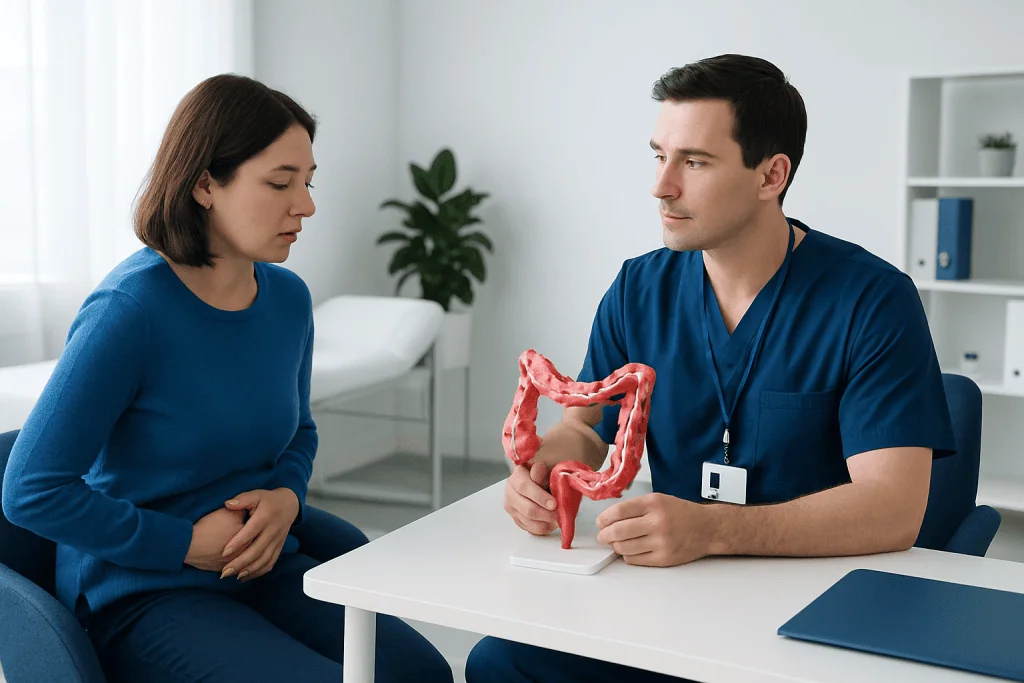
A bowel perforation can happen for several reasons. One common cause is inflammation that weakens the bowel wall over time, such as diverticulitis or inflammatory bowel disease. Conditions such as Crohn’s disease and ulcerative colitis can increase the risk because ongoing inflammation may damage the lining and deeper layers of the intestine.
Another important cause is a blockage in the bowel. If pressure builds up behind an obstruction, the bowel wall may lose blood supply, become injured, and eventually tear. Severe infection, untreated ulcers, swallowed foreign objects, abdominal trauma, or reduced blood flow to the intestines can also cause rupture.
Less commonly, perforation may happen as a complication of a medical procedure such as colonoscopy or abdominal surgery. Doctors take extensive precautions to reduce this risk, but it can still occur in rare cases. The likelihood depends on the person’s anatomy, the condition being treated, and whether the bowel tissue is already fragile or inflamed.
Risk factors and possible complications
Some people have a higher risk of bowel perforation than others. Risk factors include older age, a history of diverticular disease, inflammatory bowel disease, peptic ulcer disease, abdominal cancer, previous abdominal surgery, long-term steroid use, and disorders that reduce normal blood flow to the intestines. Trauma from accidents or injuries can also increase the risk.
The main danger after a rupture is that bacteria and waste leak into places where they do not belong. This can cause peritonitis, abscess formation, bloodstream infection, and sepsis. The body may also lose fluids rapidly into the abdominal cavity, which can contribute to dehydration, low blood pressure, and shock.
Because these complications can develop quickly, doctors treat suspected bowel perforation as an emergency. Rapid assessment helps determine whether the person needs immediate surgery, antibiotics, drainage of infected fluid, or other supportive care in the hospital.
How doctors diagnose bowel perforation
Diagnosis begins with a detailed medical history and physical examination. A doctor will ask when the pain started, where it is located, whether there has been vomiting, fever, constipation, diarrhea, injury, recent procedures, or a known digestive disorder. On examination, the abdomen may be extremely tender, distended, or rigid.
Blood tests often help look for signs of infection, inflammation, dehydration, and organ stress. Imaging is usually essential. A CT scan of the abdomen is commonly used because it can show free air, fluid leakage, inflammation, obstruction, abscesses, or the likely site of perforation. In some cases, an upright chest or abdominal X-ray may show air under the diaphragm, suggesting a hole in the digestive tract.
If doctors suspect an underlying disease, they may investigate that as part of the overall treatment plan. For example, imaging may reveal complicated diverticular disease or another urgent condition such as colon cancer. The priority, however, is first to stabilize the patient and control the perforation and infection.
Treatment options and hospital care
Treatment depends on the size and location of the perforation, the cause, and how ill the person is when they arrive at the hospital. In most cases, bowel perforation requires urgent surgery. The surgeon may repair the hole, remove the damaged section of bowel, clean the abdominal cavity, and, when needed, create a temporary or permanent stoma.
Alongside surgery, hospital treatment usually includes intravenous fluids, pain control, close monitoring, and broad-spectrum antibiotics to treat or prevent severe infection. If there is a collection of infected fluid, drainage may also be needed. Some carefully selected patients with very small, contained perforations may be treated without immediate surgery, but only under specialist supervision in the hospital.
Depending on the cause, treatment may involve specialists in gastroenterology care and emergency general surgery. If imaging is needed quickly to guide decisions, advanced radiology assessment is often part of the process. Recovery time varies and depends on the person’s general health, the extent of contamination in the abdomen, and whether complications developed before treatment began.
Recovery, prevention, and self-care
Recovery after a bowel perforation can take time. In the hospital, the care team monitors for infection, wound healing, bowel function, nutrition needs, and pain control. Some people begin with fluids and gradually return to food as the bowel recovers. Others may need short-term nutritional support, especially after major surgery.
Prevention focuses mainly on identifying and treating digestive conditions before complications occur. Managing diverticulitis, inflammatory bowel disease, ulcers, severe constipation, and bowel obstruction promptly can lower risk. Following advice after procedures, reporting worsening pain early, and taking medications exactly as prescribed may also help reduce complications.
At home, self-care is not appropriate for suspected bowel rupture itself, but it matters during long-term digestive health. Patients should seek medical advice for persistent abdominal pain, unexplained weight loss, blood in the stool, fever with abdominal symptoms, or major changes in bowel habits. Near the end of treatment planning, some international patients may choose centers such as Acibadem International, where multidisciplinary specialists in JCI-accredited hospitals diagnose and treat complex digestive emergencies and their underlying causes.
When to seek medical care
Urgent medical care is needed right away if a person has severe abdominal pain that starts suddenly, a hard or swollen belly, fever, repeated vomiting, fainting, confusion, or signs of shock such as clammy skin or weakness. These symptoms do not always mean the bowel has ruptured, but they can signal a life-threatening abdominal emergency.
People should also seek immediate care after abdominal injury or after a recent procedure such as colonoscopy if they develop severe pain, bloating, fever, or difficulty passing gas and stool. It is safer not to delay, because early treatment may reduce the chance of sepsis and extensive surgery.
For less urgent but persistent symptoms, such as recurring abdominal pain, ongoing constipation, unexplained diarrhea, or rectal bleeding, a scheduled medical evaluation is appropriate. A doctor can assess whether there is an underlying bowel problem that needs treatment before complications occur.
Frequently asked questions
Is “bowels burst” the same as a bowel perforation?
Usually, yes. “Bowels burst” is a non-medical phrase people use to describe a bowel perforation or ruptured intestine, meaning there is a hole or tear in the bowel wall. This condition needs urgent medical assessment.
Can a bowel rupture heal on its own?
A suspected bowel rupture should never be assumed to heal on its own. Some very small, contained perforations may sometimes be managed without surgery, but this decision can only be made in the hospital with close specialist monitoring. Because of the risk of infection and sepsis, urgent evaluation is essential.
What does bowel rupture pain feel like?
Many people describe it as sudden, severe abdominal pain that quickly becomes worse with movement or touch. The abdomen may feel bloated, very tender, or hard. Fever, nausea, vomiting, and weakness often occur as well.
What causes the bowel to burst?
Causes include diverticulitis, inflammatory bowel disease, ulcers, bowel obstruction, trauma, reduced blood supply to the intestine, swallowed foreign objects, and rare complications of medical procedures. Sometimes a serious underlying disease weakens the bowel wall over time. A doctor must identify the exact cause to guide treatment.
How is a bowel perforation treated?
Treatment usually involves hospital care with intravenous fluids, antibiotics, and often urgent surgery. Surgery may repair the tear or remove the damaged part of the intestine. The care plan depends on the location of the perforation, its cause, and the patient’s overall condition.
When should someone go to the emergency room for abdominal pain?
Emergency care is needed for sudden severe abdominal pain, a rigid or swollen abdomen, fever, repeated vomiting, fainting, confusion, or signs of shock. Immediate care is also important after abdominal injury or a recent digestive procedure if severe symptoms appear. It is better to be assessed early than to wait.
References
- National Institute of Diabetes and Digestive and Kidney Diseases
- American College of Gastroenterology
- National Health Service
- Mayo Clinic
- Merck Manual Consumer Version
This article is for general information only and is not a substitute for professional medical advice. Please consult a qualified doctor about your individual situation.
Persistent digestive symptoms? Get evaluated in Turkey
JCI-accredited · board-certified surgeons · reply within 24h
Add us as a Preferred Source to see more of our trusted health content across Google Search, AI Overviews and Discover.
Check your numbers in seconds
BMI, calories, due date, blood pressure and 30+ more clinical calculators — free, instant, doctor-reviewed ranges.

More from the Health Library

Low Porosity Hair — Explained by Medical Evidence, Not Myths

Leg Stretches — Explained by Medical Evidence, Not Myths

Emetophobia: An Evidence-Based Guide for Patients

Azelastine — Explained by Medical Evidence, Not Myths

Cimetidine: A Complete Medical Overview