Braces: What Patients Need to Know

Braces use controlled pressure over time to straighten teeth and correct bite alignment. Treatment may help with crowding, spacing, overbite, underbite, crossbite, and related cleaning difficulties.
Key Takeaways
- Braces use controlled pressure over time to straighten teeth and correct bite alignment.
- Treatment may help with crowding, spacing, overbite, underbite, crossbite, and related cleaning difficulties.
- Several options exist, including metal braces, ceramic braces, lingual braces, and clear aligner-based orthodontic treatment in selected cases.
- Good brushing, flossing, and regular follow-up visits are important throughout treatment.
- Mild soreness after adjustments is common, but severe pain, swelling, or broken appliances should be checked by a dentist or orthodontist.
Braces are orthodontic devices that gradually move teeth and guide jaw alignment to improve bite, oral function, and appearance. Patients often use braces for crowding, gaps, or bite problems, and treatment is planned individually after a dental or orthodontic assessment.
Overview: what braces do and who may need them
Braces are devices used to straighten teeth and improve the way the upper and lower teeth meet. They work by applying gentle, steady pressure that slowly moves teeth through the bone into better positions. This process can improve chewing, speech in some cases, and daily oral hygiene, while also changing the appearance of the smile.
Patients may need braces for many reasons, not only cosmetic ones. Orthodontic treatment can help when teeth are crowded, widely spaced, rotated, or erupt in the wrong position. It may also be recommended for bite problems such as overbite, underbite, open bite, and crossbite, which can sometimes contribute to tooth wear, gum strain, or jaw discomfort.
Braces are commonly associated with adolescence, but they can be effective for adults as well. Healthy teeth and gums are the main requirement. Orthodontists assess the teeth, gums, jaw relationship, and facial growth before recommending treatment, and they may coordinate care if conditions such as missing teeth or gum disease are also present.
Common signs that braces may be helpful
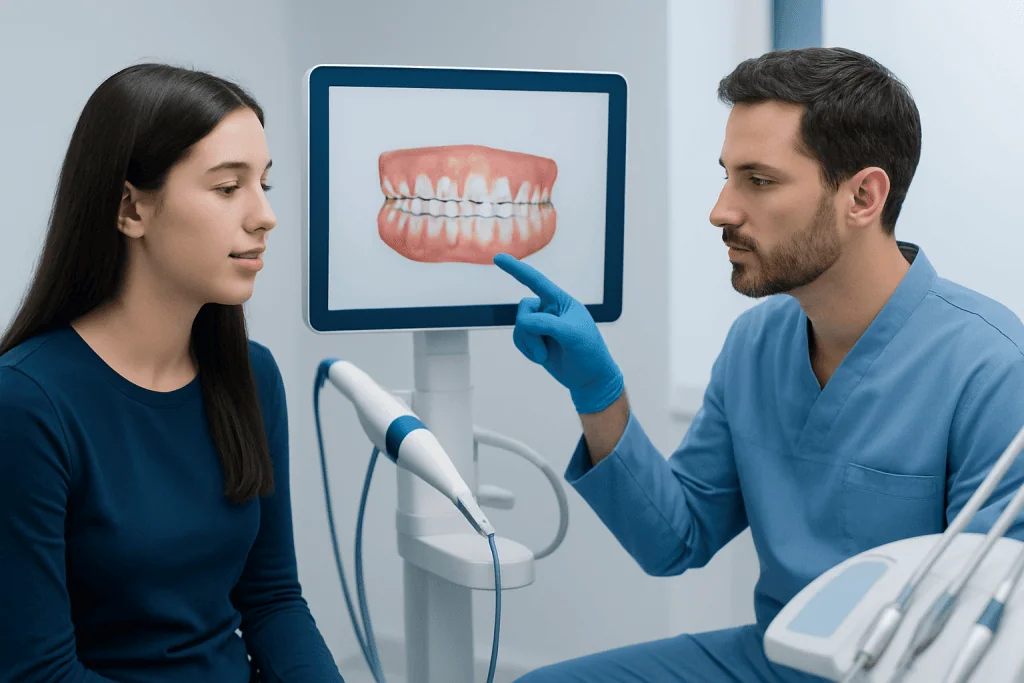
Some people seek braces because they are unhappy with crooked teeth, but others are advised to consider treatment during a routine dental examination. Signs that braces may be helpful include crowding that makes brushing and flossing difficult, gaps between teeth, or front teeth that stick out more than expected.
Bite-related concerns are also important. Teeth that do not meet properly may cause uneven wear, cheek biting, difficulty chewing certain foods, or speech changes in selected cases. In growing children, orthodontic follow-up may identify developing jaw alignment problems early, which can sometimes make later treatment more efficient.
Not every alignment issue requires braces, and not every patient is suited to the same type of appliance. A professional evaluation helps determine whether observation, preventive dental care, or active orthodontic treatment is the most appropriate next step.
- Crooked or crowded teeth
- Spacing or gaps between teeth
- Overbite, underbite, open bite, or crossbite
- Difficulty cleaning around overlapping teeth
- Jaw strain or uneven tooth wear related to bite position
Types of braces and how they differ

Several types of braces are available, and the best choice depends on the dental problem, age, lifestyle, and treatment goals. Traditional metal braces remain widely used because they are reliable and effective for simple to complex tooth movement. Ceramic braces work similarly but use tooth-colored materials that may be less noticeable.
Lingual braces are attached to the inner surfaces of the teeth, making them harder to see from the outside. They can be useful for selected patients, although cleaning and speaking comfortably may require an adjustment period. Clear aligner-based systems are another option for some alignment problems and may be discussed as part of broader orthodontic treatment.
Orthodontists also use accessories such as elastics, springs, or retainers at different stages of care. In more complex situations, treatment planning may involve imaging, extraction decisions, or coordination with restorative and surgical care. When jaw position is a major concern, the team may discuss advanced options within maxillofacial surgery planning.
How treatment is planned and what the process involves
Braces treatment begins with a detailed examination. The dentist or orthodontist reviews medical and dental history, examines the teeth and gums, and checks how the jaws come together. X-rays, photographs, and dental impressions or digital scans are commonly used to build a treatment plan that matches the patient’s needs.
Once braces are placed, regular visits are needed so the appliance can be adjusted and progress can be monitored. Teeth move gradually, so treatment takes time. The exact duration varies based on the complexity of the problem, age, growth pattern, and how consistently the patient follows instructions such as wearing elastics or retainers.
Some patients need dental work before braces, especially if there are cavities, gum inflammation, or unerupted teeth that need evaluation. In selected cases, the orthodontist may coordinate with specialists in dental treatment or oral surgery. After braces are removed, retention is essential because teeth naturally tend to shift over time.
Benefits, limits, and possible side effects
The main benefits of braces are improved tooth alignment and a better bite relationship. Straighter teeth are often easier to clean, which may support long-term oral health. For some patients, treatment also reduces abnormal wear on certain teeth and improves comfort when biting or chewing.
Braces have limits, and results depend on the condition being treated. They can move teeth, but they do not replace daily oral hygiene or treat every cause of facial pain or jaw symptoms. If gum disease, tooth decay, or missing teeth are present, these problems usually need attention as part of the overall plan.
Mild discomfort is common, especially after braces are first placed or adjusted. Patients may notice pressure, temporary mouth irritation, or small sores on the lips and cheeks. White spot lesions, cavities, or gum swelling can develop if plaque builds up around brackets, which is why home care and professional follow-up are so important.
Daily care, food choices, and self-care during braces
Good oral hygiene is one of the most important parts of successful braces treatment. Food and plaque can collect around brackets and wires more easily than on unbraced teeth. Patients are usually advised to brush carefully after meals, clean between teeth daily with floss or orthodontic aids, and keep all scheduled dental and orthodontic visits.
Food choices also matter. Hard, sticky, or very chewy foods may bend wires, loosen brackets, or become trapped around the appliance. Softer foods are often more comfortable after adjustments. A dentist or orthodontist may recommend fluoride products or professional cleanings if there is a higher risk of enamel problems.
Simple self-care can make treatment easier. Orthodontic wax may reduce rubbing from brackets, and cool or soft foods may help with short-term soreness. Clear communication with the care team is helpful if a wire feels sharp, a bracket comes loose, or the patient is unsure how to clean a difficult area.
- Brush thoroughly around brackets and along the gumline
- Clean between teeth every day
- Avoid sticky candies, hard nuts, ice, and similar foods
- Wear elastics or other prescribed appliances as directed
- Use a retainer after treatment if recommended
When to seek medical care
Routine follow-up is expected during braces treatment, but some situations should be checked sooner. Patients should contact a dentist or orthodontist if a bracket breaks, a wire shifts and causes injury, or pain becomes severe rather than mild and temporary. Swelling, pus, bleeding that does not settle, or signs of infection also need prompt evaluation.
It is also sensible to seek care if teeth feel unusually loose, the bite changes suddenly, or a child has delayed eruption or jaw growth concerns. Patients who have trauma to the mouth while wearing braces should be assessed even if the appliance looks intact, because teeth and surrounding bone may still be affected.
For international patients who need assessment or coordinated care, Acibadem International’s multidisciplinary specialists and JCI-accredited hospitals diagnose and treat dental and orthodontic conditions. If bite concerns are linked with broader jaw problems, a clinician may also evaluate related conditions such as jaw abnormalities or other structural issues.
Frequently asked questions
What are braces used for?
Braces are used to move teeth into better positions and improve the way the upper and lower teeth fit together. They may help with crowding, spacing, rotated teeth, and bite problems such as overbite or crossbite.
Do braces hurt?
Braces can cause mild soreness or pressure, especially after they are first placed or adjusted. This discomfort is usually temporary and tends to improve within a few days, but severe or persistent pain should be checked by a dental professional.
How long do braces usually stay on?
The length of treatment varies from person to person. It depends on the complexity of the alignment problem, age, jaw growth, and how well the patient follows instructions such as attending visits and wearing prescribed elastics or retainers.
Can adults get braces?
Yes, adults can have braces if their teeth and gums are healthy enough for orthodontic treatment. Adult treatment may be very effective, although planning sometimes needs to account for existing dental work, gum health, or missing teeth.
What foods should be avoided with braces?
Patients are usually advised to avoid hard, sticky, and very chewy foods because they can damage brackets or wires. Cutting food into smaller pieces and choosing softer options after adjustments can make eating more comfortable.
Are retainers necessary after braces?
Yes, retainers are commonly needed after braces because teeth can gradually shift back toward their previous positions. The orthodontist recommends the type of retainer and how long it should be worn based on the individual treatment result.
References
- American Association of Orthodontists
- American Dental Association
- National Institute of Dental and Craniofacial Research
- NHS
- Mayo Clinic
This article is for general information only and is not a substitute for professional medical advice. Please consult a qualified doctor about your individual situation.
Explore treatments in Turkey — costs, top hospitals & a free quote
JCI-accredited · board-certified surgeons · reply within 24h
Add us as a Preferred Source to see more of our trusted health content across Google Search, AI Overviews and Discover.