Brain Aneurysm Coiling: Who Is a Candidate, Risks, and Recovery Time

Brain aneurysm coiling treats an aneurysm from inside the blood vessel without open brain surgery. Candidacy depends on aneurysm anatomy, overall health, and whether the aneurysm has ruptured.
Key Takeaways
- Brain aneurysm coiling treats an aneurysm from inside the blood vessel without open brain surgery.
- Candidacy depends on aneurysm anatomy, overall health, and whether the aneurysm has ruptured.
- Most people recover faster after coiling than after open surgery, but follow-up imaging is still essential.
- Risks can include bleeding, stroke, clot formation, and the need for future retreatment.
- A neuroradiology, neurology, and neurosurgery team helps choose the safest treatment plan.
Brain aneurysm coiling is a minimally invasive procedure used to reduce the risk of bleeding from certain brain aneurysms. The best candidates, possible risks, and recovery time depend on the aneurysm’s size, shape, location, and whether it has already ruptured.
Overview of Brain Aneurysm Coiling
Brain aneurysm coiling is an endovascular treatment used to manage certain cerebral aneurysms. A brain aneurysm is a weak, bulging area in a blood vessel wall in the brain. During coiling, a specialist guides a thin catheter through a blood vessel, usually from the wrist or groin, to the aneurysm and places tiny soft metal coils inside it. These coils help slow blood flow into the aneurysm and promote clotting within the sac, which lowers the risk of rupture or re-bleeding.
Because the procedure is performed from inside the blood vessels, it does not require opening the skull. For many patients, this means a shorter hospital stay and a quicker recovery than with some open surgical approaches. Coiling is often discussed alongside other treatment options, including brain aneurysm surgery and interventional neuroradiology procedures, depending on the aneurysm’s features.
Coiling may be used for aneurysms that have not ruptured and for aneurysms that have already caused bleeding. In emergency situations, especially after a subarachnoid hemorrhage, the main goal is to secure the aneurysm quickly and safely. In non-emergency cases, the care team weighs the risk of future rupture against the risks and benefits of treatment.
Who Is a Candidate for Brain Aneurysm Coiling?
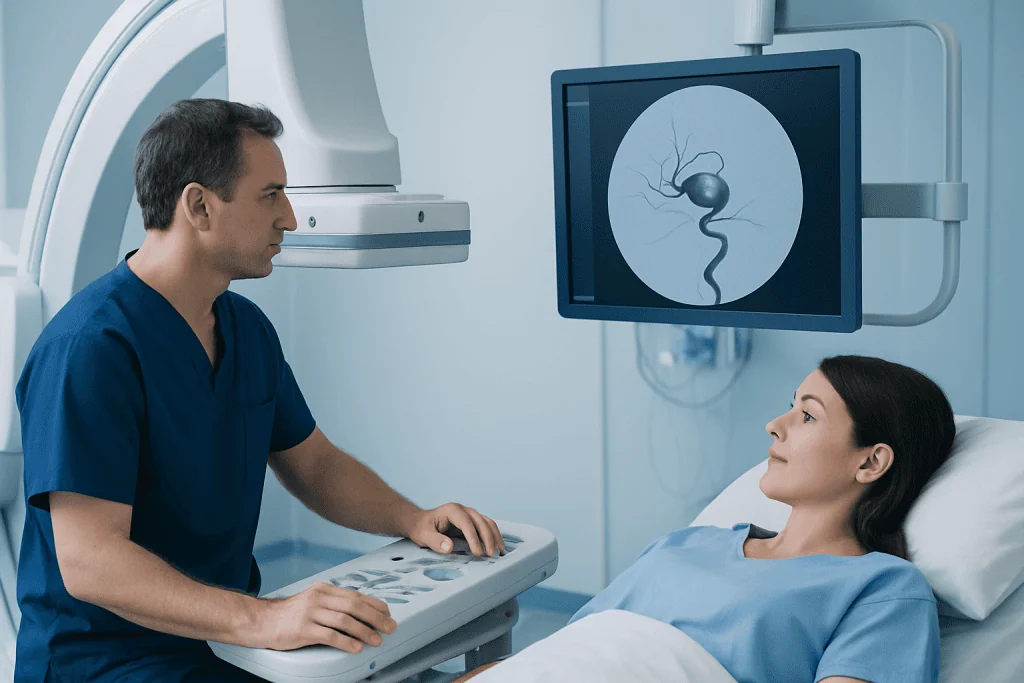
There is no single rule that determines who should have brain aneurysm coiling. Specialists consider the aneurysm’s size, neck width, shape, and exact location in the brain circulation. Some aneurysms are especially well suited to coiling, while others may be safer to treat with clipping, flow diversion, or careful monitoring.
Patients with aneurysms that are difficult to reach through open surgery may be good candidates for an endovascular approach. Coiling is often considered when a less invasive option is preferred because of age, other medical conditions, or recovery concerns. However, a minimally invasive method is not automatically the best choice for every aneurysm.
The team also considers whether the aneurysm has ruptured. In a ruptured aneurysm, treatment timing is urgent, and coiling is commonly used when the anatomy is favorable. In an unruptured aneurysm, factors such as prior growth, family history, smoking, high blood pressure, and symptoms may influence whether treatment is recommended at all.
Some aneurysms have a wide neck or complex structure and may need additional devices such as stents or balloons to support coiling. In other cases, another endovascular method such as brain aneurysm embolization or a different surgical plan may offer more durable protection. The decision is best made by a multidisciplinary team experienced in brain aneurysm care.
How the Procedure Is Performed

Brain aneurysm coiling is usually done in a specialized angiography suite under general anesthesia or, in selected cases, deep sedation. The specialist inserts a catheter into an artery in the groin or wrist and carefully advances it through the body’s blood vessels to the arteries in the brain. Contrast dye and real-time X-ray imaging guide the placement.
Once the catheter reaches the aneurysm, very small platinum coils are deployed into the aneurysm sac. The coils are designed to fill the space enough to reduce blood flow and encourage a stable clot to form inside the aneurysm. If the aneurysm neck is broad, the team may use a balloon or stent to help keep the coils in place and protect the parent artery.
After the aneurysm is treated, the catheter is removed and pressure or a closure device is used at the access site. Patients are then monitored closely for blood pressure control, neurological changes, headache, and any signs of complications. Follow-up care begins immediately because the period after treatment is important for detecting any early problems.
Risks and Possible Complications
Brain aneurysm coiling is widely used and can be very effective, but like all procedures, it carries risks. Possible complications include bleeding, damage to the blood vessel, clot formation, stroke, and reactions to contrast dye or anesthesia. Rarely, the aneurysm can rupture during the procedure, which requires immediate management.
Another consideration is that coiled aneurysms may sometimes reopen slightly over time, a process called recanalization. This does not happen in every patient, but it is one reason follow-up scans are important. Some people may need another procedure later if the aneurysm is not fully sealed or if blood flow returns to part of the sac.
If a stent is used, doctors may prescribe antiplatelet medicines to reduce the risk of clots forming on the device. These medicines can also increase bleeding risk, so they must be used under close medical guidance. Patients should always tell their care team about other medicines, allergies, kidney disease, or any past bleeding problems before treatment.
The overall balance of risks depends on many details, including whether the aneurysm has ruptured, the patient’s age and health, and the experience of the treating center. For some people, coiling offers a lower short-term recovery burden than open surgery. For others, a different option may be safer or more durable in the long term.
Recovery Time After Aneurysm Coiling
Recovery time after brain aneurysm coiling varies from person to person. Many patients with an unruptured aneurysm are in the hospital for a short period, sometimes one to two days, if there are no complications. They may feel tired, have a mild headache, or notice bruising and soreness at the catheter insertion site for several days.
People are often able to return to light daily activities within days to a couple of weeks, depending on how they feel and what their doctor advises. More strenuous activity, heavy lifting, and driving may need to wait until the care team confirms it is safe. Recovery is usually longer if a stent was placed, if the patient has other health conditions, or if the aneurysm had ruptured before treatment.
When a ruptured aneurysm has caused bleeding, recovery can be much more complex and may take weeks or months. Symptoms from the hemorrhage itself, such as fatigue, headaches, concentration problems, or weakness, often affect recovery more than the coiling procedure. These patients may need rehabilitation, close neurological follow-up, and repeat imaging.
Follow-up angiography, CT angiography, or MR angiography is commonly scheduled after coiling to confirm that the aneurysm remains closed. Even when a patient feels well, these checkups matter because they help detect recurrence early. A doctor can also advise when work, travel, and exercise can safely resume.
Diagnosis and Treatment Planning
Before recommending brain aneurysm coiling, doctors first confirm the aneurysm’s size, location, and shape using imaging tests. These may include CT angiography, MR angiography, or catheter angiography. If there is concern for bleeding, urgent brain imaging is used to look for a subarachnoid hemorrhage or other complications.
Treatment planning is highly individualized. The care team considers whether the aneurysm is causing symptoms, whether it has changed over time, and how likely it is to bleed in the future. They also compare coiling with other options such as observation, clipping, or advanced endovascular devices.
In some centers, cases are reviewed by interventional neuroradiologists, neurologists, and neurosurgeons together so that patients receive a balanced recommendation. This team-based approach is especially useful when the aneurysm has complex anatomy or when the patient has more than one aneurysm. Conditions related to blood vessel abnormalities, such as arteriovenous malformation, may also require specialized imaging and planning to make sure the diagnosis is clear.
Self-Care, Prevention, and When to See a Doctor
Not every brain aneurysm can be prevented, but controlling risk factors may help lower the chance of growth or rupture. Important steps include managing high blood pressure, avoiding smoking, limiting illicit stimulant drug use, and following treatment plans for cholesterol, diabetes, or other vascular risk factors. Regular checkups are especially important for people with a family history of aneurysm or a known unruptured aneurysm under surveillance.
After coiling, patients should take prescribed medicines exactly as directed and keep all follow-up appointments. It is also helpful to ask about safe activity levels, travel timing, and whether any temporary restrictions apply. Good hydration, gradual return to activity, and prompt reporting of new symptoms can support a smoother recovery.
Urgent medical attention is needed for symptoms that could suggest a ruptured aneurysm or a complication. These include a sudden severe headache, fainting, confusion, weakness, trouble speaking, seizures, or sudden vision changes. Patients recovering from coiling should also contact their doctor for worsening headache, fever, access-site swelling, increasing bruising, or any new neurological symptom.
For people seeking evaluation or treatment abroad, Acibadem International’s multidisciplinary specialists and JCI-accredited hospitals diagnose and treat brain aneurysms using modern endovascular and surgical techniques, including minimally invasive neurovascular treatment when appropriate.
Frequently asked questions
Is brain aneurysm coiling better than surgery?
It depends on the aneurysm and the patient. Coiling is less invasive and often has a faster early recovery, but some aneurysms are better treated with surgical clipping or another endovascular method. The best option is based on anatomy, rupture status, age, and overall health.
How long does it take to recover from aneurysm coiling?
Many people with an unruptured aneurysm recover from the procedure itself within days to a couple of weeks. Recovery may take much longer if the aneurysm had ruptured or if complications occurred. Follow-up imaging and medical visits remain important even after symptoms improve.
Can a coiled brain aneurysm come back?
A treated aneurysm can sometimes reopen partially over time, which is why repeat scans are recommended. If this happens, doctors may continue monitoring or suggest another procedure. Not every patient needs retreatment, but long-term follow-up is part of standard care.
Is aneurysm coiling a major procedure?
It is a serious medical procedure, but it is minimally invasive because it is done through the blood vessels rather than through an opening in the skull. It still requires specialized imaging, anesthesia, and close monitoring afterward. The level of complexity depends on the aneurysm’s location and shape.
Will I be awake during brain aneurysm coiling?
Many patients have the procedure under general anesthesia, so they are asleep. In some cases, deep sedation may be used instead. The anesthesia plan depends on the patient’s condition, the urgency of treatment, and the technical needs of the procedure.
What are the warning signs after going home?
Patients should seek urgent care for sudden severe headache, weakness, trouble speaking, confusion, fainting, seizures, or sudden vision changes. They should also contact their doctor about increasing pain or swelling at the catheter site, fever, or any new neurological symptom. Early communication with the care team can help address complications quickly.
References
- American Heart Association
- National Institute of Neurological Disorders and Stroke
- Brain Aneurysm Foundation
- Society of NeuroInterventional Surgery
- Radiological Society of North America
This article is for general information only and is not a substitute for professional medical advice. Please consult a qualified doctor about your individual situation.
Explore treatments in Turkey — costs, top hospitals & a free quote
JCI-accredited · board-certified surgeons · reply within 24h
Add us as a Preferred Source to see more of our trusted health content across Google Search, AI Overviews and Discover.
Check your numbers in seconds
BMI, calories, due date, blood pressure and 30+ more clinical calculators — free, instant, doctor-reviewed ranges.