Brain Atrophy: An Evidence-Based Guide for Patients

Brain atrophy is a descriptive finding, not a single disease by itself. Mild brain volume loss can occur with aging, but more significant or focal atrophy may signal an underlying condition.
Key Takeaways
- Brain atrophy is a descriptive finding, not a single disease by itself.
- Mild brain volume loss can occur with aging, but more significant or focal atrophy may signal an underlying condition.
- Symptoms depend on which brain areas are affected and may include memory, language, balance, mood, or movement changes.
- Diagnosis usually combines a medical history, neurological examination, brain imaging, and sometimes blood tests or cognitive testing.
- Treatment aims to manage the cause, support brain function, and improve quality of life through rehabilitation and follow-up care.
Brain atrophy means a loss of brain cells or the connections between them, causing parts of the brain to become smaller. It can occur as part of normal aging or as a result of neurological disease, injury, infection, or other medical conditions, and treatment focuses on finding and addressing the underlying cause.
Overview
Brain atrophy, also called cerebral atrophy, refers to a reduction in brain volume caused by loss of brain cells, called neurons, or the connections between them. In simple terms, some areas of the brain become smaller. This can happen gradually with normal aging, but it can also be linked to medical conditions that affect the brain more directly.
Brain atrophy is not one diagnosis with one cause. Instead, it is a finding that may appear on brain imaging such as MRI or CT scans and needs to be interpreted in the context of a person’s symptoms, age, and overall health. Some people have mild atrophy with few symptoms, while others may experience noticeable changes in memory, language, movement, personality, or daily functioning.
Atrophy may be generalized, meaning it affects much of the brain, or focal, meaning it involves a specific region. When a particular area is affected, the symptoms often reflect the job that part of the brain normally performs. For example, changes in the frontal lobe may affect judgment or behavior, while changes in the temporal lobe may affect memory or language.
Because the causes are varied, evaluation is important. Brain atrophy may be associated with conditions such as Alzheimer’s disease, prior stroke, traumatic brain injury, inflammation, infection, alcohol-related brain injury, or other neurological disorders. A careful assessment helps clarify whether the finding is age-related, potentially reversible, or part of a progressive condition.
Symptoms of Brain Atrophy
The symptoms of brain atrophy can differ widely. Some people have no obvious symptoms at first, and the finding is discovered during imaging for another reason. Others notice subtle changes over time, such as increased forgetfulness, difficulty finding words, slower thinking, reduced concentration, or problems with planning and organization.
If atrophy affects areas involved in movement or coordination, symptoms may include poor balance, tremor, weakness, stiffness, or trouble with fine motor tasks. In other cases, people may experience mood or personality changes, reduced motivation, irritability, anxiety, or depression. Seizures can also occur in some conditions that involve brain tissue loss.
When atrophy involves language or memory centers, family members may be the first to notice repeating questions, trouble following conversations, getting lost in familiar places, or difficulty managing medications and finances. These signs do not always mean dementia, but they do warrant medical review.
- Memory loss or confusion
- Word-finding or speech difficulties
- Changes in judgment, behavior, or personality
- Poor balance or coordination
- Weakness or movement problems
- Seizures or episodes of altered awareness
Causes and Risk Factors

Brain atrophy can result from many different processes. One broad group includes neurodegenerative diseases, in which brain cells are gradually damaged over time. Examples include Alzheimer’s disease, frontotemporal dementia, and disorders related to Parkinsonism. These conditions often produce progressive symptoms that change slowly over months or years.
Another group includes structural or acquired causes. A prior stroke may lead to tissue loss in the affected region. Traumatic brain injury, repeated head impacts, severe seizures, and some infections involving the brain can also contribute. Chronic heavy alcohol use, poor nutrition, and reduced oxygen delivery to the brain may play a role in some individuals.
Inflammatory and immune-related disorders, such as multiple sclerosis or autoimmune encephalitis, may lead to tissue injury and atrophy over time. Certain genetic conditions, rare metabolic disorders, and long-standing uncontrolled medical illness can also affect brain volume. In older adults, vascular risk factors such as high blood pressure, diabetes, high cholesterol, smoking, and heart disease may increase the risk of brain changes by damaging blood vessels that supply the brain.
It is also important to remember that some degree of brain volume loss is associated with normal aging. The key question is whether the change is greater than expected for age or whether it matches a person’s symptoms. That is why doctors focus not only on the scan result, but also on the overall clinical picture.
How Doctors Diagnose Brain Atrophy
Diagnosis begins with a detailed history. The doctor asks about the timing of symptoms, changes in memory or function, mood and sleep, headaches, falls, alcohol use, medications, prior head injury, infection, and family history of neurological conditions. Input from a relative or caregiver can be very helpful, especially if the person is unaware of subtle changes.
A neurological examination checks strength, sensation, reflexes, balance, gait, speech, eye movements, and coordination. Cognitive screening may assess memory, attention, language, and problem-solving. Depending on the pattern of symptoms, more formal neuropsychological testing may be recommended to measure specific areas of thinking in greater detail.
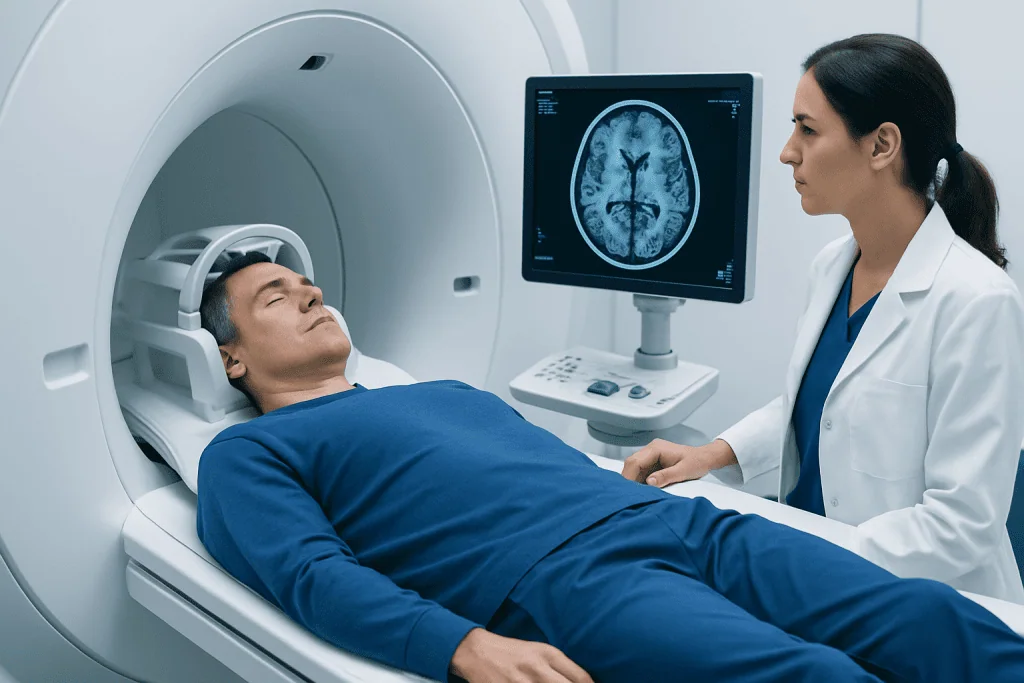
Brain imaging is central to the evaluation. MRI is often preferred because it shows brain structure in more detail and can help identify patterns of atrophy, old strokes, inflammation, tumors, or hydrocephalus. In some cases, CT may be used first or when MRI is not suitable. Imaging does not stand alone; its findings must be interpreted together with symptoms and exam results. For some patients, advanced assessment with brain MRI helps the care team understand which regions are affected.
Additional tests may include blood work to look for reversible contributors such as vitamin deficiencies, thyroid problems, infections, inflammation, or metabolic abnormalities. If seizures are suspected, an EEG may be used. When stroke or blood vessel disease is a concern, doctors may also consider stroke evaluation and treatment pathways or vascular imaging to look for underlying circulatory problems.
Treatment Options and Ongoing Care
There is no single treatment that reverses all brain atrophy, because treatment depends on the cause. The first priority is to identify and manage any underlying condition that may be treatable or modifiable. For example, this may involve controlling vascular risk factors, treating infection or inflammation, stopping harmful alcohol use, addressing nutritional deficiencies, or managing seizures.
When brain atrophy is linked to a neurodegenerative condition, treatment usually focuses on symptom management, maintaining independence, and slowing functional decline where possible. Medications may help some people with memory symptoms, mood changes, sleep problems, or muscle stiffness, depending on the diagnosis. Supportive therapies are often just as important as medication.
Rehabilitation can improve day-to-day function and safety. Physical therapy may help with balance and mobility, occupational therapy can support dressing, cooking, and home adaptations, and speech-language therapy may address communication or swallowing concerns. In selected cases, consultation with neurosurgery may be appropriate if imaging reveals a structural issue that needs surgical assessment rather than a degenerative process alone.
Ongoing follow-up allows the medical team to monitor symptoms, adjust treatment, and provide support to patients and families. Near the end of the care pathway, some people also benefit from coordinated specialty evaluation. Acibadem International’s multidisciplinary specialists and JCI-accredited hospitals diagnose and treat neurological conditions for international patients, including cases where brain atrophy needs detailed assessment.
Prevention and Self-Care
Not all causes of brain atrophy can be prevented, especially those related to genetics or certain degenerative diseases. However, several healthy habits may support brain health and reduce the risk of some contributing factors. Managing blood pressure, blood sugar, and cholesterol, avoiding smoking, limiting alcohol, and staying physically active can help protect blood vessels and overall brain function.
Mental and social activity also matter. Regular reading, learning, conversation, hobbies, and social engagement may help maintain cognitive resilience. Good sleep, treatment of hearing loss, and management of depression or anxiety can also support brain function and quality of life.
Safety is another important part of self-care. People who have balance problems, falls, confusion, or seizures may need home adjustments, medication review, or driving advice from a doctor. Family support and simple routines, such as calendars, labeled storage, pill organizers, and consistent daily schedules, can make daily life easier.
Self-care does not replace medical evaluation. A person should not assume that memory loss or behavior changes are “just aging,” especially if symptoms are worsening. Early assessment may identify reversible problems or allow treatment to begin sooner.
When to Seek Medical Care
A person should seek medical care if they or their family notice new or progressive problems with memory, speech, judgment, balance, or personality. Medical review is also important after a head injury, stroke-like symptoms, seizures, or a rapid decline in thinking or behavior. These changes may have causes that need prompt treatment.
Urgent care is needed for sudden confusion, weakness on one side, facial drooping, severe headache, loss of consciousness, or a new seizure. These symptoms can point to emergencies such as stroke, bleeding, or infection and should not be ignored.
Even when symptoms develop slowly, evaluation can still be valuable. A doctor may identify treatable contributors such as medication effects, vitamin deficiencies, thyroid disorders, sleep problems, depression, or vascular disease. If needed, referral to neurology and imaging can help clarify the diagnosis and next steps.
It may be helpful to bring a list of symptoms, medications, prior scans, and observations from family members to the appointment. This can make it easier for the doctor to understand changes over time and recommend the most appropriate plan.
Frequently asked questions
Is brain atrophy the same as dementia?
No. Brain atrophy describes loss of brain tissue seen clinically or on imaging, while dementia is a syndrome involving decline in memory and thinking severe enough to affect daily life. Some forms of dementia can cause brain atrophy, but not everyone with brain atrophy has dementia.
Can brain atrophy be a normal part of aging?
Yes, some degree of brain volume loss can occur with normal aging. The concern is greater when the atrophy is more than expected for age, affects certain regions, or is accompanied by symptoms such as memory loss, confusion, or movement changes.
Can brain atrophy be reversed?
In many cases, lost brain tissue cannot be fully restored. However, treatment may slow progression, improve symptoms, and address reversible contributing factors such as vitamin deficiency, alcohol-related injury, infection, or vascular risk factors.
What test shows brain atrophy?
Brain atrophy is usually seen on MRI or CT imaging. MRI often provides more detail and may help doctors recognize patterns that suggest specific causes, but the scan must always be interpreted along with symptoms and examination findings.
Does brain atrophy always cause memory loss?
No. Symptoms depend on which part of the brain is affected and how much tissue loss is present. Some people have memory problems, while others may mainly notice balance issues, speech changes, mood changes, or no symptoms at all initially.
When should someone worry about brain atrophy symptoms?
A doctor should evaluate symptoms that are new, worsening, or interfering with daily activities. Sudden confusion, one-sided weakness, a seizure, or a severe abrupt headache should be treated as urgent medical problems.
References
- National Institute on Aging
- National Institute of Neurological Disorders and Stroke
- Alzheimer's Association
- Mayo Clinic
- World Health Organization
This article is for general information only and is not a substitute for professional medical advice. Please consult a qualified doctor about your individual situation.
Explore treatments in Turkey — costs, top hospitals & a free quote
JCI-accredited · board-certified surgeons · reply within 24h
Add us as a Preferred Source to see more of our trusted health content across Google Search, AI Overviews and Discover.
Check your numbers in seconds
BMI, calories, due date, blood pressure and 30+ more clinical calculators — free, instant, doctor-reviewed ranges.