

Brain Cancer Treatment Los Angeles: How It Works, Results and What to Expect

Brain cancer is not one disease; treatment and outlook differ substantially by tumor type, grade, location and molecular findings. Care is usually planned by a multidisciplinary team that may include neurosurgeons, neuro-oncologists, radiation oncologists, neurologists and rehabilitation professionals.
Key Takeaways
- Brain cancer is not one disease; treatment and outlook differ substantially by tumor type, grade, location and molecular findings.
- Care is usually planned by a multidisciplinary team that may include neurosurgeons, neuro-oncologists, radiation oncologists, neurologists and rehabilitation professionals.
- Surgery, radiation therapy and chemotherapy may be used alone or in combination, while some slow-growing tumors can be monitored initially.
- Chemotherapy effectiveness and treatment duration vary by tumor biology and whether treatment is given with radiation, after surgery or for recurrent disease.
- Prompt medical assessment is important for new seizures, sudden neurological symptoms, persistent worsening headaches or changes in thinking, speech or movement.
Brain cancer treatment Los Angeles typically combines specialist assessment, imaging, surgery when appropriate, radiation therapy, medicines such as chemotherapy, and rehabilitation or supportive care. The most suitable plan depends on the exact tumor type and grade, its location, molecular features, symptoms, and the person’s general health and goals.
Overview: how brain cancer treatment works
Brain cancer treatment Los Angeles is based on a detailed diagnosis rather than a single standard procedure. Treatment may include surgery, radiation therapy, chemotherapy, targeted medicines, tumor-treating fields, clinical trials, symptom management and rehabilitation. Some tumors begin in the brain or spinal cord, while others are cancers that have spread to the brain from another part of the body; these situations are assessed and treated differently.
The care team first aims to identify the tumor accurately and protect neurological function. Imaging, pathology and, increasingly, molecular testing help clinicians understand how quickly a tumor may grow and which treatments may be most useful. Decisions are individualized, balancing tumor control with quality of life, independence and the person’s priorities.
Although this article addresses a Los Angeles search query, the principles of high-quality brain tumor care are the same across specialist centers: coordinated planning by neurosurgery, neuro-oncology, radiation oncology, neuroradiology, neuropathology and supportive-care teams. A second opinion may be useful when the diagnosis is uncommon, surgery carries a high risk, or more than one treatment approach is reasonable.
Who may be a candidate for treatment?
Most people with a newly diagnosed brain tumor are candidates for some form of treatment or active monitoring. Candidacy for a particular option depends on whether the tumor is benign or malignant, primary or metastatic, low- or high-grade, and located near areas controlling speech, movement, vision, memory or breathing. The size and number of tumors, prior treatment, symptoms and rate of growth also matter.
Age alone does not determine whether treatment is appropriate. Clinicians consider a person’s overall fitness, other health conditions, daily functioning and ability to tolerate surgery, radiation or systemic therapy. For a tumor that appears slow-growing and causes few or no symptoms, careful imaging surveillance may sometimes be recommended before immediate intervention.
A tissue sample is often needed to confirm the diagnosis. This may be obtained during tumor removal or with a stereotactic biopsy, which uses imaging guidance to collect a small sample. The pathology report can include molecular markers that help predict behavior and guide chemotherapy or targeted-treatment decisions.
- Surgery may be considered when a tumor can be reached safely and removal or biopsy is likely to clarify diagnosis or relieve pressure.
- Radiation may be used after surgery, as a primary treatment when surgery is not suitable, or for cancer that has spread to the brain.
- Chemotherapy or other drug treatment may be used with radiation, after radiation, for recurrence, or for selected tumor types with treatment-sensitive biology.
Step by step: assessment, surgery, radiation and chemotherapy
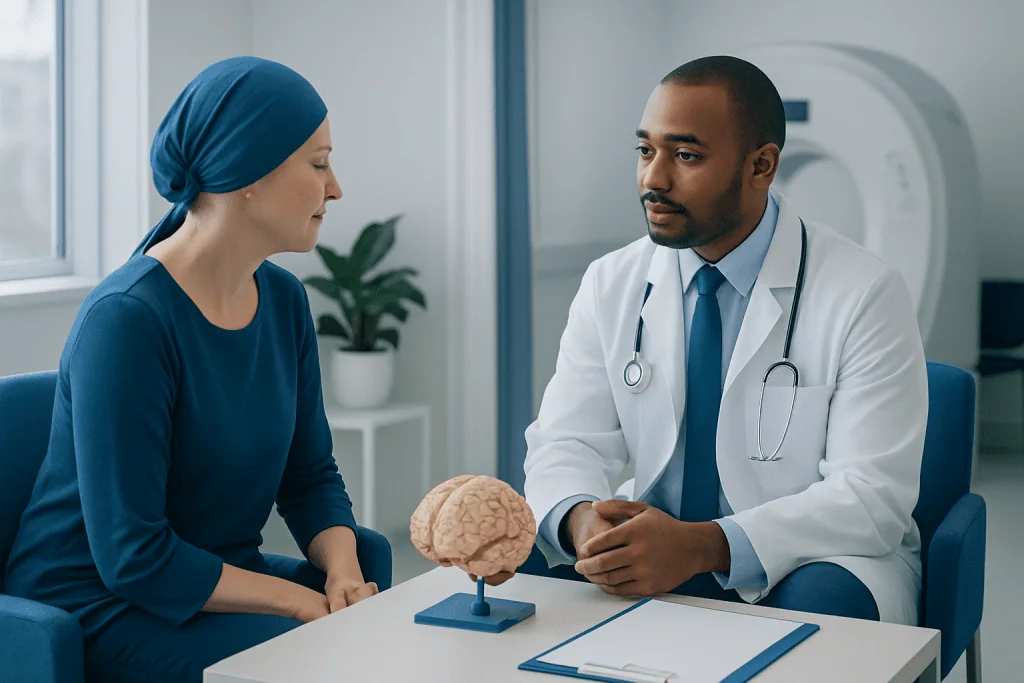
The process usually starts with a neurological examination and brain imaging, most often magnetic resonance imaging (MRI) with contrast. Additional scans may evaluate the rest of the body if metastasis is suspected. A multidisciplinary tumor board may review the images, pathology and medical history to recommend a sequence of care.
If surgery is advised, the neurosurgeon discusses the expected purpose: obtaining tissue, removing as much tumor as safely possible, reducing pressure in the brain, or improving symptoms. Techniques such as image guidance, functional mapping and awake surgery in selected cases can help protect important brain functions. Surgery may be followed by an inpatient stay, repeat imaging and pathology review before the next phase is planned.
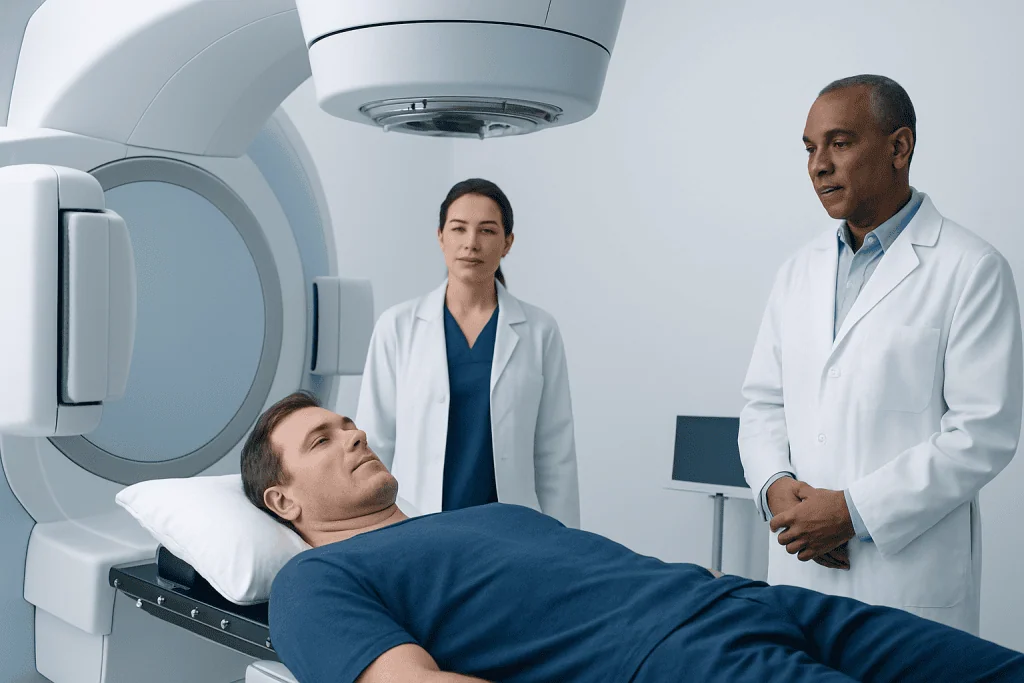
Radiation therapy uses focused high-energy radiation to damage tumor cells while limiting exposure to nearby healthy tissue. It may be delivered in small daily sessions over several weeks or, for carefully selected small lesions, in one or a few highly focused sessions. The choice depends on tumor size, type, location, prior radiation and whether there are multiple lesions.
Chemotherapy is medication that travels through the bloodstream or is delivered by another appropriate route to target cancer cells. Some medicines can cross the blood-brain barrier more effectively than others. Treatment is usually given in cycles, with planned periods for monitoring and recovery. Brain cancer treatment is best planned as a coordinated pathway rather than as an isolated procedure.
How long can a person live with brain cancer with treatment?
Survival with brain cancer varies widely, so no single time frame can accurately describe an individual person’s outlook. Some noncancerous or low-grade tumors can be controlled for many years, while aggressive tumors may require intensive treatment and close follow-up. Metastatic brain tumors also have a variable outlook that depends partly on the original cancer and whether it is controlled elsewhere in the body.
Doctors use tumor type, grade, molecular markers, age, neurological function, tumor location, extent of safe surgical removal and response to treatment to discuss prognosis. Population survival estimates can be useful for broad context, but they cannot predict precisely what will happen for one patient. Results from older studies may also not reflect newer diagnostic methods, radiation approaches or medicines.
It can help to ask the treating team about the goal of treatment in the individual situation: cure, long-term control, slowing growth, relieving symptoms or maintaining function. Palliative care can be introduced alongside cancer-directed treatment at any stage to help manage symptoms, emotional concerns and practical needs; it is not limited to end-of-life care.
How successful is chemotherapy for brain cancer?
Chemotherapy can be an important part of treatment for certain brain cancers, but its success depends strongly on the tumor type and molecular profile. For some high-grade gliomas, chemotherapy given with and after radiation can improve outcomes compared with radiation alone. For other tumors, chemotherapy has a more limited role, or different treatments may be more effective.
Success may mean shrinking a tumor, slowing its growth, delaying recurrence, improving symptoms, or helping a person live longer with stable disease. It does not always mean that all tumor cells are permanently eliminated. In some situations, chemotherapy is used to treat recurrence, and the response may differ from the response to initial therapy.
Possible side effects depend on the drug and treatment schedule and can include tiredness, nausea, appetite changes, lowered blood counts or increased infection risk. The care team monitors blood tests and symptoms and may adjust treatment or provide supportive medicines when needed. Patients should report fever, unusual bleeding, severe vomiting, worsening confusion or new neurological symptoms promptly.
How long does chemo for brain cancer take?
There is no universal chemotherapy schedule for brain cancer. A course may involve several cycles over months, and some regimens are given alongside a radiation course before continuing as maintenance treatment. Each cycle includes treatment days and a recovery interval, allowing clinicians to assess side effects and blood counts.
The exact duration is influenced by the diagnosis, treatment purpose, response on MRI, laboratory results and how well treatment is tolerated. Some people complete a planned fixed number of cycles, while others continue treatment as long as it is controlling the tumor without unacceptable side effects. For recurrent disease, duration may be shorter or based on response to a different medicine.
Before treatment begins, patients should receive a written schedule explaining appointment timing, imaging follow-up, blood testing and whom to contact between visits. It is reasonable to ask how treatment may affect work, driving, travel, fertility, family responsibilities and routine vaccinations. The medical team can also discuss practical support during therapy.
Can brain cancer be fully cured?
Some brain tumors can be completely removed and may be cured, particularly certain benign or low-grade tumors in locations where surgery can be performed safely. However, even tumors described as benign can sometimes require long-term monitoring because location and growth behavior can affect health. The word “cure” should therefore be used carefully and only after discussion of the specific diagnosis.
For many malignant brain cancers, treatment focuses on removing or controlling as much tumor as possible, delaying progression and preserving quality of life. A complete visible removal on a scan does not always mean every microscopic tumor cell has been eliminated, which is one reason radiation and medication may be recommended after surgery. Ongoing MRI surveillance is important even after successful initial treatment.
Clinical trials may be an option for eligible patients, especially when standard treatments have limited effectiveness or a tumor returns. Trials can study new medicines, immunotherapy approaches, radiation strategies or combinations of existing treatments. Participation is voluntary, and the team should explain the potential benefits, uncertainties, alternatives and extra monitoring involved.
Recovery, risks, support and when to seek medical care
Recovery varies according to the treatment received and the brain area affected. After surgery, hospital recovery may range from a short stay to a longer period when rehabilitation is needed. Fatigue is common during radiation and chemotherapy and may continue for weeks afterward. Physical therapy, occupational therapy, speech and language therapy, neuropsychology and seizure management can support recovery and daily functioning.
Potential treatment risks include infection, bleeding, seizures, swelling in the brain, stroke-like neurological deficits, changes in memory or concentration, hormonal effects and radiation-related injury to healthy tissue. Not every person experiences these problems, and teams use careful planning, monitoring and supportive treatments to reduce risks. A person should understand the expected benefits and possible complications before deciding on treatment.
When to seek medical care: Urgent assessment is needed for a first seizure, sudden weakness or numbness on one side, new trouble speaking, sudden severe headache, loss of consciousness, repeated vomiting, marked confusion or a rapid change in vision. Persistent or progressively worsening headaches, balance problems, personality changes or new cognitive symptoms also deserve timely medical review, especially when they are new or unexplained.
For international patients, Acibadem International’s multidisciplinary specialists and JCI-accredited hospitals can assess and treat brain tumors, coordinating neurosurgical, medical and radiation oncology care. A qualified doctor should review all imaging and pathology directly before recommending a personal treatment plan.
Frequently asked questions
What is usually the first treatment for brain cancer?
The first step is usually detailed imaging and assessment by a specialist team. If it can be done safely, surgery or a biopsy may be recommended to confirm the tumor type and reduce pressure or tumor volume. Radiation and drug treatment are then considered according to the pathology results and the person’s condition.
Is surgery always needed for brain cancer?
No. Surgery may not be appropriate when a tumor is in a high-risk location, when there are multiple tumors, or when another treatment is more suitable. A biopsy, radiation, medicines or active monitoring may be used instead, depending on the diagnosis.
Can chemotherapy cross the blood-brain barrier?
Some chemotherapy medicines can reach the brain more effectively than others, and this affects which medicines are used. The selection depends on the tumor type, molecular findings, prior treatment and the expected balance of benefit and side effects. A neuro-oncology team can explain why a particular regimen is or is not recommended.
What happens after brain tumor surgery?
After surgery, patients are monitored for neurological changes, pain, swelling, seizures and wound healing. A scan may be performed to assess the surgical result, and the tissue sample is examined by a pathologist. Follow-up planning may include radiation, chemotherapy, rehabilitation, surveillance imaging or a combination of these.
How often are MRI scans needed after treatment?
MRI follow-up schedules vary by tumor type, treatment and clinical situation. Scans are often more frequent early after treatment and may be spaced further apart if the tumor remains stable. New symptoms may lead the medical team to recommend imaging sooner.
Should a person get a second opinion for brain cancer treatment?
A second opinion can be helpful, particularly for rare tumors, complex surgery, recurrent disease or when treatment choices are uncertain. It may confirm the diagnosis and proposed plan or identify other reasonable options, including clinical trials. Seeking another expert view does not mean delaying urgent care when immediate treatment is needed.
References
- National Cancer Institute
- American Cancer Society
- National Institute of Neurological Disorders and Stroke
- World Health Organization
- National Comprehensive Cancer Network
This article is for general information only and is not a substitute for professional medical advice. Please consult a qualified doctor about your individual situation.
Joint and spine care in Turkey — expert assessment & treatment
JCI-accredited · board-certified surgeons · reply within 24h
Add us as a Preferred Source to see more of our trusted health content across Google Search, AI Overviews and Discover.

More from the Health Library



Related Specialists

Prof. Dr. Ayşe Korkmaz Toygar
Neonatal Intensive Care Unit
Prof. Dr. S. Tolga Aydoğ
Physical Medicine & Rehabilitation
Assoc. Prof. Dr. A. Erdem Kilavuz
Ear Nose & Throat
Dr. Duygu Yavuzer Karadeniz
Periodontolgy