Brain Physiology Basics: How Nerve Signals Control Movement, Senses, and Thinking
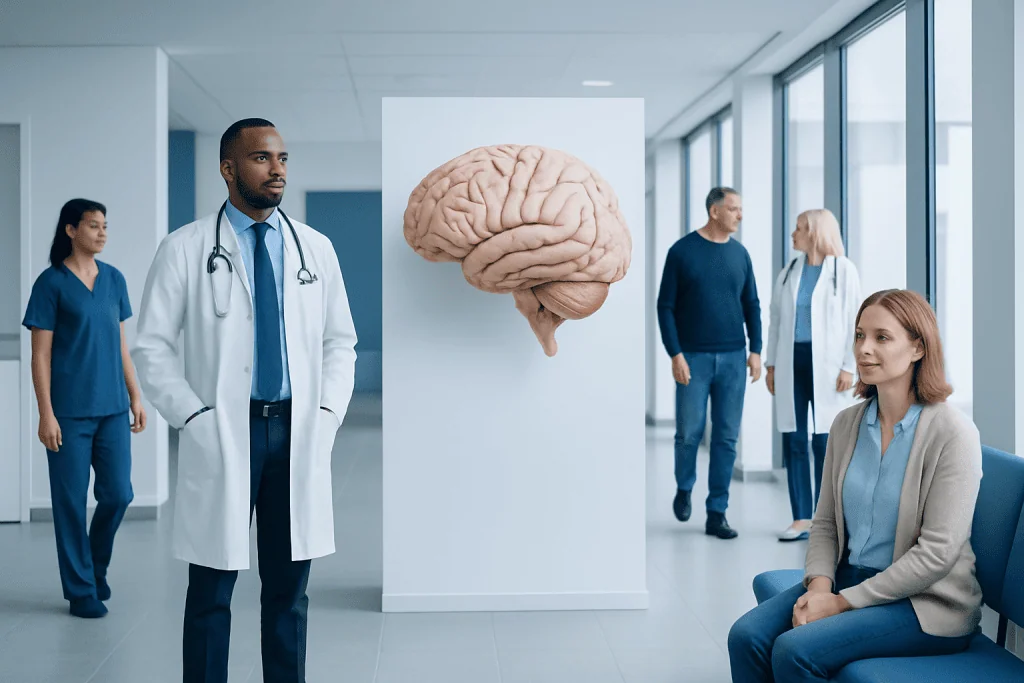
The brain works through networks of nerve cells called neurons that send electrical and chemical signals. These signals allow the body to move, feel sensations, form memories, speak, and make decisions.
Key Takeaways
- The brain works through networks of nerve cells called neurons that send electrical and chemical signals.
- These signals allow the body to move, feel sensations, form memories, speak, and make decisions.
- Different brain regions have specialized roles, but they work together continuously.
- Sleep, blood flow, oxygen, nutrition, and overall health all affect brain function.
- New neurological symptoms such as weakness, confusion, seizures, or sudden speech problems need prompt medical attention.
Brain physiology basics describe how the brain and nervous system use electrical and chemical signals to control movement, process senses, and support thinking. Understanding these core functions can help patients better recognize how everyday brain health connects to symptoms, diagnosis, and care.
Overview of Brain Physiology
Brain physiology basics focus on how the brain functions from moment to moment. The brain is the body’s control center, receiving information from the senses, interpreting it, and sending instructions back to muscles, organs, and glands. It also supports memory, language, attention, emotion, and problem-solving. Even simple daily actions, such as walking across a room or recognizing a familiar face, rely on highly organized brain activity.
The nervous system is commonly divided into the central nervous system and the peripheral nervous system. The central nervous system includes the brain and spinal cord. The peripheral nervous system includes the nerves that travel throughout the body. Together, these systems create communication pathways that allow the body to respond quickly and appropriately to the environment.
At the heart of brain physiology are nerve signals. These signals are partly electrical and partly chemical. Electrical impulses travel along nerve cells, while chemical messengers carry information across tiny gaps between cells. This constant communication helps coordinate movement, regulate body functions such as breathing and heart rate, and support higher mental functions such as reasoning and self-awareness.
How Neurons Send and Receive Signals
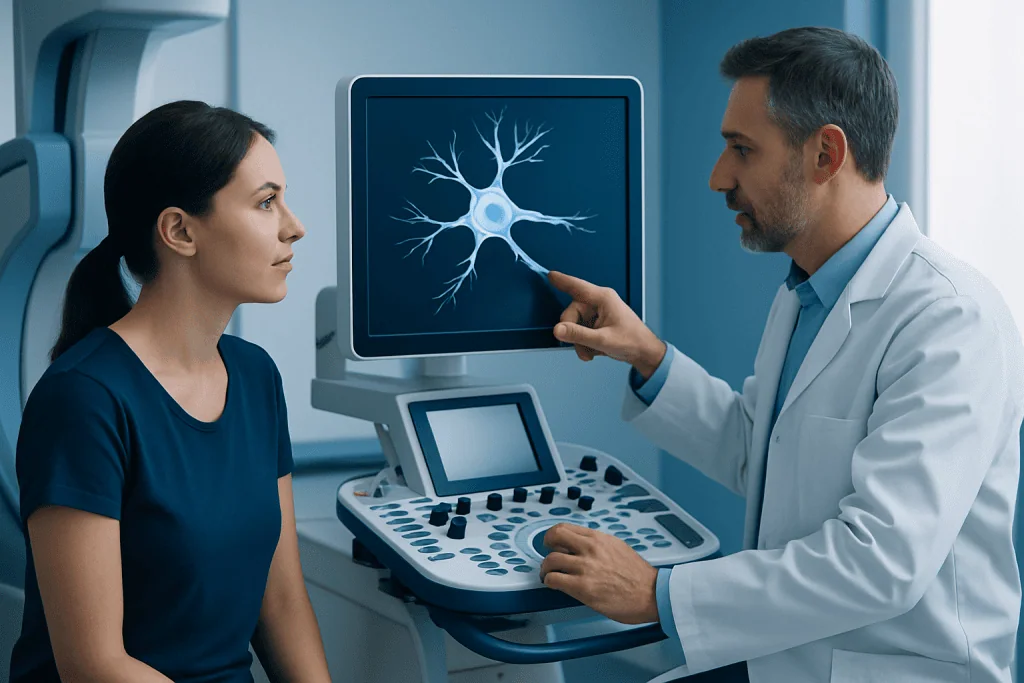
The main working cells of the nervous system are called neurons. A neuron has a cell body, branching structures called dendrites that receive signals, and a long extension called an axon that sends signals onward. When a neuron is activated strongly enough, it produces an electrical impulse called an action potential. This impulse travels down the axon toward the next cell.
Neurons do not usually touch one another directly. Instead, they communicate across a tiny space called a synapse. At the synapse, the sending neuron releases chemicals known as neurotransmitters. These chemicals bind to receptors on the receiving cell and either encourage it to send its own signal or make it less likely to fire. This balance of excitation and inhibition is essential for normal brain function.
Several neurotransmitters are especially important in brain physiology. Glutamate is a major excitatory neurotransmitter, while gamma-aminobutyric acid, or GABA, is a major inhibitory one. Dopamine helps regulate movement, reward, and motivation. Serotonin contributes to mood, sleep, and appetite. Acetylcholine is involved in attention, memory, and muscle activation. Disturbances in these systems may contribute to neurological or psychiatric conditions.
Supporting cells called glial cells also play an important role. They help protect neurons, maintain the environment around them, provide nutrients, and support the transmission of signals. Brain physiology therefore depends not only on neurons themselves but also on the health of the surrounding brain tissue and blood supply.
How the Brain Controls Movement

Voluntary movement begins with planning in the brain. Areas in the frontal lobe help decide to act, organize the sequence of motion, and send commands toward the spinal cord. From there, motor nerves carry signals to muscles, which contract in a controlled way. This process occurs very quickly and is refined continuously as the body moves.
Movement is not controlled by one brain region alone. The motor cortex helps initiate motion, while the cerebellum fine-tunes balance, timing, and coordination. The basal ganglia help regulate movement patterns and smooth transitions between actions. These regions constantly exchange information so that actions such as writing, swallowing, speaking, or climbing stairs feel accurate and efficient.
Sensory feedback is equally important. As a person moves, receptors in muscles, joints, skin, and inner ear send information back to the brain about position, pressure, and balance. The brain compares the intended movement with what is actually happening and makes rapid adjustments. This is why healthy brain physiology is essential for posture, precision, and reaction time.
When signal pathways are disrupted, movement may become weak, slow, stiff, uncoordinated, or involuntary. Depending on the part of the nervous system involved, symptoms can include tremor, balance problems, abnormal gait, muscle spasms, or difficulty with skilled hand movements. In some cases, doctors may evaluate disorders related to Parkinson’s disease or other neurological conditions that affect motor control.
How the Brain Processes Senses
The senses allow the brain to gather information about the world and the body itself. Vision, hearing, touch, taste, smell, balance, temperature, and pain all depend on specialized receptors. These receptors convert physical stimuli into nerve signals that travel through defined pathways to the brain. The brain then organizes and interprets these signals so a person can respond appropriately.
Different sensory systems have different routes, but the basic principle is similar. For example, light entering the eyes is converted into electrical signals by the retina and sent to the visual areas of the brain. Sound waves stimulate structures in the inner ear, which send signals to auditory centers. Touch, vibration, and body position are relayed through the spinal cord to the brain, where they are mapped and understood.
The brain does more than simply receive signals. It filters, compares, prioritizes, and integrates them. This helps a person focus on a conversation in a busy room, pull away quickly from a hot surface, or recognize the smell of food while seeing it and reaching for it. Sensory processing is closely linked to attention, memory, and emotion.
If these pathways are affected, a person may notice numbness, tingling, visual changes, hearing changes, dizziness, altered taste or smell, or increased sensitivity to touch or sound. Evaluation may include a neurological exam and, when needed, tests such as electromyography or electroencephalography to better understand how parts of the nervous system are functioning.
How the Brain Supports Thinking, Memory, and Emotion
Thinking depends on communication across broad brain networks rather than one single location. The frontal lobes are especially important for planning, judgment, attention, impulse control, and decision-making. The temporal lobes contribute to memory and language, while the parietal lobes help integrate sensory information and support spatial awareness. The occipital lobes are central to vision, and deeper structures such as the hippocampus and amygdala support memory and emotion.
Memory formation is a dynamic process. The brain must first pay attention to information, then encode it, store it, and retrieve it later. Sleep plays an important part in this process because it helps consolidate memory and maintain normal brain network function. Learning can physically change the strength of synaptic connections, a property often referred to as neuroplasticity.
Emotion is also grounded in brain physiology. Brain circuits involving the limbic system, prefrontal cortex, brainstem, and neurotransmitters help shape mood, motivation, alertness, and stress responses. This is why brain health and mental health are closely connected. Changes in sleep, hormones, medications, inflammation, or blood flow can affect concentration, mood, and cognitive performance.
Many people notice temporary changes in attention or memory during periods of stress, illness, or fatigue. However, persistent or worsening changes deserve medical review. In some situations, clinicians may investigate conditions such as epilepsy or other disorders that can affect awareness, behavior, memory, or cognitive function.
What Affects Normal Brain Function
Healthy brain physiology depends on a steady supply of oxygen and nutrients. The brain uses a large amount of the body’s energy, even at rest. Blood flow must remain adequate so brain cells receive oxygen and glucose. This is one reason conditions that affect the heart, blood vessels, lungs, or blood sugar can also affect mental clarity and neurological function.
Sleep is another essential factor. During sleep, the brain carries out processes that support memory, emotional regulation, and cellular maintenance. Poor sleep may lead to slower thinking, reduced attention, irritability, and headaches. Long-term sleep problems may also worsen other medical conditions that influence brain health.
Lifestyle and general health also matter. Regular physical activity supports blood flow and overall vascular health. A balanced diet provides nutrients needed for nerve and brain cell function. Avoiding smoking, limiting alcohol, managing stress, and controlling conditions such as high blood pressure, diabetes, and high cholesterol can all help protect the nervous system.
Brain function may also change because of injury, infection, inflammation, seizures, medication effects, metabolic disturbances, or structural disease. When symptoms are unexplained, doctors may recommend a neurological exam along with imaging such as MRI to look more closely at the brain and spinal cord.
How Doctors Evaluate Brain Function
Assessment usually begins with a detailed medical history and neurological examination. A doctor may ask about weakness, numbness, headaches, dizziness, seizures, memory changes, speech difficulty, vision changes, sleep problems, or balance symptoms. The examination can assess strength, reflexes, coordination, sensation, eye movements, speech, and mental status.
Further testing depends on the symptoms. Brain imaging can help identify structural causes such as stroke, tumors, inflammation, bleeding, or degenerative changes. Electrical tests can evaluate how nerve pathways and brain activity are functioning. Blood tests may also be useful to look for metabolic, hormonal, nutritional, or infectious factors affecting the nervous system.
Doctors often combine several pieces of information rather than relying on one test alone. A symptom may arise from the brain, spinal cord, peripheral nerves, muscles, or even non-neurological conditions. Careful evaluation helps guide treatment and avoid unnecessary worry.
For patients with complex neurological symptoms, a multidisciplinary approach may be helpful. Near the end of the evaluation and care pathway, some patients choose centers with advanced neurodiagnostic services. Acibadem International’s multidisciplinary specialists and JCI-accredited hospitals diagnose and treat neurological conditions for international patients.
Protecting Brain Health and Knowing When to Seek Care
Many supportive habits can help maintain healthy brain function. These include regular exercise, consistent sleep, a balanced diet, hydration, stress management, social engagement, and mentally stimulating activities. Protecting the head from injury by using seat belts, helmets, and fall-prevention strategies is also important across all ages.
Managing long-term medical conditions can make a meaningful difference. High blood pressure, diabetes, high cholesterol, obesity, sleep apnea, and smoking can all place strain on blood vessels and the nervous system. Taking prescribed treatment as directed and attending regular checkups can support both general and neurological health.
Some symptoms should not be ignored. Prompt medical care is important for sudden weakness, facial drooping, speech difficulty, severe confusion, sudden vision loss, a first seizure, severe head injury, sudden severe headache, or loss of consciousness. These symptoms do not always mean a serious emergency, but they should be assessed quickly.
If symptoms are mild but persistent, such as recurring numbness, tremor, balance problems, memory concerns, or ongoing headaches, arranging a medical evaluation is a sensible next step. Early assessment can often clarify the cause, provide reassurance, and help begin treatment when needed.
Frequently asked questions
What does brain physiology mean?
Brain physiology refers to how the brain works. It includes how nerve cells send signals, how brain regions communicate, and how these processes control movement, sensation, thought, memory, and emotion.
Are nerve signals electrical or chemical?
They are both. Signals travel electrically along neurons and then usually pass chemically across synapses using neurotransmitters. This combination allows fast and flexible communication throughout the nervous system.
Which part of the brain controls movement?
Movement depends on several connected regions rather than one single area. The motor cortex helps initiate movement, the cerebellum supports coordination and balance, and the basal ganglia help regulate smooth and purposeful motion.
Why can sleep affect thinking and memory?
Sleep supports attention, learning, memory consolidation, and emotional balance. When sleep is poor, the brain may process information less efficiently, leading to forgetfulness, slower thinking, or reduced concentration.
Can stress change how the brain functions?
Yes, stress can temporarily affect concentration, memory, mood, and sleep. Ongoing stress may also influence neurotransmitters and attention networks, which is why stress management is an important part of overall brain health.
When should someone see a doctor for neurological symptoms?
A doctor should be consulted for persistent symptoms such as numbness, weakness, tremor, balance problems, memory changes, or recurring headaches. Urgent care is needed for sudden weakness, speech problems, seizures, severe confusion, or sudden vision loss.
References
- National Institute of Neurological Disorders and Stroke
- National Institute of Mental Health
- MedlinePlus
- World Health Organization
- Mayo Clinic
This article is for general information only and is not a substitute for professional medical advice. Please consult a qualified doctor about your individual situation.
Explore treatments in Turkey — costs, top hospitals & a free quote
JCI-accredited · board-certified surgeons · reply within 24h
Add us as a Preferred Source to see more of our trusted health content across Google Search, AI Overviews and Discover.
Check your numbers in seconds
BMI, calories, due date, blood pressure and 30+ more clinical calculators — free, instant, doctor-reviewed ranges.