Brain Vessel Coiling in Turkey: Cost Factors, Hospital Stay, and Follow-Up

Brain vessel coiling treats selected brain aneurysms through a catheter rather than open surgery. Costs vary by aneurysm size, location, urgency, imaging needs, devices, and length of hospital stay.
Key Takeaways
- Brain vessel coiling treats selected brain aneurysms through a catheter rather than open surgery.
- Costs vary by aneurysm size, location, urgency, imaging needs, devices, and length of hospital stay.
- Many patients stay in hospital for a short period, but complex or ruptured aneurysms usually require longer monitoring.
- Follow-up imaging is important because some aneurysms need long-term surveillance after coiling.
- Travelers should plan for pre-treatment evaluation, recovery time, medicines, and later imaging reviews.
Brain vessel coiling is a minimally invasive treatment used to close certain brain aneurysms from inside the blood vessel. In Turkey, overall cost, hospital stay, and follow-up needs depend mainly on the aneurysm, the devices used, and the patient’s recovery plan.
Overview of brain vessel coiling
Brain vessel coiling, also called endovascular coiling, is a minimally invasive procedure used to treat certain brain aneurysms. A brain aneurysm is a weak area in a blood vessel wall that bulges outward. During coiling, a specialist guides a thin catheter through an artery, usually starting in the wrist or groin, up to the blood vessel in the brain. Very small platinum coils are then placed inside the aneurysm to reduce blood flow into it and lower the risk of bleeding.
This treatment is commonly performed by an interventional neuroradiologist, endovascular neurosurgeon, or a similarly trained neurovascular specialist. Compared with open brain surgery, coiling does not require opening the skull. For many patients, this can mean a shorter recovery period and less physical strain, although the best approach always depends on the aneurysm’s shape, size, and location.
In Turkey, brain vessel coiling is offered in centers with advanced imaging, neuro-intensive care support, and multidisciplinary teams. Planning often involves neurologists, neurosurgeons, interventional neuroradiologists, anesthesiologists, and critical care specialists. For some patients, doctors may compare coiling with other options such as aneurysm clipping or discuss related conditions like brain aneurysm.
Who may need coiling and when it is used
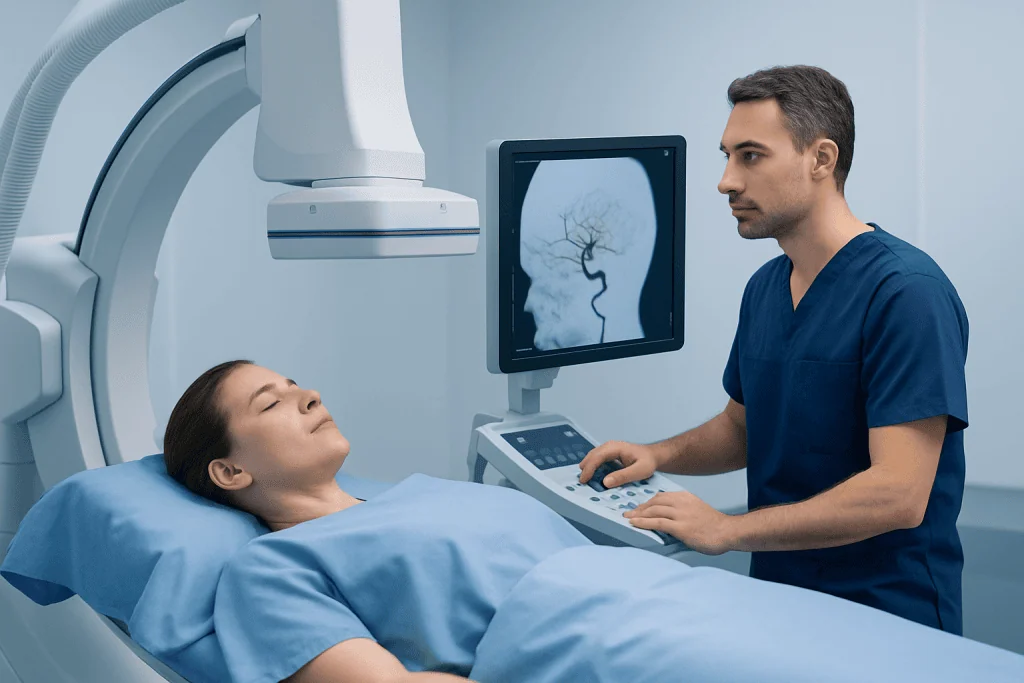
Coiling is most often used for brain aneurysms that have either ruptured or are considered at meaningful risk of rupture. A ruptured aneurysm causes bleeding around the brain and is a medical emergency. An unruptured aneurysm may be found incidentally during imaging done for headaches, dizziness, or another reason. In those cases, treatment decisions are based on careful risk assessment rather than symptoms alone.
Doctors look at several features when deciding whether coiling is suitable. These include the aneurysm’s size, neck width, exact location, whether it has bled before, and the patient’s age and general health. Some aneurysms are ideal for coiling, while others may be safer to treat with clipping, flow-diverting stents, or monitoring over time.
Additional devices may sometimes be needed to support coiling, especially when the aneurysm has a wide neck. These devices can include stents or balloons that help the coils stay in the right place. Because treatment is individualized, two people with the same diagnosis may receive different recommendations. A complete review of imaging and medical history helps the team choose the safest and most effective plan.
Cost factors for brain vessel coiling in Turkey

The cost of brain vessel coiling in Turkey is not a single fixed number because it depends on several medical and practical factors. The biggest influence is usually the complexity of the aneurysm and the type of endovascular materials needed. A straightforward aneurysm may require fewer coils and less procedure time, while a more complex aneurysm may need additional devices, longer imaging guidance, and more intensive monitoring.
Other important cost factors include whether the aneurysm is ruptured or unruptured, whether emergency admission is required, and how long the patient stays in the hospital or intensive care unit. Pre-procedure tests such as CT, MRI, cerebral angiography, blood work, and anesthesia evaluation also contribute to the overall treatment plan. Follow-up imaging after discharge may be billed separately depending on the center and the patient’s care pathway.
International patients should also think beyond the procedure itself. Travel, local transport, accommodation for a companion, prescription medicines, translation support, and the need to remain in the country for early review can all affect the total cost. Asking for a written treatment plan that explains what is included helps patients compare options more clearly.
- Procedure complexity and aneurysm anatomy
- Number of coils and whether stents or balloons are needed
- Emergency treatment versus planned treatment
- Length of intensive care and hospital stay
- Imaging, laboratory tests, and anesthesia services
- Post-treatment medicines and follow-up visits
Hospital stay and early recovery
Hospital stay after coiling varies from person to person. Many patients treated for an unruptured aneurysm stay for a relatively short period, often one to several days, so the team can monitor neurological status, blood pressure, access-site healing, and any immediate complications. If the aneurysm has ruptured, the stay is usually longer because the brain and blood vessels need close observation for problems such as vasospasm, hydrocephalus, or rebleeding risk.
Right after the procedure, patients are monitored in a recovery area, stroke unit, or intensive care setting depending on the case. The team checks alertness, strength, speech, headache severity, and the puncture site in the wrist or groin. Some people feel tired for a few days, and mild bruising or soreness at the access site can occur.
Before discharge, doctors explain activity limits, medicine use, warning signs, and when normal routines can resume. Return to work depends on the reason for treatment, the type of work, and whether the aneurysm was ruptured. Travel plans should be discussed with the treating team, especially for international patients who may need a short local recovery period before flying home.
Follow-up after coiling
Follow-up is a very important part of aneurysm care after coiling. Although coiling is effective, some aneurysms can reopen slightly over time or continue to fill at the edges. For that reason, doctors usually recommend scheduled imaging to confirm that the aneurysm remains safely sealed and that no further treatment is needed.
Follow-up imaging may include magnetic resonance angiography, CT angiography, or catheter angiography, depending on the aneurysm and the materials used. The timing varies between centers and according to individual risk, but it is common for patients to have an early review and then longer-term surveillance. If a stent was used, medicine instructions and follow-up may be especially important.
Patients should also attend regular clinical reviews and report any new neurological symptoms, severe headache, vision change, weakness, confusion, or speech difficulty promptly. Most follow-up visits are routine and reassuring, but they help the team identify rare issues early. In some situations, doctors may compare recovery with other neurovascular treatments such as stroke treatment pathways when symptoms overlap and urgent assessment is needed.
Possible risks and how doctors reduce them
As with any procedure involving the brain and blood vessels, coiling has potential risks. These can include bleeding, clot formation, reduced blood flow to part of the brain, movement of a coil, reaction to contrast dye, or complications at the catheter entry site. In some cases, the aneurysm may not be fully sealed in one session and another procedure may be advised later.
Specialist teams work carefully to lower these risks. Detailed pre-procedure imaging helps map the aneurysm and nearby vessels. During treatment, real-time angiography guides precise placement of coils and any supporting devices. Monitoring by anesthesia, neurocritical care, and nursing teams also improves safety during the procedure and early recovery period.
Patients can help by sharing their full medical history, medicine list, allergies, and any previous bleeding or clotting problems. It is especially important to mention blood thinners, antiplatelet medicines, kidney disease, pregnancy, or prior reactions to contrast agents. Clear communication helps the team prepare the safest treatment strategy.
Planning treatment in Turkey and preparing for care
For people considering treatment in Turkey, preparation usually begins with sharing previous scans and reports for specialist review. The team may then recommend updated imaging after arrival to confirm the treatment plan. Patients often benefit from asking practical questions in advance, such as who will perform the procedure, whether intensive care may be needed, what medicines will be required afterward, and when follow-up imaging should happen.
It is also useful to prepare for the period after discharge. A companion may be helpful for the first few days, especially if the patient has had a ruptured aneurysm or feels tired after anesthesia. Travel insurance, medical records, and a plan for continuing follow-up at home should be organized before the trip whenever possible.
Near the end of care, the treating team usually provides a discharge summary, imaging results, and recommendations for ongoing monitoring. Acibadem International’s multidisciplinary specialists and JCI-accredited hospitals diagnose and treat neurovascular conditions for international patients, with coordinated evaluation and aftercare planning. In selected cases, patients may also be assessed for related cerebrovascular conditions such as stroke if symptoms suggest an urgent neurological event.
When to seek urgent medical help
A suspected ruptured brain aneurysm is an emergency and needs immediate medical attention. Sudden severe headache, loss of consciousness, seizure, new weakness, facial droop, difficulty speaking, sudden confusion, or major vision change should never be ignored. These symptoms do not always mean an aneurysm, but they require urgent evaluation.
After coiling, patients should also seek prompt medical advice if they develop worsening headache, new neurological symptoms, fever, severe nausea and vomiting, chest pain, shortness of breath, or heavy bleeding from the catheter site. Mild tiredness and bruising may be expected, but anything that feels significant or rapidly changing should be discussed with a doctor.
For non-emergency concerns, it is reasonable to contact the treating team about medicines, activity, travel, or timing of follow-up scans. Early questions can often prevent unnecessary worry and help recovery go more smoothly. Personalized advice from a qualified specialist is always the safest guide.
Frequently asked questions
Is brain vessel coiling the same as brain surgery?
No. Brain vessel coiling is an endovascular procedure performed through a catheter inside the blood vessels, rather than through an opening in the skull. It is minimally invasive, but it is still a specialized procedure that requires expert neurovascular care.
How long is the hospital stay after brain coiling?
The stay depends on whether the aneurysm was ruptured, the complexity of treatment, and how the patient recovers. Some people with unruptured aneurysms go home after a short stay, while patients with bleeding usually need longer observation and supportive care.
Why can the cost vary so much from one patient to another?
Costs differ because aneurysms are not all alike. The number of coils, use of stents or balloons, emergency admission, imaging tests, intensive care needs, and follow-up plans can all change the total treatment cost.
Will follow-up scans still be needed if the procedure goes well?
Yes, follow-up imaging is usually recommended even after a successful procedure. These scans help confirm that the aneurysm remains closed and identify any change that might need further observation or treatment.
Can a treated aneurysm come back after coiling?
In some cases, part of the aneurysm can refill over time, which is why surveillance is important. This does not happen to every patient, but regular imaging helps doctors detect it early and decide whether any additional treatment is needed.
When is it safe to travel home after treatment in Turkey?
Travel timing depends on the patient’s overall condition, whether the aneurysm ruptured, and whether there were any complications. The treating doctor will advise when flying is reasonable and whether a short period of local recovery is recommended before departure.
References
- World Health Organization
- American Heart Association
- National Institute of Neurological Disorders and Stroke
- Society of NeuroInterventional Surgery
- European Society of Minimally Invasive Neurological Therapy
This article is for general information only and is not a substitute for professional medical advice. Please consult a qualified doctor about your individual situation.
Explore treatments in Turkey — costs, top hospitals & a free quote
JCI-accredited · board-certified surgeons · reply within 24h
Add us as a Preferred Source to see more of our trusted health content across Google Search, AI Overviews and Discover.
Check your numbers in seconds
BMI, calories, due date, blood pressure and 30+ more clinical calculators — free, instant, doctor-reviewed ranges.

Neurosurgery
Surgical treatment of the brain, spine and nervous system, including minimally invasive and functional procedures.
72 specialists in this unit