Cataract Grading Scale: An Evidence-Based Patient Guide

Cataract grades describe lens appearance and opacity; they do not measure vision perfectly. Different systems assess nuclear, cortical, and posterior subcapsular cataracts in different ways.
Key Takeaways
- Cataract grades describe lens appearance and opacity; they do not measure vision perfectly.
- Different systems assess nuclear, cortical, and posterior subcapsular cataracts in different ways.
- A grade 2 cataract does not automatically require surgery if vision remains satisfactory for the person’s needs.
- Cataract surgery replaces the cloudy natural lens with an artificial intraocular lens and is the only established treatment that removes a cataract.
- After surgery, prescribed drops, activity guidance, and follow-up visits support safe healing.
A cataract grading scale is a clinical way to describe the type and degree of clouding in the eye’s natural lens. It helps eye specialists track change and plan care, but the decision about cataract surgery depends chiefly on symptoms, eye examination findings, and how vision affects everyday activities.
Overview: what a cataract grade means
A cataract is clouding of the natural lens inside the eye. As the lens becomes less transparent, light does not focus as clearly on the retina, which can cause blurred vision, glare, faded colors, poorer night vision, or frequent changes in glasses prescription. Cataracts are common with aging, but may also develop after eye injury, certain medicines, eye surgery, diabetes, or prolonged ultraviolet exposure.
The cataract grading scale is a descriptive tool used during an eye examination. It records how dense the clouding appears and where it is located in the lens. Grading helps clinicians communicate consistently, monitor progression, and document whether the lens changes match a person’s visual symptoms.
Importantly, a higher-looking grade does not always mean a person sees worse than someone with a lower grade. A small posterior subcapsular cataract, for example, may cause substantial glare or reading difficulty, while a denser nuclear cataract may be less troublesome for another person. An ophthalmologist considers the whole clinical picture rather than the grade in isolation.
What is the grading scale for cataracts?
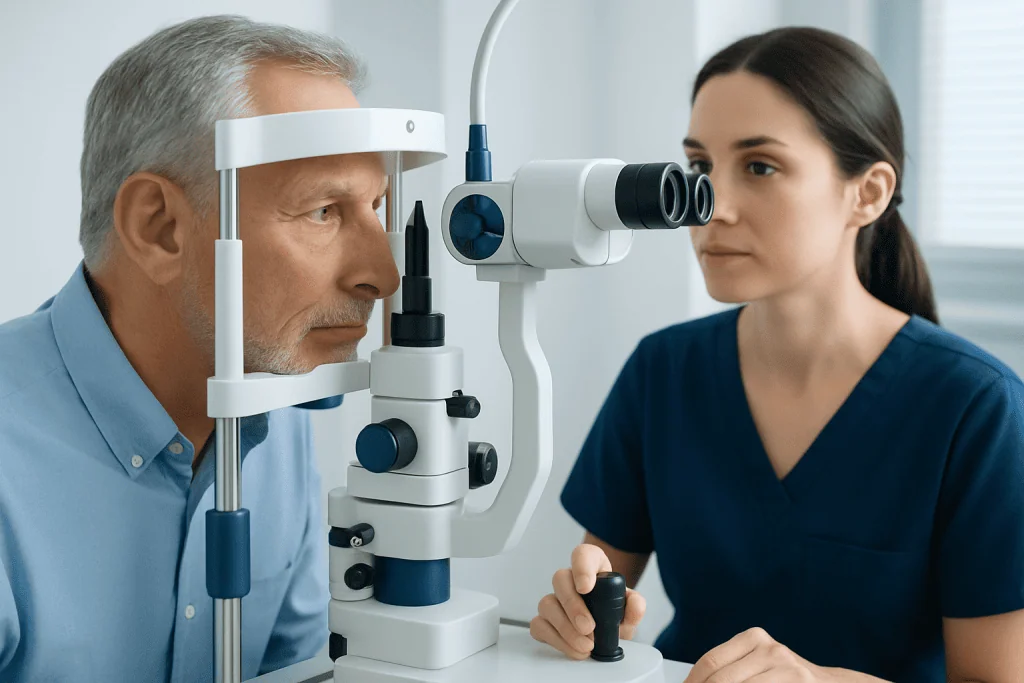
There is no single universal cataract grading scale used in every clinic. Most cataract grading systems assess the lens at a slit-lamp examination after the pupils are dilated. The examiner identifies the cataract type and estimates its severity, often using photographs or standard reference images for comparison.
The commonly discussed cataract grading scale 1 5 describes increasing severity, from minimal lens changes at grade 1 to very dense opacity at grade 5. However, the exact meaning of each number can differ by clinic and system. For this reason, a person should ask their ophthalmologist what the recorded grade means in their particular examination rather than comparing it directly with an online chart.
Clinicians may grade three main patterns: nuclear sclerosis, clouding in the lens center that can make vision appear yellowed or dim; cortical cataract, spoke-like changes beginning around the lens edge; and posterior subcapsular cataract, clouding near the back surface of the lens that can particularly affect bright-light and near vision. A cataract may have more than one pattern.
In discussions of cataract grading systems, a review of past and present methods commonly includes the Lens Opacities Classification System III (LOCS III), a widely recognized photographic comparison method. Digital imaging and computer-assisted approaches are also being studied and used in selected settings. Terms such as cataract grading EyeGuru may refer to educational resources, not necessarily to the exact system used in a person’s medical record.
How eye specialists assess cataracts and decide on care
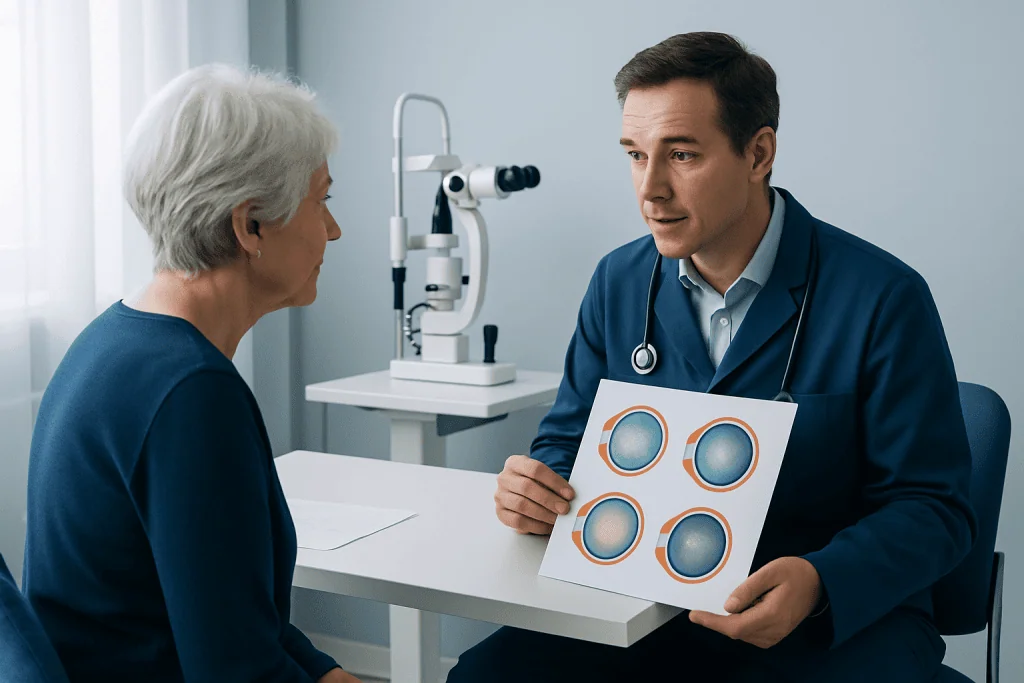
An eye assessment begins with questions about vision in real situations: reading, driving, work, recognizing faces, using screens, and coping with sunlight or headlights. The clinician measures visual acuity, checks refraction to see whether glasses improve vision, and examines the front and back of the eye. Dilating drops allow a more complete view of the lens and retina.
A slit-lamp microscope lets the ophthalmologist identify the location, density, and color of lens changes. Additional tests may be needed before surgery, including measurements of eye length and corneal curvature to help select an intraocular lens. Retinal imaging or optical coherence tomography may be appropriate when another eye condition could contribute to reduced vision.
Vision changes should not automatically be attributed to cataracts. Dry eye, glaucoma, diabetic eye disease, macular degeneration, and other conditions can affect sight and may change the likely benefit of surgery. This is why a comprehensive eye examination is valuable, particularly if symptoms are sudden, affect one eye markedly, or include pain or flashes.
For people with mild symptoms, updated glasses, brighter task lighting, anti-glare measures, and regular review may be enough for a time. Cataracts generally progress gradually, but the pace varies. No eye drop, vitamin, supplement, or exercise has been proven to reverse an established age-related cataract.
Does grade 2 cataract need surgery?
A grade 2 cataract does not necessarily need surgery. The number describes the examiner’s assessment of lens clouding, while the need for treatment depends on whether vision problems are interfering with a person’s comfort, independence, safety, work, hobbies, or quality of life.
Surgery may be considered when cataract-related blur, glare, double vision in one eye, or reduced contrast makes ordinary activities difficult despite suitable glasses or contact lenses. It may also be advised when a cataract prevents the specialist from monitoring or treating another important eye condition, such as retinal disease.
There is usually no need to wait until a cataract becomes “mature” or very dense before discussing surgery. On the other hand, if a person with a grade 2 cataract is functioning well and has no concerning examination findings, monitoring is a reasonable approach. The best timing is individualized through shared decision-making with an ophthalmologist.
People with diabetes, glaucoma, retinal disease, prior eye surgery, or use of medicines that affect the pupil may need additional planning. These factors do not always prevent surgery, but they can influence expected results, lens selection, and the follow-up plan.
Cataract surgery: how it works, candidacy, and treatment steps
Cataract surgery is the only established treatment that removes a cataract. In the most common technique, called phacoemulsification, the surgeon makes very small incisions, uses ultrasound energy to break up and remove the cloudy lens, and places a clear artificial intraocular lens in the lens capsule. The procedure is usually performed with local anesthesia and sedation when appropriate, and most people return home the same day.
Potential candidates are people whose cataract-related symptoms affect daily life or whose cataract is interfering with assessment or treatment of another eye disease. Before proceeding, the ophthalmologist discusses eye health, general health, medications, visual goals, and lens options. Different intraocular lenses can be selected to address distance vision and, in some cases, reduce dependence on glasses for specific activities; suitability varies between individuals.
On the day of surgery, the eye is prepared with antiseptic and anesthetic drops. The surgeon removes the cloudy lens through the small opening, inserts the chosen lens, and protects the eye afterward. The procedure itself is often short, but patients should allow time for preparation, recovery monitoring, and transport home. Detailed information about cataract surgery can help patients prepare for a consultation.
The main expected benefit is clearer vision once the eye has healed, although the final result also depends on the retina, optic nerve, cornea, and other parts of the eye. Possible risks include infection, inflammation, pressure changes, swelling in the retina, retinal detachment, lens-position problems, and residual refractive error. Serious complications are uncommon, but urgent symptoms after surgery should always be assessed promptly.
Recovery timeline and what is forbidden after cataract surgery?
Vision often begins to improve within several days after cataract surgery, though temporary blur, mild scratchiness, watering, light sensitivity, and visual fluctuations can occur early in recovery. Many people resume light everyday tasks within a short period, while the eye can take several weeks to stabilize fully. Follow-up appointments allow the ophthalmologist to check healing and adjust the plan if needed.
What is forbidden after cataract surgery? Instructions differ slightly by surgeon and eye condition, but patients are generally advised not to rub or press on the eye, get non-sterile water or soap directly into it, swim or use hot tubs until cleared, or expose the eye to dust, smoke, and dirty water. They should also avoid strenuous exercise, heavy lifting, bending that places pressure on the eye, and contact sports during the early healing period unless their surgeon says otherwise.
Prescribed eye drops should be used exactly as directed, and patients should not stop them early or use over-the-counter eye drops unless approved. A protective shield may be recommended while sleeping, and sunglasses can improve comfort outdoors. Driving should wait until vision meets local legal requirements and the person feels confident and has been cleared where appropriate.
Occasionally, a cloudy membrane can develop behind the implanted lens months or years later, causing symptoms similar to cataract recurrence. This is called posterior capsule opacification and can usually be treated with a brief laser procedure. It is not a new cataract growing back.
What is the new treatment for cataracts in 2026?
As of 2026, cataract surgery with removal of the cloudy lens and implantation of an intraocular lens remains the standard, evidence-based treatment for vision-limiting cataracts. There is currently no approved medication or eye drop that reliably dissolves or reverses an established cataract in routine clinical practice.
Research continues into medicines that might slow lens clouding, improved surgical technology, advanced imaging, and newer intraocular lens designs. Some technologies may improve measurement accuracy or expand options for correcting astigmatism and reducing glasses dependence in suitable patients. However, availability, evidence, cost, and appropriateness vary, and newer does not automatically mean better for every eye.
A careful preoperative assessment is more important than choosing a technology based on a label alone. People considering surgery can ask what option is recommended, why it fits their eye health and visual goals, what alternatives exist, and what level of glasses use may still be needed afterward.
Acibadem International’s multidisciplinary specialists and JCI-accredited hospitals diagnose and treat cataracts for international patients, with treatment planning based on individual eye findings and visual needs.
When to seek medical care
People should arrange a routine eye examination if they notice gradually worsening blur, increasing glare from lights, difficulty driving at night, colors appearing less vivid, or frequent changes in glasses. These symptoms can be caused by cataracts but also by other treatable eye conditions, so assessment is important.
Urgent medical evaluation is needed for sudden vision loss, severe eye pain, a very red eye, new flashes of light, a sudden increase in floaters, or a curtain-like shadow across vision. These symptoms are not typical of an uncomplicated cataract and may signal a problem requiring prompt care.
After cataract surgery, patients should contact their eye team urgently for worsening pain, rapidly reduced vision, increasing redness, nausea or vomiting with eye pain, marked swelling, or a new shower of floaters or flashes. Attending all planned follow-ups is an important part of recovery.
Frequently asked questions
Can a cataract grading scale predict exactly how well a person sees?
No. Cataract grade describes the appearance and extent of lens clouding, but vision is also affected by the cataract’s location, pupil size, lighting, glasses correction, and the health of the retina and optic nerve. Symptoms and functional difficulty are therefore central to treatment decisions.
Are cataract grading scales the same in all eye clinics?
No. Clinics may use different systems, reference photographs, or descriptive terms. A grade recorded in one system may not translate directly to the same number in another, so the ophthalmologist’s explanation of the individual result is most useful.
Can glasses stop a cataract from progressing?
Glasses cannot stop or remove a cataract, but a prescription update may improve vision temporarily when the cataract is mild. Cataract progression varies, and regular eye reviews help determine when glasses are no longer providing enough benefit.
Is cataract surgery performed only when the cataract is severe?
No. Surgery is generally considered when cataract-related vision changes interfere with daily life or when the cataract affects care for another eye condition. A person does not need to wait for the cataract to become very advanced if symptoms are already meaningful.
What should a person avoid after cataract surgery?
They should avoid rubbing the eye, swimming, dusty or dirty environments, strenuous exertion, and heavy lifting until their eye surgeon says these activities are safe. They should also use prescribed drops correctly and attend follow-up appointments.
Can cataracts come back after surgery?
The removed natural lens cannot grow back, so the original cataract does not return. Some people later develop clouding of the capsule behind the artificial lens, which can often be cleared with a short laser treatment.
References
- American Academy of Ophthalmology
- National Eye Institute
- Royal College of Ophthalmologists
- World Health Organization
This article is for general information only and is not a substitute for professional medical advice. Please consult a qualified doctor about your individual situation.
Explore treatments in Turkey — costs, top hospitals & a free quote
JCI-accredited · board-certified surgeons · reply within 24h
Add us as a Preferred Source to see more of our trusted health content across Google Search, AI Overviews and Discover.

More from the Health Library


Related Specialists

Dr. Edis Kahraman
Gynecology & Obstetrics
Prof. Dr. Korhan Özkan
Orthopedic Surgery & Traumatology
Gülsen Ersözlü
Physical Medicine & Rehabilitation
Dr. Veysel Doğan
Emergency Service