Brainstem Migraine Treatment: How It Works, Results and What to Expect

Migraine with brainstem aura is a migraine subtype with reversible neurological aura symptoms, such as vertigo, slurred speech or double vision, without motor weakness. Treatment begins with ruling out conditions that need urgent care, including stroke and other neurological disorders.
Key Takeaways
- Migraine with brainstem aura is a migraine subtype with reversible neurological aura symptoms, such as vertigo, slurred speech or double vision, without motor weakness.
- Treatment begins with ruling out conditions that need urgent care, including stroke and other neurological disorders.
- An individualized plan may include early acute treatment, anti-nausea treatment, preventive medicines and lifestyle measures.
- There is no single procedure that cures brainstem migraine; follow-up helps refine treatment based on symptom patterns and safety needs.
- Sudden first-time neurological symptoms, weakness, persistent symptoms or a severe new headache require urgent medical evaluation.
Brainstem migraine treatment is individualized and usually combines an attack plan, preventive care when episodes are frequent or disabling, and practical trigger management. Because its aura can resemble more serious neurological conditions, new or unusual symptoms should be assessed promptly by a qualified clinician.
Overview: How brainstem migraine treatment works
Brainstem migraine treatment aims to reduce the intensity and duration of attacks, prevent future episodes when they are frequent or disabling, and make sure symptoms are not caused by another neurological condition. The modern diagnostic term is migraine with brainstem aura. It is uncommon and can involve symptoms such as vertigo, ringing in the ears, imbalance, double vision, slurred speech, tingling on both sides of the body, or reduced alertness, followed by or occurring with migraine headache.
These symptoms are thought to reflect temporary changes in brain networks involved in migraine, rather than permanent injury to the brainstem. However, they can overlap with symptoms of stroke, seizure, inner-ear disorders and other illnesses. For this reason, the first episode, a major change in a familiar pattern, or symptoms that are sudden or persistent should be evaluated by a clinician.
Care is not usually a single procedure. It is a structured process: confirm the diagnosis, create a safe plan for attacks, identify whether prevention is needed, and review response over time. A headache diary is often useful because it records the timing, symptoms, possible triggers, treatments used and recovery after each episode.
What does a brain stem headache feel like?
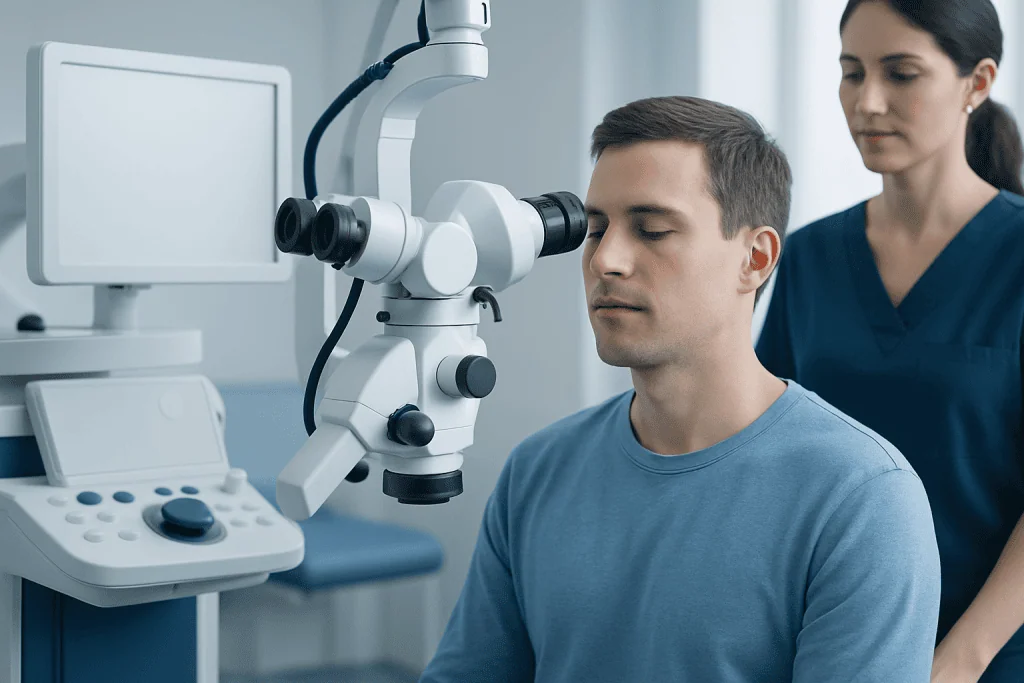
“Brain stem headache” is not a formal medical diagnosis, but people may use it to describe migraine with brainstem aura. The headache itself often has migraine features: throbbing or pulsating pain, sensitivity to light or sound, nausea, vomiting, and worsening with routine activity. Pain may occur on one side or both sides of the head, and not every attack includes a significant headache.
What distinguishes this migraine subtype is the aura. Symptoms can include a spinning sensation, unsteadiness, difficulty coordinating movements, ringing in both ears, muffled hearing, double vision, difficulty speaking clearly, or tingling affecting both sides. Aura symptoms generally develop gradually, are fully reversible, and commonly last from several minutes up to an hour, although the overall migraine episode can last much longer.
Weakness or paralysis on one side of the body is not typical of migraine with brainstem aura. New facial drooping, one-sided weakness, sudden confusion, fainting, severe imbalance, or trouble speaking must not be assumed to be migraine. Emergency assessment is important, particularly when symptoms are new, abrupt, different from prior episodes, or accompanied by a sudden severe headache.
What triggers migraine with brainstem aura?

Triggers vary considerably between individuals, and having a trigger does not mean that an attack will always follow. Commonly reported migraine triggers include missed meals, dehydration, disrupted sleep, emotional stress, recovery after stress, bright or flickering lights, strong odors, loud environments and changes in routine. Hormonal changes can also influence migraine patterns in some people.
Alcohol, excess caffeine, caffeine withdrawal and certain foods may be relevant for some individuals, but broad dietary restrictions are not routinely necessary. Rather than avoiding many foods pre-emptively, clinicians often recommend observing patterns over several weeks. A diary can help distinguish a true recurring trigger from a factor that happened to occur before an attack.
Some people notice that motion, visual stimulation or poor sleep is particularly important when dizziness and balance symptoms are prominent. Regular meals, consistent sleep and fluid intake, gradual exercise as tolerated, and planned stress-management strategies can lower overall migraine susceptibility. These measures support medical treatment but do not replace an assessment of new neurological symptoms.
Diagnosis and candidacy for treatment
A clinician diagnoses migraine with brainstem aura mainly from a detailed history of symptoms, their order and duration, previous migraine episodes, medical history, medication use and a neurological examination. The timing matters: migraine aura typically evolves over minutes and resolves, whereas symptoms from some vascular conditions may be sudden. Still, symptom patterns alone cannot safely exclude every alternative diagnosis.
Brain imaging, often MRI, may be recommended for a first episode, atypical symptoms, an abnormal examination, a change in established headaches, or features that raise concern for another cause. Additional testing may include blood tests, assessment of the heart or blood vessels, or an electroencephalogram when seizures are considered. The purpose is to guide safe care, not to confirm migraine in every person.
Candidacy for a particular treatment depends on attack frequency, severity, associated nausea or vomiting, medical conditions, pregnancy plans, cardiovascular risk factors and other medicines. A neurologist or headache specialist can decide whether acute treatment alone is appropriate or whether preventive treatment should be considered. This evaluation is especially important because some medicines may not suit every patient.
Do migraines show up on brain MRI?
Most migraines do not produce a specific finding on a brain MRI. MRI is therefore not used as a routine test to “prove” that someone has migraine. It is most valuable when clinicians need to exclude other possible explanations for symptoms, such as a structural brain condition, inflammation, bleeding, or changes involving blood vessels.
Some people with long-standing migraine have small white-matter changes reported on MRI. These findings are often nonspecific and do not necessarily explain symptoms or indicate damage from an individual migraine attack. Their meaning depends on a person’s age, health history and the pattern seen on imaging, so results should be discussed with the clinician who ordered the scan.
Imaging can be normal even during disabling migraine symptoms. A normal MRI is reassuring in the appropriate clinical setting, but it does not replace ongoing review if symptoms change. A new sudden headache or new focal neurological symptoms may need urgent evaluation regardless of previous normal imaging.
How to treat brainstem migraine?
Treatment is usually planned in two parts: care during an attack and prevention between attacks. During an episode, early treatment may include a clinician-recommended pain-relieving medicine, anti-inflammatory medicine or anti-nausea medicine, along with rest in a quiet, dark environment and hydration if tolerated. If vomiting prevents oral medication, a doctor may discuss alternative formulations or routes of treatment.
Some migraine-specific acute medicines may be considered on an individual basis, but their suitability in migraine with brainstem aura should be assessed carefully by a clinician. Certain medicines have historically been avoided in this subtype because of theoretical safety concerns, while evolving evidence has led specialists to make decisions case by case. People should not start, stop or borrow migraine medication without medical advice.
Preventive treatment may be appropriate when attacks are recurrent, prolonged, very disabling, difficult to control with acute care, or leading to frequent use of rescue medicines. Options may include medicines also used for blood pressure, seizures or mood disorders, as well as migraine-specific preventive therapies in suitable patients. The best choice is based on individual health needs, possible side effects and treatment goals.
Follow-up is an important part of brainstem migraine treatment. The clinician reviews attack frequency, aura pattern, medication use and daily impact, then adjusts the plan. Frequent reliance on acute pain medicines can contribute to medication-overuse headache, so patients should ask their healthcare professional how often their chosen rescue treatment can be used safely.
What to expect: treatment steps, recovery, benefits and risks
The first visit commonly involves a detailed account of attacks and an examination, followed by tests if needed to exclude urgent or alternative causes. Once migraine with brainstem aura is considered likely, the clinician and patient develop a written attack plan. This may state which symptoms require emergency care, when to take prescribed treatment, how to manage nausea, and when to contact the clinical team.
Recovery from an individual attack is variable. Aura symptoms often resolve within an hour, while headache, nausea, fatigue and concentration difficulties may continue for hours or occasionally longer. A “postdrome” phase can leave a person tired or mentally slowed for a day or two. Rest, regular fluids, gentle return to normal routines and avoiding additional known triggers can be helpful while recovery occurs.
The potential benefit of treatment is fewer or less disabling episodes and greater confidence in responding to attacks. No approach can guarantee complete prevention. Risks depend on the treatment selected and can include medication side effects, interactions or rebound headaches from excessive acute medication use. A clinician should review other health conditions and medicines before a new therapy is started.
For patients seeking coordinated neurological assessment, Acibadem International’s multidisciplinary specialists and JCI-accredited hospitals evaluate and treat migraine-related conditions for international patients. Care should always be tailored after a medical assessment, particularly when aura symptoms are new or complex.
When to seek medical care
Urgent medical assessment is needed for a first-ever episode of symptoms resembling brainstem aura, a sudden “worst-ever” headache, symptoms that begin abruptly rather than gradually, or a headache following head injury. Emergency care is also important for one-sided weakness, facial droop, persistent speech difficulty, loss of consciousness, severe confusion, persistent double vision, new seizure, fever with a stiff neck, or symptoms that do not resolve as expected.
People with an established diagnosis should arrange a non-urgent review if attacks become more frequent, longer, more severe, different in character, or less responsive to the agreed treatment plan. Review is also advisable before pregnancy, when starting a new medicine, or when acute medicines are needed often. Keeping a symptom and medication diary can make these discussions more productive.
It is reasonable to seek medical advice even when symptoms have settled, especially after a first event. A careful diagnosis provides reassurance where appropriate and helps create a plan that balances symptom control with medication safety.
Frequently asked questions
Is migraine with brainstem aura the same as a stroke?
No. Migraine with brainstem aura causes reversible neurological symptoms related to migraine, while stroke is caused by interrupted blood flow or bleeding in the brain. However, the symptoms can overlap, so a first episode, sudden symptoms or a change in pattern needs urgent medical assessment.
Can brainstem migraine occur without headache?
Yes. Some people experience aura symptoms with little or no head pain, sometimes called acephalgic migraine. Because dizziness, speech changes and visual symptoms have other possible causes, a clinician should assess new episodes.
How long does a brainstem migraine attack last?
Aura symptoms commonly develop over minutes and generally resolve within an hour, although individual experiences vary. Headache and associated symptoms such as nausea, light sensitivity and fatigue can continue for hours or occasionally longer.
Are triptans safe for brainstem migraine?
The decision is individualized. Triptans have historically been avoided in migraine with brainstem aura because of theoretical concerns, and a headache specialist should determine whether they are appropriate based on the person’s diagnosis and medical history. Patients should not use a triptan unless it has been specifically recommended for them.
Can lifestyle changes prevent migraine with brainstem aura?
Regular sleep, meals, hydration, physical activity as tolerated and stress-management practices may reduce migraine susceptibility for some people. A diary can help identify personal patterns, but lifestyle changes may need to be combined with medical treatment when attacks are frequent or disabling.
When is preventive treatment considered?
Preventive treatment may be discussed when attacks are frequent, prolonged, disabling, difficult to treat early, or causing substantial disruption to daily life. The choice depends on symptoms, other medical conditions, current medicines and personal preferences, and it should be reviewed over time.
References
- International Headache Society
- American Migraine Foundation
- National Institute of Neurological Disorders and Stroke
- American Academy of Neurology
This article is for general information only and is not a substitute for professional medical advice. Please consult a qualified doctor about your individual situation.
Migraine in Turkey — costs, top hospitals & a free quote
JCI-accredited · board-certified surgeons · reply within 24h
Add us as a Preferred Source to see more of our trusted health content across Google Search, AI Overviews and Discover.