Breast Carcinoma: Types, Symptoms, and Treatment

Breast carcinoma most commonly starts in the milk ducts or lobules of the breast. A new lump, skin changes, nipple changes, or unusual discharge should be medically assessed.
Key Takeaways
- Breast carcinoma most commonly starts in the milk ducts or lobules of the breast.
- A new lump, skin changes, nipple changes, or unusual discharge should be medically assessed.
- Diagnosis usually combines examination, breast imaging, and a biopsy to confirm the type and stage.
- Treatment may include surgery, radiation therapy, chemotherapy, hormone therapy, targeted therapy, or immunotherapy.
- Not all breast carcinomas are the same; treatment depends on tumor biology as well as stage.
- Regular screening and awareness of breast changes can support earlier detection.
Breast carcinoma is a cancer that begins in the cells of the breast, most often in the ducts or lobules. With modern screening, imaging, pathology, surgery, and drug therapies, many people can be diagnosed earlier and treated with a personalized plan.
Overview of Breast Carcinoma
Breast carcinoma is a type of cancer that develops when cells in the breast grow in an uncontrolled way. It most often begins in the ducts, which carry milk to the nipple, or in the lobules, which produce milk. Although it is commonly discussed in women, breast carcinoma can also occur in men.
Doctors usually describe breast carcinoma by where it starts, whether it has invaded surrounding tissue, and certain biological features seen on laboratory testing. These details matter because they help guide treatment decisions and give a clearer picture of how the cancer may behave.
Some breast carcinomas are found during routine screening before any symptoms appear, while others are discovered after a person notices a lump or a change in the breast. Earlier detection can make treatment more straightforward in many cases, which is why screening and prompt medical evaluation of new breast changes are important.
Types of Breast Carcinoma
Breast carcinoma is not a single disease. The most common forms are ductal carcinoma and lobular carcinoma. Each may be either in situ, meaning it remains confined to where it started, or invasive, meaning it has spread into nearby breast tissue.
Ductal carcinoma in situ, often called DCIS, begins in the milk ducts and has not invaded surrounding tissue. Invasive ductal carcinoma is the most common invasive type. Lobular carcinoma starts in the milk-producing lobules; invasive lobular carcinoma may be more difficult to detect on examination or imaging because it can grow in a less distinct pattern.
There are also less common subtypes, including inflammatory breast cancer, Paget disease of the nipple, and certain rare microscopic patterns. In addition to the subtype, pathology reports often include receptor status, such as estrogen receptor, progesterone receptor, and HER2 status. These features help determine whether therapies such as breast cancer surgery, hormone therapy, targeted treatment, or other approaches may be appropriate.
- Non-invasive: confined to ducts or lobules
- Invasive: spread into surrounding breast tissue
- Hormone receptor-positive: may respond to hormone-blocking treatment
- HER2-positive: may respond to HER2-targeted therapy
- Triple-negative: lacks estrogen, progesterone, and HER2 receptors
Symptoms and Warning Signs

Breast carcinoma may cause no symptoms at first, especially when it is found by screening. When symptoms do occur, the most common sign is a new lump or thickened area in the breast or underarm. Not every lump is cancer, but any new or persistent change should be checked by a doctor.
Other possible signs include a change in breast size or shape, dimpling of the skin, redness, swelling, or skin that looks thicker or resembles an orange peel. Some people notice nipple changes such as inversion, crusting, scaling, or discharge that is not related to breastfeeding, especially if it is bloody or comes from one side only.
Pain is not the most typical early symptom of breast carcinoma, but it can occur. It is also important to remember that many noncancerous breast conditions can cause discomfort or lumps. A medical assessment helps distinguish among benign changes, breast cysts, and cancers so that the next steps are clear.
Causes and Risk Factors
Breast carcinoma develops because of changes in the DNA of breast cells that allow them to grow and divide abnormally. In most people, there is no single clear cause. Instead, risk reflects a combination of age, hormonal influences, family history, genetic factors, and lifestyle-related factors.
Risk generally increases with age. A personal history of certain breast conditions or previous breast cancer can raise risk, as can having close relatives with breast or ovarian cancer. Inherited gene changes such as BRCA1 or BRCA2 are important in some families, though most breast cancers are not caused by inherited mutations.
Other factors associated with risk can include early menstruation, later menopause, dense breast tissue, prior chest radiation, alcohol use, obesity after menopause, and lower physical activity. Having risk factors does not mean a person will definitely develop breast carcinoma, and some people diagnosed with breast cancer have no obvious risk factors at all.
How Breast Carcinoma Is Diagnosed
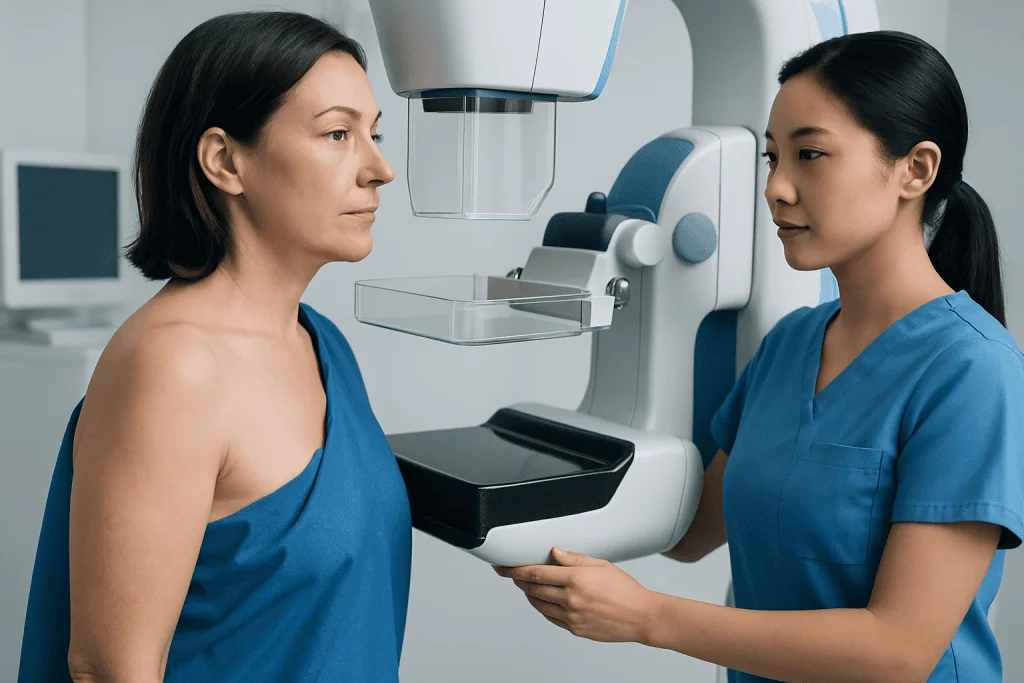
Diagnosis usually begins with a medical history and breast examination. If there is a new symptom or an abnormal screening result, doctors typically arrange imaging tests. Depending on age, breast density, and the clinical situation, these tests may include mammography, ultrasound, and sometimes breast MRI.
If imaging shows an area of concern, a biopsy is needed to confirm whether cancer is present. During a biopsy, a sample of tissue is taken and examined by a pathologist. This is the only way to establish the diagnosis and identify the exact type of carcinoma.
Pathology testing also helps determine grade and receptor status, including hormone receptors and HER2. Additional scans or blood tests may be used in selected cases to understand whether the cancer is localized or has spread. This process is called staging, and it helps the care team choose the most suitable treatment plan, which may involve mammography for screening or follow-up and, when appropriate, further evaluation such as breast MRI.
Treatment Options
Treatment for breast carcinoma is personalized. It depends on the type of cancer, tumor size, receptor status, stage, overall health, and patient preferences. The main treatments include surgery, radiation therapy, chemotherapy, hormone therapy, targeted therapy, and immunotherapy. Many people receive a combination of these treatments.
Surgery may involve removing the tumor while preserving most of the breast, or removing the entire breast in selected cases. Lymph nodes under the arm may also be assessed to see whether cancer cells have spread. After breast-conserving surgery, radiation therapy is often used to reduce the risk of cancer returning in the breast.
Drug treatment may be given before surgery to shrink the tumor, or after surgery to lower the chance of recurrence. Hormone therapy is commonly used for hormone receptor-positive cancers. HER2-targeted treatments are used for HER2-positive disease. Chemotherapy may be recommended for higher-risk cancers or specific subtypes such as some triple-negative tumors. In advanced disease, treatment often focuses on controlling the cancer, relieving symptoms, and maintaining quality of life. Related care may also include attention to breast cancer survivorship, side-effect management, and emotional support.
Prevention, Screening, and Self-care
There is no guaranteed way to prevent breast carcinoma, but some steps may help lower risk and support early detection. Maintaining a healthy weight, being physically active, limiting alcohol, and discussing hormone use with a doctor are common lifestyle measures that may be beneficial. People with a strong family history may benefit from genetic counseling and a more individualized screening plan.
Screening aims to find breast cancer before symptoms appear. Mammography remains the main screening test in many guidelines, but the recommended starting age and interval can vary by country and individual risk. A doctor can help decide what screening schedule is appropriate based on age, family history, breast density, and other factors.
Self-care also includes becoming familiar with how the breasts normally look and feel, so that new changes are noticed promptly. This is different from relying on self-exams alone. A balanced approach is to be breast aware, attend regular screening appointments, and seek medical advice if any new lump, nipple change, persistent skin change, or asymmetry appears.
When to See a Doctor
A doctor should be consulted if there is a new breast lump, thickening, nipple discharge, skin dimpling, persistent redness, or a change in the shape of the breast. These changes are often caused by conditions other than cancer, but they still deserve evaluation. It is also sensible to seek medical advice if breast pain is persistent and localized or if a previously normal screening test is followed by new symptoms.
People at higher risk, such as those with a strong family history or known inherited cancer-related mutations, should talk with a healthcare professional about screening and prevention strategies. Prompt assessment can reduce uncertainty and help identify whether the cause is benign or needs treatment.
Near the end of the care pathway, coordinated follow-up remains important. Multidisciplinary specialists at Acibadem International, in JCI-accredited hospitals, diagnose and treat breast carcinoma for international patients, with care plans tailored to each person’s condition and needs.
Frequently asked questions
Is breast carcinoma the same as breast cancer?
Breast carcinoma is the most common form of breast cancer and refers to cancer that starts in the lining cells of the ducts or lobules. In everyday use, people often use the terms interchangeably, though doctors may use more specific names based on the exact subtype.
Can breast carcinoma occur without a lump?
Yes. Some breast carcinomas are found on screening mammograms before a lump can be felt. Others may cause skin changes, nipple changes, or no noticeable symptoms at all in the early stages.
Does breast pain mean breast carcinoma?
Not usually. Breast pain is common and is more often related to hormonal changes or benign breast conditions. Still, persistent or localized pain should be discussed with a doctor, especially if there are other breast changes.
How is breast carcinoma confirmed?
It is confirmed with a biopsy, which allows a pathologist to examine breast tissue under a microscope. Imaging tests such as mammography, ultrasound, or MRI can show suspicious areas, but they do not replace a biopsy for diagnosis.
What is the difference between invasive and non-invasive breast carcinoma?
Non-invasive carcinoma remains confined to the ducts or lobules where it began. Invasive carcinoma has grown into surrounding breast tissue and may have a greater chance of spreading to lymph nodes or other parts of the body.
Can breast carcinoma be treated successfully?
Many people with breast carcinoma are treated effectively, especially when it is found early. Outcomes depend on several factors, including stage, subtype, receptor status, and how the cancer responds to treatment.
References
- World Health Organization
- National Cancer Institute
- American Cancer Society
- Centers for Disease Control and Prevention
- European Society for Medical Oncology
This article is for general information only and is not a substitute for professional medical advice. Please consult a qualified doctor about your individual situation.
Oncology care in Turkey — second opinion and treatment plan
JCI-accredited · board-certified surgeons · reply within 24h
Add us as a Preferred Source to see more of our trusted health content across Google Search, AI Overviews and Discover.