Breast Lump Evaluation: When to See a Doctor

Any new, persistent, or changing breast lump should be assessed by a qualified doctor. Breast lump evaluation often includes a clinical exam, imaging such as ultrasound or mammography, and sometimes a biopsy.
Key Takeaways
- Any new, persistent, or changing breast lump should be assessed by a qualified doctor.
- Breast lump evaluation often includes a clinical exam, imaging such as ultrasound or mammography, and sometimes a biopsy.
- Painful lumps are not always serious, and painless lumps are not always harmless, so symptoms alone cannot confirm the cause.
- Breast changes in pregnancy, breastfeeding, menopause, or men also deserve medical attention when they are new or persistent.
- Early evaluation supports accurate diagnosis, appropriate treatment, and peace of mind.
Finding a breast lump can be unsettling, but many breast changes are benign and treatable. A timely medical evaluation helps identify the cause, provide reassurance, and guide the right next steps.
Overview
A breast lump is an area of thickening, swelling, firmness, or a distinct mass felt in the breast or underarm. It may be discovered during bathing, dressing, breastfeeding, a routine self-check, or a clinical examination. Although the word lump often causes worry, many breast lumps are related to benign conditions such as cysts, fibroadenomas, hormonal changes, infection, or normal tissue variation.
Breast Lump Evaluation is the process doctors use to understand what a lump is and whether it needs treatment. This usually begins with a medical history and breast examination, followed by imaging tests when appropriate. In some cases, a small tissue sample, called a biopsy, is needed to confirm the diagnosis.
The goal is not only to rule out cancer but also to identify benign conditions that may require care, monitoring, or symptom relief. Prompt evaluation is especially important when a lump is new, persists after a menstrual cycle, grows, feels fixed, or is accompanied by skin or nipple changes.
Breast Lump Symptoms and Warning Signs
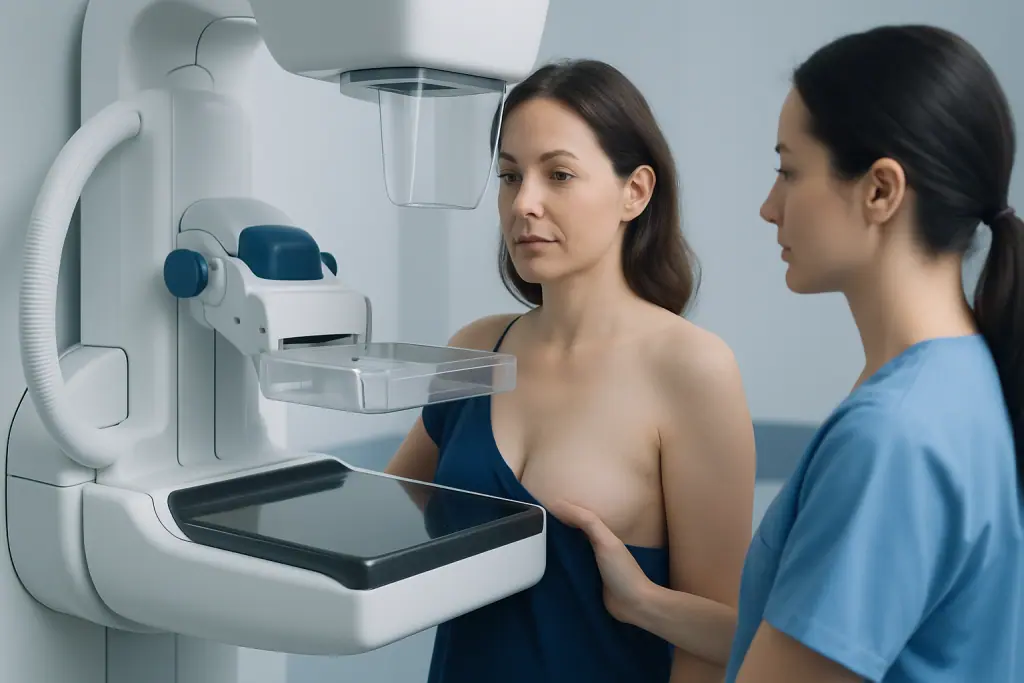
Breast lumps can feel very different from one person to another. Some are round and movable, some are tender, and others feel firm or irregular. A lump may appear suddenly, change with the menstrual cycle, or remain unchanged for weeks. The breast may also feel generally lumpy, especially in people with dense or fibrocystic breast tissue.
Symptoms that should be discussed with a doctor include a new lump in the breast or armpit, a lump that does not go away after menstruation, breast swelling in one area, nipple discharge, nipple inversion that is new, redness, warmth, dimpling, thickened skin, or a change in breast shape. Pain can occur with benign conditions such as cysts or infection, but pain alone does not identify the cause.
Some changes need more urgent attention, particularly if there is rapidly increasing redness, fever, severe tenderness, or drainage from the breast, as these may suggest infection or an abscess. A firm, painless, or fixed lump should also be evaluated promptly, even if there are no other symptoms.
Common Causes and Risk Factors
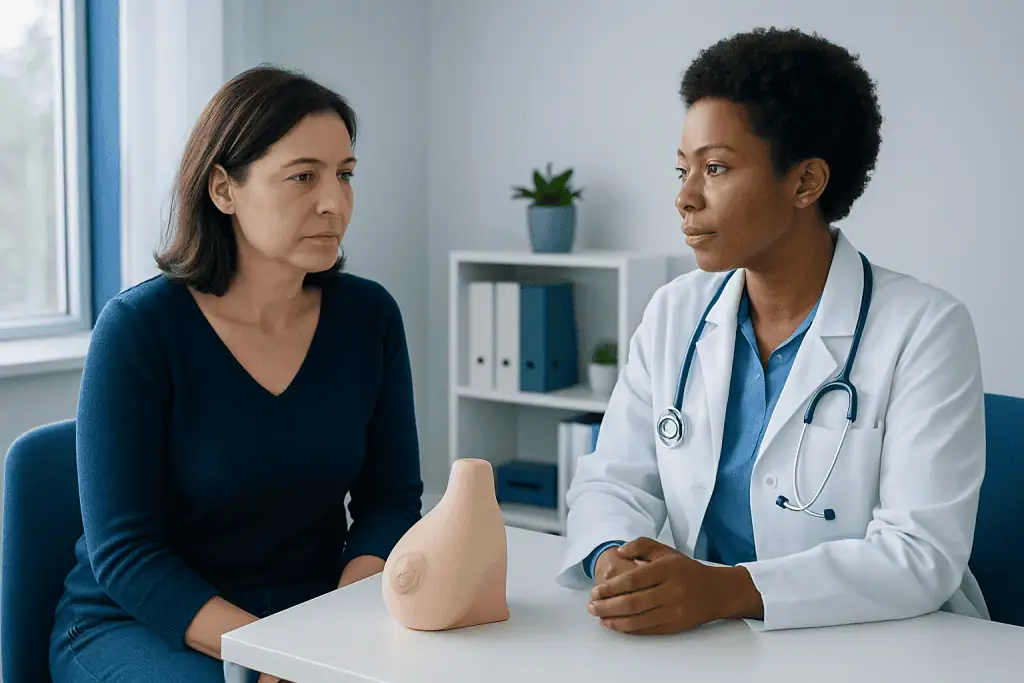
Many breast lumps are benign. Fluid-filled cysts can develop due to hormonal changes and may feel smooth or tender. Fibroadenomas are non-cancerous solid lumps that are often movable and commonly occur in younger women. Fibrocystic changes can cause generalized lumpiness, tenderness, and swelling that may vary during the menstrual cycle.
Other causes include mastitis, which is inflammation or infection of breast tissue, often during breastfeeding; fat necrosis, which may follow an injury or surgery; and benign growths in milk ducts. In men, breast tissue enlargement, called gynecomastia, can feel like a lump beneath the nipple, but men can also develop other breast conditions and should not ignore a new lump.
Risk factors that may influence a doctor’s level of concern include older age, a personal or family history of breast or ovarian cancer, known inherited genetic mutations, prior chest radiation, certain high-risk breast lesions, and changes found on previous breast imaging. However, a person without risk factors can still develop breast cancer, and a person with risk factors may have a benign lump. This is why proper evaluation is important for everyone.
How Doctors Evaluate a Breast Lump
A doctor begins by asking when the lump was first noticed, whether it changes with the menstrual cycle, whether there is pain, nipple discharge, skin change, recent injury, pregnancy, breastfeeding, medication use, and personal or family health history. The clinical breast examination checks both breasts, the nipples, the skin, and the lymph node areas under the arms and near the collarbone.
Imaging is often the next step. Breast ultrasound is commonly used to tell whether a lump is fluid-filled or solid and is especially useful in younger patients, pregnant or breastfeeding patients, and people with dense breast tissue. Mammography may be recommended depending on age, symptoms, and risk factors, and diagnostic mammography focuses on the area of concern more closely than routine screening.
In selected cases, additional imaging such as breast MRI may be used, particularly for people at higher risk or when other tests need clarification. Doctors often follow a structured approach sometimes called triple assessment: clinical examination, imaging, and tissue sampling when needed. This helps reduce uncertainty and supports accurate decision-making.
Biopsy and Diagnosis
A biopsy may be recommended when imaging or examination shows a suspicious, unclear, or solid lump that needs confirmation. A biopsy does not mean the lump is cancer; it means the doctor needs a tissue diagnosis. The most common method is a core needle biopsy, where a small sample is removed using imaging guidance such as ultrasound or mammography.
Other techniques include fine needle aspiration, often used for some cysts, or vacuum-assisted biopsy for certain imaging findings. The tissue is examined by a pathologist, who identifies whether the lump is benign, high-risk, or malignant. Results help determine whether monitoring, medication, drainage, surgery, or cancer treatment is needed.
After a biopsy, mild bruising or tenderness can occur, and the care team will provide instructions for aftercare and follow-up. Patients should ask when results will be available, who will explain them, and what the next step will be. Clear communication is an important part of safe breast lump evaluation.
Treatment Options
Treatment depends entirely on the cause of the lump. Simple cysts may require no treatment if they are not painful, while a symptomatic cyst may be drained. Fibroadenomas may be monitored with follow-up exams and imaging, or removed if they grow, cause discomfort, or have features that require further evaluation. Fibrocystic breast discomfort may improve with supportive bras, symptom tracking, and individualized advice from a clinician.
Infections such as mastitis may require antibiotics and continued support for breastfeeding when appropriate. If an abscess forms, drainage may be needed. Lumps related to injury, inflammation, or hormonal changes may improve over time but should still be followed if they persist or change.
If cancer is diagnosed, treatment is planned according to the cancer type, stage, hormone receptor status, overall health, and patient preferences. Options may include surgery, radiation therapy, chemotherapy, hormone therapy, targeted therapy, or a combination. A multidisciplinary team helps coordinate care so that diagnosis, treatment, and recovery are approached in a structured way.
Prevention, Self-Care, and Breast Awareness
Not all breast lumps can be prevented, but breast awareness helps people notice changes earlier. Breast awareness means knowing what is normal for one’s own breasts, including texture, cyclical tenderness, size differences, and nipple appearance. This does not need to be a stressful routine; it can be part of normal bathing or dressing.
Healthy lifestyle habits support overall health and may help reduce some cancer risks. These include staying physically active, maintaining a healthy weight when possible, limiting alcohol, avoiding smoking, and discussing hormone therapy risks and benefits with a doctor. People with a strong family history may benefit from genetic counseling or a personalized screening plan.
Routine screening mammography should follow national guidelines and an individual doctor’s advice, which may vary based on age, breast density, and risk factors. Self-care should not replace medical evaluation. If a new lump is felt, waiting for it to disappear is not advised unless a doctor has recommended a specific short follow-up plan.
When to See a Doctor
A doctor should evaluate any new breast lump, especially if it lasts more than a few weeks, remains after a menstrual period, grows, feels hard or fixed, or is associated with nipple discharge, skin dimpling, redness, swelling, or a new nipple change. People who are pregnant, breastfeeding, postmenopausal, or male should also seek care for a new or persistent lump.
Same-day or urgent assessment is appropriate if there are signs of infection such as fever, spreading redness, severe pain, warmth, or pus-like drainage. People with a past history of breast cancer or a known high-risk genetic mutation should contact their doctor promptly for any new breast or underarm finding.
Patients should bring previous mammograms, ultrasound reports, biopsy results, and a list of medications if available. At Acibadem International, multidisciplinary specialists in JCI-accredited hospitals evaluate and treat breast conditions for international patients, using coordinated diagnostic and treatment pathways. Regardless of where care is received, timely assessment by a qualified healthcare professional is the safest next step.
Frequently asked questions
Is every breast lump cancer?
No. Many breast lumps are benign, including cysts, fibroadenomas, infections, and hormone-related changes. However, it is not possible to know the cause reliably by touch alone, so a new or persistent lump should be evaluated by a doctor.
How quickly should a breast lump be checked?
A new lump should be discussed with a healthcare professional promptly, especially if it persists, grows, or is accompanied by skin or nipple changes. Urgent care is recommended if there is fever, spreading redness, severe pain, or drainage that may suggest infection.
Can a painful breast lump still be serious?
Yes, although painful lumps are often caused by benign conditions such as cysts, inflammation, or infection. Pain does not rule out cancer, and a painless lump is not always harmless. Medical evaluation is the best way to identify the cause.
What tests are used for breast lump diagnosis?
Doctors usually begin with a medical history and clinical breast examination. Imaging such as breast ultrasound or diagnostic mammography may follow, depending on age, symptoms, pregnancy status, and risk factors. If the findings are unclear or suspicious, a biopsy may be recommended.
Does needing a breast biopsy mean cancer is likely?
Not necessarily. A biopsy is a diagnostic test used to confirm what a lump is when examination or imaging cannot provide enough certainty. Many biopsies show benign results, but the tissue diagnosis helps guide safe follow-up or treatment.
Should men see a doctor for a breast lump?
Yes. Men can develop benign breast enlargement, cysts, infections, and, rarely, breast cancer. Any new, firm, painful, enlarging, or persistent lump in a man’s breast or underarm should be assessed by a doctor.
Can breast lumps appear during pregnancy or breastfeeding?
Yes. Pregnancy and breastfeeding can cause breast fullness, blocked ducts, cysts, mastitis, or abscesses. Most causes are manageable, but a lump that persists, enlarges, or is associated with fever, redness, or skin changes should be evaluated promptly.
References
- World Health Organization
- American Cancer Society
- National Cancer Institute
- American College of Radiology
- Mayo Clinic
This article is for general information only and is not a substitute for professional medical advice. Please consult a qualified doctor about your individual situation.
Explore treatments in Turkey — costs, top hospitals & a free quote
JCI-accredited · board-certified surgeons · reply within 24h
Add us as a Preferred Source to see more of our trusted health content across Google Search, AI Overviews and Discover.