Breast Pump: A Complete Clinical Guide for Patients

A breast pump can support breastfeeding, protect milk supply, and help families feed expressed milk safely. Choosing between manual, electric, and hospital-grade pumps depends on how often pumping is needed and the parent’s medical situation.
Key Takeaways
- A breast pump can support breastfeeding, protect milk supply, and help families feed expressed milk safely.
- Choosing between manual, electric, and hospital-grade pumps depends on how often pumping is needed and the parent’s medical situation.
- Correct flange fit and comfortable suction are important for effective milk removal and to reduce nipple pain.
- Safe milk handling and careful pump cleaning help lower the risk of contamination for the baby.
- Persistent pain, low milk output, breast redness, fever, or a baby with poor weight gain should be discussed with a healthcare professional.
A breast pump is a device that removes milk from the breast when direct breastfeeding is not possible, not preferred, or needs support. The right breast pump, correct fit, and safe cleaning can improve comfort, milk removal, and confidence during feeding.
Overview: what a breast pump does and who may need one
A breast pump is a device used to remove milk from the breasts and collect it for immediate feeding or storage. It can be helpful for parents returning to work, babies who have difficulty latching, premature or hospitalized infants, or anyone who needs to relieve breast fullness while maintaining milk production. Some parents use a breast pump occasionally, while others rely on it daily.
Breast pumps do not need to be painful to work well. In most cases, effective pumping depends more on the right equipment, a good flange fit, and a regular routine than on using the strongest suction. A comfortable setup usually supports better milk flow and a more sustainable experience over time.
Pumping may be used alongside direct breastfeeding or as the main method of milk expression. For some families, it offers flexibility and helps other caregivers participate in feeding. For others, it is part of a medical plan when breastfeeding challenges such as nipple pain, breast engorgement, or infant feeding difficulties need extra support.
Types of breast pump and how to choose
Breast pumps are commonly divided into manual, personal electric, wearable, and hospital-grade models. Manual pumps are hand-operated and often suited to occasional use. Personal electric pumps, including single and double pumps, are a common choice for regular pumping. Wearable pumps can offer convenience, but comfort, fit, and milk removal may vary by user. Hospital-grade pumps are designed for frequent use and are often recommended when establishing milk supply is especially important.
The best breast pump depends on individual needs rather than one device being ideal for everyone. Important factors include how often pumping will happen, whether pumping will replace missed feeds, whether milk supply needs to be built up, how portable the device must be, and whether one or both breasts will be pumped at the same time. Double pumping may save time and can improve efficiency for some users.
Medical circumstances also matter. After a premature birth, infant hospitalization, breast surgery, or feeding difficulties, a clinician or lactation consultant may recommend a stronger or hospital-grade device. Families dealing with related feeding concerns may also benefit from evaluation for conditions such as breast conditions when symptoms are unusual, persistent, or not clearly related to lactation.
- Manual pump: best for occasional pumping or relief of fullness
- Personal electric pump: often suitable for regular home or work use
- Wearable pump: convenient for mobility, but fit and output can differ
- Hospital-grade pump: commonly used when milk supply needs extra support
How to use a breast pump effectively
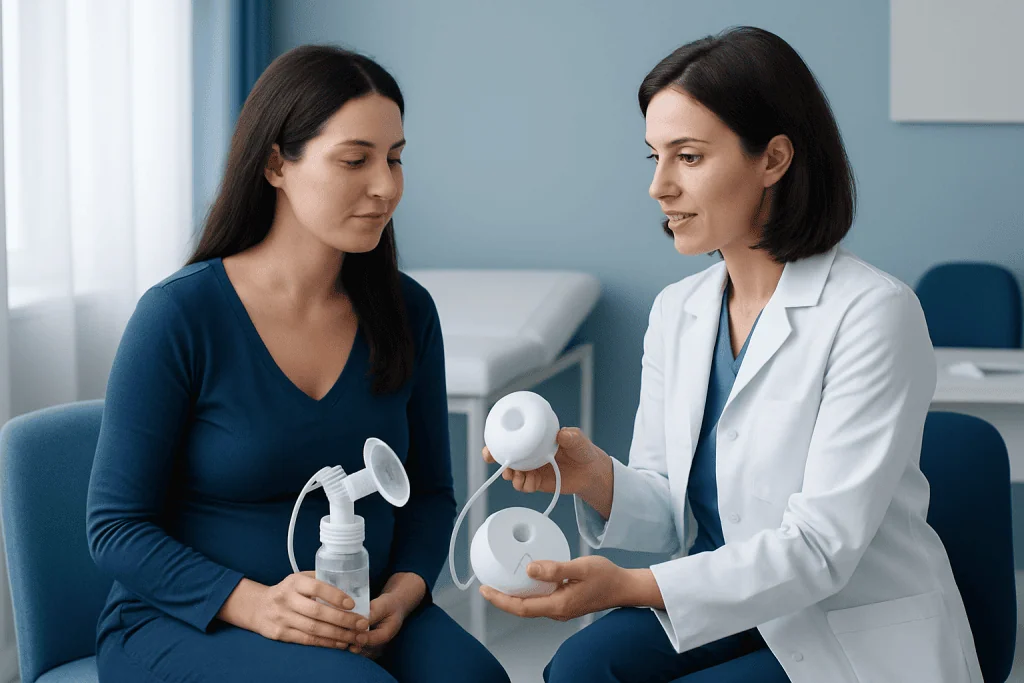
Before pumping, hands should be washed and the pump checked to make sure all clean parts are assembled correctly. Many pumps have a stimulation or let-down phase followed by an expression phase. Starting with low suction and increasing only to a comfortable level is usually more effective than using the highest setting. Pain is a sign that the setup or suction may need adjustment.
Flange fit is one of the most important parts of successful pumping. The nipple should move freely in the tunnel without excessive rubbing, while too much areolar tissue should not be pulled in. A flange that is too small or too large may reduce milk flow and cause discomfort, swelling, or nipple damage. If pumping feels persistently uncomfortable, a lactation professional can help assess fit and technique.
For many parents, pumping works best when it follows the baby’s feeding pattern or replaces a missed feed. Gentle breast massage, skin-to-skin contact, relaxation, hydration, and looking at or being near the baby may help trigger milk release. If direct feeding remains difficult, assessment by specialists in breast health evaluation or feeding support may be useful as part of a broader care plan.
Milk output varies widely from person to person and even from session to session. The amount pumped is not always a direct measure of total milk supply because babies often remove milk more efficiently than a pump. Comparing output too closely with others can be misleading and may increase stress.
Common problems: pain, low output, and clogged ducts
Some of the most common breast pump concerns are nipple pain, low milk output, engorgement, leaking, and feeling that the breast is not emptying well. Pain is often linked to flange fit, suction that is too high, dry nipple tissue, or pumping sessions that are too long. Reducing suction, checking alignment, and trying a different flange size may help.
Low output can happen for many reasons, including inconsistent pumping, stress, fatigue, dehydration, skipped sessions, poor fit, or an ineffective pump. It can also reflect the normal stage of lactation, especially in the first days after birth. When supply concerns continue, a healthcare professional may review feeding frequency, infant latch, maternal health, and medications.
Blocked milk flow may lead to tender lumps, swelling, or breast fullness that does not improve. In some cases, breast inflammation can progress to infection. Supportive steps may include regular milk removal, avoiding overly tight bras, reviewing pumping technique, and seeking guidance if symptoms suggest mastitis or if fever develops.
If bleeding from the nipple, cracked skin, or severe one-sided pain occurs, the issue should not be ignored. Sometimes persistent symptoms are mechanical, but occasionally they need medical evaluation to rule out skin infection, milk blistering, or other breast conditions.
Cleaning, storage, and breast milk safety
Safe pump use includes careful cleaning of the parts that come into contact with breast milk. After pumping, these parts should be separated and washed according to the manufacturer’s instructions. Some components can be cleaned in a dishwasher, while others require handwashing. They should be allowed to dry fully on a clean surface before reuse.
Cleaning matters because breast milk is a food, and pump parts can become contaminated if handled improperly. The exact cleaning routine may differ depending on whether the baby is healthy, premature, or medically fragile. In higher-risk situations, clinicians may recommend more frequent sterilization or stricter handling steps.
Expressed milk should be stored in clean containers intended for breast milk. Each container should be labeled with the date and, if relevant, the pumping location such as home or hospital. Milk should be cooled, refrigerated, or frozen promptly based on how soon it will be used. Thawed milk should be handled carefully and not repeatedly refrozen.
When questions arise about infant feeding safety, newborn growth, or special nutritional needs, coordinated care can help. In selected cases, families may be guided by pediatric and maternal teams together, and related support may include fertility care history review when hormonal, postpartum, or perinatal factors affect lactation planning.
Treatment and support for breastfeeding difficulties
A breast pump is a tool, but it is not the only answer to feeding challenges. If pumping is painful, ineffective, or emotionally exhausting, treatment should focus on the underlying problem rather than simply increasing pumping time. Lactation consultants, obstetricians, pediatricians, and breast specialists may all play a role depending on the situation.
Support may include checking infant latch, reviewing pumping frequency, changing equipment, treating nipple trauma, addressing breast inflammation, or evaluating hormonal and postpartum health issues. In some cases, ultrasound or specialist breast assessment is needed if there is a persistent lump, unusual discharge, or symptoms not clearly related to lactation. If a structural concern is suspected, a doctor may recommend breast ultrasound as part of the evaluation.
Parents who are exclusively pumping may need help developing a schedule that protects supply while remaining realistic and sustainable. Emotional wellbeing also matters. Feeding plans can be adjusted over time, and combining direct breastfeeding, pumping, and formula when medically appropriate may still support bonding and infant nutrition.
Near the end of the care pathway, some families seek multidisciplinary assessment for both maternal and infant factors. Acibadem International’s multidisciplinary specialists and JCI-accredited hospitals diagnose and treat breastfeeding-related breast concerns for international patients when further evaluation is needed.
Prevention and self-care during pumping
Good self-care can make pumping more comfortable and reduce common problems. A regular routine, supportive bra, adequate hydration, balanced meals, and rest when possible may all help. Short, effective sessions are generally more useful than very long sessions with excessive suction.
Equipment should be checked regularly for worn valves, membranes, tubing, or batteries if applicable, because declining pump performance can affect milk removal. Replacing damaged parts and reviewing the manufacturer’s instructions can improve function. Positioning also matters; sitting comfortably with the pump centered and supported can reduce strain on the shoulders, neck, and back.
For nipple comfort, some parents benefit from expressing a few drops of milk onto the nipple after pumping and letting the skin air dry. Persistent soreness, whitening of the nipple, recurrent cracks, or signs of fungal or bacterial infection should be discussed with a clinician rather than treated repeatedly without a clear diagnosis.
- Use the lowest suction that removes milk comfortably
- Reassess flange size if rubbing, swelling, or pain occurs
- Replace missed feeds with pumping when trying to maintain supply
- Store milk safely and label it clearly
- Seek feeding support early if the baby is not transferring milk well
When to seek medical care
Medical advice should be sought if pumping or breastfeeding is consistently painful, if nipples are cracked or bleeding, or if milk supply drops suddenly without an obvious reason. Parents should also contact a healthcare professional if the baby seems persistently hungry, has fewer wet diapers than expected, struggles to latch, or is not gaining weight as advised.
Urgent assessment is important for fever, chills, worsening redness of the breast, a hot painful area, pus-like discharge, or symptoms that suggest infection. A breast lump that does not improve after feeding or pumping, especially if it persists for several days, also deserves evaluation. While many lactation-related lumps are benign, persistent breast changes should not be self-diagnosed.
Parents recovering from birth complications, endocrine disorders, prior breast surgery, or complex postpartum conditions may need individualized guidance. Early help is often the best way to protect comfort, milk supply, and infant feeding success.
Frequently asked questions
What is a breast pump used for?
A breast pump removes milk from the breast so it can be fed to the baby right away or stored for later. It may be used to support breastfeeding, relieve fullness, maintain milk supply, or help when a baby cannot feed directly at the breast.
How often should someone pump?
The best schedule depends on whether pumping is occasional, replacing feeds, or exclusively providing expressed milk. In general, pumping often works best when it matches the baby’s feeding pattern or replaces missed nursing sessions. A lactation consultant or doctor can help tailor a plan.
Should pumping hurt?
Pumping should not be strongly painful. Mild pulling or pressure can be normal, but ongoing pain usually suggests a problem such as poor flange fit, too much suction, or nipple injury. Persistent discomfort should be assessed rather than ignored.
Why is milk output sometimes low with a breast pump?
Low output can happen because of stress, skipped sessions, an ineffective latch elsewhere in the feeding plan, poor flange fit, or pump performance issues. It can also reflect normal day-to-day variation. Pumped volume alone does not always represent total milk supply accurately.
How should a breast pump be cleaned?
Parts that contact milk should be cleaned after use according to the manufacturer’s instructions. They are usually washed with soap and water or placed in the dishwasher if approved, then dried fully on a clean surface. Extra precautions may be needed for premature or medically fragile babies.
When is a hospital-grade breast pump recommended?
A hospital-grade pump may be recommended when establishing supply is difficult or especially important, such as after premature birth, infant hospitalization, or certain maternal medical issues. It may also be useful when frequent pumping is needed for a period of time.
References
- World Health Organization
- Centers for Disease Control and Prevention
- American Academy of Pediatrics
- Academy of Breastfeeding Medicine
- American College of Obstetricians and Gynecologists
This article is for general information only and is not a substitute for professional medical advice. Please consult a qualified doctor about your individual situation.
Explore treatments in Turkey — costs, top hospitals & a free quote
JCI-accredited · board-certified surgeons · reply within 24h
Add us as a Preferred Source to see more of our trusted health content across Google Search, AI Overviews and Discover.