Breast: What Is Normal, What Is Not, and When to Seek Care

Breast tissue normally changes with age, hormones, pregnancy, and menopause. Cyclic tenderness, temporary fullness, and mild asymmetry are often normal.
Key Takeaways
- Breast tissue normally changes with age, hormones, pregnancy, and menopause.
- Cyclic tenderness, temporary fullness, and mild asymmetry are often normal.
- A new lump, nipple discharge, skin dimpling, or a persistent focal change should be medically assessed.
- Evaluation may include a clinical exam, imaging such as mammography or ultrasound, and sometimes a biopsy.
- Knowing one’s usual breast pattern can help a person notice changes without causing unnecessary alarm.
Many breast changes are part of normal life, especially around menstrual cycles, pregnancy, breastfeeding, and menopause. A breast should be checked by a doctor if there is a new lump, skin or nipple change, unexplained discharge, or symptoms that persist or worsen.
Overview: what is normal and what is not
A breast can change throughout life, and many changes are normal. Hormones, age, menstrual cycles, pregnancy, breastfeeding, weight change, and menopause can all affect how the breasts look and feel. It is common for one breast to be slightly different from the other, and many people notice temporary fullness, tenderness, or lumpiness at certain times of the month.
What is less likely to be normal is a new or persistent change that stands out from a person’s usual pattern. Examples include a new lump that does not go away, visible skin dimpling, a nipple that newly turns inward, spontaneous bloody discharge, or redness that does not improve. These findings do not automatically mean cancer, but they do deserve medical attention.
A practical way to think about breast health is not to ask whether breasts should feel perfectly smooth or look perfectly symmetrical, because many do not. Instead, it helps to know what is usual for that person and to seek care if something clearly changes, lasts, or progresses.
How breasts normally change across life
Breast tissue is made up of glandular tissue, fibrous tissue, and fat. Because this tissue responds to hormones, the breast may feel firmer, fuller, or more tender before a menstrual period and softer afterward. Some people naturally have dense or nodular breast tissue, which can feel rope-like or lumpy but still be normal.
Pregnancy and breastfeeding often cause some of the most noticeable changes. The breasts may enlarge, veins may become more visible, the nipples and areolae may darken, and the tissue may feel heavier or more sensitive. During breastfeeding, blocked ducts or inflammation can cause discomfort, and these should be assessed if symptoms do not settle.
With age and after menopause, breasts may become softer and less firm as glandular tissue decreases and fatty tissue becomes more prominent. Even so, new breast symptoms at any age should not be dismissed simply because hormonal changes are expected.
Normal variation can include:
- One breast being slightly larger than the other
- Mild cyclic soreness or swelling
- Generalized lumpiness that changes with the menstrual cycle
- Nipple projection differences present for many years
- Changes in size or shape with weight changes, pregnancy, or aging
Breast changes that should be checked

Certain symptoms are more important to evaluate because they may signal a benign condition that needs treatment or, less commonly, a serious disease. A new lump is one of the most common reasons for assessment. Many lumps are noncancerous, such as cysts or fibroadenomas, but a clinician should decide whether imaging or biopsy is needed.
Changes in the skin or nipple can also matter. Dimpling, puckering, thickening, scaling, crusting, or an orange-peel texture may indicate inflammation or another underlying process. A nipple that suddenly becomes inverted, especially on one side only, should also be assessed.
Nipple discharge is often harmless when it occurs with squeezing and comes from both breasts, especially if it is milky. However, spontaneous discharge from one breast, particularly if it is bloody or clear and comes from a single duct, should be evaluated. Persistent focal pain, swelling in the underarm, or a breast that becomes red and warm without improving are also reasons to seek care.
Changes worth medical review include:
- A new lump or thickened area
- Skin dimpling, puckering, or persistent redness
- New nipple inversion or scaling
- Bloody or spontaneous one-sided nipple discharge
- Breast pain that is localized and persistent
- Swelling or a lump in the armpit
Common causes of breast symptoms
Not every breast symptom has the same cause. Hormonal fluctuations often explain soreness, temporary lumpiness, or fullness. Benign cysts may feel smooth or tender and can become more noticeable before a period. Fibroadenomas are another common noncancerous cause of a breast lump, especially in younger adults.
Infections and inflammatory conditions can also affect a breast. Mastitis is more common during breastfeeding, but inflammation can occur outside lactation as well. Trauma, prior surgery, or fat necrosis may cause a firm area that can mimic a concerning lump. Skin conditions can affect the nipple or surrounding skin and may need to be distinguished from deeper breast disease.
Less commonly, symptoms may be related to breast cancer. A cancerous lump is often described as firm, irregular, and not moving easily, but appearance and feel alone are not reliable enough to confirm or exclude cancer. That is why timely evaluation is important. People who need further investigation for a suspicious finding may be assessed for conditions such as breast cancer.
Family history, inherited genetic variants, increasing age, prior chest radiation, certain hormonal exposures, and a personal history of breast disease can all influence risk. Still, a person with no major risk factors can develop a concerning breast change, and someone with risk factors may have a harmless cause. Symptoms always need context and proper assessment.
How doctors evaluate breast concerns
Assessment usually begins with a careful history and physical examination. The doctor will ask when the change was first noticed, whether it varies with the menstrual cycle, whether there is pain or discharge, and whether there is a family or personal history of breast disease. During the exam, the clinician checks the breasts, nipples, and underarm areas for lumps, skin changes, and asymmetry.
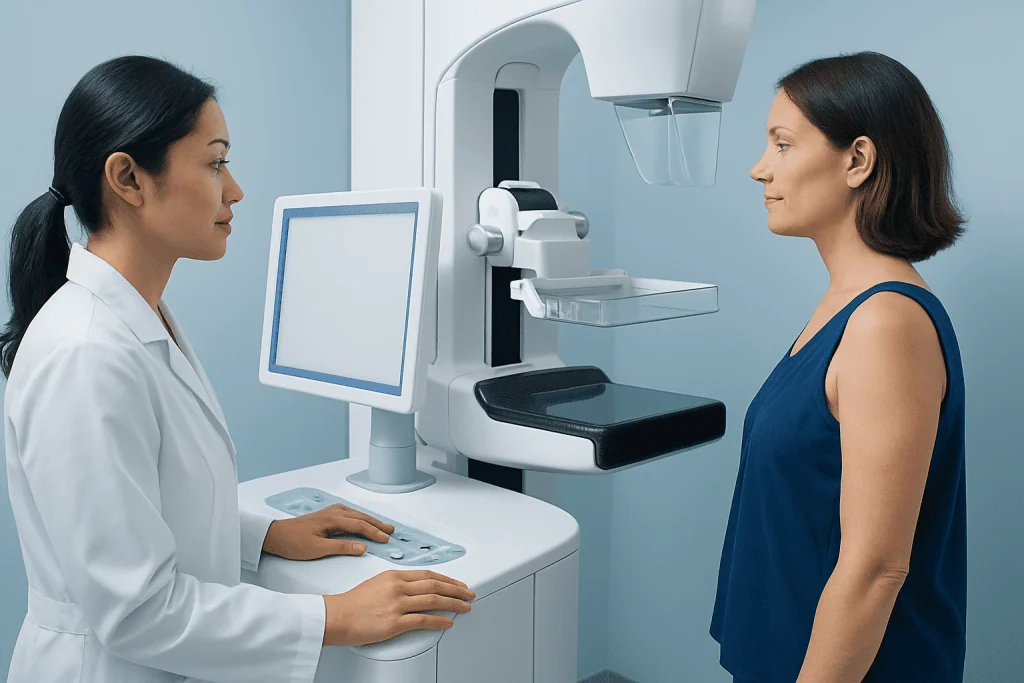
Imaging depends on age, symptoms, and clinical findings. Mammography is commonly used to evaluate many breast concerns and is also a standard screening tool. Ultrasound is especially helpful for distinguishing a solid lump from a fluid-filled cyst and is often used in younger patients or to examine a specific area more closely. In selected situations, a doctor may recommend mammography or breast ultrasound as part of the workup.
If imaging shows an area that remains uncertain or suspicious, a biopsy may be recommended. This means taking a small sample of tissue so a pathologist can examine it under a microscope. A biopsy is the most reliable way to determine whether a change is benign or cancerous.
Some people may need follow-up rather than immediate intervention, especially if a finding looks benign. Others may be referred to a specialist breast clinic. In more complex cases, additional evaluation such as breast MRI may be considered when clinically appropriate.
Treatment options depend on the cause
Treatment for a breast symptom depends entirely on the underlying diagnosis. Many normal or benign changes do not need active treatment at all. Reassurance, observation, and follow-up may be enough when the examination and imaging are clearly benign.
When symptoms are caused by hormonal tenderness, self-care measures such as a supportive bra, warm or cool compresses, and discussing pain relief options with a doctor may help. Cysts sometimes need no treatment, while larger or painful cysts may be drained if a clinician recommends it. Infections may require antibiotics or drainage if an abscess has formed.
If the cause is a benign growth such as a fibroadenoma, doctors may suggest monitoring or removal depending on size, symptoms, and imaging features. If cancer is diagnosed, treatment is individualized and may include surgery, radiation therapy, systemic medication, or a combination of approaches. A tissue diagnosis may be obtained through a breast biopsy when needed to guide care.
Near the end of the care pathway, some people benefit from coordinated input from radiology, surgery, oncology, and pathology teams. Acibadem International’s multidisciplinary specialists and JCI-accredited hospitals diagnose and treat breast conditions for international patients when further evaluation or treatment is needed.
Prevention, awareness, and self-care
No one can prevent every breast condition, but awareness and routine care can support breast health. People should follow age- and risk-appropriate screening advice from their doctor, especially if they have a family history or other known risk factors. Screening recommendations vary, so individualized guidance matters.
Becoming familiar with one’s own usual breast pattern can be helpful, but there is no need for forceful or overly frequent checking. The goal is simply to notice a new, persistent change rather than to search for perfect symmetry or smoothness. Looking in the mirror occasionally and being aware of how the breasts normally feel during different times of the month may make changes easier to recognize.
General healthy habits may support overall well-being and may also help reduce some risks. These include regular physical activity, limiting alcohol, not smoking, maintaining a healthy weight when possible, and discussing hormone use with a qualified clinician. During breastfeeding, good latch support and early care for pain or engorgement can reduce complications.
Self-care is useful, but it should not replace medical advice for a concerning symptom. Any change that is new, one-sided, persistent, or worsening should be reviewed by a healthcare professional rather than watched indefinitely at home.
When to seek medical care
It is reasonable to arrange medical care promptly for any breast change that is new and does not settle within a short time, especially if it is clearly different from the person’s usual pattern. This includes a lump, one-sided nipple discharge, skin dimpling, nipple inversion, or a persistent area of focal pain or thickening.
More urgent medical attention is appropriate if a breast becomes red, hot, swollen, and increasingly painful, especially with fever or feeling unwell, because infection may need treatment. Rapidly changing symptoms, significant underarm swelling, or a breast change during pregnancy or breastfeeding that does not improve should also be assessed without delay.
People with a strong family history of breast or ovarian cancer, known genetic risk, or previous breast disease should mention this during evaluation. Even when symptoms turn out to be benign, timely assessment can provide reassurance and, if needed, make treatment more straightforward.
Frequently asked questions
Is it normal for breasts to feel lumpy?
Yes, many breasts naturally feel somewhat lumpy or nodular, especially before a menstrual period. What matters most is whether the texture is usual for that person or whether there is a new, distinct, persistent change.
Does breast pain usually mean cancer?
Breast pain alone is more often related to hormonal changes, muscle strain, or benign breast conditions than to cancer. However, pain that is persistent, localized to one spot, or associated with another change should be checked.
When is nipple discharge concerning?
Discharge is more concerning when it happens on its own, comes from one breast, or is bloody or clear from a single duct. Milky discharge from both breasts can have other explanations, but it should still be discussed with a doctor if it is unexpected or persistent.
Can a harmless cyst feel like a breast lump?
Yes, a cyst can feel like a lump and may be tender, especially around a menstrual cycle. A doctor may use ultrasound or other imaging to tell whether a lump is fluid-filled or solid.
Should every breast lump be biopsied?
No, not every lump needs a biopsy. Some lumps have clearly benign features on examination and imaging, while others need tissue sampling to confirm the diagnosis.
How can someone know what is normal for their own breasts?
It helps to be generally familiar with the usual look and feel of the breasts at different times of the month, without excessive checking. Knowing that personal baseline makes it easier to notice a change that deserves medical review.
References
- World Health Organization
- American Cancer Society
- Centers for Disease Control and Prevention
- National Cancer Institute
- American College of Obstetricians and Gynecologists
This article is for general information only and is not a substitute for professional medical advice. Please consult a qualified doctor about your individual situation.
Explore treatments in Turkey — costs, top hospitals & a free quote
JCI-accredited · board-certified surgeons · reply within 24h
Add us as a Preferred Source to see more of our trusted health content across Google Search, AI Overviews and Discover.