Breech Baby: When Position Matters and How Delivery Decisions Are Made

A breech baby is not unusual earlier in pregnancy, but persistent breech position near term needs assessment. Ultrasound and physical examination help confirm the baby's position and guide delivery planning.
Key Takeaways
- A breech baby is not unusual earlier in pregnancy, but persistent breech position near term needs assessment.
- Ultrasound and physical examination help confirm the baby's position and guide delivery planning.
- Some pregnant people may be offered external cephalic version to try to turn the baby head-down.
- The safest delivery approach depends on the type of breech, gestational age, maternal health, and the baby's wellbeing.
- Prompt medical review is important if labor starts, waters break, or fetal movements change.
A breech baby is a baby positioned bottom-first or feet-first instead of head-first near the end of pregnancy. This position is common earlier in pregnancy, but when it persists close to delivery, it may change how birth is planned and managed.
Overview: What Is a Breech Baby?
A breech baby is a baby who is lying in the uterus with the buttocks, feet, or both positioned to come out first, instead of the head. In a typical head-down position, called cephalic presentation, the baby’s head is closest to the birth canal before labor. Breech presentation is common earlier in pregnancy because babies have more room to move, but most turn head-down on their own before delivery.
When a baby remains breech later in pregnancy, especially after about 36 weeks, the care team usually looks more closely at the situation. This is because the baby’s position can influence how labor progresses and which birth method is likely to be safest. A breech position does not always mean there is a serious problem, but it does mean that delivery planning becomes more important.
There are several types of breech presentation. In a frank breech, the baby’s buttocks are down and the legs are extended upward. In a complete breech, the buttocks are down and the knees are bent. In a footling breech, one or both feet are positioned lower than the buttocks. The exact type matters because it affects how suitable a vaginal birth may be and whether another option is safer.
Signs, Symptoms, and How Breech Position Is Found
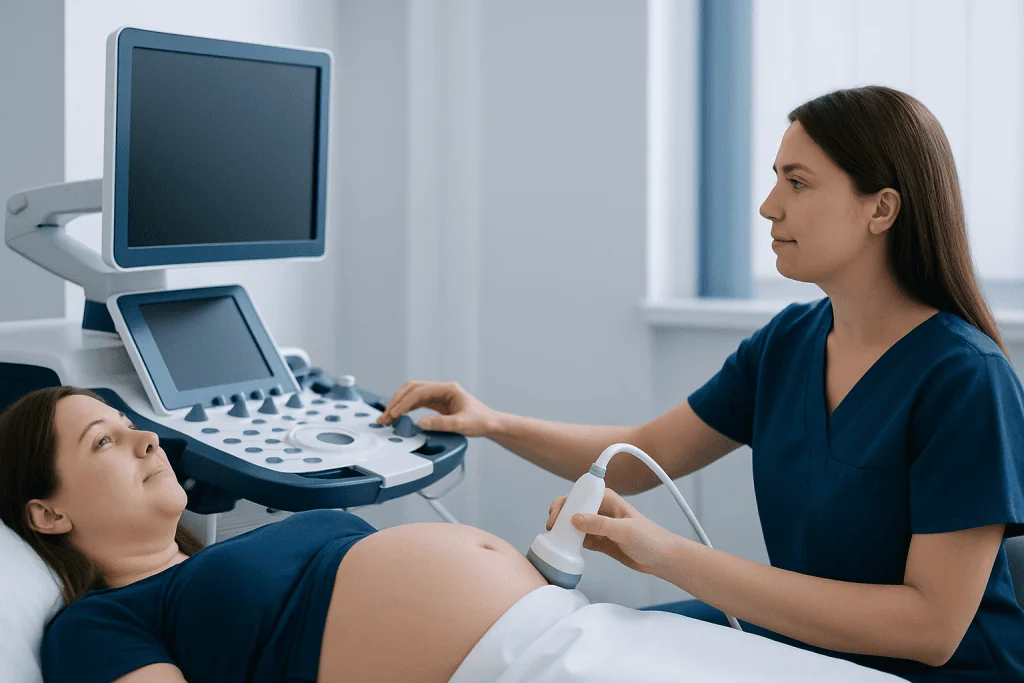
Many pregnant people do not notice any clear symptoms that the baby is breech. Often, the position is first suspected during a routine prenatal visit when a doctor or midwife feels the abdomen. Sometimes the mother may notice more kicks low in the pelvis or feel the baby’s head as a firm round shape under the ribs, but these signs are not always reliable.
A breech position is usually confirmed with ultrasound. Ultrasound helps show whether the baby’s buttocks or feet are closest to the cervix, what type of breech is present, and whether there are other factors that may affect delivery. It can also help assess amniotic fluid, placental location, and the baby’s size and movement.
If the baby is breech near the end of pregnancy, the care team may continue checking position at follow-up visits because some babies still turn on their own. However, if labor begins or the waters break while the baby is breech, urgent assessment is important. This is especially true with footling breech, because the cord or feet may descend first.
Why Breech Happens: Causes and Risk Factors
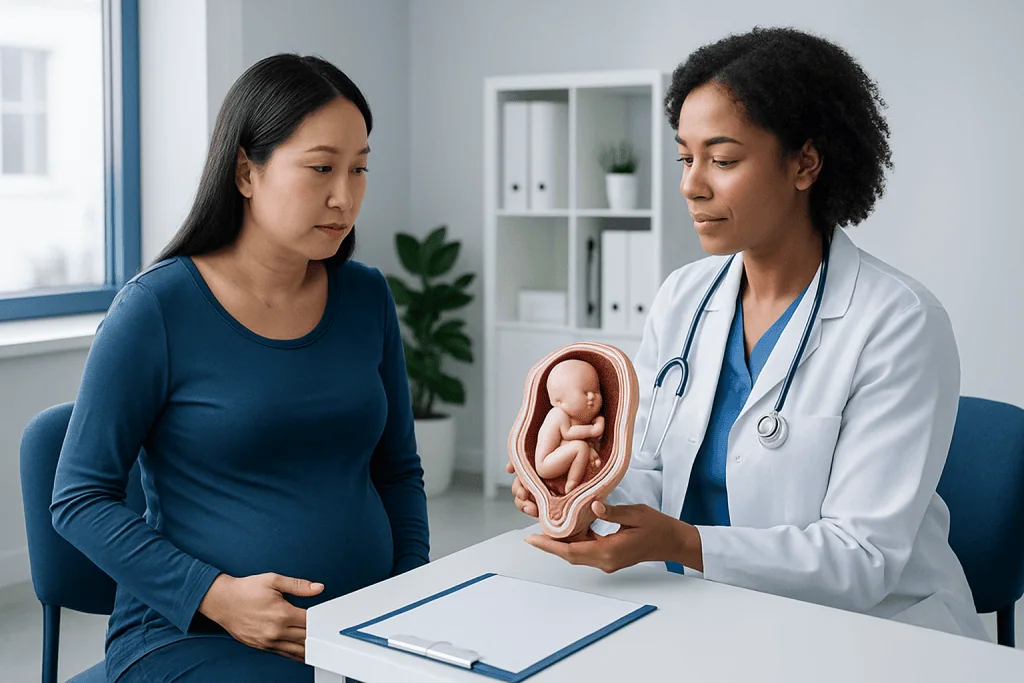
In many cases, there is no single clear reason why a baby stays breech. It may happen simply because the baby has not turned yet. Earlier in pregnancy, breech position is normal and expected. Only when it persists later in pregnancy does it become a focus of care.
Some factors make breech presentation more likely. These include preterm pregnancy, too much or too little amniotic fluid, an unusually shaped uterus, uterine fibroids, placenta previa, multiple pregnancy, or a baby with certain congenital conditions. A previous breech pregnancy may also slightly increase the chance in a later pregnancy.
Risk factors do not automatically mean something is wrong. They simply help explain why the baby may have less space or a different pattern of movement in the uterus. If a breech baby is identified, the doctor may look for related issues and may also monitor for conditions that can affect birth planning, such as placenta previa.
How Doctors Confirm Breech Position and Assess Delivery Safety
Diagnosis begins with routine prenatal care. A doctor or midwife may suspect breech presentation based on abdominal examination, especially later in the third trimester. Listening to the fetal heartbeat may also give clues, but ultrasound is the main tool used to confirm the baby’s position.
Ultrasound provides important details beyond simply confirming breech. It can show the type of breech, estimate fetal size, check the position of the placenta, and evaluate amniotic fluid. In some cases, the care team may also assess the baby’s neck position and look for concerns that would make a vaginal breech birth less suitable.
The doctor will also consider the mother’s health, prior births, pelvic factors, and whether labor has already started. These pieces of information help guide a discussion about whether to wait, try to turn the baby, plan a cesarean birth, or consider a carefully selected vaginal breech delivery in a center with appropriate experience. If additional assessment of the baby’s wellbeing is needed, fetal monitoring and other pregnancy follow-up and delivery services may be part of care.
Treatment Options and How Delivery Decisions Are Made
If a baby is breech near term, one option may be external cephalic version, often called ECV. This is a procedure in which a trained doctor places hands on the mother’s abdomen and gently tries to turn the baby into a head-down position. It is usually considered near the end of pregnancy when there are no reasons to avoid it. ECV is not suitable for everyone, such as when there is certain placental bleeding, some uterine abnormalities, or signs that the baby should be delivered soon.
If the baby remains breech, the care team will discuss delivery options. In many situations, a planned cesarean section is recommended because it can reduce certain risks linked with breech birth. However, a vaginal breech birth may still be considered in selected cases, depending on the type of breech, the size and health of the baby, the mother’s circumstances, and the experience of the team attending the birth.
Delivery decisions are individualized. A footling breech, concerns about the baby’s wellbeing, a very large or very small baby, or other pregnancy complications often make cesarean delivery the safer option. A planned vaginal breech birth may be discussed when the pregnancy is otherwise uncomplicated and the setting includes clinicians trained in breech delivery. The goal is always to balance maternal and baby safety while respecting informed preferences.
Some people ask whether exercises or home techniques can turn a breech baby. While many suggestions circulate, they should not replace medical guidance. The most appropriate next step is usually discussion with an obstetrician or maternity team, who can explain whether observation, ECV, or planned delivery is best.
Self-care, Monitoring, and Preparing for Birth
Self-care during a breech pregnancy focuses on keeping regular prenatal appointments and knowing when to contact the care team. Since position may still change, especially before term, follow-up visits help track whether the baby turns naturally. Good hydration, rest, and attention to fetal movements remain part of normal pregnancy care, even though they do not directly correct breech position.
It can also help to prepare practically and emotionally for different delivery possibilities. A doctor may explain what to expect with ECV, how a planned cesarean is scheduled, or under what circumstances a vaginal breech birth might be offered. Having clear information often reduces anxiety and helps families feel more prepared.
Questions to discuss at appointments may include:
- What type of breech position is present?
- Is the baby likely to turn on its own?
- Am I a candidate for external cephalic version?
- What are the benefits and risks of cesarean versus vaginal breech birth in my case?
- What should I do if labor starts before the planned date?
Near the end of pregnancy, it is wise to know when to go to the hospital and how to reach the maternity team quickly. At Acibadem International, multidisciplinary specialists in JCI-accredited hospitals diagnose and manage breech pregnancy for international patients, including evaluation, delivery planning, and supportive maternity care.
When to See a Doctor Urgently
Anyone told that their baby is breech should continue regular prenatal follow-up and should seek urgent medical care if labor begins, the waters break, or there is vaginal bleeding. Breech position can sometimes increase the need for rapid assessment, particularly if the baby is not yet in a safe, planned delivery pathway.
Changes in fetal movement also need prompt attention. If movements become noticeably reduced or different from the baby’s usual pattern, the maternity team should be contacted right away. This does not always mean there is a serious problem, but it should be checked without delay.
Other reasons for urgent review include severe abdominal pain, strong regular contractions, fever, or any sudden concern about maternal wellbeing. Quick assessment helps the team decide whether immediate delivery, closer monitoring, or another intervention is needed. In pregnancies affected by another complication, such as preeclampsia, urgency may be even greater.
Frequently asked questions
Is a breech baby common?
Yes. Breech position is common earlier in pregnancy because the baby has room to move freely. Most babies turn head-down on their own before birth, so persistent breech near term is less common.
Can a breech baby turn naturally before labor?
Yes, some breech babies turn on their own, especially before 36 weeks. After that point, there is less space in the uterus, so spontaneous turning becomes less likely but can still happen.
What is external cephalic version?
External cephalic version is a procedure in which a trained doctor tries to turn the baby to a head-down position by gently pressing on the abdomen. It is usually offered near term when there are no medical reasons to avoid it, and it is done in a setting where the baby can be monitored.
Does a breech baby always mean a cesarean birth?
No. Many breech pregnancies are delivered by planned cesarean birth, but not all require it. In carefully selected situations, vaginal breech birth may be considered if the team has the right experience and the pregnancy meets safety criteria.
What type of breech is most concerning?
Doctors pay close attention to footling breech because one or both feet are positioned lowest, which can raise the chance of cord-related complications during labor. The safest delivery method depends on the exact presentation and the overall pregnancy picture.
Should someone with a breech baby go to the hospital right away if labor starts?
Yes, they should contact their maternity team or go to the hospital promptly if labor starts or the waters break. Early assessment is important because breech presentation can affect how labor and delivery should be managed.
References
- World Health Organization
- American College of Obstetricians and Gynecologists
- Royal College of Obstetricians and Gynaecologists
- National Institute for Health and Care Excellence
- Mayo Clinic
This article is for general information only and is not a substitute for professional medical advice. Please consult a qualified doctor about your individual situation.
Explore treatments in Turkey — costs, top hospitals & a free quote
JCI-accredited · board-certified surgeons · reply within 24h
Add us as a Preferred Source to see more of our trusted health content across Google Search, AI Overviews and Discover.