

Broken Bones Toes: What Patients Need to Know

A broken toe can cause pain, swelling, bruising, and difficulty walking, but symptoms may overlap with a sprain or severe bruise. Many simple toe fractures heal with rest, supportive footwear, and buddy taping, but displaced or complex fractures may need specialist treatment.
Key Takeaways
- A broken toe can cause pain, swelling, bruising, and difficulty walking, but symptoms may overlap with a sprain or severe bruise.
- Many simple toe fractures heal with rest, supportive footwear, and buddy taping, but displaced or complex fractures may need specialist treatment.
- Medical assessment is important if the toe looks crooked, the pain is severe, the skin is broken, or walking is very difficult.
- Diagnosis may involve a physical exam and X-rays to confirm the location and pattern of the fracture.
- Early protection and follow-up can help reduce pain, support healing, and lower the risk of long-term stiffness or deformity.
Broken bones toes are common injuries that often heal well with protection, rest, and time. The key is recognizing when a toe can be managed conservatively and when it needs medical assessment, imaging, or specialist care.
Overview
Broken bones toes usually happen after a direct injury, such as stubbing the foot, dropping something heavy on the toes, or twisting the forefoot during a fall or sports activity. In many cases, a broken toe heals without surgery, especially if the fracture is stable and the bones remain in good alignment. Even so, proper diagnosis matters because some toe fractures involve the joint, have significant displacement, or occur alongside soft-tissue injuries that need more careful treatment.
Patients often ask whether they can tell the difference between a broken toe and a bad bruise. While bruising, swelling, and pain are common in both, a fracture is more likely when there is persistent tenderness directly over the bone, pain with weight-bearing, or a visible change in shape. Some fractures are minor and improve with simple support, but others can affect walking mechanics and healing if they are missed.
The big toe deserves special attention because it plays a larger role in balance and push-off during walking. Fractures of the big toe are more likely to need closer evaluation than injuries to the smaller toes. If symptoms seem significant, a clinician may recommend imaging and, in selected cases, referral to a foot and ankle or orthopedic specialist.
Symptoms of a Broken Toe
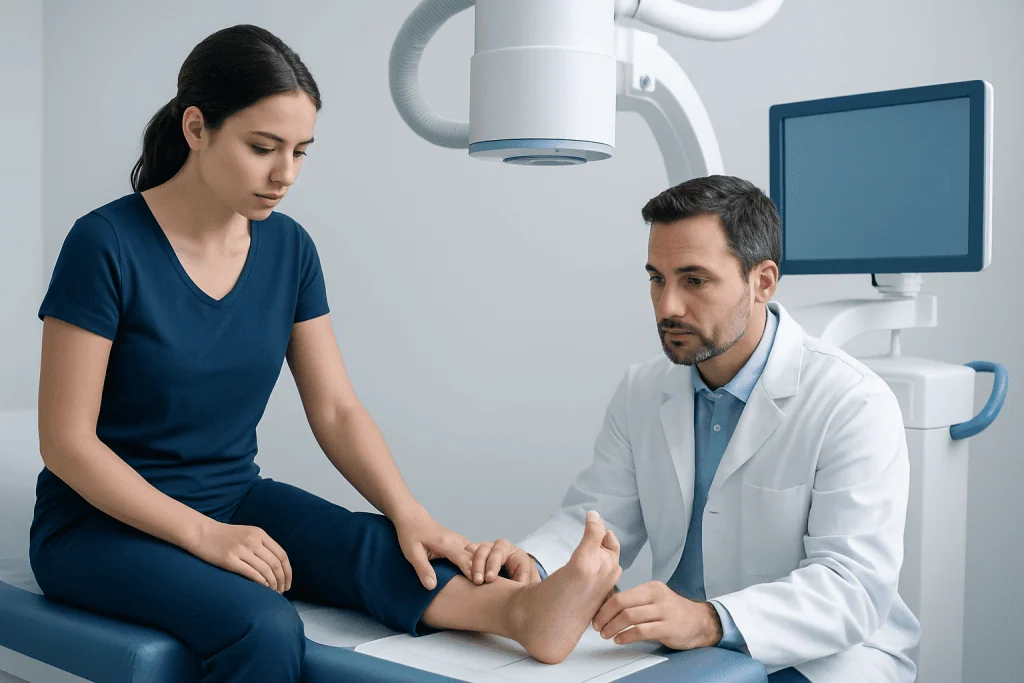
The most common symptoms of broken bones toes are sudden pain, swelling, bruising, and tenderness after an injury. The toe may hurt more when touched, moved, or when pressure is placed on the front of the foot. Some patients can still walk, but they may limp or avoid putting weight on the injured side.
Other possible signs include stiffness, reduced range of motion, throbbing discomfort, and difficulty wearing regular shoes because of swelling. In some cases, the toe may look crooked, shortened, or rotated. If blood collects under the toenail, the nail may appear dark purple or black, which can happen with either a fracture or a crush injury.
A toe fracture can look similar to a sprain, strain, or severe contusion. However, symptoms that raise more concern for fracture include pain that remains sharply localized over the bone, worsening swelling over several hours, or an obvious deformity. The appearance of numbness, pale skin, a cold toe, or an open wound needs prompt medical attention.
- Pain after stubbing or crushing the toe
- Swelling and bruising
- Tenderness directly over the toe bone
- Difficulty walking or wearing shoes
- Visible deformity or abnormal toe position
Causes and Risk Factors

Most toe fractures are caused by trauma. Common examples include hitting the toe against furniture, dropping a heavy object on the foot, falling, or sustaining a sports-related impact. Twisting injuries can also fracture a toe, especially if the foot catches on the ground while the body keeps moving.
Certain activities increase risk. Contact sports, running on uneven surfaces, dancing, and work that involves heavy tools or materials may lead to toe injuries. Going barefoot in environments with hard surfaces or clutter can also make stubbing injuries more likely. Repetitive stress may occasionally contribute to small fractures, especially in active individuals.
Some people are more vulnerable to fractures in general. Reduced bone strength from osteoporosis, older age, poor balance, previous foot injuries, and conditions that affect sensation in the feet can all increase the chance of injury or make it harder to notice how serious it is. In people with diabetes, poor circulation or reduced feeling in the feet can complicate healing and make earlier medical assessment especially important.
How Broken Toes Are Diagnosed
Diagnosis begins with a clinical assessment. A doctor will usually ask how the injury happened, where the pain is most severe, and whether the patient can walk. The foot and toes are examined for swelling, bruising, nail-bed injury, skin breaks, and any visible deformity. The clinician may gently check whether the toe is aligned properly and whether nearby joints are affected.
X-rays are often used when a fracture is suspected, especially if there is significant pain, deformity, persistent tenderness, or difficulty bearing weight. Imaging can help show whether the bone is cracked, displaced, involves a joint surface, or affects the big toe. This information guides treatment and follow-up. In unusual or more complex cases, further assessment by specialists in orthopedics and traumatology may be recommended.
It is also important to look for related injuries. A crush injury can damage the nail bed or surrounding soft tissues, and an open fracture can raise the risk of infection. If there is concern about more extensive foot trauma, clinicians may evaluate for associated problems such as other foot fractures or injuries to tendons and ligaments.
Treatment Options and Healing
Treatment depends on which toe is broken, whether the fracture is stable, and whether the bones are in normal alignment. Many fractures of the smaller toes can be treated without surgery. Common measures include rest, limiting aggravating activity, elevating the foot, applying ice wrapped in a cloth, and wearing a stiff-soled or wide, supportive shoe. Buddy taping, where the injured toe is gently taped to a neighboring toe with padding between them, may help protect alignment in selected cases.
Pain relief may involve over-the-counter medication if a doctor considers it appropriate for the individual. Patients are generally advised to avoid forcing the toe to move and to return gradually to activity as pain improves. Healing often takes several weeks, but the exact timeline varies by age, overall health, the specific toe involved, and the type of fracture. The big toe may require a longer recovery and closer follow-up than the smaller toes.
Some fractures need more active treatment. This includes displaced fractures, unstable fractures, injuries involving the joint, open fractures, or fractures associated with severe nail-bed damage. A doctor may need to realign the toe, immobilize it more firmly, or consider an orthopedic procedure. If a fracture affects function or alignment significantly, evaluation within services such as foot and ankle surgery can be appropriate. In selected cases, imaging support from radiology helps guide diagnosis and follow-up.
Even when surgery is not required, follow-up can be useful if symptoms are not improving as expected. Persistent swelling, ongoing pain, difficulty fitting into shoes, or limited movement after healing may suggest the need for reassessment and rehabilitation advice.
Self-Care, Recovery, and Prevention
At home, early care focuses on protecting the injured toe and reducing swelling. Resting the foot, keeping it elevated when possible, and using ice for short intervals during the first couple of days may help with discomfort. Shoes with a firm sole and roomy toe box can make walking easier while the fracture heals. Patients should follow a clinician’s advice about buddy taping, weight-bearing, and timing of return to exercise.
Recovery is not only about bone healing. Stiffness can develop if the toe is sore and not used normally for a prolonged period, so many patients benefit from gradually resuming comfortable movement once a doctor says it is safe. High-impact sports and running are usually postponed until walking is comfortable and the toe is no longer tender. If a toenail was injured, it may take much longer to look normal again even after the bone has healed.
Prevention centers on reducing avoidable foot trauma. Helpful steps include wearing protective footwear during sports or work, keeping walkways clear at home, using lights at night, and taking care on uneven ground. For people with low bone density or recurrent fractures, addressing bone health and underlying risks can also be important.
- Rest and protect the toe in the early phase
- Use supportive footwear rather than tight or flexible shoes
- Return to activity gradually
- Seek advice if pain or swelling is not improving
- Support overall bone health with medical guidance when needed
When to Seek Medical Care
Many broken toes are not emergencies, but some situations should be assessed promptly. Medical care is recommended if the toe looks bent, rotated, or out of place; if there is severe swelling or pain; if the patient cannot bear weight; or if the injury involves the big toe. An open wound, bleeding around the nail, numbness, color change, or signs that circulation may be affected should also be evaluated without delay.
Patients with diabetes, circulation problems, weakened immunity, or reduced feeling in the feet should have a lower threshold for seeking care because complications may be easier to miss. Children also benefit from assessment when symptoms are significant, since growing bones have special considerations. If symptoms continue beyond a few days without improvement, or if walking remains difficult, a medical review is sensible even after seemingly minor injuries.
Near the end of the care pathway, some patients need specialist input for persistent pain, delayed healing, deformity, or suspected joint involvement. Acibadem International’s multidisciplinary specialists at JCI-accredited hospitals diagnose and treat toe and foot injuries for international patients, including cases that need imaging, orthopedic evaluation, or follow-up planning.
Frequently asked questions
How can someone tell if a toe is broken or just bruised?
A broken toe and a severe bruise can both cause pain, swelling, and discoloration. A fracture is more likely when pain is sharply focused over the bone, walking is difficult, or the toe looks misaligned. Because symptoms can overlap, a doctor may recommend an X-ray when the diagnosis is uncertain.
Can a person walk on a broken toe?
Some people can still walk on a broken toe, especially if one of the smaller toes is affected and the fracture is stable. Even so, walking may be painful and can worsen discomfort if the toe is not protected. If weight-bearing is very difficult or the big toe is injured, medical evaluation is recommended.
Do all broken toes need an X-ray?
Not always, but X-rays are often helpful when symptoms are significant, the toe appears deformed, or the injury involves the big toe. Imaging can confirm whether the bone is broken and whether the pieces are well aligned. This helps guide the safest treatment plan.
How long does a broken toe take to heal?
Many uncomplicated toe fractures improve over several weeks, but full comfort may take longer depending on the severity and which toe is involved. Big toe fractures often need a longer recovery than injuries to the smaller toes. Pain, swelling, and stiffness can continue for some time even after the bone has started to heal.
When is a broken toe considered an emergency?
Urgent care is important if the toe is clearly deformed, the skin is broken, the toe becomes pale or numb, or there is severe pain after a high-impact injury. Medical help is also important if there is heavy bleeding around the nail or signs of infection. These features can indicate a more serious fracture or soft-tissue injury.
What is buddy taping, and is it always safe?
Buddy taping means securing the injured toe to a neighboring toe with soft padding between them to provide support. It can be useful for some stable fractures of the smaller toes, but it is not right for every injury. If there is deformity, a skin wound, poor circulation, or uncertainty about the diagnosis, a clinician should advise before taping.
References
- American Academy of Orthopaedic Surgeons
- American College of Foot and Ankle Surgeons
- National Health Service
- MedlinePlus
- Mayo Clinic
This article is for general information only and is not a substitute for professional medical advice. Please consult a qualified doctor about your individual situation.
Joint and spine care in Turkey — expert assessment & treatment
JCI-accredited · board-certified surgeons · reply within 24h
Add us as a Preferred Source to see more of our trusted health content across Google Search, AI Overviews and Discover.

More from the Health Library

Substitutes for Egg Substitutes — Explained by Medical Evidence, Not Myths

Hydronephrosis Kidney: Procedure, Recovery and Results

Radishes — Explained by Medical Evidence, Not Myths

Inspiresleep Com Cost: A Complete Medical Overview

Standing Desk: A Complete Medical Overview

Salves: A Complete Medical Overview
Related Specialists

Assoc. Prof. Dr. Emel Ur Özçelik
Neurology
Dr. Ekin Erdemli
Emergency Service
Dr. Asif Akyol
Emergency Service
Assoc. Prof. Dr. Erdem Güven (m)
Aesthetic Plastic & Reconstructive Surgery