

Broken Kneecap — Explained by Medical Evidence, Not Myths
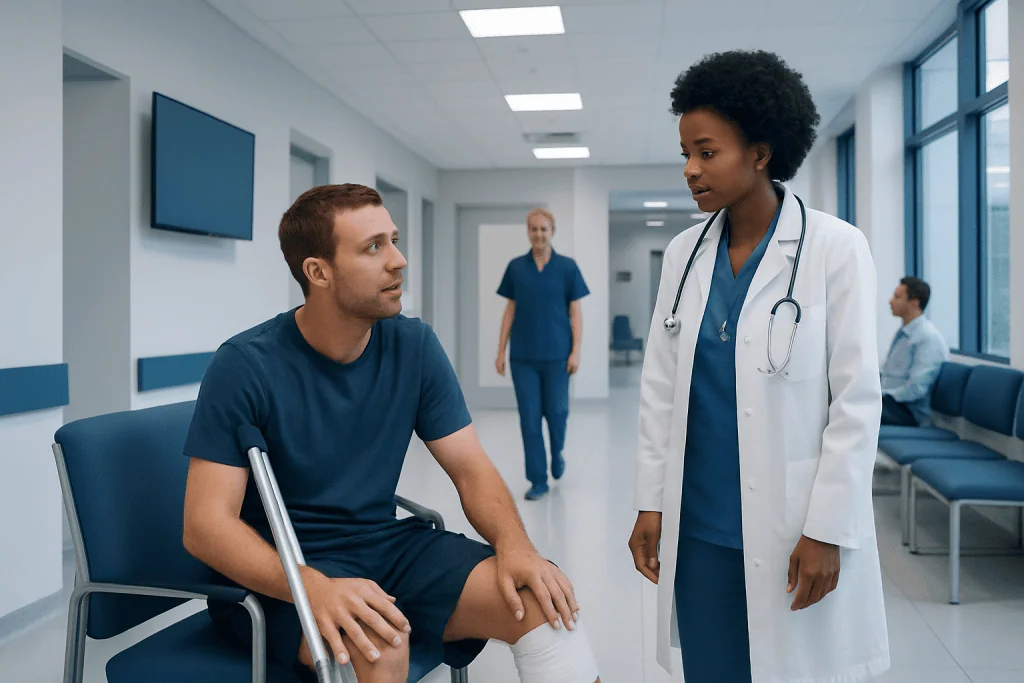
A broken kneecap commonly follows a direct fall or impact to the front of the knee, but can also occur during a forceful muscle contraction. Severe pain, swelling, bruising and difficulty straightening or bearing weight on the knee may occur.
Key Takeaways
- A broken kneecap commonly follows a direct fall or impact to the front of the knee, but can also occur during a forceful muscle contraction.
- Severe pain, swelling, bruising and difficulty straightening or bearing weight on the knee may occur.
- X-rays usually confirm the diagnosis, while CT or MRI may occasionally provide further detail.
- A brace or cast may be suitable for stable fractures; surgery may be needed when bone fragments are separated or the knee's extensor mechanism is disrupted.
- Rehabilitation is an essential part of recovery and helps restore knee movement, strength and confidence with daily activities.
A broken kneecap, also called a patella fracture, is an injury to the small bone at the front of the knee. Treatment depends mainly on whether the fracture pieces remain aligned and whether the person can straighten the knee; many stable fractures heal without surgery, while displaced fractures often need surgical repair.
Overview: What Is a Broken Kneecap?
A broken kneecap is a fracture of the patella, the flat, rounded bone at the front of the knee. The patella protects the knee joint and works with the quadriceps muscles and patellar tendon to straighten the leg. Because of this important role, a fracture may affect walking, standing from a chair, climbing stairs and other daily activities.
Patella fractures vary considerably. A crack may be small and stable, with bone pieces remaining in their usual position. In other cases, the bone can break into two or more pieces, and the pieces may move apart. Clinicians also assess whether the injury has interrupted the extensor mechanism, the system that allows the person to actively straighten the knee.
A broken kneecap should be assessed promptly by a qualified clinician. Early evaluation can identify associated skin wounds, ligament injuries or cartilage damage and helps ensure that the knee is protected appropriately while healing begins.
How a Patella Fracture Can Feel
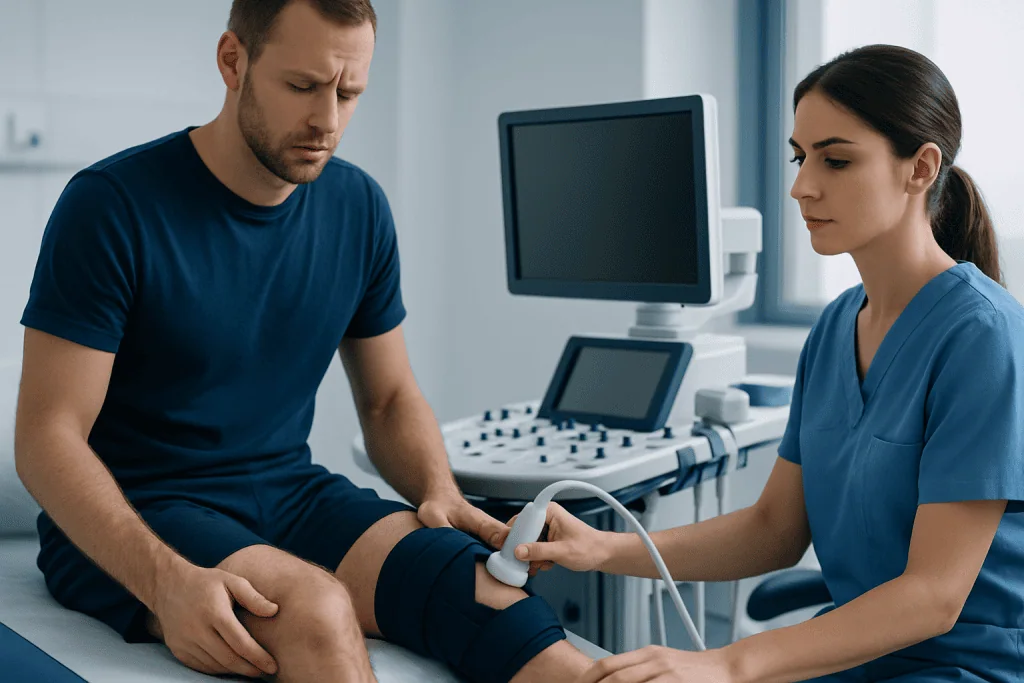
Pain directly over the front of the knee is a common symptom. It may begin immediately after a fall, collision or sudden twisting event, and it often worsens with bending the knee, attempting to stand or contracting the thigh muscles. Swelling can develop quickly because bleeding and inflammation may occur within and around the joint.
Other possible signs include bruising, tenderness, a visible change in the kneecap’s shape, and an inability or marked difficulty in lifting the straight leg from a bed. Some people can still walk with a stable fracture, so the ability to take a few steps does not reliably exclude a broken kneecap.
Symptoms overlap with other knee injuries, including sprains, tendon tears and cartilage injuries. It is therefore safer not to try to diagnose the injury based on pain alone. Until assessment, limiting weight-bearing and avoiding attempts to force the knee straight or bent can reduce further discomfort.
How Broken Kneecaps Happen and Who Is at Risk

Most patella fractures result from direct trauma. Examples include landing directly on the knee during a fall, a sports collision, or an impact in a road traffic accident. A strong, sudden contraction of the quadriceps muscles, such as when trying to prevent a fall, can also pull the patella apart and cause a fracture.
Risk is influenced by circumstances rather than by one single factor. Falls are more likely in people with balance difficulties, reduced vision, certain neurological conditions or unsafe home environments. Contact sports, cycling and other activities with a risk of direct knee impact can also increase exposure to injury.
Bone strength matters as well. Osteoporosis and other conditions that weaken bone may allow a fracture to occur after relatively minor trauma. Previous knee surgery, certain long-term medicines and nutritional factors can affect bone health in some individuals. A clinician may recommend further assessment when a fracture occurs after an unexpectedly low-impact event.
Diagnosis: Looking Beyond the X-Ray
Diagnosis begins with a history of the injury and a careful knee examination. The clinician will ask how the injury occurred, assess swelling and skin integrity, check circulation and sensation below the knee, and test whether the person can actively extend the leg. Open wounds near a fracture need urgent attention because of the risk of infection.
Plain X-rays taken from different angles are the usual first test and can show the fracture pattern and whether fragments are displaced. In selected situations, a CT scan may help define complex fractures and support surgical planning. MRI is not routinely necessary for a clear fracture on X-ray, but it may be considered when soft-tissue injury or an occult fracture is suspected.
The findings guide treatment decisions. Clinicians consider fracture location, the gap between fragments, the joint surface, the ability to straighten the knee, skin condition, activity needs and overall health. This individualized assessment is more useful than assuming that every broken kneecap requires an operation.
Treatment Options and the Healing Process
Initial care often includes protecting the knee in an immobilizer, brace or cast, using crutches or another walking aid when needed, elevating the leg and applying wrapped cold packs for short periods to help ease swelling. Pain relief may be recommended based on the person’s medical history. Medication should be used only as advised by a healthcare professional, particularly for people with kidney disease, stomach ulcers, heart conditions or blood-thinning treatment.
Stable fractures with little or no displacement may be treated without surgery. The knee is usually held straight initially to protect healing, while follow-up appointments and repeat imaging check that the alignment remains satisfactory. A clinician will provide individualized instructions about weight-bearing and when knee movement can safely begin.
Surgery is more often considered when fragments are separated, the joint surface is uneven, there is an open fracture, or the person cannot straighten the knee because the extensor mechanism is disrupted. Surgical fixation may use screws, pins, wires, plates or sutures to restore alignment. The goal is to reconstruct a stable kneecap and permit a carefully planned return to movement; surgery does not remove the need for rehabilitation.
Rehabilitation, Daily Care and Recovery Expectations
Healing time differs according to the fracture pattern, treatment method, age, bone health and rehabilitation progress. Bone healing commonly takes several weeks, but recovery of comfortable movement, thigh strength and confidence can take longer. Follow-up appointments are important because they allow the care team to monitor healing and adjust activity guidance.
Physiotherapy usually progresses in stages. Early rehabilitation may focus on controlling swelling, keeping nearby joints mobile and activating the quadriceps safely. As healing permits, exercises commonly advance toward restoring knee bending, improving leg strength, balance training and gradually returning to walking, stairs, work and sport-specific activities.
People should avoid testing the knee through high-impact activity, kneeling, deep squats or sport before they have been cleared to do so. Keeping the brace on as instructed, attending follow-up visits, maintaining a balanced diet with adequate protein and calcium, and avoiding tobacco can support healing. Smoking and nicotine exposure may slow bone healing and increase surgical complication risks.
Some stiffness, weakness and swelling can persist for a period after a patella fracture. Long-term concerns may include ongoing anterior knee pain, reduced range of motion, hardware irritation after surgery or post-traumatic arthritis, especially when the joint surface was injured. Reporting persistent symptoms helps the clinical team determine whether further treatment is needed.
When to Seek Medical Care
Urgent medical assessment is appropriate after a significant knee impact when there is severe pain, rapid swelling, inability to bear weight, inability to straighten the knee, obvious deformity or a wound over the kneecap. Emergency care is particularly important if bone is visible, bleeding does not stop, the foot becomes pale or cold, or there is numbness or tingling below the injury.
A person should also arrange assessment for knee pain and swelling that does not improve after a fall, even if they can walk. A minor-looking injury may still involve a stable fracture or another injury that requires protection. Driving should be avoided until it is safe to control the vehicle and emergency braking without limitation.
During recovery, medical advice is needed promptly for fever, increasing redness or drainage from a surgical wound, worsening calf pain or swelling, sudden shortness of breath, uncontrolled pain, or a new loss of movement or sensation. Acibadem International’s multidisciplinary specialists at JCI-accredited hospitals diagnose and treat patella fractures for international patients, with care plans based on individual clinical needs.
Frequently asked questions
Can someone walk with a broken kneecap?
Sometimes. A stable, non-displaced patella fracture may still allow limited walking, particularly if the knee can remain straight. However, walking does not rule out a fracture, so pain, swelling or trouble straightening the knee after an injury should be medically assessed.
Does every broken kneecap need surgery?
No. Many fractures in which the bone pieces remain aligned and the knee can still be actively straightened can be treated with immobilization and monitored rehabilitation. Surgery is more likely when fragments are displaced, the joint surface is disrupted, or the mechanism for straightening the knee has been damaged.
How long does a broken kneecap take to heal?
Bone healing often takes several weeks, but the full return of knee motion and strength may take months. The timeline depends on the fracture type, whether surgery was needed, overall health and participation in rehabilitation. The treating clinician can give the most relevant estimate after reviewing follow-up examinations and imaging.
What should a person do immediately after a suspected kneecap fracture?
They should stop the activity, keep the knee supported and avoid forcing it to bend or straighten. Elevating the leg and applying a cold pack wrapped in cloth may help with swelling while medical care is arranged. Urgent evaluation is needed for deformity, an open wound, numbness, a cold foot or inability to move the leg normally.
Can a broken kneecap cause arthritis later in life?
A patella fracture involving the smooth joint surface can increase the chance of post-traumatic arthritis over time. Not everyone develops arthritis, and accurate alignment, appropriate rehabilitation and follow-up can help support the best possible joint function. Persistent pain, swelling or catching after recovery should be discussed with a clinician.
When can a person return to sport after a patella fracture?
Return to sport should be guided by the treating orthopedic clinician and physiotherapist rather than by a fixed date. It generally requires confirmed healing, sufficient knee movement, strength and control, and the ability to perform sport-specific movements without significant pain or swelling. Returning too early may increase the risk of reinjury or delayed recovery.
This article is for general information only and is not a substitute for professional medical advice. Please consult a qualified doctor about your individual situation.
Joint and spine care in Turkey — expert assessment & treatment
JCI-accredited · board-certified surgeons · reply within 24h
Add us as a Preferred Source to see more of our trusted health content across Google Search, AI Overviews and Discover.

More from the Health Library

Mucus in Baby Poop: A Complete Medical Overview

Cmv Virus — Explained by Medical Evidence, Not Myths

Coq10 Benefits: An Evidence-Based Guide for Patients

Box Breathing: A Complete Medical Overview

Depo Shot: What Patients Need to Know

Centipede Bite: What Patients Need to Know
Orthopedic Surgery & Traumatology Specialists at Acibadem

Dr. Alp Er Tunga Bölükbaşı
Orthopedic Surgery & Traumatology
Dr. Alper Gölpınar
Orthopedic Surgery & Traumatology
Prof. Dr. Alper Kaya
Orthopedic Surgery & Traumatology
Fzt. Alperen Mustafa Oğuz
Physical Medicine & Rehabilitation