Brow Lift: Candidacy, Procedure Steps, and Recovery Timeline

A brow lift can elevate a drooping brow, soften forehead lines, and improve the upper facial contour. Good candidates are generally healthy, have realistic expectations, and are bothered by brow descent or deep forehead creases.
Key Takeaways
- A brow lift can elevate a drooping brow, soften forehead lines, and improve the upper facial contour.
- Good candidates are generally healthy, have realistic expectations, and are bothered by brow descent or deep forehead creases.
- Recovery is usually measured in stages, with early swelling and bruising improving over 1 to 2 weeks and final settling taking longer.
- Techniques include endoscopic, temporal, and more traditional open approaches, chosen according to anatomy and goals.
- Benefits and risks should be reviewed carefully with a qualified plastic surgeon before surgery.
A brow lift is a surgical procedure that raises the brow position, reduces deep forehead creases, and can make the upper face look more rested. The best approach depends on facial anatomy, goals, skin quality, and whether brow descent contributes to a tired or heavy appearance around the eyes.
Overview: What a Brow Lift Does
A brow lift is a surgical procedure designed to raise a low or heavy brow, soften forehead wrinkles, and improve frown lines between the eyebrows. It can also help restore a more open, refreshed appearance to the upper face when the brow has descended with age or natural anatomy. In some people, brow descent can make the upper eyelids seem heavier, even when the main issue begins above the eyes.
Rather than being a one-size-fits-all operation, a brow lift is tailored to the person’s facial proportions, hairline, skin elasticity, and cosmetic goals. Surgeons may use smaller endoscopic incisions, a limited temporal technique, or a more traditional open approach depending on how much lift is needed and where the brow position should be adjusted. The goal is not to create a surprised look, but to restore balance and maintain natural facial expression.
A brow lift is often considered alongside other facial procedures when concerns overlap. For example, some people also have excess upper eyelid skin or laxity that may be better assessed together with eyelid surgery. A consultation helps determine whether the brow, eyelids, forehead muscles, or a combination of these areas is contributing most to the concern.
Who May Be a Good Candidate
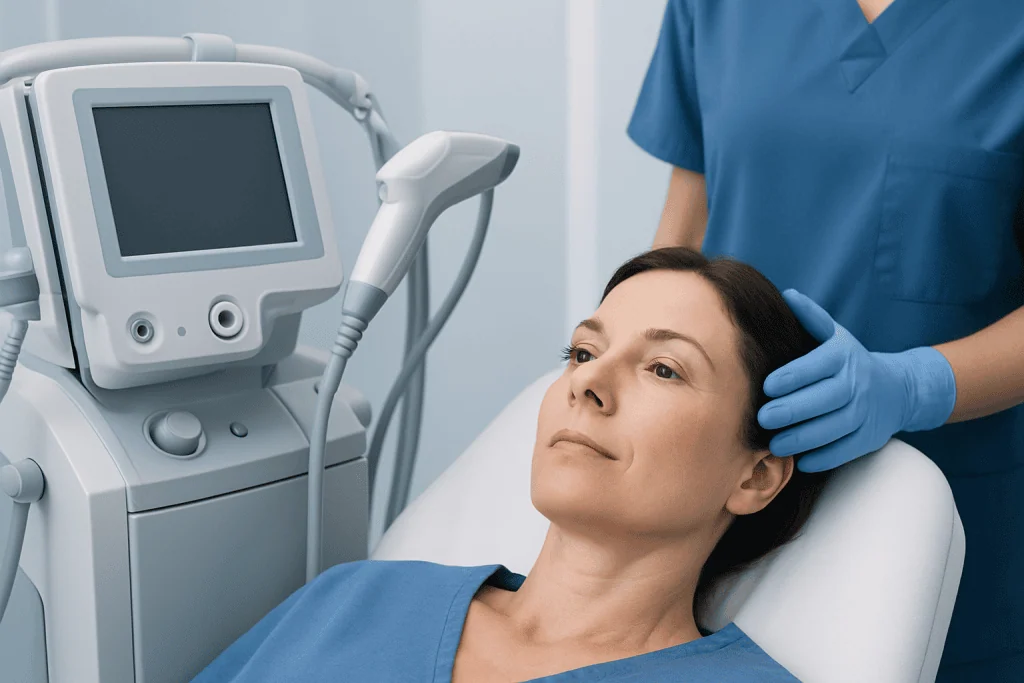
A good candidate for a brow lift is usually someone bothered by a drooping or flattened brow, deep horizontal forehead lines, or pronounced frown lines between the eyebrows. Some patients feel they look tired, stern, or older than they feel, even when they are well rested. Others notice that brow descent contributes to upper eyelid crowding, making eye makeup harder to apply or the eye area look smaller.
In general, candidates should be in good overall health, be nonsmokers or willing to stop smoking around the time of surgery, and have realistic expectations about what the procedure can and cannot do. A brow lift improves brow position and upper facial contours, but it does not change skin quality everywhere or stop the aging process. Surgeons will also ask about eye symptoms, previous facial surgery, medications, bleeding risk, and any tendency toward poor wound healing.
Age alone does not determine candidacy. Some younger adults seek a brow lift for inherited low-brow anatomy, while older adults may pursue it as part of facial rejuvenation. During evaluation, the surgeon examines brow symmetry, eyelid position, forehead height, hairline shape, and muscle activity to decide whether brow lift surgery is likely to help and which technique would be most suitable.
How the Procedure Works and Step-by-Step Surgical Process
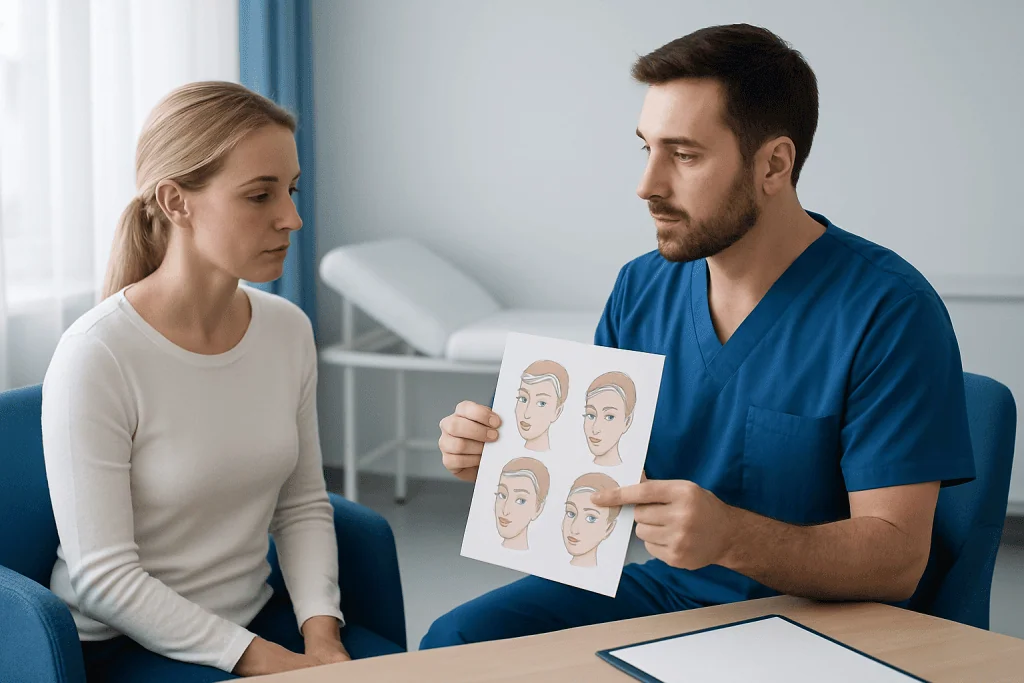
The basic principle of a brow lift is to reposition soft tissues of the forehead and brow to a more favorable level, while also weakening or adjusting muscles that create deep frown lines when appropriate. By releasing tissues and securing them in a higher position, the surgeon can smooth the upper face and reduce heaviness over the eyes. The exact method varies with anatomy and the pattern of brow descent.
Before surgery, the team reviews medical history, medications, allergies, and lifestyle factors such as smoking. Preoperative photographs are commonly taken for planning. Brow position is marked while the patient is awake so the surgeon can account for natural muscle movement, asymmetry, and the relationship between the brows, eyelids, and hairline.
On the day of surgery, a brow lift is usually performed with anesthesia appropriate to the planned technique and the patient’s needs. Small incisions may be placed just behind the hairline for an endoscopic approach, while other methods use different incision patterns depending on whether the hairline should be preserved, shortened, or left unchanged. The surgeon lifts the tissues, releases areas of tethering, adjusts selected muscles if needed, then secures the brow in its new position before closing the incisions.
In some cases, brow lift surgery is combined with other facial procedures for a more harmonious result, such as facelift surgery or rhinoplasty when concerns involve multiple facial regions. When upper eyelid fullness coexists with brow descent, the surgeon may discuss whether a brow lift alone, blepharoplasty alone, or a combined plan would be more appropriate.
Types of Brow Lift Techniques
Several brow lift techniques are used in modern practice. An endoscopic brow lift uses a series of small incisions behind the hairline and a camera-assisted instrument to reposition the brow with less visible scarring. This approach is often chosen when the hairline is favorable and the degree of lift needed is moderate. Many patients appreciate the shorter incisions and potentially quicker early recovery.
A temporal or limited-incision brow lift focuses more on the outer brow and temple region. It may be suitable for patients whose main concern is lateral brow descent rather than the entire forehead. A more traditional open brow lift may be recommended when greater correction is needed, when the hairline requires specific management, or when forehead anatomy makes broader exposure more useful.
No single technique is best for everyone. The choice depends on forehead length, hairline position, skin looseness, asymmetry, muscle strength, and the desired result. A careful facial analysis helps the surgeon select the method that offers the most natural improvement while minimizing visible scars and preserving expression.
Recovery Timeline: What to Expect After a Brow Lift
Recovery after a brow lift usually happens in stages. In the first few days, swelling, bruising, mild tightness, and temporary numbness of the forehead or scalp are common. Keeping the head elevated, using cold compresses if advised, and following wound-care instructions can help with comfort and early healing. Many patients describe pressure or soreness rather than severe pain, but the experience varies.
During the first 1 to 2 weeks, bruising and swelling generally begin to improve noticeably. Stitches or staples, if used, are often removed according to the surgeon’s schedule. Many people feel ready for light daily activities relatively soon, but strenuous exercise, heavy lifting, and actions that increase facial pressure are usually restricted until healing is further along.
Over the following weeks, the brow continues to settle into a more natural position. Residual swelling, altered sensation, itchiness around the incision sites, or temporary asymmetry can improve gradually. Final results are not judged in the first days after surgery; tissues need time to soften and adapt. The surgeon will guide return to work, exercise, hair care, and sun exposure based on the specific technique used.
People sometimes ask whether ongoing aging can affect results. A brow lift does not stop the normal aging process, but it can provide long-lasting improvement. Supporting the result with sun protection, smoking avoidance, and healthy skin care may help maintain the upper face over time.
Benefits, Risks, and Possible Complications
The main benefits of a brow lift include a higher and better-shaped brow, a smoother forehead, softer frown lines, and a less heavy appearance above the eyes. For some people, this can make facial expressions appear less tired or stern while still looking natural. When carefully planned, the procedure can also improve harmony between the forehead, brows, and eyelids.
As with any surgery, a brow lift has risks. These may include bleeding, infection, scarring, temporary or longer-lasting numbness, hair loss near incisions, asymmetry, delayed healing, or dissatisfaction with the cosmetic result. Some patients may have temporary difficulty adjusting to changes in brow position, especially early in recovery when swelling is present.
There are also procedure-specific considerations, such as undercorrection or overcorrection, changes in hairline position depending on technique, and the possibility of nerve irritation or weakness affecting forehead movement. Although serious complications are uncommon in experienced hands, they should still be discussed carefully before surgery. Choosing a qualified surgeon and following preoperative and postoperative instructions can reduce risk.
In a multidisciplinary setting such as Acibadem International, specialists in plastic surgery evaluate facial anatomy, goals, and recovery needs to help international patients make informed decisions in JCI-accredited hospitals.
Preparation, Self-care, and Long-Term Outlook
Preparation often begins several weeks before surgery. Patients may be advised to stop smoking, review blood-thinning medicines and supplements with their doctor, arrange transportation, and plan for a short period of reduced activity. It is also helpful to discuss work demands, exercise habits, and home support so recovery is more comfortable and realistic.
Good self-care after a brow lift includes protecting the incisions, avoiding unnecessary strain, keeping follow-up appointments, and contacting the care team if symptoms seem unusual. Gentle skin care and sun protection become especially important once healing is underway, because the forehead and scalp may remain sensitive for a time. Makeup or hairstyling can often help camouflage early bruising once approved by the surgeon.
The long-term outlook is generally favorable when the procedure is matched to the patient’s anatomy and goals. Results vary with skin quality, genetics, lifestyle, and whether other facial changes continue with age. A brow lift can create durable improvement, but realistic expectations remain important: it refreshes the upper face rather than changing a person’s identity.
When to Seek Medical Care
Medical review is appropriate if a person is considering a brow lift and wants a professional assessment of whether the brow, eyelids, or another facial feature is the main issue. A consultation is also useful when brow asymmetry seems new, vision is affected by heaviness around the eyes, or concerns about healing, medications, or other health conditions might influence surgery planning.
After a brow lift, patients should contact their surgical team promptly if they develop severe or increasing pain, significant swelling on one side, fever, drainage with a bad odor, bleeding that does not settle, sudden changes in vision, or symptoms that seem to worsen rather than improve. New weakness of facial movement or marked asymmetry should also be reviewed. Prompt communication helps the team decide whether reassurance, medication changes, or an in-person evaluation is needed.
Anyone with brow or eyelid changes accompanied by headache, trauma, or sudden neurological symptoms should seek urgent medical care, because not every brow problem is cosmetic. A doctor can rule out eye, nerve, or other medical causes and direct treatment appropriately.
Frequently asked questions
How long does brow lift recovery take?
Early recovery usually takes about 1 to 2 weeks, when swelling and bruising tend to improve the most. However, subtle swelling and tissue settling can continue for several weeks or longer, so final results are assessed over time.
Is a brow lift the same as eyelid surgery?
No. A brow lift raises the brow and treats the forehead and upper eye area from above, while eyelid surgery removes or reshapes excess skin and fat from the eyelids themselves. Some people benefit from one procedure, and others may need both for the best result.
Will a brow lift make the face look surprised or unnatural?
A well-planned brow lift aims for a natural, balanced result rather than an over-elevated brow. Technique, anatomy, and careful surgical planning are important in preserving normal expression.
Who is not a good candidate for a brow lift?
People with uncontrolled medical conditions, active smoking that cannot be stopped, unrealistic expectations, or untreated eye or skin problems may not be ideal candidates until those issues are addressed. A surgeon will also consider hairline position, healing factors, and whether another procedure would better match the concern.
Are the results of a brow lift permanent?
The improvement is long-lasting, but it is not permanent in the sense of stopping normal aging. Skin, soft tissues, and facial structure continue to change over time, although the brow may still remain better positioned than before surgery.
Can a brow lift help with heavy upper eyelids?
It can help when brow descent is pushing tissue downward and contributing to heaviness above the eyes. If the main problem is excess eyelid skin or fat, eyelid surgery may be more appropriate, so an examination is important.
References
- American Society of Plastic Surgeons
- American Board of Cosmetic Surgery
- National Health Service
- Mayo Clinic
- American Academy of Ophthalmology
This article is for general information only and is not a substitute for professional medical advice. Please consult a qualified doctor about your individual situation.
Brow Lift in Turkey — costs, top hospitals & a free quote
JCI-accredited · board-certified surgeons · reply within 24h
Add us as a Preferred Source to see more of our trusted health content across Google Search, AI Overviews and Discover.

Plastic, Reconstructive & Aesthetic Surgery
Reconstructive and aesthetic procedures for the face and body, performed by experienced surgeons.
35 specialists in this unit