Brown Secretion During Pregnancy: What Is Normal, What Is Not, and When to Seek Care

Brown secretion during pregnancy commonly represents old blood leaving the body more slowly than fresh bleeding. Light spotting can occur in early pregnancy, after sex, or after a pelvic exam because the cervix becomes more sensitive.
Key Takeaways
- Brown secretion during pregnancy commonly represents old blood leaving the body more slowly than fresh bleeding.
- Light spotting can occur in early pregnancy, after sex, or after a pelvic exam because the cervix becomes more sensitive.
- Brown discharge may also be linked to infection, irritation, miscarriage, or other pregnancy complications, depending on symptoms and timing.
- Urgent medical care is needed for heavy bleeding, severe pain, dizziness, fever, or suspected fluid leakage.
- A clinician may use history, pelvic examination, ultrasound, and lab tests to find the cause and guide treatment.
Brown secretion during pregnancy often means a small amount of old blood has mixed with normal vaginal discharge. It can be harmless, especially early in pregnancy, but ongoing, heavy, painful, or foul-smelling discharge should be assessed by a doctor.
Overview: Is Brown Secretion During Pregnancy Normal?
Brown secretion during pregnancy is often caused by a small amount of old blood mixing with vaginal discharge. Because the blood has taken longer to leave the uterus or vagina, it turns brown instead of bright red. In many cases, especially when it is light and short-lived, this can happen without harming the pregnancy.
At the same time, brown discharge is not something to ignore completely. Pregnancy changes the cervix, vagina, and uterus, and some causes are harmless while others need prompt attention. The meaning can depend on how far along the pregnancy is, how much discharge there is, whether there is pain, and whether other symptoms are present.
A practical way to think about brown secretion is to look at the whole picture rather than color alone. A few spots once or twice may be very different from repeated discharge over several days, discharge with cramping, or discharge with an unpleasant odor. This is why clinicians ask about timing, amount, texture, and associated symptoms before deciding whether further testing is needed.
What Brown Discharge Can Look Like
People describe brown secretion in different ways. It may appear as light beige-brown spotting on underwear, a rust-colored streak after wiping, or a mucus-like discharge tinged with brown. Some notice it only once, while others see a small amount over one or two days.
Normal pregnancy discharge, called leukorrhea, is usually thin, milky, and mild-smelling. When a trace of old blood mixes with it, the discharge may appear tan, brown, or dark brown. This is different from active bleeding, which is usually red or pink and may become heavier.
It is helpful to note the pattern:
- Very light brown spotting after sex or an exam may be due to cervical irritation.
- Brief early spotting may happen around the time of implantation or from normal cervical changes.
- Brown discharge with clots, increasing flow, or tissue-like material needs prompt medical advice.
- Brown discharge with itching, burning, or odor may point to an infection rather than bleeding alone.
Common Causes of Brown Secretion During Pregnancy

One of the most common explanations is old blood leaving the uterus or cervix. In early pregnancy, light spotting may occur around the time the embryo implants into the uterine lining, although not everyone experiences this. The cervix also becomes more vascular during pregnancy, so sex, a transvaginal ultrasound, or a pelvic exam can sometimes lead to a small amount of brown spotting afterward.
Subchorionic bleeding, which is bleeding between the gestational sac and the uterine wall, can also cause brown discharge or spotting. Some people have no symptoms other than discharge, while others may have mild cramping. Many subchorionic bleeds resolve on their own, but follow-up with a clinician is important.
Not all causes are benign. Brown discharge can be associated with early pregnancy loss, ectopic pregnancy, or changes in the cervix such as polyps. Later in pregnancy, it may occur after a cervical exam, but it can also be seen when the mucus plug begins to loosen, or less commonly with placental problems. Any discharge that is persistent or accompanied by pain should be discussed with an obstetric clinician.
Infections are another possibility. Vaginal infections and some sexually transmitted infections can irritate tissues and lead to unusual discharge that may look brown if mixed with a small amount of blood. If there is odor, itching, burning, pelvic discomfort, or fever, a medical evaluation is important because infections may need treatment during pregnancy.
How Timing in Pregnancy Changes the Meaning
In the first trimester, brown secretion is relatively common and often does not mean something serious. Early pregnancy spotting may come from implantation, cervical sensitivity, or a small subchorionic bleed. However, because first-trimester bleeding can also signal miscarriage or ectopic pregnancy, even light discharge should be mentioned to a healthcare professional, especially if it recurs.
In the second trimester, spotting is less common and deserves closer review. The cervix may still bleed a little after intercourse or an examination, but clinicians may also consider cervical shortening, infection, or placental causes depending on the symptoms and ultrasound findings. If pain, pressure, or contractions are present, the situation should be assessed more urgently.
In the third trimester, a small amount of brown or blood-tinged mucus may be related to cervical change as labor approaches. Still, new bleeding at this stage should never be self-diagnosed. Placenta previa, placental abruption, and preterm labor are among the conditions doctors aim to rule out. If the discharge seems watery, it is also important to consider rupture of membranes and contact maternity care promptly.
Symptoms That Matter More Than Color Alone
The amount of discharge and any symptoms that come with it are often more important than the fact that it is brown. A tiny amount without pain may simply be old blood. But discharge that becomes heavier, brighter, or more frequent may indicate active bleeding and should be evaluated.
Clinicians particularly pay attention to pain. Mild occasional pelvic pulling can happen in normal pregnancy, but one-sided pain, strong cramps, shoulder pain, or pain with dizziness can point to an emergency such as ectopic pregnancy. Fever, chills, bad odor, or burning can suggest infection.
It is useful to keep track of:
- How much discharge there is and whether a pad is needed
- Whether it is brown, pink, red, watery, or mucus-like
- Any cramps, pelvic pressure, contractions, or back pain
- Any itching, burning, odor, fever, or pain during urination
- Whether it followed sex, exercise, or a pelvic exam
These details help a doctor decide whether reassurance, monitoring, or immediate testing is the safest next step.
How Doctors Diagnose the Cause
Evaluation starts with a detailed history. A clinician will ask about gestational age, previous pregnancies, miscarriage history, amount of discharge, associated pain, and recent sex or examinations. This conversation often gives important clues before any testing is done.
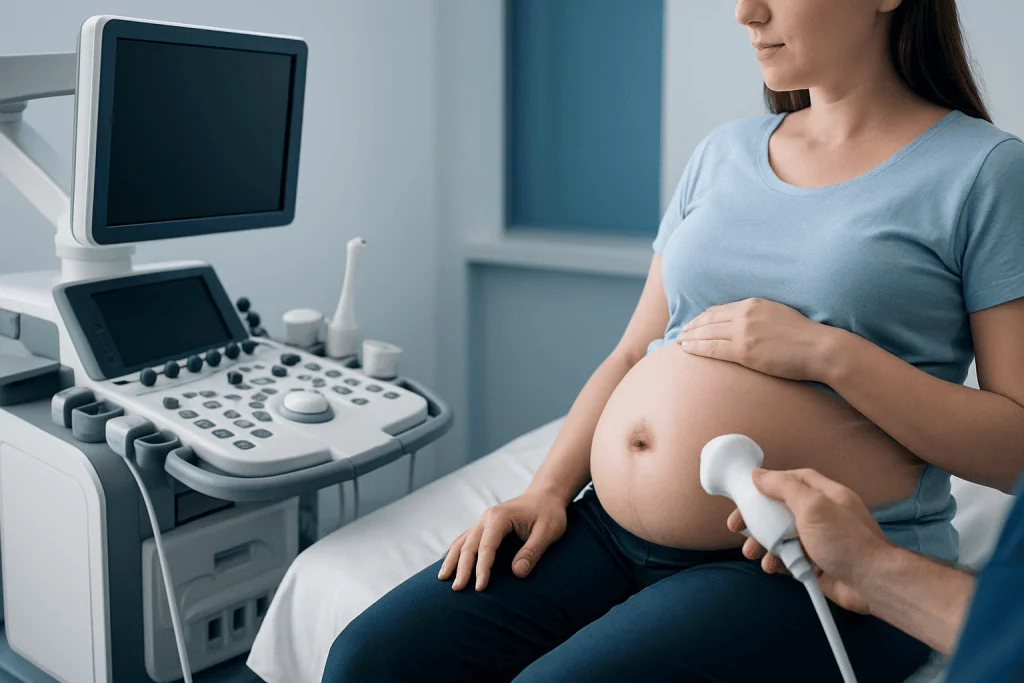
A pelvic examination may be recommended to look at the cervix and identify irritation, infection, or active bleeding. Depending on the stage of pregnancy and symptoms, the clinician may also perform or arrange an ultrasound. Ultrasound is often the key tool for checking the pregnancy location, the baby’s heartbeat when expected, placental position, and whether there is a subchorionic bleed.
Laboratory tests may include blood work, pregnancy hormone measurements in early pregnancy, urine testing, or vaginal swabs if infection is suspected. If there is concern about cervical changes, additional obstetric assessment may be needed. In some situations, obstetric consultation and follow-up are enough; in others, treatment is directed at the underlying cause.
Treatment, Self-Care, and Prevention
Treatment depends entirely on the cause. If the brown secretion is due to minor cervical irritation or a small amount of old blood, no specific treatment may be needed beyond observation. If infection is found, a doctor may prescribe pregnancy-safe treatment. If ultrasound shows a concern such as an ectopic pregnancy or miscarriage, management will be based on the diagnosis and how stable the patient is.
At home, it is generally wise to take a calm, practical approach. Resting, avoiding self-diagnosis, and monitoring the amount and color of discharge can be helpful until medical advice is obtained. A pad can help track the volume; tampons should not be used during pregnancy unless specifically advised by a clinician. Douching should also be avoided because it may irritate tissues and increase infection risk.
There is no guaranteed way to prevent all spotting in pregnancy, but a few habits may reduce irritation and support vaginal health:
- Attend routine prenatal care and follow any advice about activity or pelvic rest.
- Avoid douching and scented intimate products.
- Practice safer sex and discuss STI testing if relevant.
- Seek prompt care for unusual odor, itching, burning, or urinary symptoms.
- Stay hydrated and maintain general prenatal health habits.
Some people may need specialized follow-up depending on findings. For example, if a cervical problem is suspected, the doctor may consider further gynecologic evaluation. If early pregnancy viability is uncertain, repeat ultrasound or blood tests may be arranged over time rather than making conclusions from one symptom alone.
When to Seek Medical Care
Brown secretion during pregnancy should be reported to a prenatal care provider, even when it seems light. The need for urgent care depends on what else is happening. It is reasonable to call the same day for new spotting, especially in the first trimester or if it happens more than once.
Immediate or emergency assessment is important if there is heavy bleeding, strong cramps, one-sided abdominal pain, fainting, dizziness, shoulder pain, fever, or passage of tissue. Care is also urgent if the discharge becomes bright red, if there is concern for leaking amniotic fluid, or if there are contractions before term.
For international patients who need evaluation, Acibadem International’s multidisciplinary specialists and JCI-accredited hospitals diagnose and treat pregnancy-related concerns with coordinated obstetric and imaging support. Depending on the situation, this may include pregnancy follow-up and targeted assessment to clarify the cause safely.
Frequently asked questions
Is brown secretion during pregnancy always a sign of miscarriage?
No. Brown secretion often means old blood and can occur for relatively harmless reasons, such as cervical irritation or a small amount of early spotting. However, because miscarriage is one possible cause, a healthcare professional should be informed, especially if there is pain or repeat spotting.
Can brown discharge be normal in early pregnancy?
Yes, light brown discharge can happen in early pregnancy and may come from implantation, cervical sensitivity, or old blood leaving the body. Even so, it is sensible to mention it to a doctor or midwife because early pregnancy bleeding can have several causes.
What is the difference between brown discharge and bleeding in pregnancy?
Brown discharge usually contains older blood that has oxidized and turned darker before leaving the body. Fresh bleeding is more often red or pink and may suggest more active bleeding. The amount and associated symptoms are often more important than color alone.
Should someone go to the emergency room for brown discharge in pregnancy?
Emergency care is appropriate if brown discharge comes with severe cramps, one-sided pain, fainting, dizziness, fever, or heavy bleeding. It is also urgent if the discharge becomes bright red or seems watery like possible fluid leakage. If symptoms are mild, contacting a prenatal care provider promptly is usually the first step.
Can sex cause brown discharge during pregnancy?
Yes. The cervix becomes more sensitive and has a richer blood supply during pregnancy, so intercourse can sometimes cause light spotting that later looks brown. If the discharge is minimal and short-lived it may not be serious, but repeated spotting should still be discussed with a clinician.
Does brown discharge mean an infection?
Not necessarily. Brown discharge often reflects old blood rather than infection, but infection becomes more likely if there is foul odor, itching, burning, pelvic pain, or fever. A doctor may recommend an exam or swab to find out the cause.
References
- American College of Obstetricians and Gynecologists
- NHS
- Mayo Clinic
- Centers for Disease Control and Prevention
- World Health Organization
This article is for general information only and is not a substitute for professional medical advice. Please consult a qualified doctor about your individual situation.
Explore treatments in Turkey — costs, top hospitals & a free quote
JCI-accredited · board-certified surgeons · reply within 24h
Add us as a Preferred Source to see more of our trusted health content across Google Search, AI Overviews and Discover.

More from the Health Library



Related Specialists

Prof. Dr. Banu Atalar
Radiation Oncology
Prof. Dr. Şule Arslan
Physical Medicine & Rehabilitation
Assoc. Prof. Dr. Ferhat Demir
Pediatrics
Dr. Serdar Korkmaz
Anesthesiology